

When assessing wounds in working animals, it is often safer to assess and triage them whilst still under harness, as they are not often used to being handled without it. However, this can pose a challenge in assessing the animal's entire body, and some serious wounds can otherwise go unnoticed.
Whilst you may feel that not much can be done when you don't have medications and drugs available, even few resources can be extremely efficient when assessing a wound successfully.
Remember that triaging and assessing a wound is one of the most important steps in wound therapy. More repaired wounds fail because of improper preparation and assessment rather than improper therapy. Common considerations you take when triaging a wound are the same, irrespective of the budget and resources available!
Considerations
Patient temperament. Begin with an objective evaluation of your patient's behaviour and attitude towards handling and treatments. Is it safe to work with? Has it been handled? Will it tolerate treatment?
A wild, aggressive animal which will panic if bandaged or handled will not be a suitable candidate for extensive treatment.
Then, consider your options depending on the nature of the wound, the temperament of the patient, and the circumstances.
Restraint. Can the patient be easily restrained for an initial assessment and treatment, for example by simply lifting a limb or applying a twitch? Can you safely work on the wound if you cannot access sedation, or can you use local anaesthetics? Is the prognosis good if I manage to address the wound?
If the prognosis is good, you may have to resort to more aggressive physical restraining methods, which would not be tolerable if you had access to appropriate medication.
Remember that your actions should only be undertaken if it produces worthwhile results at the end.
If, for example, the animal is going to make a full recovery, it may be worth the stress of being cast while it is treated. If its prognosis is poor, excessive handling and the resulting stress and pain may not be fair.
Always ensure the safety of you and other people. You are responsible (legally and morally) for the safety of your helpers. There is no advantage in fixing an animal just to end up sending a human casualty to the hospital instead!
Wound assessment. When did the wound occur? What structures appear to be affected? Is the damage likely to cause long lasting issues?
If the wound is still bleeding profusely, haemostasis is a priority in fresh wounds and must be tended to ahead of continuing any assessment.
Patient assessment. Assess the patient thoroughly, evaluating essential factors which may delay wound healing, such as age, physical status, level of nutrition and concurrent systemic disease.
Part of such assessment is remembering to also check the vaccination status of the animal. This is not just important for the health and welfare of the animals you will be treating, but also for yours. Some diseases (for example tetanus and rabies) are endemic in developing countries and pose a dangerous zoonotic risk!
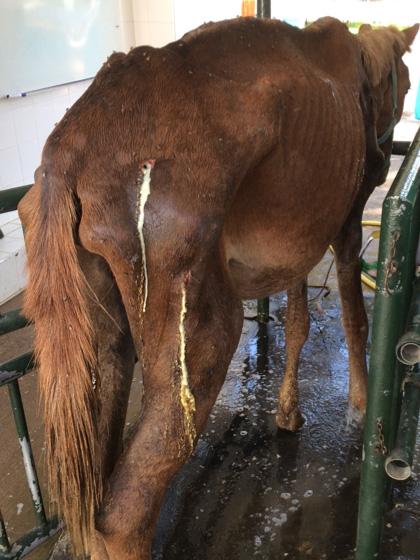
Additional considerations to assess and triage wounds specifically in working equines:
What caused the injury? Is it due to an ill-fitting harness? Do we know how to assess a harness? Looking at the height? Length of shafts? Breeching mechanism? Point of load on the animal?
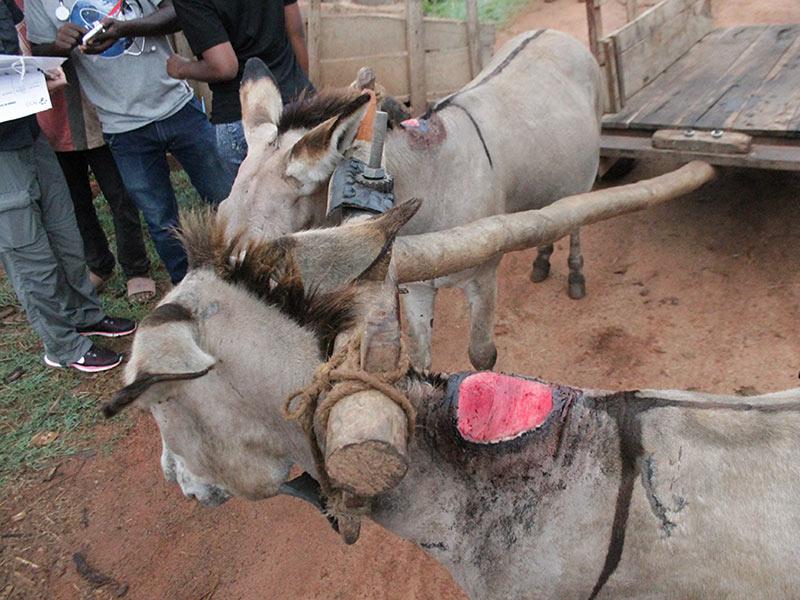
If the animal will need to rest, is this feasible? Or is it the sole source of transport for the owner? Is the animal receiving enough food, or are the bony prominences likely to repeatedly be injured?
What type is it, and where does the horse work? What is the long term impact on this animal's working ability? Is the animal likely to require medical therapy such as antibiotics or NSAIDs? Are they available? How will it receive them?
Remember, the size and severity of the wound does not correlate well with the true significance of the injury — some small innocuous wounds that result in synovial sepsis are more difficult to treat, and potentially have a much worse prognosis than a large skin laceration or even fracture.
Wound preparation
Clip the area around the wound. Equine wounds are frequently contaminated with bacteria, organic debris and necrotic material, making them prone to infection. Begin by clipping or shaving the wound so as to effectively clean and inspect the wound margins, as well as identifying any additional and unnoticed smaller wounds.

Clean the wound. The wound should then be cleaned with an antiseptic solution and flushed with saline solution ahead of probing and debriding (a recipe for making home made saline can be found further down in this article). Such saline can then be transported in an unused clean garden weed spray container, which serves as a great tool to deliver saline under pressure to clean/clear wounds. Alternatively, it can be stored in empty/clean water bottles, and drawn into 30ml syringes with a 18G needle attached, creating your own hand held pressure pump.

I don't have clean or sterile fluids; what do I do?
In the event of a lack of isotonic saline, we can manufacture it by boiling 1 litre of water for over 20 minutes and adding 9gr of table salt and 9gr of baking soda. The baking soda balances the pH of the solution, making it less aggressive on epithelial cells and fibroblasts — but is not necessary for the purpose of cleaning and debriding the wound.

Debridement of the wound, performed early and effectively, reduces the quantity of foreign material present, greatly reducing the potential for infection to develop. A surgical pump or lavage system is not necessary but can occasionally expedite the procedure.
In cases where there is significant contamination or devitalised tissue, then surgical sharp debridement with a scalpel and lavaging the area provides a cost-effective means of vastly reducing bacterial load.
Wound debridement can also be achieved using wet-to-dry and hypertonic dressings. Hypertonic solutions can be made up of a variety of substances, including honey or sugar and iodine mixtures
Other solutions which can clean and reduce bacterial load include conventional antiseptic solutions: basic soap or a 50:50 mix of iodine tincture with body soap or shampoo.
Also useful for contaminated wounds is the direct use of bleach at 0.05% or hydrogen peroxide, particularly in wounds where anaerobic bacteria thrive (such as the hoof).
Suppurative wounds can scald the skin, so protect the skin by applying a think layer of vaseline distal to the wound (where the discharging fluids may trickle). Also: adding a tea spoon of petrol to a small handful of vaseline can act as a deterrent for insects! But be extra careful that the petrol-vaseline mix does not touch the wound.