

Vega-Mariño P, Olson J, Howitt B, Criollo R, Figueroa L, Orlando SA, Cruz M and Garcia-Bereguiain MA (2023) A recent distemper virus outbreak in the growing canine populations of Galapagos Islands: a persistent threat for the endangered Galapagos Sea Lion. Front. Vet. Sci. 10:1154625.(https://doi.org/10.3389/fvets.2023.1154625)
Key points
- The Galapagos Islands have a high concentration of endemic wildlife, including the endangered Galapagos sea lion.
- Canine distemper virus (CDV) is a highly infectious virus commonly associated with domestic dogs, but also transmissible to other mammals including wildlife.
- There was a lack of recent CDV surveillance in the dog population on the islands at the time of publication.
- CDV is present in the domestic dog population in both rural and urban areas of Santa Cruz Island in the Galapagos.
- Clinical signs of CDV vary depending on the severity of infection but infected dogs share some common signs.
Research Question: why did we carry out this research?
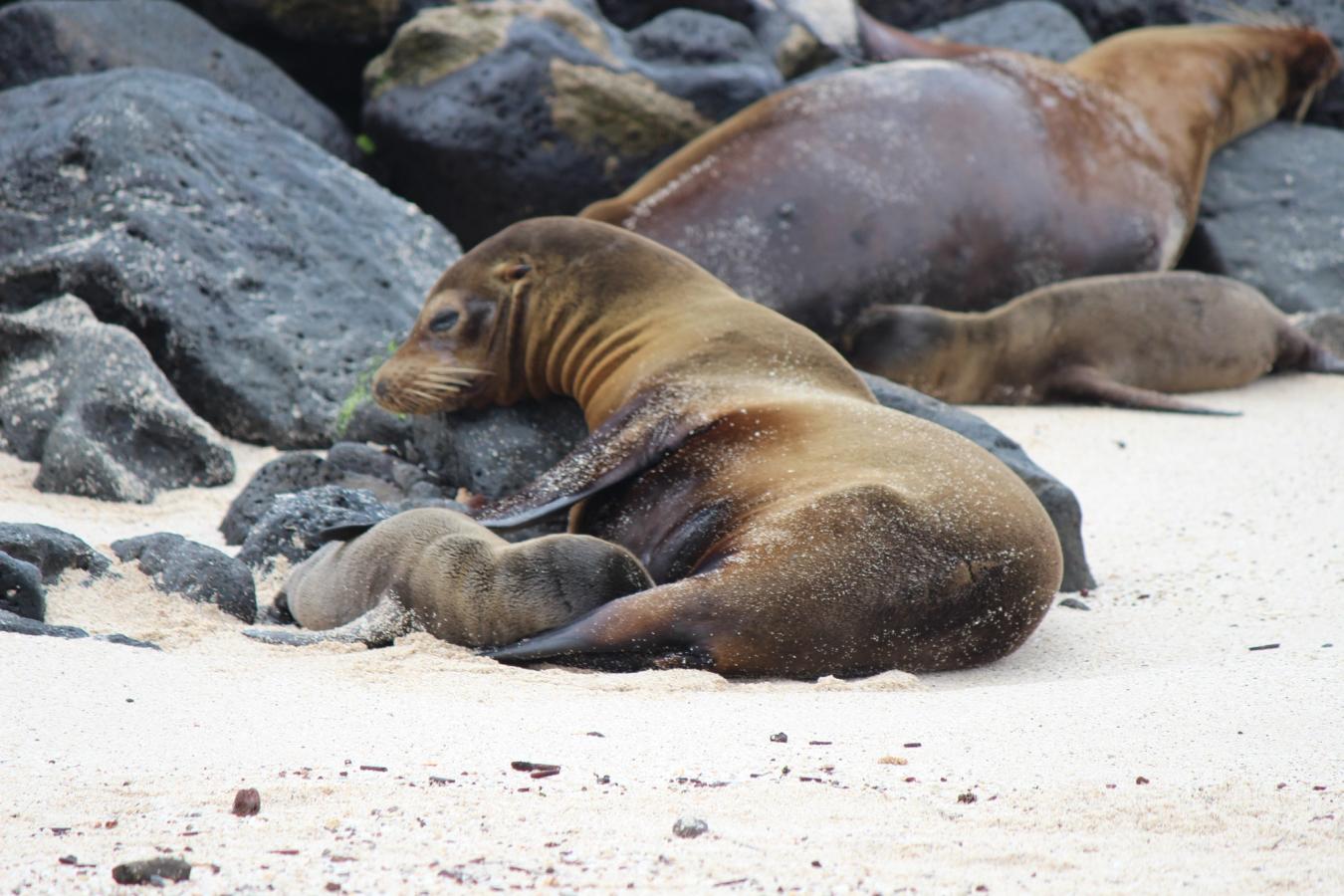
The Galapagos Islands have high levels of endemism, meaning they are home to species found nowhere else in the world. This is one of the reasons the islands have been listed as a UNESCO World Heritage Site since 1978. The Galapagos sea lion has faced a population decline and is now an endangered species. The potential transmission of pathogens such as canine distemper virus (CDV) from domestic pets to wildlife poses a serious threat to the islands' biodiversity. Domestic dogs are an important source of CDV infection worldwide and transmission to wildlife has been reported. CDV has been reported in sea lions, suggesting this virus is a potential concern for native sea lion species.

The growing dog population in the Galapagos may increase the risk of CDV transmission to native wildlife. Until 2017, dog vaccination was prohibited in the Galapagos under regulations governing introduced species (1).
From 2016 to 2017, the prevalence of CDV antibodies in sampled Galapagos sea lions on San Cristobal Island increased from 19.6% to 53.1%, indicating increased exposure to the virus and highlighting the importance of continued monitoring (2). Previous studies have provided evidence of CDV in the domestic dog population of the Galapagos Islands, but there was a lack of surveillance data in the decade leading up to this study (1,3). This study describes an outbreak of CDV in dogs on Santa Cruz Island in 2019, providing important data on the presence of distemper in the canine population, and the clinical signs associated with infection.
Methods: what did we do?
Occurrence
Between July and August 2019, a total of 125 dogs showing clinical signs compatible with CDV on Santa Cruz Island were included in the study. Data collected included age, clinical signs, owners’ addresses, and clinical history where possible. Nasal swab samples were collected and tested for CDV.
Testing
Nasal swabs were tested using reverse transcription polymerase chain reaction (RT-PCR), a molecular technique used to detect viral RNA.
Clinical signs
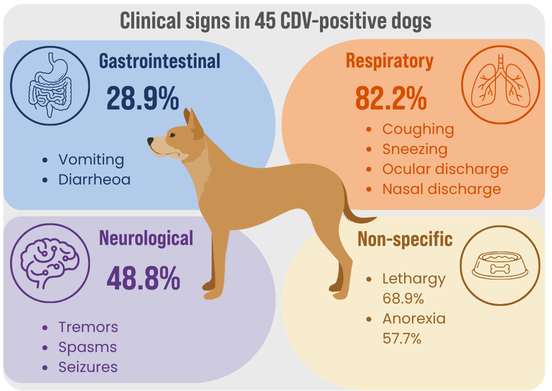
Clinical signs were recorded for 45 of the 93 dogs that tested positive for CDV, and 12 of the 32 dogs that tested negative. The clinical signs recorded in the CDV-positive dogs were grouped into four categories: 1) gastrointestinal (vomiting, diarrhoea); 2) respiratory (coughing, sneezing, ocular and/or nasal discharge); 3) neurological (tremors, spasms, seizures); 4) non-specific signs (lethargy and appetite loss).
Results: what were the findings?
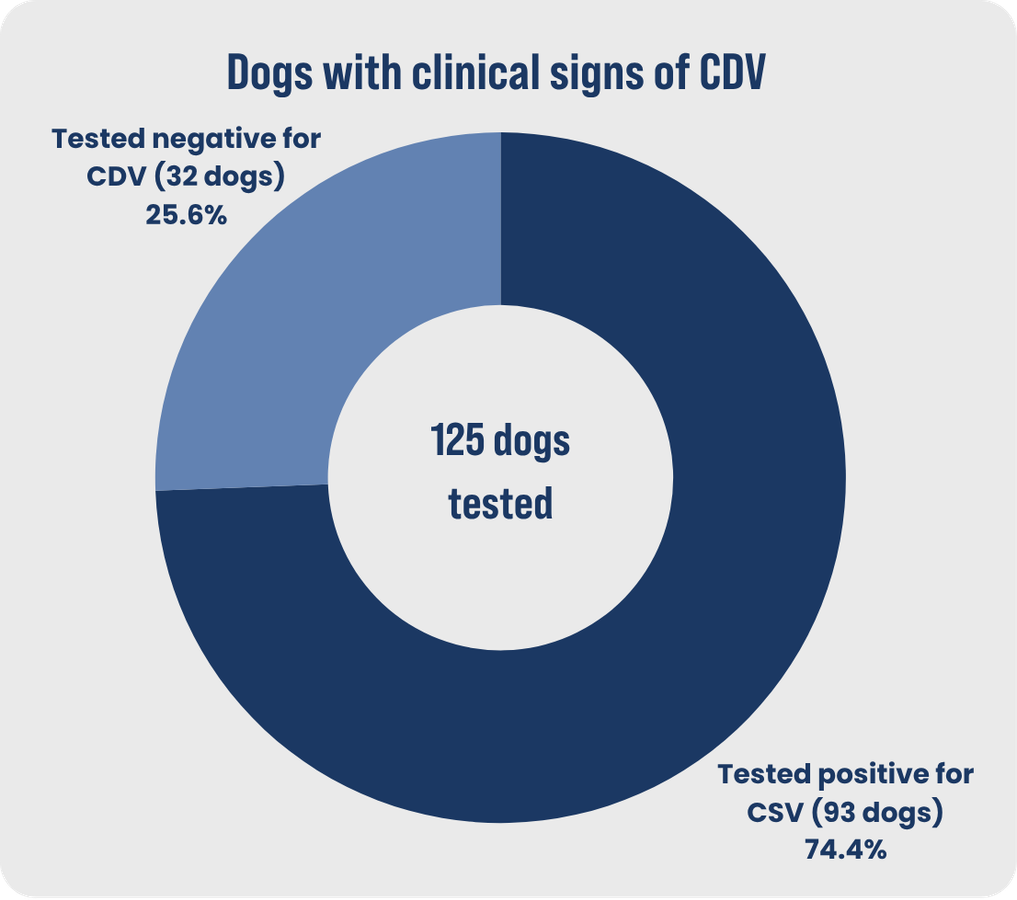
125 dogs were tested for CDV because they showed clinical signs compatible with the disease. Of these, 93 tested positive (74.4%) and 32 tested negative (25.6%). This proportion reflects the dogs included in the study, rather than the prevalence of CDV in the wider dog population on Santa Cruz Island.

Clinical signs were recorded in 45 of the 93 dogs that tested positive for CDV.
Respiratory signs were the most prevalent (82.2%), with coughing and ocular discharge seen in 60% and 48.9% of dogs, respectively. Coughing ranged from mild, dry coughs to wet, ‘honking’ coughs, not dissimilar to those seen in kennel cough.
Neurological signs were seen in 48.8% of dogs, with tremors, spasms and seizures all frequently reported. In more severe cases, neurological signs sometimes developed without any preceding signs. The most severe neurological signs involved the full body, progressing to hindlimb paresis and eventually quadriparesis.
Gastrointestinal signs (vomiting and diarrhoea) were present in 28.9% of dogs. A generalised loss of appetite was seen in 57.7%.

Patient outcomes
Because follow-up was not possible for all dogs, the number that recovered or died during the outbreak could not be established. However, among the dogs for which outcomes were recorded, including those who tested negative for the virus, 4 died and 16 were euthanised on welfare grounds. Of those 20 dogs, 15 were positive for CDV at the time of death.
Spatial distribution
CDV-positive cases were mapped according to their locations and it was found that approximately 75% of CDV cases were urban and approximately 25% were in rural regions.
Interpretation: what insights can we gain from the findings?
Although vaccination for CDV had been conducted since 2017, this study provides evidence that greater vaccination efforts were needed. The combination of increasing dog populations and the presence of CDV may increase the risk of transmission to the endemic wildlife of the Galapagos Islands. Increased efforts were required to control and vaccinate domestic dog populations, to reduce the threat of canine distemper virus to the endangered Galapagos sea lion.
Ongoing work
Worldwide Veterinary Service (WVS) works alongside Pan Animalia Galápagos through the Galápagos Animal Doctors project, based on Santa Cruz Island.
Vaccination campaigns and population data
In 2024, WVS collaborated with the Decentralised Autonomous Municipal Government of Santa Cruz and the Galápagos Biosecurity Agency (Agencia de Regulación y Control de la Bioseguridad y Cuarentena para Galápagos; ABG) to conduct a door-to-door campaign across the island’s main populated areas. The campaign combined mass canine vaccination (including against distemper) and microchipping with a census of the dog and cat populations. This approach aimed to support future vaccination programmes, promote responsible pet ownership and help protect local wildlife from disease.
Achieving over 80% vaccination coverage among registered dogs, the campaign demonstrated the value of a coordinated, door-to-door approach that combines vaccination with registration, microchipping and population monitoring. The information collected provides a valuable baseline to guide follow-up vaccination programmes, improve animal identification and traceability, and support long-term dog and cat population management. Together, these efforts can help improve companion animal welfare, reduce disease risks and support the protection of the islands’ unique wildlife. The team repeated the population census in 2026 to support ongoing monitoring and future planning.
Veterinary care to improve animal welfare
WVS also works from its clinic in Santa Cruz to provide veterinary care for domestic dogs and cats, including treatment of illness and injury, sterilisation and preventative healthcare. The team supports responsible pet ownership, whilst also providing veterinary training and education opportunities for veterinary professionals.