

Tick-borne disease
Ehrlichia canis is a small gram-negative coccoid bacteria that is transmitted by the tick Rhipicephalus sanguineus. It is an intracellular parasite that lives in the cytoplasm of circulating monocytes (white blood cells).
The Rhipicephalus sanguineus tick is also known to transmit other tick-borne infections, such as Babesiosis and Anaplasma, so infections with multiple organisms is not unusual.
Pathogenesis and clinical presentation
Ehrlichia has an incubation period of 8-20 days that is then followed by an acute, subclinical and chronic phase of the disease. The clinical signs seen within dogs depends on the stage of the disease upon presentation:
Acute phase:
- Pathogenesis: after being transmitted from a tick, the parasite enters the blood and lymphatic system where it replicates within monocytes. These cells spread the Ehrlichia around the system where it interacts with endothelial cells causing a vasculitis. During this phase, the platelet count may also drop due to immune-mediated platelet destruction.
- Clinical signs: these may be mild or non-specific at this stage. Typically they include lethargy, weight loss, anorexia, pyrexia, lymphadenomegaly, splenomegaly, mild oculonasal discharge, mild bleeding disorders (spontaneous haemorrhage or bruising), and occasional neurological symptoms (ataxia or meningitis). These signs often spontaneously improve within 2-4 weeks, even without treatment. Some dogs may be able to eliminate the disease themselves, whilst others will remain persistently infected and carriers of Ehrlichia, heading into the sub-clinical phase.
Sub-clinical phase:
- Pathogenesis: Ehrlichia sequesters in the spleen and remains there. Dogs can stay in this phase for months or even years. There will be very few clinical signs, and identifying this phase is only through laboratory investigations/findings.
- Clinical signs: there will be no outward apparent signs of illness, yet Ehrlichia remains present and continues to stimulate the immune system, increasing the risk of immune-mediated conditions arising. Anemia and mild bleeding disorders here may be the only indications of the presence of disease.
Chronic phase:
- Pathogenesis: the long-term stimulation of the immune system by Ehrlichia eventually reaches a crisis point where the dog becomes sick again, with the pathology now a result of bone marrow suppression and inappropriate immune system response.
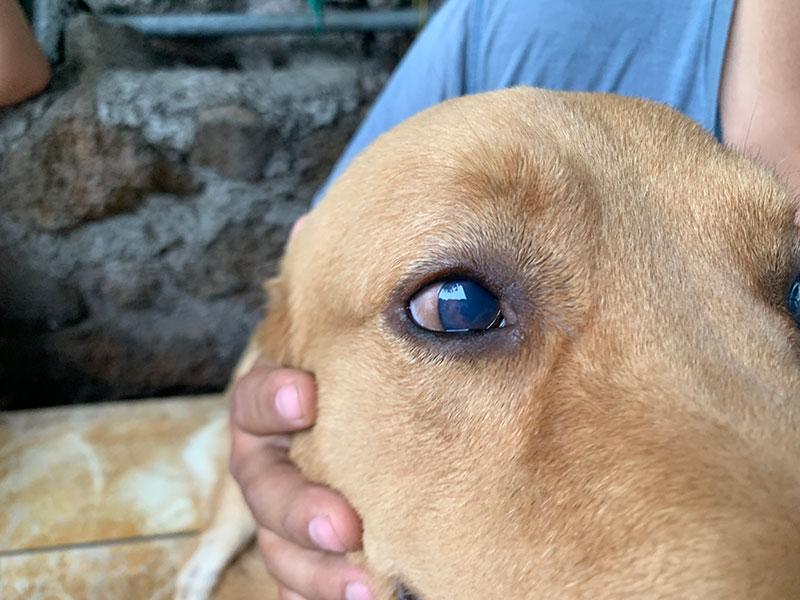
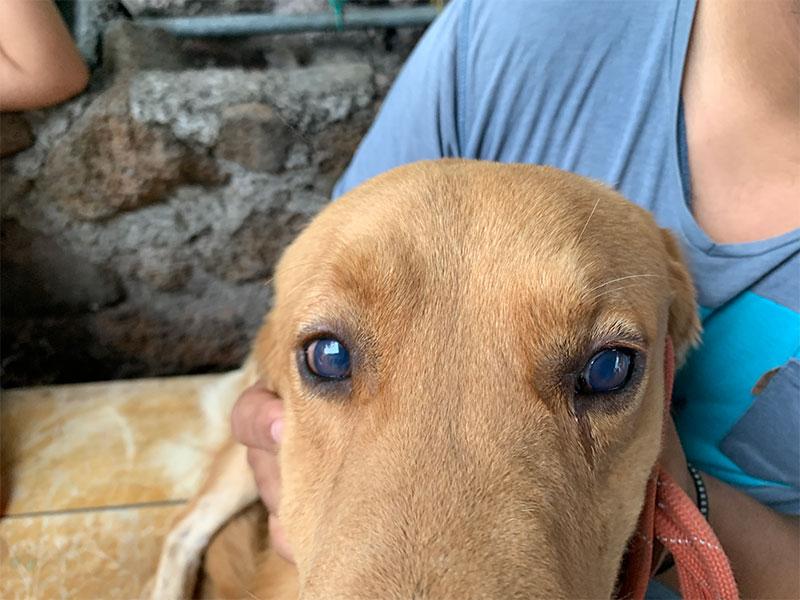
- Clinical signs: this occurs because the immune system has not been able to eliminate the organism itself. Due to long-term stimulation of the immune system, dogs in the chronic phase exhibit bone marrow hypoplasia and severe pancytopenia (reduction in RBCs, WBCs, and platelets due to the inability to manufacture them). Clinical signs include anaemia, bleeding episodes (thrombocytopenia), ocular signs (anterior uveitis, haemorrhage into globe, blindness, ocular discharge), neurological signs (secondary to meningitis), and lameness (swollen joints – immune-mediated polyarthritis).
Diagnosis
The ability to detect and diagnose the disease is also dependent on the stage of the disease at which point the dog presents. Diagnosis depends on:
Clinical signs. Despite the chronic phase symptoms being quite pathognomonic, the clinical signs for the other stages are very unreliable and non-specific, and many dogs will be sub-clinical for extended periods of time.
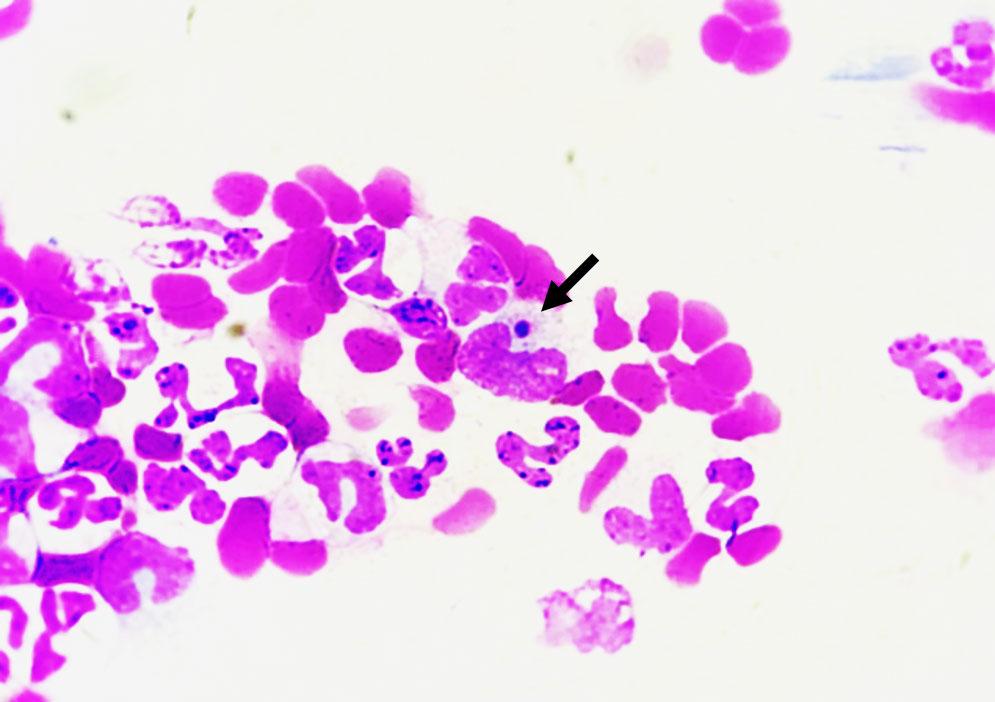
Blood smear. A blood smear is a quick and easy method to support a diagnosis of Ehrlichia. It is rare to detect a ‘morula’ of Ehrlichia in a blood smear (an aggregation of Ehrlichia canis inside a monocyte) as it occurs in 4-6% of clinical cases (Figure 3). However, blood smears are important to identify thrombocytopenia and lymphopenia associated with the subclinical and chronic phases of the disease. See our section on blood smears to learn how to count platelets.
PCV and TP. The sub-clinical and chronic forms will show a low PCV (anaemia) and a high TP (raised globulins).
Advanced blood haematology. The fundamental signs of a haematology blood test are anaemia, thrombocytopenia, leukopenia, and high globulin levels. Note that these figures can be determined manually without advanced machine haematology through a blood smear, PCV, and TP.
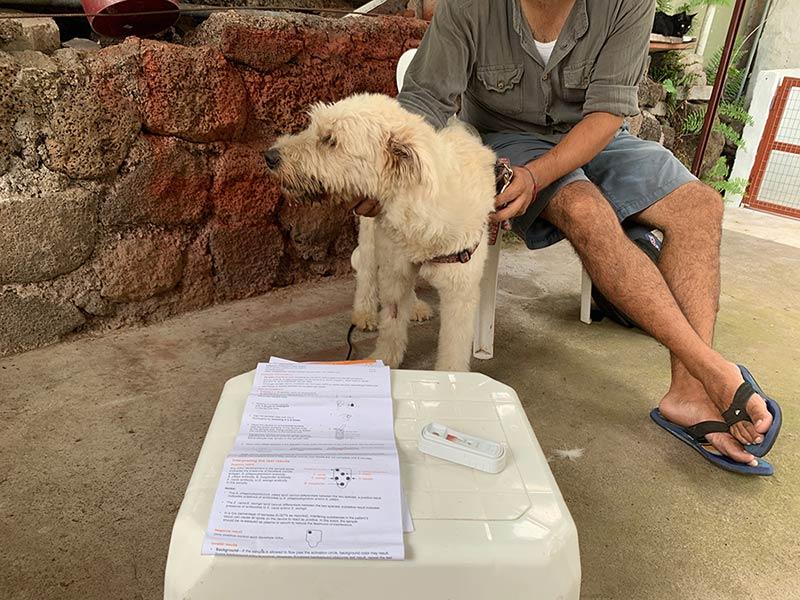
ELISA testing. The most common method for diagnosis is through ELISA serology, commonly seen as the 4DX SNAP test. A dog can, however, be seronegative despite harbouring an infection if they are in the incubation period or in the early stages of the acute disease.
Treatment
The treatment for Ehrlichia depends on the clinical signs, and initial treatment is supportive:
- Doxycycline (10mg/kg SID) – this is the mainstay of treatment and requires a long course of 28 days.
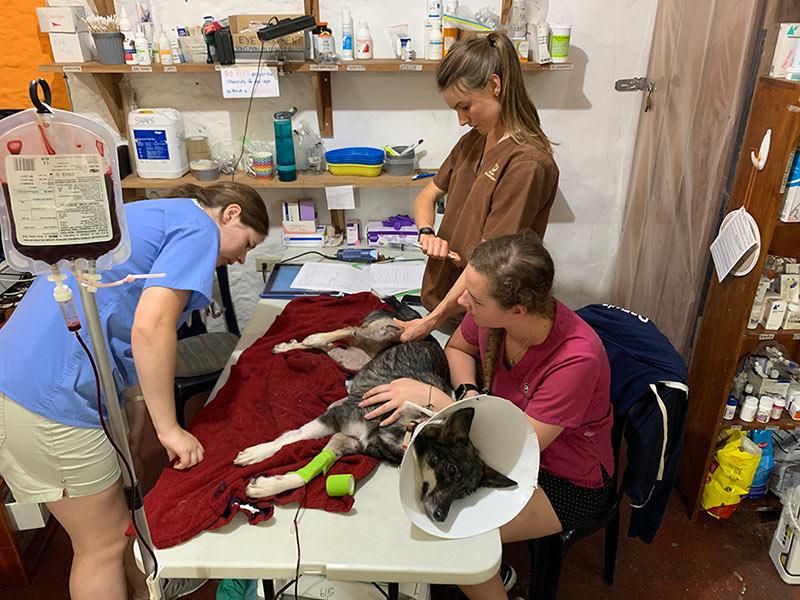
- Blood transfusion – appropriate in dogs with severe anaemia or thrombocytopenia. This does not treat the underlying disease.
- Prednisolone (1-2mg/kg SID) – this may be appropriate in severe or advanced cases where immune-mediated conditions and bone marrow suppression (e.g. immune-mediated thrombocytopenia, immune-mediated polyarthritis, or immune-mediated meningitis) may need more immediate intervention whilst the Doxycycline is taking effect. It can be given systemically and topically for uveitis. Figure 5. A team of volunteers conducting a blood transfusion on a dog with a debilitating and compromising chronic Ehrlichia Canis infection. This dog presented with lethargy, white mucus membranes, subcutaneous haemorrhaging, and a PCV of 15%. A blood smear revealed significant thrombocytopenia.
Prognosis
The prognosis is good for dogs diagnosed in the early phases as there is often a great response to treatment. However, it is guarded for those that are presented in the chronic phase and are already seen to be suffering from severe pancytopenia.
Dogs that survive or eliminate Ehrlichia can become re-infected as immunity is not life-long.
Prevention
Prevention is key in high-risk areas. Appropriate tick treatment for your dog is crucial, as well as environmental methods to reduce the number of ticks present.