
Pathogens vary widely in terms of how dangerous they are to their host, and how easily they spread. In a veterinary clinical setting, understanding these differences helps the team choose the correct level of infection control and reduce the risk of hospital-acquired infection.
In these resources, we discuss differing approaches to infection control depending on the type of micro-organism or pathogen involved. For this purpose, we will refer to ‘low risk’ or ‘high risk’ pathogens.
In the context of these resources, a low-risk micro-organism/pathogen can cause infection, but has limited ability to spread, and can usually be easily controlled through routine hygiene. For these cases, standard infection control is generally appropriate. This includes hand hygiene, cleaning and disinfection of surfaces, wearing gloves when appropriate, and using clean equipment between patients.
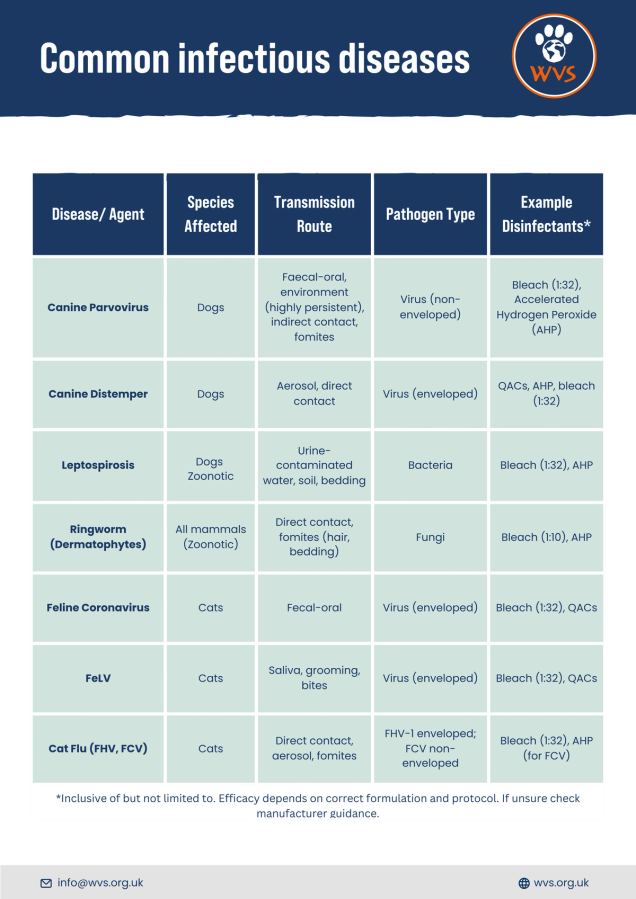
A high-risk pathogen is considered more harmful because it can cause severe disease, spread efficiently, be hard to kill with routine cleaning, or pose a serious risk to people. Examples in veterinary practice may include suspected parvovirus, canine distemper, leptospirosis, or multidrug-resistant organisms. These cases require strict infection control measures, often including isolation, restricted staff access, full personal protective equipment, dedicated equipment, enhanced cleaning protocols, and careful waste disposal.
This table summarises some common diseases caused by high-risk pathogens, which require additional infection control measures compared to routine cleaning protocols.