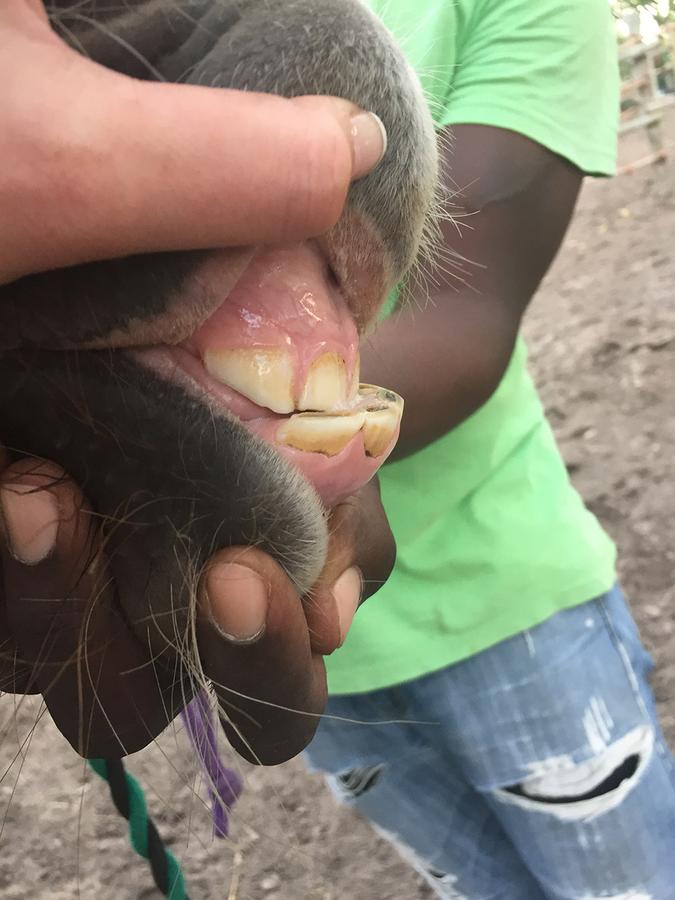

Dental examinations are an important and routine practice in the health management of a horse. They should be performed on a regular basis, at intervals which vary depending on the horse's age, overall dental condition, and nutrition. As a general rule, very young animals (under 3 years of age) and much older individuals (above 20 years of age) should only receive minor, routine management of sharp enamel ridges (every 6-12 months), while the others are candidates for more radical, corrective procedures (and should be seen as often as every 3 months and at least once a year).
Owners are the first sentinel in identifying dental disease and need to routinely observe their horse's eating habits, performance and body weight closely. If the horse changes either eating and/or performance habits, a dental examination is indicated. Veterinarians must be familiar with the anatomy of teeth and common pathologies, as well as the identification system used.