

Problems affecting the gastro-intestinal (GI) system that cause pain or discomfort are not uncommon amongst equines. Clinical signs manifested are often referred to as "colic signs".
The term "colic" therefore indicates a symptom of pain, and it is not synonym for a specific disease. Colic pain is usually (but not invariably) from within the abdomen, and often (but not always) related to the GI tract.
Statistics:
- 10-36% of the equine population has a colic episode in one year;
- 80% are mild episodes that resolve spontaneously, often without reaching a definitive diagnosis;
- 10% are medically treated colics such as impactions/flatulence/enteritis;
- 6-8% develop into serious obstructions which require surgical correction.
Signs of pain or colic
Depending on the degree of discomfort, numerous postures/behaviours may be manifested:
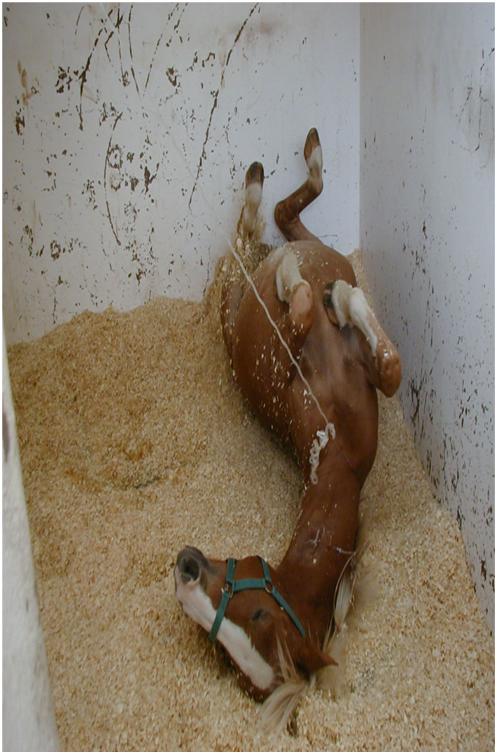
- ground pawing, flank watching, stretching out, or lying down (mild pain);
- rolling and kicking of the belly (moderate pain);
- sweating, violent rolling, and self-inflicting injuries (severe pain).
Differential diagnosis
Horses may have generalised body pain, or pain deriving from other organs contained within the abdomen (and not the GI tract). As such, they will still manifest colic signs, but they will be classified as having a "false colic".
Some causes of "false colic" include: uterine torsion, abortion, aorto-iliac thrombosis, bladder distension from urethral obstruction, peritonitis, fractures, exertional rhabdomyolysis, laminitis, and parasite migration (for example — maggots in the sheath).
If the pain is indeed from the GI system, then we are facing a "true colic".
Etiology of "true colics" or GI-derived pain
GI pain can be of visceral origin, when deriving from:
- Intramural tension — the intestinal walls are stretched by accumulation of gas or fluid, due to obstructions created by impactions/displacements/strangulations.
- Spasms — the coordinated movements are disrupted and periods of hypermotility follow periods of lack of bowel movement. Typical during enteritis when the irritated mucosa doesn't function properly.
- Tension on the mesentery — pain receptors in the mesentery react to excessive tension caused by torsions/displacement/hernias/intussusceptions.
- Ischemia of the gut — infarcts, torsions, or strangulations cause vascular occlusion that lead to death of a segment of intestine, inducing severe hypoxic pain and endotoxemia.
- Enteritis — mucosal inflammation and irritation is a painful condition in itself but also causes spasms. Typical of acute salmonellosis.
Or, it can be of parietal when deriving from:
- Peritoneal irritation — usually following rupture of the stomach or intestines.
Therefore, true colics can be classified as:
- SPASMODIC
- IMPACTIVE
- FLATULENT
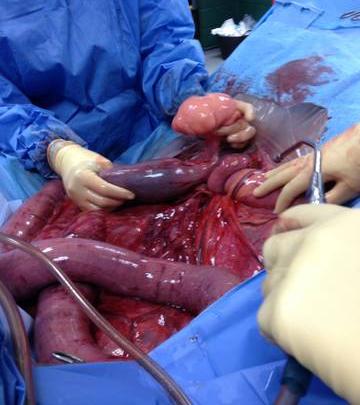
- OBSTRUCTIVE
- ENTERITIC
Usually, the first 3 types are mild uncomplicated diseases, while the last 2 (obstructive and enteritis) will require either surgical correction and/or intensive nursing.
Treatment
Regardless of the cause of the colic, our therapeutic aim is to:
- Achieve pain relief. Either by relieving the tension (decompressing the stomach from fluid or gas with a NG tube and the intestine with a trochart), or by administering analgesics.
- Restore normal propulsive motility of the gut.
- Correct and maintain hydration and the acid-base balance (by administration of isotonic solutions conveniently spiked).
- Treat the endotoxemia. Administer non-steroidal drugs and/or antibiotics with an anti-endotoxic effect such as Polymyxin B. Also aid toxin excretion with the fluid therapy.
Remember: the only way to correctly diagnose a colic (true or false), and deal with it correctly, is to perform a SYSTEMATIC EXAMINATION!