

Overview
Known as 'walking dandruf' this surface living mite is transmissible between species and also to people. There are multiple species and although none are host specific, general species hosts exist:
Cats - Cheyletiella blakei
Dog - Cheyletiella yasguri
Rabbit - Cheyletiella parasitivorax
The full 35-day life cycle is completed on the host. Adult female can survive in the environment without a host for 10 days, attaching their eggs to hair shafts by fine filament once a host is found.
Spread by direct contact although occasionally infestation can occur through contact with mites in the environment. Infestation is more common in kennel and breeding environments or households with multiple dogs or other pets. Young puppies, elderly dogs and immunocompromised dogs are at higher risk of developing infection.
Cheyetiella is zoonotic, causing pruritic skin lesions in people, although it cannot complete a life cycle on a human host.
Clinical signs
Mites may be carried asymptomatically. Mild to severe pruritus is the most common clinical sign, often worsening with chronicity of disease. Scratching, licking and over grooming can result in damage to the skin and secondary bacterial infection.
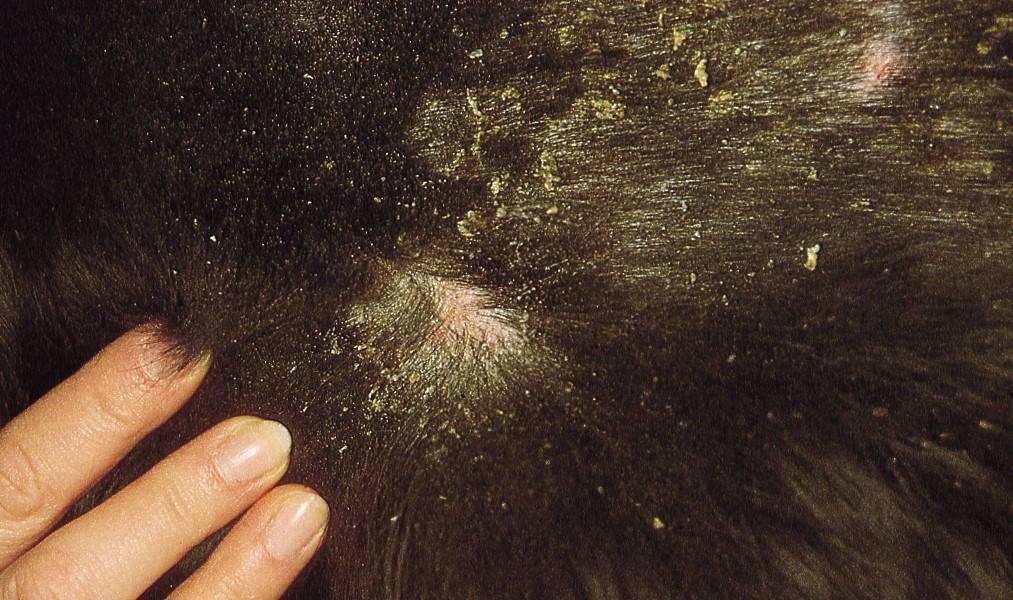
Thick, white scale close to the base of the hair shaft, with loose scale and dandruff through the coat (Figure 1). Most frequently seen on the dorsum and trunk of the body. The appearance of scale may be reduced by self-grooming. Papular dermatitis may also be observed.
Infection can cause a hypersensitivity response in the host.
Diagnostic investigations
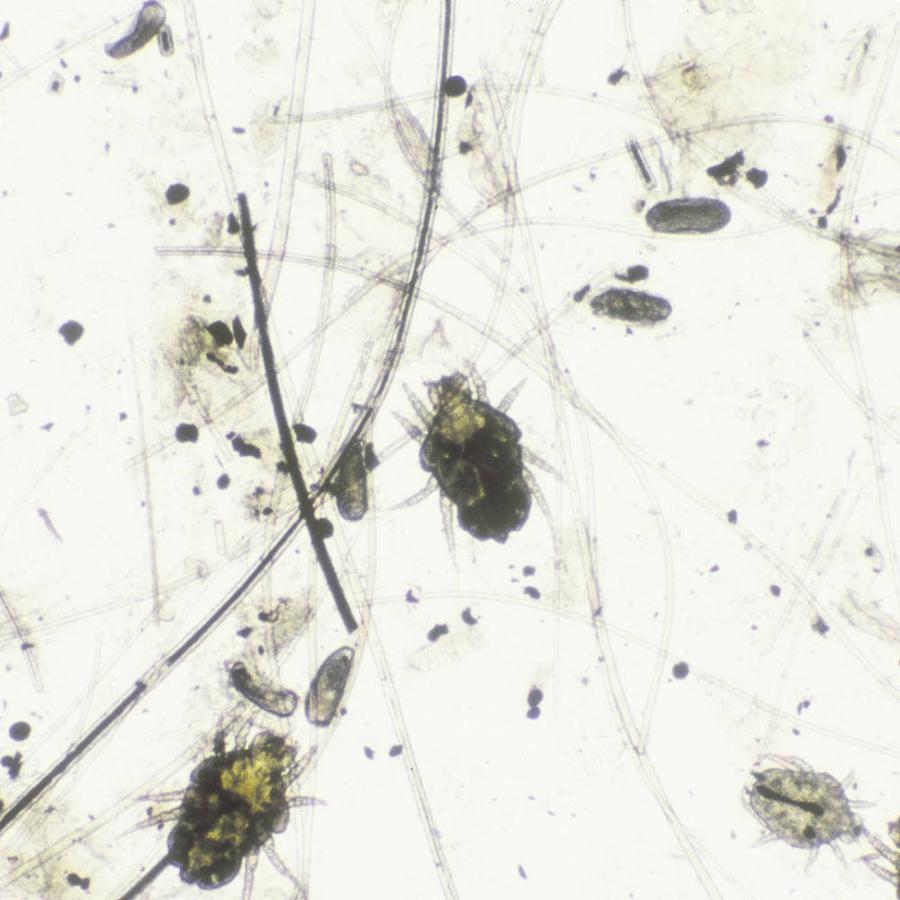
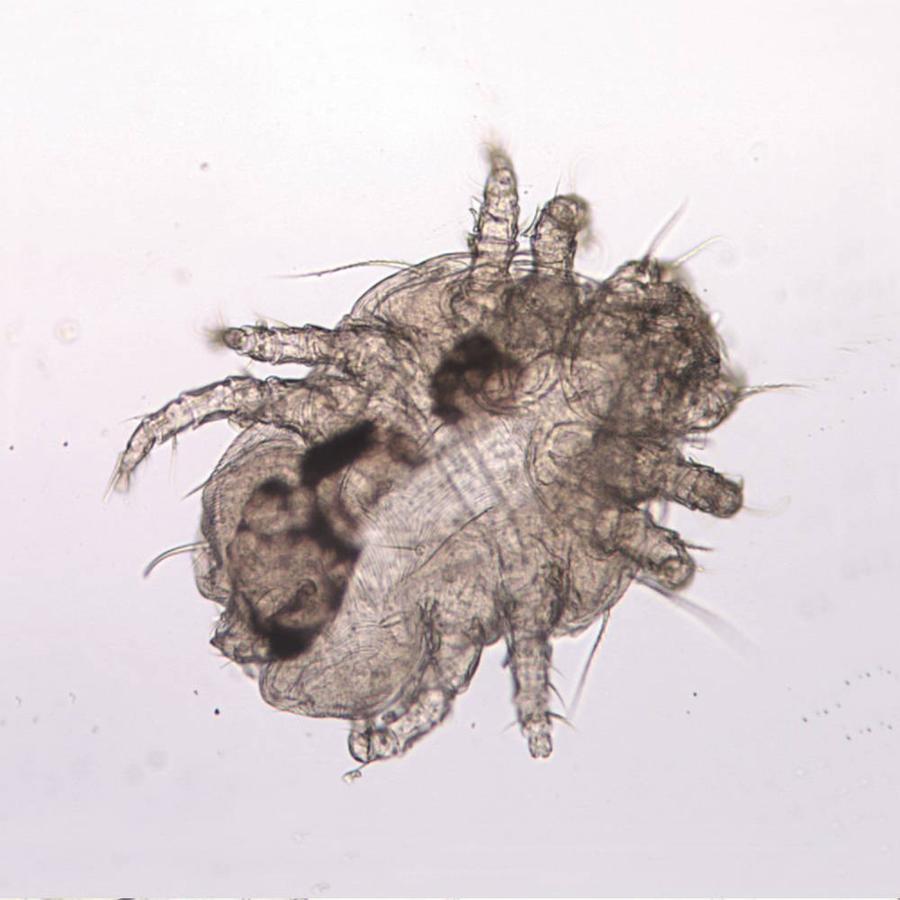
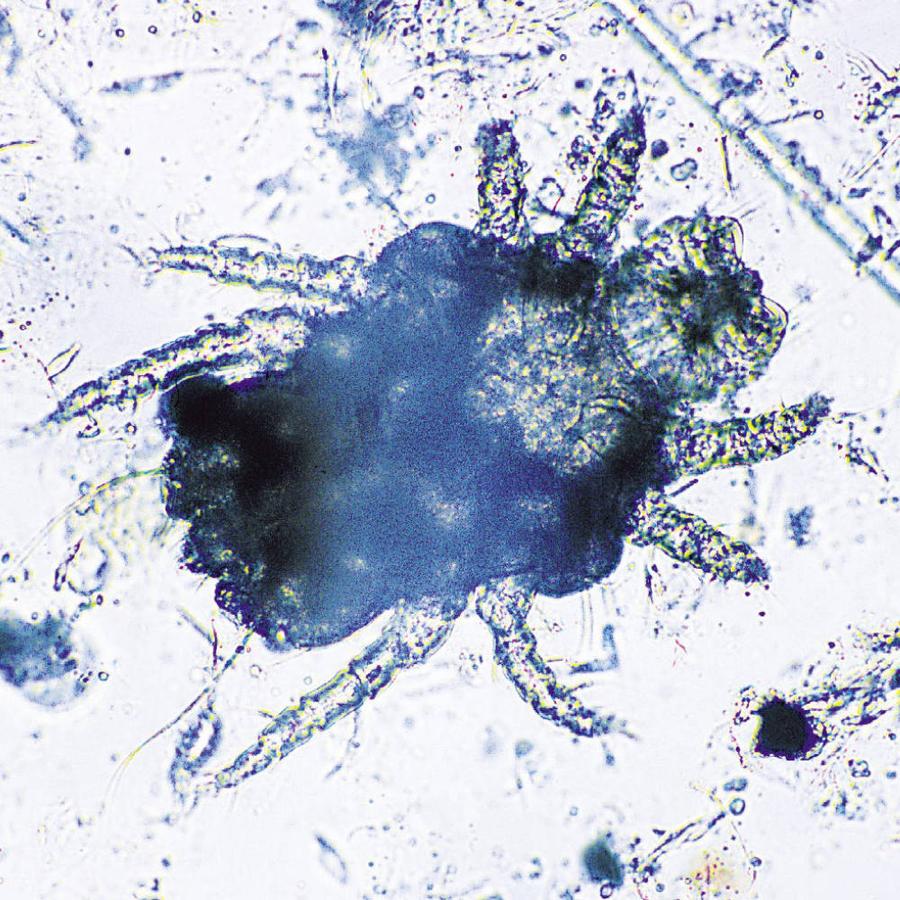
Positive identification of Cheyletiella spp. on microscopy of superficial skin scrape or scale mounted in liquid paraffin (Figure 2). Identification of adult mites or eggs on microscopy of acetate tape/sticky tape test or hair plucks. The white mites may be visualised on the skin surface with or without magnification.
Treatment
All treatments are off licence.
Fipronil topical preparation 0.25% cutaneous spray 3-6ml/kg to dampen coat down to the skin applied at 1-monthly intervals for 2 applications. Suitable for use in puppies from 2 days old.
Ivermectin 200-300 mg/kg s.c. or p.o. every 2 weeks for 6-8 weeks (off licence, not to be used in Collie or related breeds of dogs – risk of serious drug reaction)
Selamectin spot-on solution. 6mg/kg applied topically. Part the hair on the back of the neck and apply directly to the skin every 4 weeks in cats and every 2-4 weeks in dogs for 3 applications.
Selenium sulphide shampoo bath once a week for 4 - 5 applications to remove scale and adult mites.
Insecticidal treatment of the environment and bedding.
All animals in contact and sharing an environment should be treated. At least 6 weeks of treatment is required to cover full life cycle and prevent reinfection.
Prognosis
Successful elimination with appropriate treatment.
Prevention
Ensure all in-contact animals or pets are treated.
Environmental anti-parasite treatment.
Links
Further information on this subject is available on the ESCCAP website.