

Overview
The full life cycle of Demodex canis occurs in hair follicles and small numbers of adults can often be found as commensal parasites on healthy, asymptomatic dogs. Clinical disease and infestation are more common in young (less than 2 years old) or immune compromised patients. Puppies are infected from their mother by direct close contact early in life. Secondary bacterial skin infection and folliculitis is common and may exacerbate clinical signs of demodicosis and increase pruritus.
Dogs with underlying disease or receiving glucocorticoid therapy are also at higher risk of becoming infected due to immune system suppression. An adult-onset demodicosis case (patients above 2 years of age) should be carefully screened for an underlying immunosuppressive disease or recent therapy, although up to 60% of adult-onset demodicosis is idiopathic. Bull breeds of dogs are at increased risk of developing clinical disease. A genetic T-lymphocyte abnormality occurring in such breeds results in compromised immune system competence.
Clinical signs
Localised demodecosis
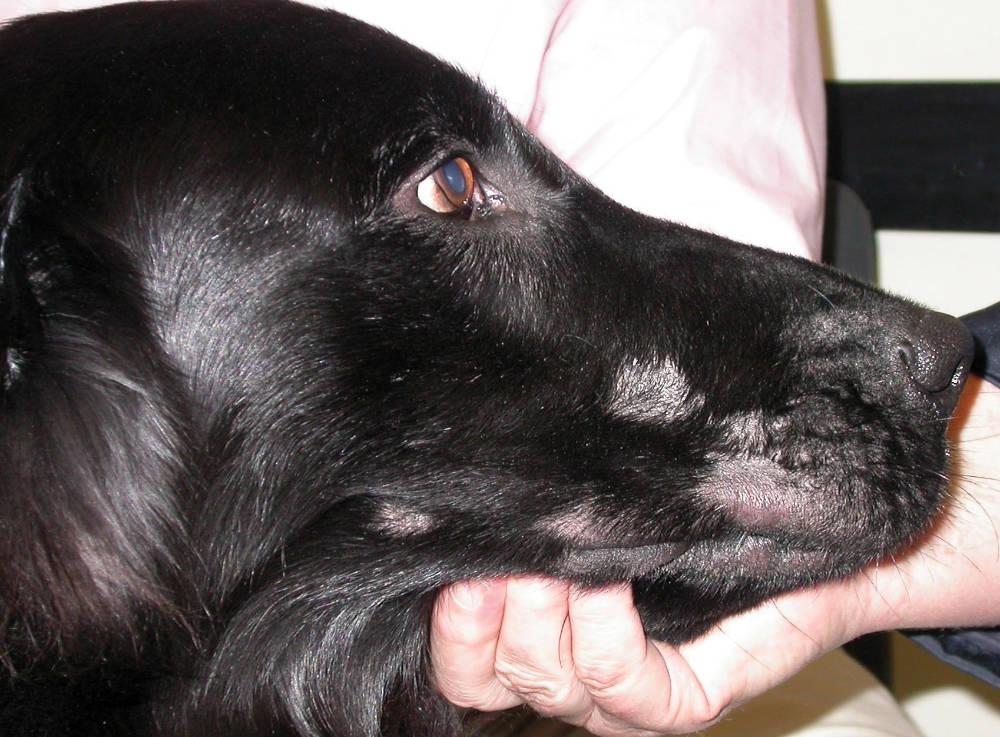
Often presents as a single small area of alopecia and scale. Most often affecting head (periorbital and perioral regions) or forelimbs, due to these being contact points of puppy with mother. Occurs most frequently in dogs less than 1 year of age and is often non-pruritic, but this is not always the case. Generally resolution occurs spontaneously within 6-12 weeks without treatment, in some cases clinical signs may persist for much longer and occasionally progresses to generalised demodicosis.
Generalised demodecosis
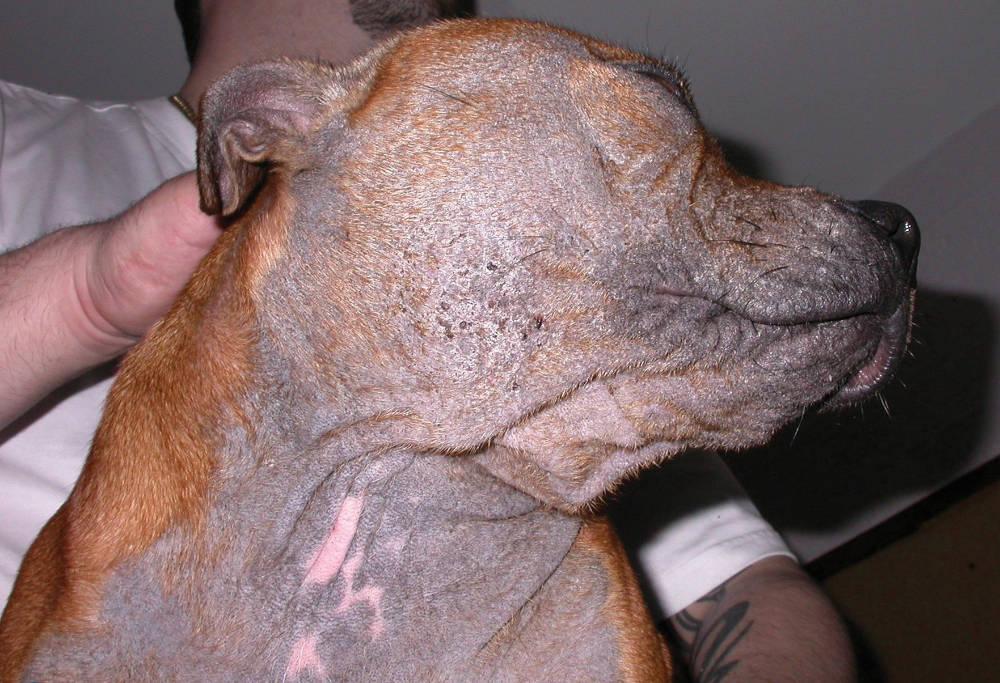
Seen most commonly in predisposed bull breed less than 18 months of age or in immunocompromised adult dogs (Figure 2). Multiple areas of patchy alopecia and scale, most commonly affecting head, body and paws. Primary infection is non-pruritic, but secondary bacterial infection can result in pruritus and self-trauma. Generalised lymphadenopathy is often seen, with pyrexia, lethargy, anorexia in severe cases.
Diagnostic investigations
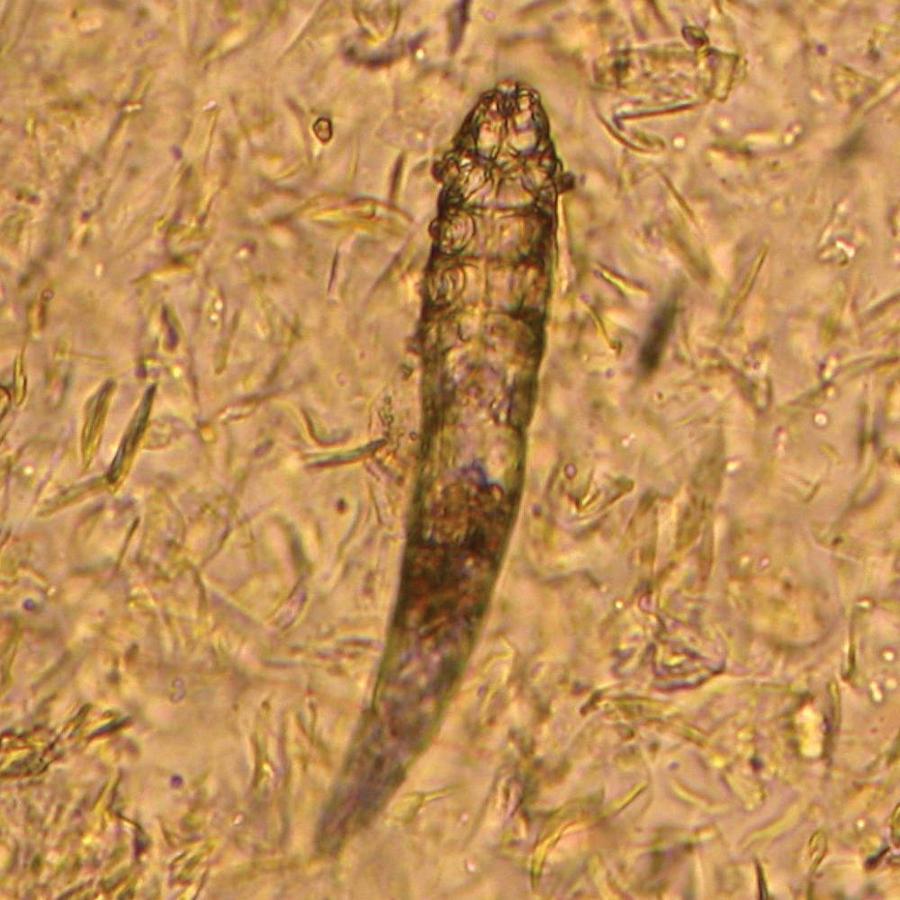
Positive identification of grey cigar shaped Demodex canis adults and nymphs on microscopy of:
- Deep skin scrapes gently squeeze hair follicles before carrying out skin scrape
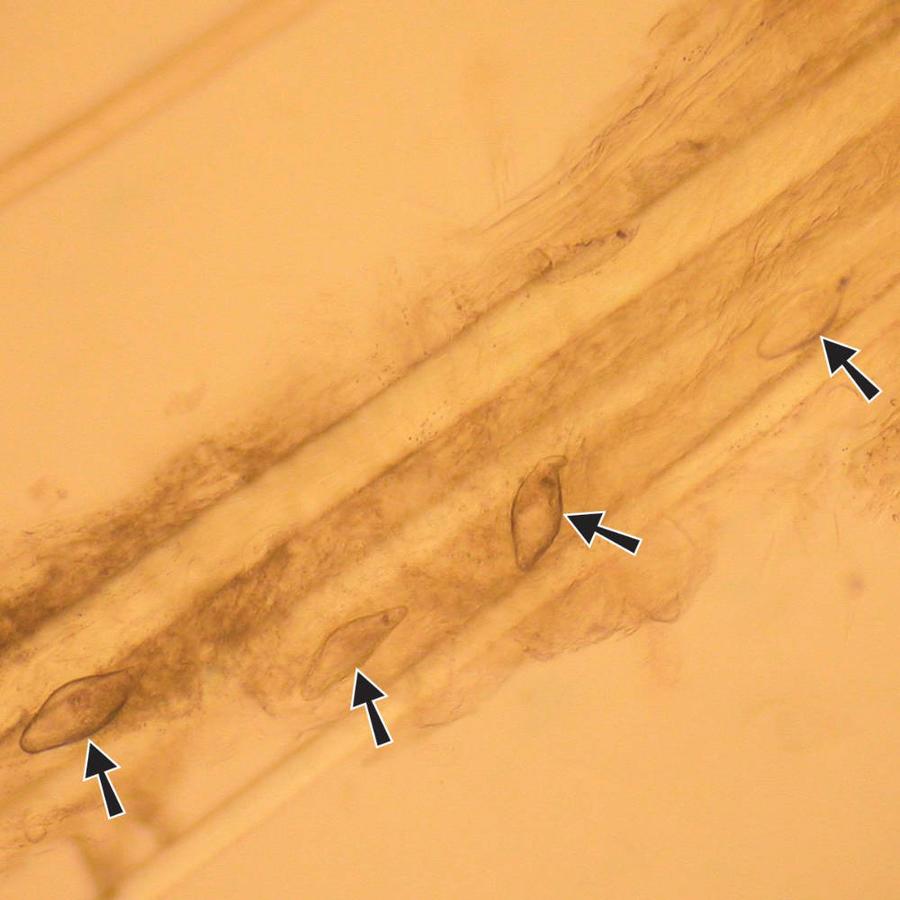
- Hair plucks gently squeeze hair follicles before carrying out hair plucks – mites or eggs identified at the hair shaft (Figure 4).
Treatment
Amitraz bathing 0.05% solution every 5-7 days.
- The diluted Amitraz solution (1ml 5% concentrated Amitraz solution diluted in 100ml water to make 0.05% solution) should be applied to the affected areas of skin with a sponge or cloth and affected paws can be submersed in the solution
- Treatment and skin scrapes should be repeated every 4 weeks until no mites are seen on microscopy of 2 consecutive skin scrapes or hair plucks
- The solution should not be rinsed off the skin, it should be allowed to dry naturally
- Use a buster collar to prevent the dog from licking and ingesting the medication from the coat while it is drying
- When preparing the solution and bathing the dog, wear protective clothing – waterproof gloves and apron and avoid contact with the solution
- Avoid handling the dog immediately after treatment until it has completely dried
- Bathing should be carried out in a well-ventilated area
- Monitor for side effects of Amitraz including sedation, hypothermia, hypotension and bradycardia, these can be reverse with and alpha-2 antagonist such as Atipamezole. Generalised pruritus due to skin irritation, hyperglycaemia and glucosuria may also occur
- Amitraz bathing should not be used in conjunction with alpha 2 antagonist sedatives
- Do not use in dogs less than 3 months old, Chihuahuas or diabetic dogs. Use with care in small dogs
- Amitraz should be stored in a brown glass bottle; it is easily degraded by UV light and has toxic metabolites. The diluted solution should not be stored once used
- Clipping of coat in long-haired dogs will improve penetration of the Amitraz bathing
- Bathing with a follicular flushing and keratolytic shampoo (for example benzoyl peroxide) prior to Amitraz application may improve effect.
Systemic antibiotic therapy in cases where secondary skin infection is present:
- Amoxicillin/clavulanate 12.5mg/kg twice daily orally
- OR cephalosporin 25mg/kg twice daily orally
- Long courses of antibiotics treatment may be required until resolution of clinical signs.
Ivermectin (off licence treatment) 300µg/kg s.c. or p.o. daily (not to be used in Collie or related breeds of dogs – risk of serious drug reaction) in cases that are refractory to treatment or suffer severe side effects with Amitraz bathing. Start at low dose and gradually increase to recommended dose, monitoring for evidence of side effects. You should always first discuss and get consent from the owner for off licence use and potential risk of toxicity before treatment.
Further diagnostic investigation and treatment of underlying disease that may predispose to demodicosis should also be considered.
Prognosis
Localised demodicosis may resolve spontaneously without treatment in 6-12 weeks.
Generalised demodicosis can be more difficult to treat, particularly in adult and predisposed dogs and therefore carries a guarded prognosis. Rigorous treatment will cause clinical improvement in most cases, in some cases ongoing treatment may be required.
Clinical disease may persist or recur after treatment in predisposed dogs. Successful clinical resolution is considered to be no recurrence of infection with Demodex canis 1 year after the end of treatment. After this length of time, infection is unlikely to recur.
Links
Further information on this subject is available on the ESCCAP website.