
Catch poles, also known as control or snare poles, have been used in animal control practices to restrain aggressive or fearful free-roaming dogs from a safe distance. The catch pole consists of a long handle, with a loop of cable at one end, which is pulled to tighten around the dog’s neck and control the animal. A button is then pressed to loosen the cable and release the dog. Due to metal tightening around the dog’s neck, the dog’s blood supply and ability to breathe may be affected, which makes the instrument highly stress-inducing and not an animal-friendly handling practice. Dogs often resist the catchpole greatly, rolling on the ground which is negative for animal welfare and this may negatively impact the image of a clinic or shelter. Following catch-pole use, it is often more difficult to handle the animal in future encounters.
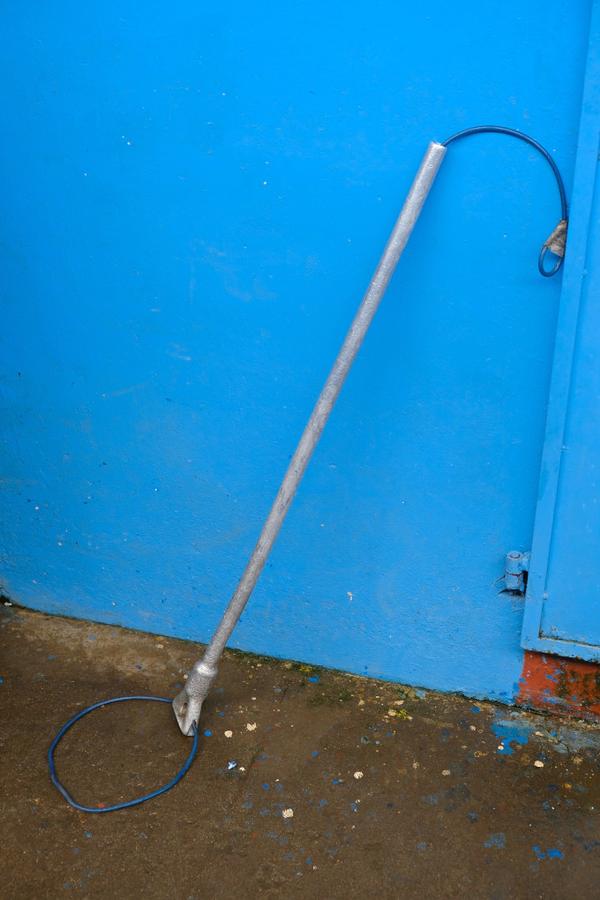
Why we advise against catchpole use:
- Stress and anxiety: Catchpoles can cause significant stress and anxiety to the dog. Due to this, their application can cause a loss of trust in humans, negatively impacting their future relationships with people.
- Risk of injury: The neck is a very sensitive structure, and the application of catchpoles may cause bruises, choking and possibly neck and spinal injuries. The injury risk is significantly increased if the catchpole is used by untrained staff, and if the pole is used with excessive force.
- Loss of trust: Each negative handling encounter makes the dog more averse to being handled in the future. If the dog is handled with a catchpole upon being brought to a clinic, then the dog will be more likely to show anxiety and aggression when sedated, and upon release. This increases the risk to handler safety alongside negatively affecting the animal’s future encounters with humans.
- Suitable alternatives available: These alternatives offer restraint with less forceful and anxiety-inducing methods. For example, ring nets, slip-leads, towels, muzzles.
When catchpole use may be justified: When handling a suspected rabies case, the risk of rabies transmission to the handler means we need as much distance between the dog and the handler as possible. In this instance, the catchpole may allow this.
Remember, a dog should never be picked up or have any of its weight supported by a catch-pole. Necks are extremely fragile, and this may cause severe injury and even death.
What we recommend instead: Ring Nets:
As an organisation committed to the improvement of animal welfare worldwide, we advise against the use of catchpoles in almost all cases. Ring nets (see previous article) offer a good level of restraint, whilst being more humane and conducive to animal welfare. Ring nets offer full-body restraint, and minimise the risk of being bitten. They take slightly longer to place than a catch pole, but this time is saved as they don’t increase dog stress levels as much for future encounters.