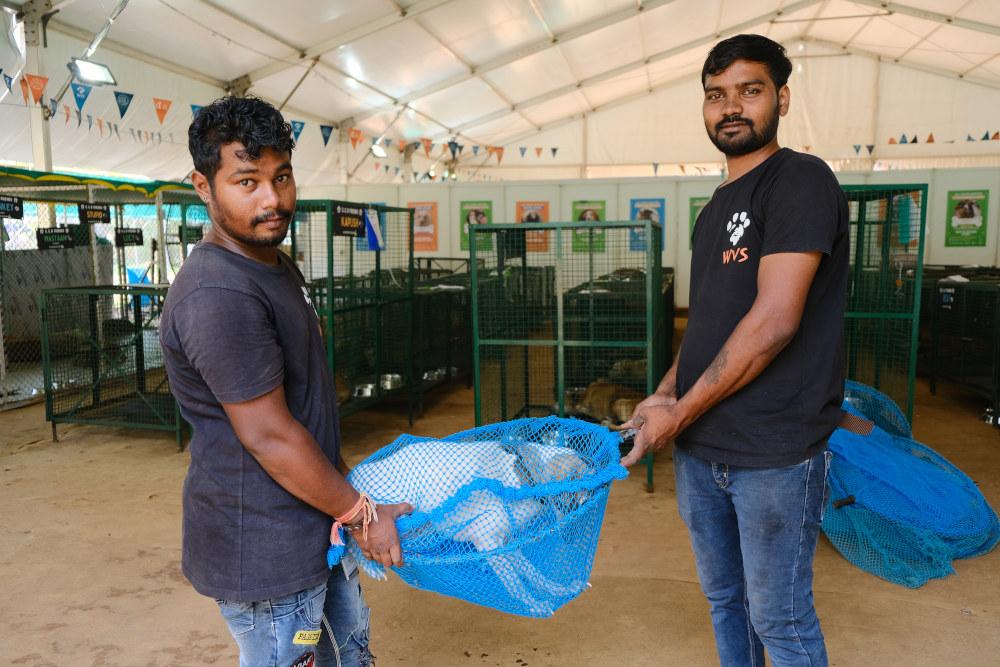

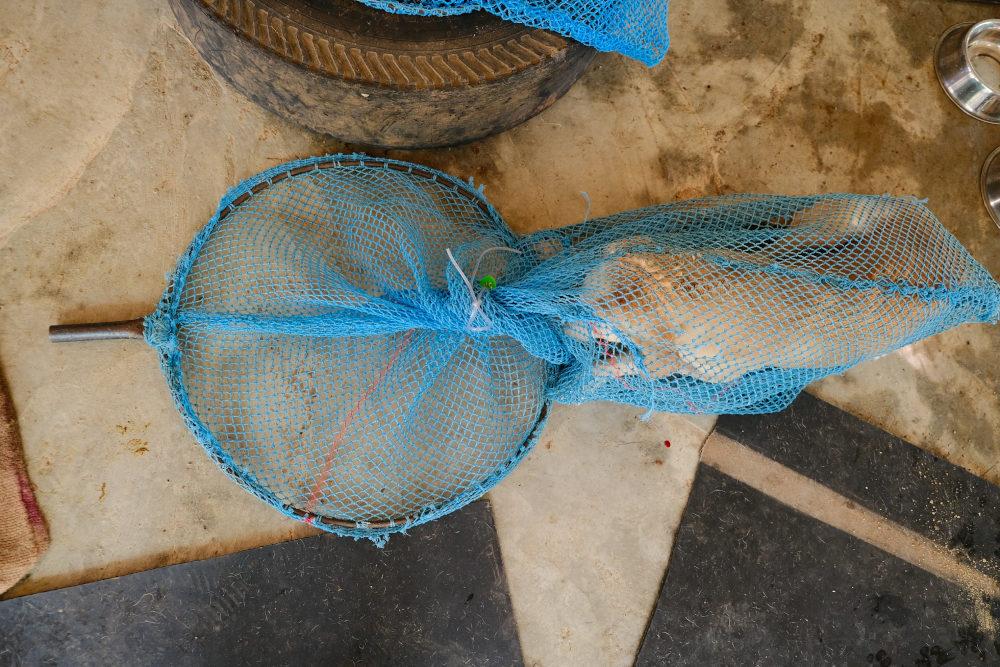
Ring nets include a circular metal hoop, with a tube of net material attached. They may be used to restrain dogs for injections, like sedating before spay/neuter surgery. They may also be used to catch and transport dogs, but this article will focus on their use as a restraint tool. We use ring nets as a last resort, when dogs are too anxious or aggressive, and other restraint tools such as slip leads and injection pillows aren’t suitable for use. Placing the dog in a ring net encloses and gently constrains the animal. This restraint offers several key benefits, but also some drawbacks.

Pros:
- Calming effect: Initially placing the dog into the net can be stressful, however once within the net, it surrounds the dog, creating a sensation like being cocooned, which can help to calm the dog. This can reduce stress and anxiety, and make handling more easy.
- Safety: The risk of bites through the net is greatly reduced, meaning handler safety is much improved.
- No neck restriction: Some dogs, especially free-roaming ones with no experience of being on a lead are aversive to pressure on their neck. This means that other restraint methods including slip leads, towels and catch poles will cause a great deal of stress. As the net envelopes the dog’s body, it can be less stressful for these dogs.
- Control without excessive force: The net restricts the dog’s entire body movement without applying excessive force, unlike equipment such as catch poles. This makes injections easier to administer.
Cons:
- Initial fear: When the net is first applied, dogs may react with fear or panic, increasing their anxiety until they begin to calm down.
- Limited access: Depending on how the dog is sat in the net, it may be tricky to inject at the preferred spot. Due to the net covering the body, there isn’t enough access to carry out procedures other than injections with the dog in the net. It is more to facilitate sedation before a procedure.
- Physical struggle: Large or strong aggressive dogs may struggle against the net, and may cause self-injuries before settling.
- Limited use: Very small dogs may not be constrained enough by the net, and some large dogs may not fit in the net.
Step-by-step guide
Handlers must apply the net correctly, to minimise the risk of stress and injury to the dog. During the process, stay calm to keep the dog relaxed, avoid sudden movements and ensure handler and dog safety are maintained, reducing stress and the risk of injury.
- Preparation: Inspect the metal ring and netting material for signs of damage prior to use. If the net is damaged the dog may be able to get its head or a leg out of the net, which may cause injury.

- Approach the dog calmly (side-on) and speak in a soothing tone. Avoid shouting or any sudden movements which might further stress the dog.
- Hold the ring with your dominant hand, holding the netting open with your non-dominant hand. Smoothly place the ring over the dog and lower it to the ground. Careful not to place the ring on the dog’s feet which would cause injury.
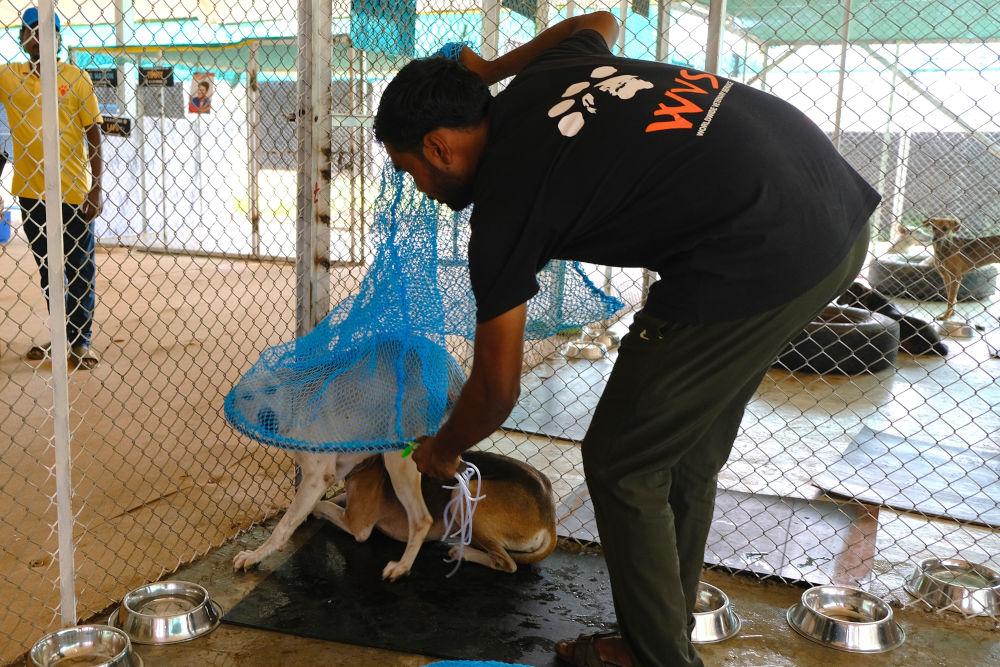
- If the dog is staying still you may inject from this point, otherwise gently encourage the dog to walk towards the bottom of the netting material. Do not pull the metal ring backwards to push the dog further down as this will scare and may injure the dog.
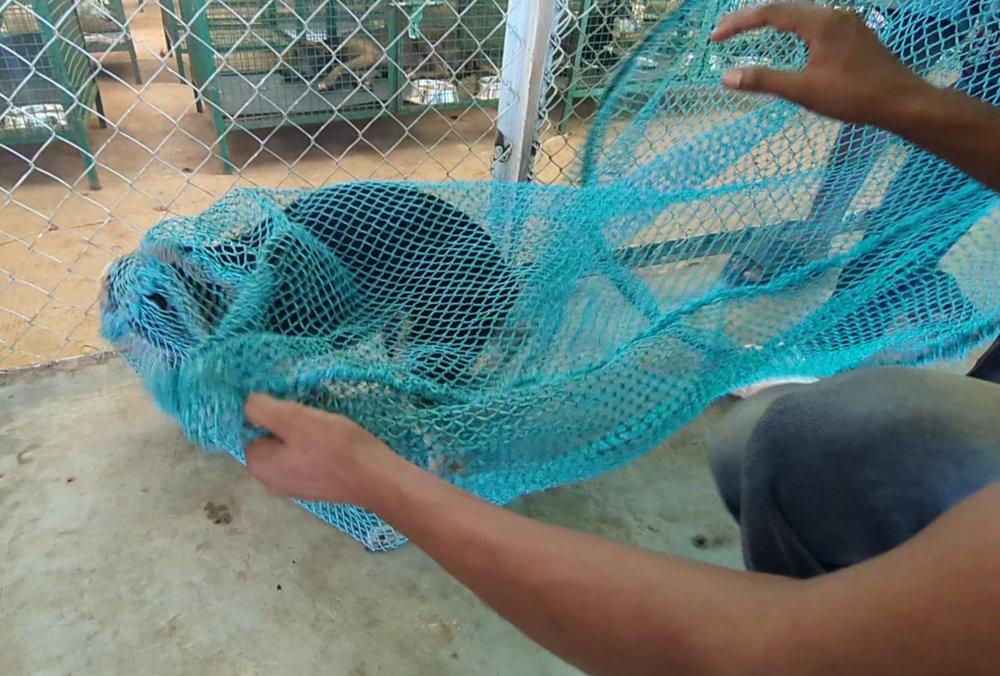
- Once the dog is fully inside the net, pick up the metal ring and twist in a circular motion, to secure the net shut around the dog. The net should be snug but not overly tight, ensuring restraint without discomfort or injury.
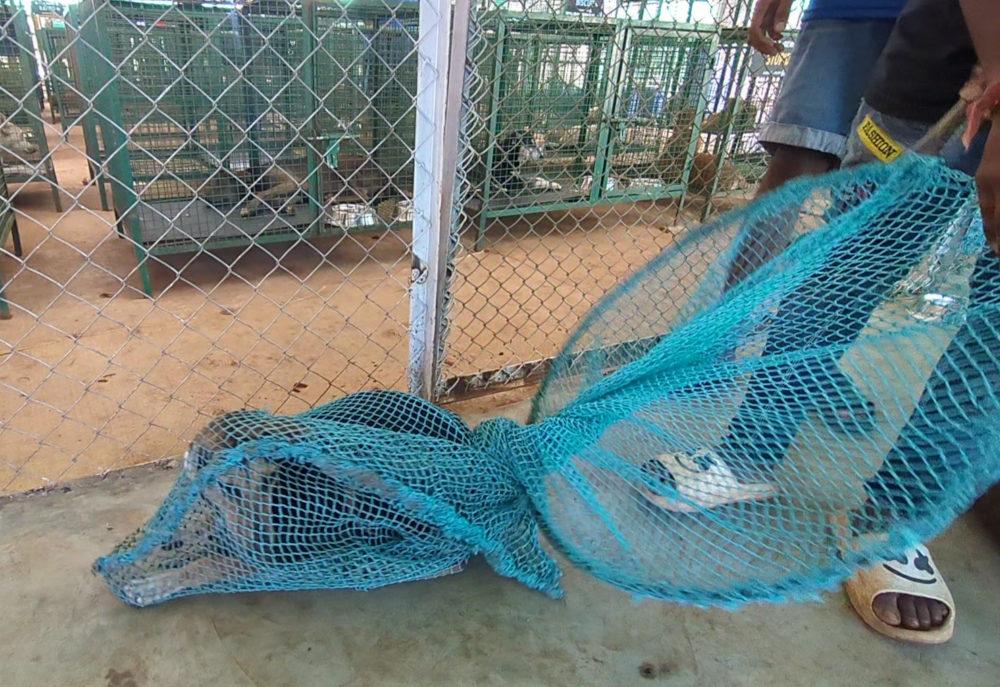
- With one handler holding the net secure, the clinician may inject the dog
Modifications: Some dogs may walk into the net of their own accord. For this, you may hold the net in front of the dog, encouraging them to walk into it. If the dog can be handled, you may pick the dog up and gently lower it into the net (hindlimbs first, with an assistant holding the net open). This is used more for transporting the dog, as if we can pick it up, we should be able to inject it without using a net.
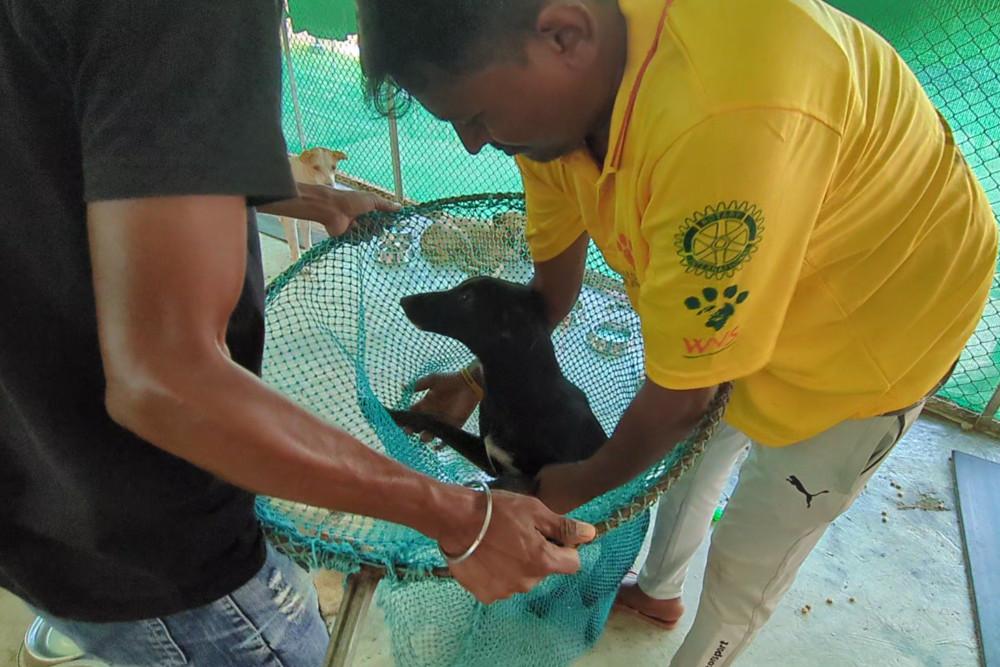
Carrying a dog in the net: To carry the dog, place it in the net in the same way, then lift the dog on top into the middle of the ring (rather than dangling underneath) to give the dog a better grip and allow it to maintain control whilst in the ring. Carry the dog gently in the net, to minimise the likelihood of scrapes and superficial injuries from the net material. Two members of staff are needed to transport dogs in ring nets.