

While many dogs do not need a muzzle to be handled, there are some situations in which the extra protection of a muzzle can be vital to keep everyone safe, including the patient. Muzzles are a useful tool when handling aggressive dogs for veterinary procedures when alternatives are not possible or safe.
It’s important to use muzzles correctly and to understand the contexts in which different types of muzzles should be used. There are various types of muzzles but they all work by preventing the dog from being able to bite. The most common types of muzzles are covered below:
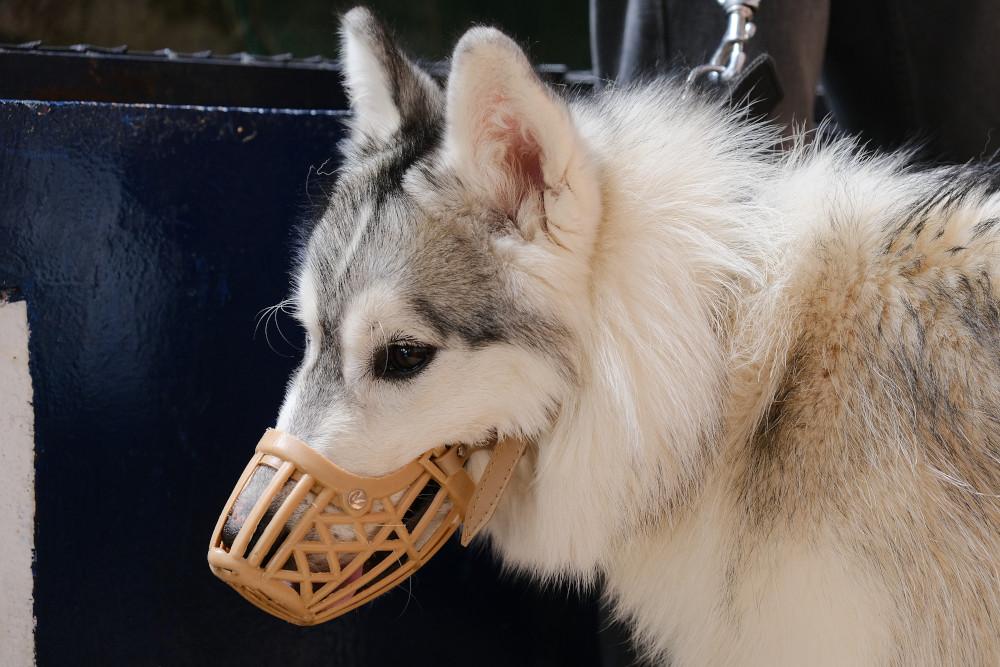
Box muzzles
These are basket-style muzzles, which allow the dog to open its mouth, pant, drink and sometimes eat treats. They are usually operated with a buckle strap which fastens behind the dog’s ears. If available, these are a great choice.
Pros: Allows for panting and drinking.
Cons: Good quality muzzles are more expensive, multiple sizes must be available and may take longer to get a secure fit.
Step-by-step:
- Select the correct size muzzle. The muzzle should fit comfortably around the dog’s snout, with some wriggle room for panting and drinking.
- Approach calmly. Slowly move the muzzle towards the dog, it may help to allow the dog to sniff the muzzle if the dog is not too agitated.
- Place the muzzle. Crouch beside the dog, holding the muzzle by the straps (to give you better reach and reduce the likelihood of being bitten as you put it on). Smoothly slip the muzzle over the dog’s nose and up. Don’t make sudden movements which may spook the dog, instead, you may reassure the dog with gentle words to help calm it down.
- Secure the muzzle. The strap should be buckled behind the dog’s ears.
- Check the fit. You must check the muzzle is secure and won’t slide off if the dog uses his/her paws against it. However, it shouldn’t be too tight (e.g. check that it isn’t digging into the skin over the nose). Observe that the dog is able to open its mouth and breathe/ pant easily.
During use, it is still important to avoid putting your fingers near the gaps in the basket to avoid being bitten.
Bandage muzzles
If a box/ basket muzzle isn’t available, a bandage muzzle can be considered instead. These are DIY muzzles, made from gauze or fabric, tied around the dog’s mouth and secured behind its ears to prevent the dog from opening its mouth, thus stopping the dog from biting handlers.
Pros: Inexpensive and material readily available. The dog’s mouth is secured shut, reducing the risk of injury.
Cons: You must learn how to apply the muzzle properly, and placement takes slightly longer. The dog isn’t able to pant or drink whilst wearing it, so these must only be used for a few minutes e.g. for a quick procedure such as an injection. They can be moderately uncomfortable for the dog. Whilst biting is largely restricted due to keeping the mouth shut, some dogs may still be able to bite (e.g. with the incisors) due to the slight flexibility of the fabric, so care must still be taken while handling. The dog must be kept in an enclosed area, particularly free-roaming dogs. If the dog escapes with the muzzle on, it will not be able to eat or drink and may die if it’s unable to get the muzzle off.
See our video below for a step-by-step guide to placing a bandage muzzle:
- Take clean material; either bandage, gauze or fabric. 3-feet long is ideal for a medium-sized dog.
- Tie a basic loop in the middle of the bandage and keep it loose, this will allow us to slip it over the dog’s mouth whilst maintaining distance to prevent being bitten.
- Gently slip the knot over the dog’s snout and tighten it with the knot on top of the nose.
- Cross the bandage ends under the dog’s chin and tie a single knot.
- Bring the ends back up behind the dog’s ears.
- Tie the two ends into a bow-knot at the back of the dog’s head.
- Ensure the muzzle is snug but not too tight.
Never leave the dog unattended whilst wearing the muzzle.
Disinfect the muzzle after each use, to prevent the spread of infectious diseases like distemper and parvovirus.
Fabric muzzles
Fabric muzzles are commercially available, similar to bandage muzzles in that they keep the dog’s mouth closed but they are easier to apply. They contain soft but durable material, placed on the dog’s snout, and fastened with a clip at the back of the head. They are suitable for short-term restraint during veterinary procedures.
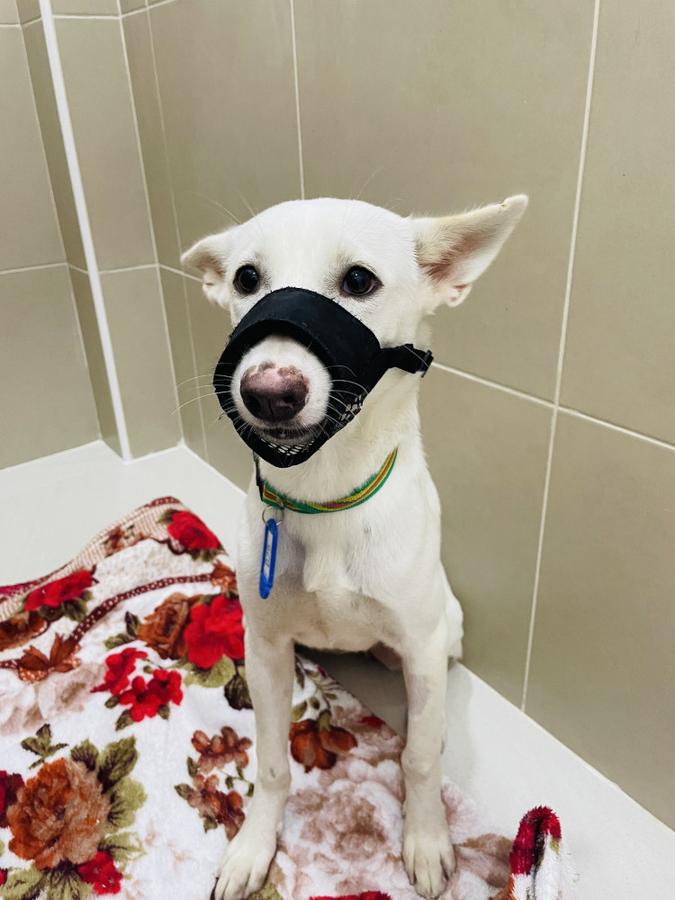
Pros: Easy to apply, fairly comfortable for the dog, widely available.
Cons: hey can only be used for short periods (dog cannot eat or drink), a number of sizes must be readily available and choosing the correct size may be time-consuming. These muzzles may also cause stress to the animal. Fabric muzzles also tend to be less durable than box muzzles.
Step-by-step guide. The application of fabric muzzles is much the same as the box muzzle, aside from a few differences:
- The muzzle should be snug but not overly tight, the dog should not be able to open its mouth.
- Fabric muzzles are often secured shut with a clip rather than a buckle.
- Check the muzzle doesn’t restrict the dog’s breathing.