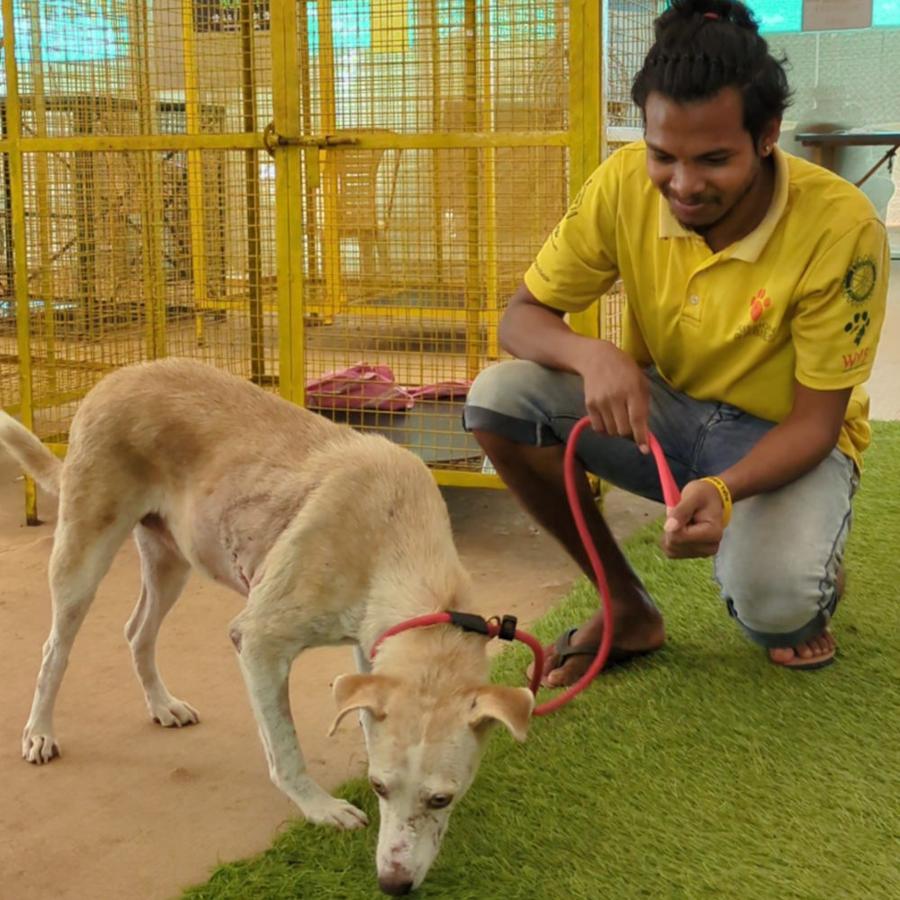
Slip leads are an easy to use and versatile method of restraint, combining collar and lead into one, and giving the handler control of the dog with relatively low-stress, particularly if the dog has been previously accustomed to wearing a lead.
Pros: Quick to apply, easy to use and provides good control. Also less stressful than harsher means of restraint (catch-pole) as slip leads tend to be fairly soft, with many dogs sensitised to wearing a lead and thus not averse to slip-lead usage.
Cons: May tighten if the dog moves away, which can be uncomfortable. Dogs who have not been on a lead before may be more stressed due to pressure on the neck.
Step-by-step:
- Take the lead and open to ensure a wide loop.
- Approach the dog calmly, side-on to be non-confrontational.
- Hold the top of the loop (at the ring) in your dominant hand. Orient the lead correctly, which is different with the dog on your left or right side. The lead will go from your hand, through the loop, over the dog’s neck and then the end of the lead will loop back under the dog’s neck. This ensures the lead can tighten and loosen easily. The other way around would make the lead tighten excessively. See the images below for how to correctly orient the lead.
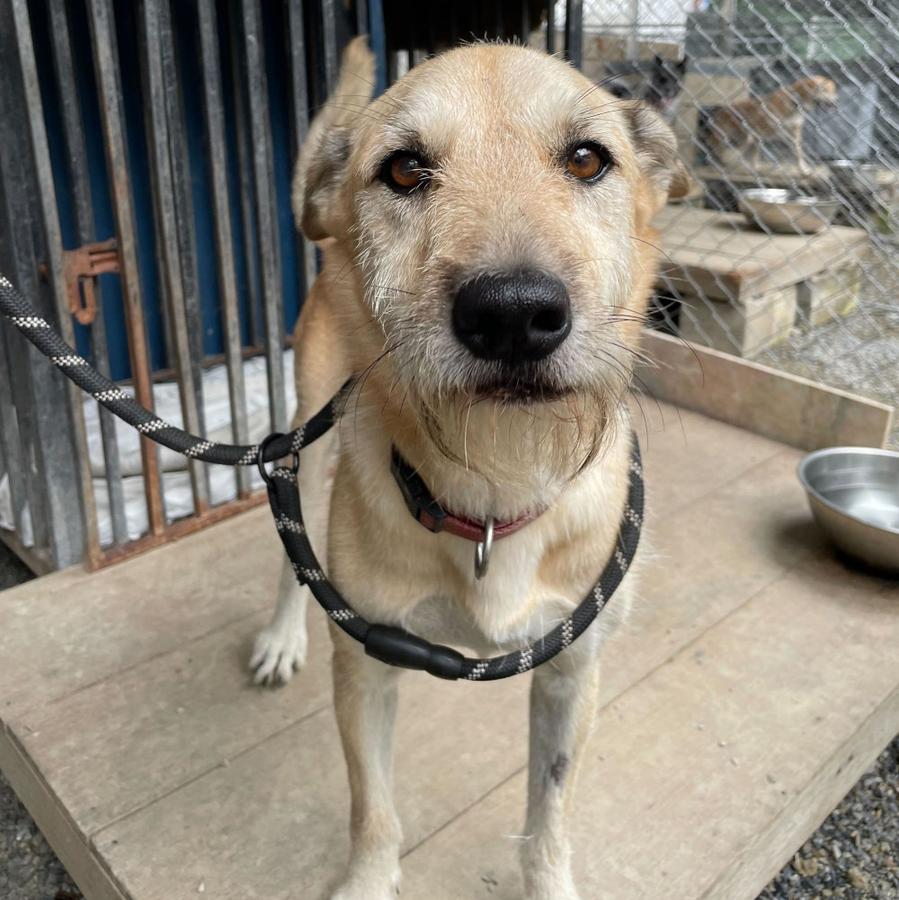
- Hold the end of the lead with your non-dominant hand.
- Pass the loop over the dog’s head in one smooth motion.
- Pull the end of the lead to tighten the loop and make it snug on the dog’s neck, but ensure it is not too tight which would be uncomfortable and risk choking the dog. Slide the adjustable stopper down, close to where the loop is, to prevent it from loosening too much. Again ensure it is not too tight.
- Use the lead to guide the dog, with gentle pressure. Ensure positive reinforcement and not punishment are used to maintain control of the dog.