

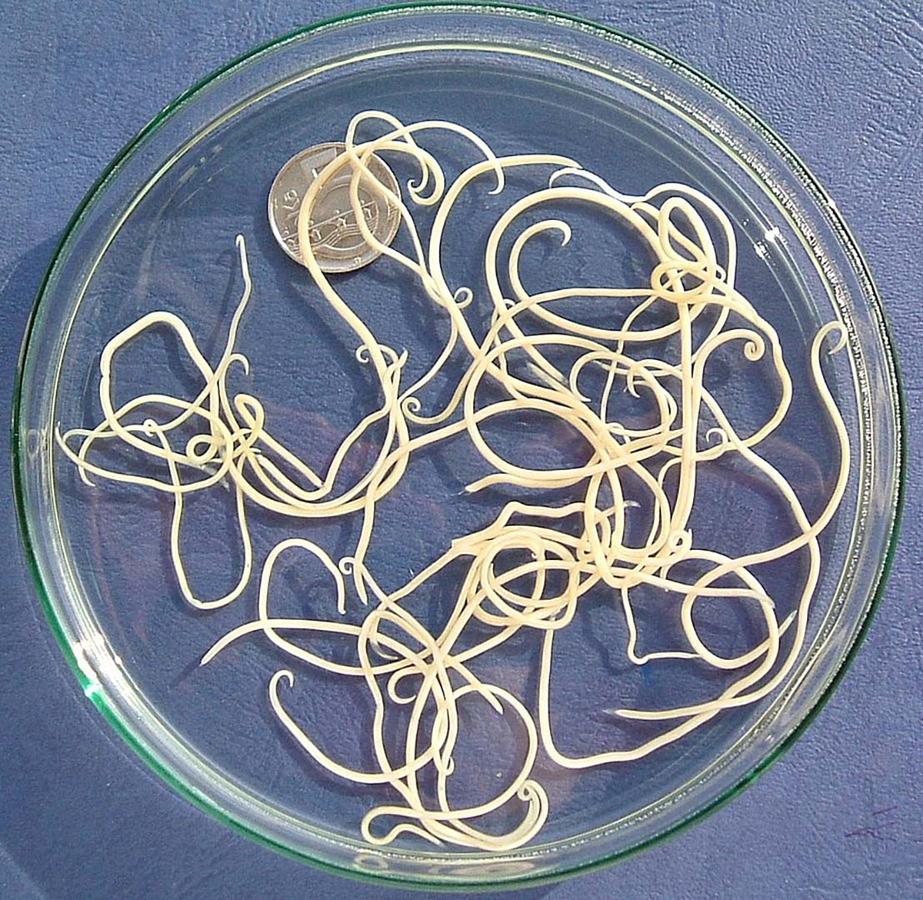
There are limited drug classes available to treat equines against endoparasites (those which occur internally; figure 1) and resistance is developing among all of these anthelmintics. Indiscriminate use of ‘wormers’ among equine owners is common practice. Vets, paraprofessionals, suppliers and owners need to understand and apply the principles underlying the treatment of endoparasites.
📚 For equines in the UK and temperate climate zones these guidelines should be followed
In tropical climates where there are distinct wet and dry seasons rather than spring/summer/autumn/winter, the life cycle of parasites follows a different pattern. Formal guidelines are not yet available for these zones, so a pragmatic approach can be followed which is also included below.
This article covers:
- The problems with anthelmintic over-use
- Non-chemical methods to reduce parasite loads on pasture
- Testing to determine which parasite and what burden is present
- Risk profiling to determine anthelmintic use
- Suggestions for anthelmintic use in tropical zones/working equine populations
- Suggestions for anthelmintic use in young equines and donkeys
- Drugs available to treat endoparasites in equines
The problems with equine anthelmintic over-use
Resistance; the parasites are developing resistance to the classes of drugs available, in some cases multi-drug resistance has been noted. Individual equines and herds are then vulnerable to severe parasitic infections, especially the young, geriatric , immunosuppressed and overworked.
Welfare; the welfare of the equines and the communities that rely upon them financially is reduced if parasites cannot be managed and the equine work output is reduced.
Cost; there is considerable cost in purchasing anthelminitcs and using them in a non-evidence based manner. Financial savings can be made when drugs are used only when needed.
Environmental*; anthelmintics are potent chemicals, and are excreted through the faeces and urine of treated animals. The chemicals are highly toxic to invertebrates in the soil and water, including to dung beetles that are responsible for degredation and recyling of nutrients. Companion and street dogs can be affected by accidental ingestion of anthelmintics and recently treated equine faeces.
* After administration:
- Fenbendazole and Pyrantel are detectable in equine faeces for 72 hours
- Ivermectin is detectable in equine faeces for up to 40 days
- Moxidectin is detectable in equine faeces for up to 75 days
Ecosystem - as the local environments are degraded the wider ecosystem is affected, there is loss of soil fertility, reduced carbon sequestration and damage to aquatic life, all of which have major consequences.
⚠️ The faeces of treated equines should be kept away from watercourses for up to one week
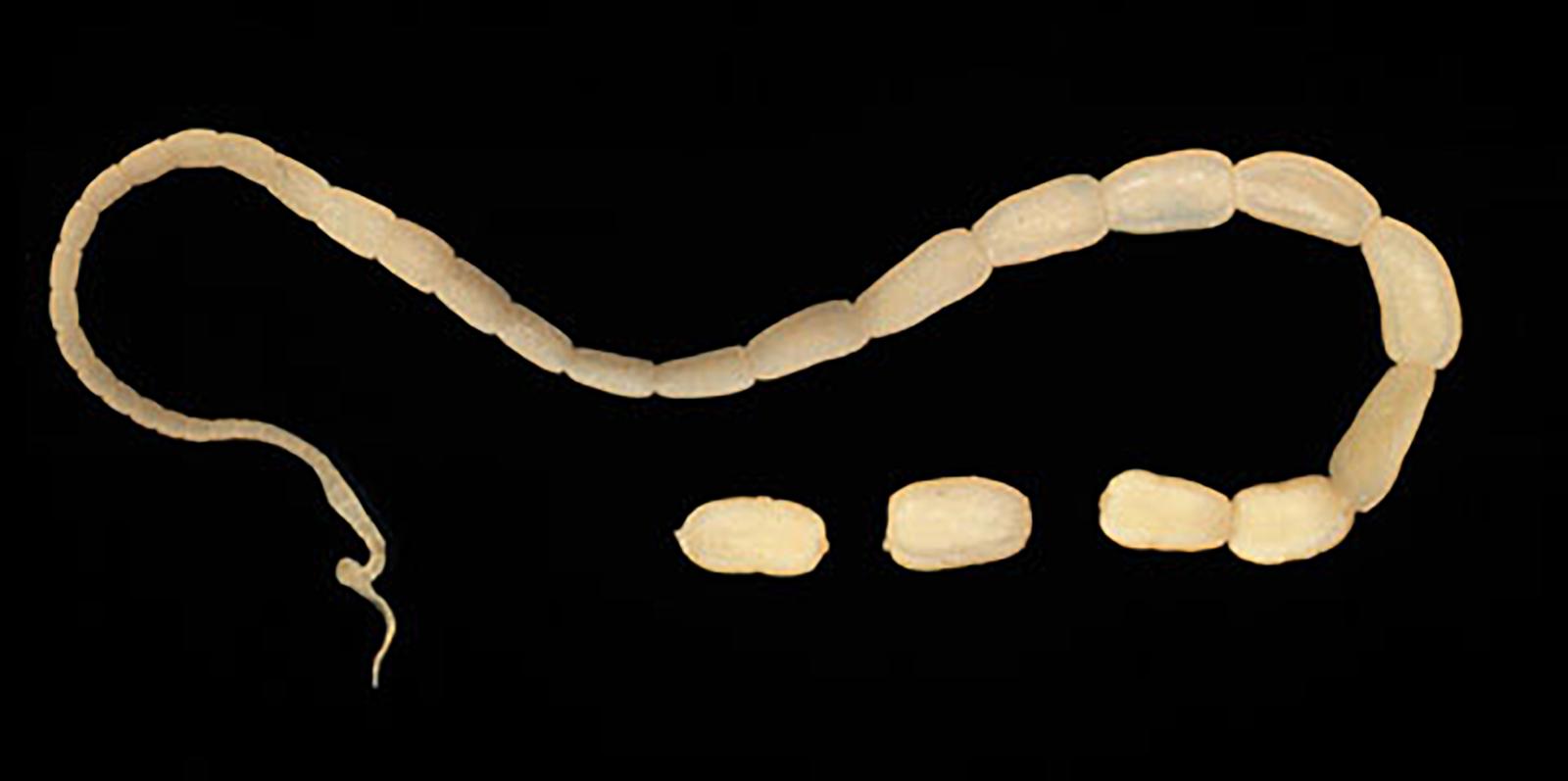
Non-chemical methods to reduce parasite load on pastures
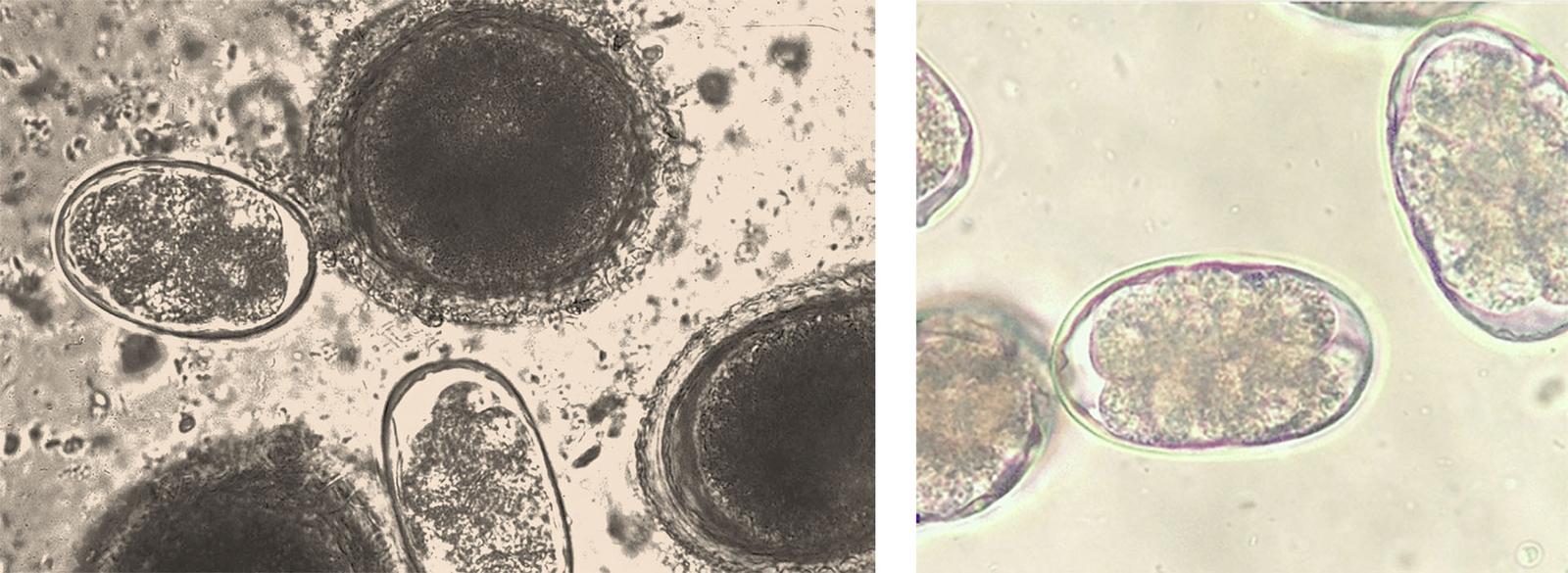
All equines live with a number of endoparasites which are ingested from pasture and passed out in faeces. The aim is not to have zero endoparasites as this would lead to an immunologically naive equine, but to have a reasonable balance between host and parasite. Some equines shed high numbers of eggs in their faeces (figure 3) - these ‘high shedders’ typically are around 20% of a horse herd, or 40% of a donkey herd. Our aim as vets and paraprofessionals is to ensure that we identify and treat equines that pass high number of eggs, to reduce pasture contamination and the risk of parasite associated disease in vulnerable animals.
For equines under typical grazing systems in temperate countries a variety of methods can help reduce the amount of infective larvae on pasture:
- Reduce the number of grazing equines; with lower stocking densities there will be fewer parasites on pasture
- Remove faeces from pasture once a week at minimum, twice a week at >25°C, as parasites hatch faster in warm weather
- Rest pastures; if pastures are rested for at least 6 months this will reduce infection pressure as some larvae will die off
- Co-graze with ruminants but check for liver fluke in the ruminant herd; ruminants ingest many equine parasites but do not pass them in their faeces
- Compost faeces at high temperatures to kill larvae; do not spread poorly composted faeces over pasture to be grazed
- Situate muck heaps away from grazing and water courses to avoid parasite migration on to pasture and chemicals from treated faeces entering water courses
- Monitor using faecal egg counts (FEC) allows identification of equines that are “high shedders” of parasite eggs, these can be treated more intensively than “low shedders”, which can help avoid unnecessary treatments.
Testing to determine which parasites - and what burden - is present
There are many parasites in horses, some of the most important are covered here.
Strongyles are the major class of endoparasite of concern. Large strongyles numbers are reduced in populations where macrocyclic lactones (see table 2) have been used, and small strongyles tend to be more prevalent. FEC usually refer to strongyle egg counts, but which cannot differentiate between large and small strongyles.
Dispersion of parasites; in horse populations 20% of the individuals in a herd are responsible for 80% of the strongyle egg output. In donkeys 40% of individuals are responsible for 80% of the egg output.
Faecal egg counts should be used to find the equines that have higher egg outputs who can then be targeted for treatments. FEC do not indicate clinical disease and should not be used for this purpose; they are an indicator of which equines contaminate pasture more.
Faecal Egg Count Reduction Test (FEC-RT) to assess the efficacy of an anthelmintic a faecal egg count is performed before and 10-14 days after worming. Levels of >95% egg reduction for Ivermectin/Moxidectin and >90% for benzimidazoles and pyrantel should be seen; lower than this indicate a reduction in efficacy of the wormer.
Treatments
Targeting treatments in certain individuals allows a reduction in total anthelmintic use, and leaves untreated parasites in some equines that dilute the number of resistant parasites present. Faecal egg counts (FEC) are used to measure the strongyle faecal egg output of an individual. Faeces must be fresh and samples sent in air tight bags to be analysed. Eggs hatch in warm weather so samples need to be kept cool and checked within 5 days.
- Small strongyle blood test; if available, this detects the presence or absence of antibodies to small strongyles. This is however, unreliable as an indicator of risk and is more useful in deciding whether to use larvicidal anthelmintics at certain times of the year
- Tapeworm testing; in horses a salivary antigen test is available although this has not been validated in donkeys. Eggs can be found in faeces using a modified technique for donkey testing
- Oxyuris/pin worm testing; sellotape strip test around the perineum are used to detect oxyuris eggs, which adhere to the tape and can be identified under the microscope
- Liver Fluke testing; faecal testing is required there is no blood test in equines
- Parascaris testing; faecal testing is required
In mature equines it is recommended to monitor FEC for strongyles throughout the grazing season on at least 2 occasions. New equines should receive a full profile to check for all parasites and be quarantined and/or treated prior to joining a herd. Donkeys, youngstock and immunosuppressed equines can harbour Parascaris even when they are adults so they should be included in the testing.
Risk profiling to determine anthelmintic use
One of the most effective ways to reduce anthelmintic use is to decide the level of risk for parasite excretion in an individual equine on a regular basis. Risks change; e.g. it will be highest in foals, and as animals age and lose protective immunity. Animals kept in large herds on tightly grazed pasture have higher risk. When we know the risk category, the results of testing, and the drugs available we can make informed choices about which anthelmintic to use and when. Risk tables (table 1) helps with decision making around risk categories for managing anthelmintic treatments, and should be used with the results of available history, management and any test information.
| Risk factor | Low | Medium | High |
|---|---|---|---|
| Clinical History | No history of parasite associated disease in 24 months | Suspected subclinical history of parasite associated disease- weight loss, mild colic | Confirmed history of parasite associated disease in 24 months |
| Age | Adult age 5 to 20 years | Adult 5-20, some stressors, work/nutrition/comorbidity/PPID | <5 or >20 year/PPID |
| Number of horses | Low stocking density > 2 acres(0.8 hectare) /horse | Medium stocking density 1-2 acres (0.4-0.8 hectare/horse) | High stocking density <1 acre (0.4 hectare/horse) |
| Tests | Low FEC <200epg Tapeworm, antigen test low FEC RT shows efficacy | FEC 200-500 epg Tapeworm antigen test above low. FEC RT shows efficay | FEC high >500 epg Tapeworm antigen test above low FEC RT shows lack of efficacy |
| Environment | Closed herd, restricted grazing, good pasture management- resting, poo picking | New equines admitted with inconsistent quarantine. Moderate pasture management. Some poo picking | Fluctuating movement in and out with no quarantine. Poor pasture management |
Table 1 Risk of an individual equine having potential to pass parasites in faeces (adapted from the CANTER guidelines)
Suggestions for use of anthelmintics in tropical zones/working equine populations
In working equine populations there are less likely to be tools to measure faecal egg counts, but they may be possible to perform as part of a project. Many adult working equines live with significant burdens of parasites; extra stress may weaken their immune system and casue them to succumb to parasite-associated disease. Stressors typically include overwork, poor nutrition, pregnancy, lactation and infectious disease. Young animals are particularly at risk, so foals and pregnant mares should be targeted for treatments.
Strongylus vulgaris is more likely to be present in populations that have not had Macrocyclic lactone (tabel 2) anthelmintic use. Parascaris is more likely to be seen in immunosuppressed adult horses and donkeys, not just confined to foals. In climates with a wet and dry seasonality, larvae are less likely to survive in the dry season, so a targeted worm dose before the wet season will reduce egg output when new grazing comes through.
Dispose of anthelmintic syringes carefully - there is often poor waste disposal and left-over chemicals enter village rubbish heaps or watercourses.
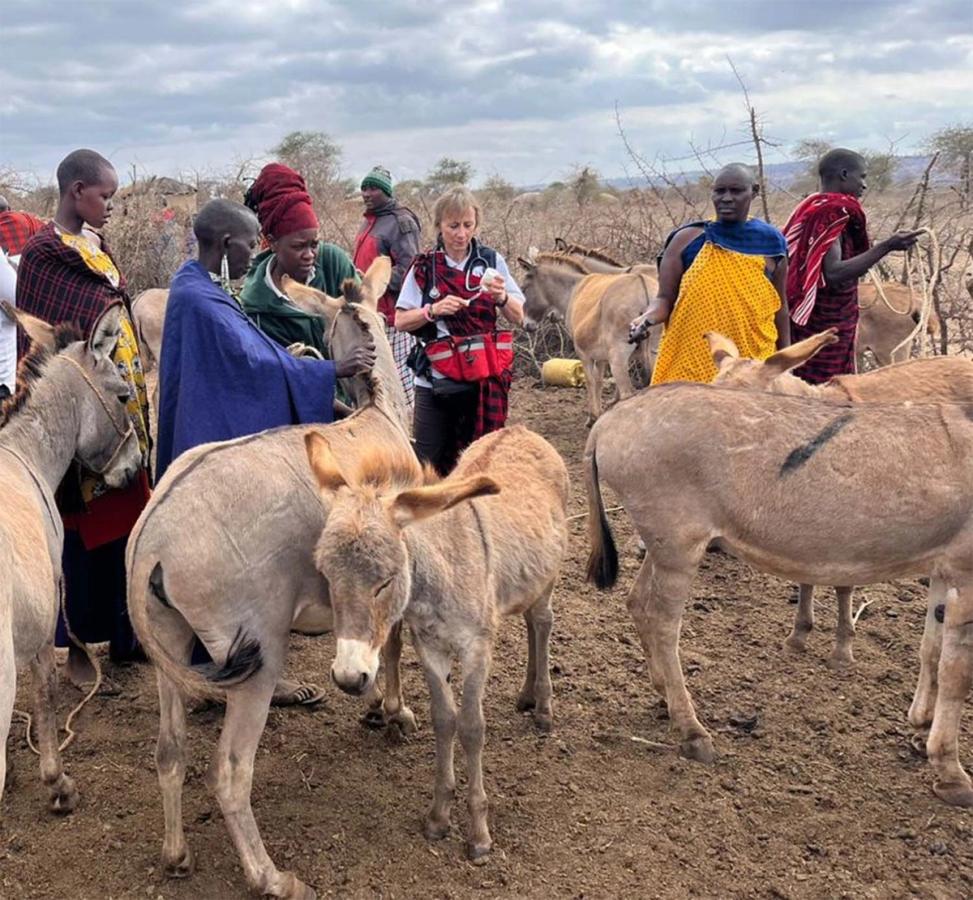
Where possible discourage mass deworming of healthy adults (figure 4)
Suggestions for anthelmintic use in young equines and donkeys
Donkeys
Donkeys are often neglected in worming programmes, and may show fewer clinical signs in the early stages of parasite associated disease. Colic signs can be hard to detect and diarrhoea is less common even with infection with small strongyles ('cyathostomiasis').
In the UK only Fenbendazole, Pyrantel and Ivermectin are authorised for use in donkeys; other drugs can be used under the cascade guidelines.
Parascaris is found in adult donkeys so testing should continue beyond youngstock when new arrivals are being considered.
Lungworm reach patency in donkeys so testing is by sedimentation of faeces using the Baermann technique to detect larvae. Clinical signs are mild or non- existent.
Liver fluke are found in donkeys co grazing with ruminant, testing is by sedimentation of faeces using the Proudman technique.
Horse and donkey foals
Foals are a special group; they can deteriorate rapidly when sick, and may have low body weight making careful dosing of wormers essential.
💡 Be careful with young foals and emaciated animals; do not use Moxidectin in foals under 4-6 months.
2-3 months old: Treat with fenbendazole to remove Parascaris. The parasite does not reach patency until 10 weeks meaning faecal egg counts are unlikely to be useful. There is resistance to Fenbendazole so if it is available use local knowledge to decide whether to use this.
4-9 months old: Monitor FEC for cyathostomes and check efficacy of parascaris treatment. Use Fenbendazole or Ivermectin. Moxidectin should not be used in equines under 4 months or if they are emaciated with low body fat, and there is little evidence of a need for larvicidal treatments at this age. Test for tapeworm from 6 months and treat if needed with a double dose of fenbendazole.
9-12 months old: Continue with FEC and if this is high in the autumn it is prudent to use larvicidal treatment annually until 3 years old as this age group can be at higher risk of disease than older animals
Common anthelmintics and recommended doses to treat endoparasites in equines
Table 2 lists many of the available anthelmintics. These come under a variety of different trade names and the vet prescribing their use must check the drug, and dose carefully according to instructions. The material presented here must be checked against availability, and licensed use in-country. This table is for vets and paraprofessionals to help with advice and discussions with owners.
In many countries it is easy for owners to access and purchase wormers without veterinary advice. This practice leads to equines being wormed without regard for worm burden or species of worm and is a driver for worm resistance to the available chemicals.
| Drug class | Drug name | Drug dose | Comments |
|---|---|---|---|
| Benzimidazoles | Fenbendazole | 7.5mg/kg oral (Large and small strongyles, Oxyuris, Parascaris, strongyloides) | Widespread resistance to these drugs. Check after use by FEC. Safer for parascaris infection due to slow death of parasites and reduced risk of GI blockage |
| Benzimidazoles | Mebendazole | 8.8mg/kg oral (Large and small strongyles, Oxyuris, Parascaris, Strongyloides) | Widespread resistance to these drugs. Check after use by FEC . Safer for Parascaris infection due to slow death of parasites and reduced risk of GI blockage |
| Isoquinolone | Praziquantel | 1.5mg/kg oral Anoplocephala perfoliata (tapeworm) | Generally sold as a combination product with Ivermectin or Moxidectin |
| Macrocyclic lactones | Ivermectin | 0.2mg/kg oral (Large and small strongyles, Lungworm, Parascaris, Strongyloides, Bots) | Resistance developing especially against Parascaris. Not effective against Anoplocephala perfoliata |
| Macrocyclic lactones | Moxidectin | 0.4mg/kg oral (Large and small strongyles, Lungworm, Parascaris, Strongyloides, Bots) | Do not use in foals under 4 months, or under 6 months if combined with praziquantel. Resistance emerging. Do not use it in emaciated animals or those with low fat reserves. Be careful with weight measurement to ensure accurate dosing Not effective against Anoplocephala perfoliata |
Table 2 Available anthelmintics and suggested dosages; check country-specific regulations for further information