

Horses can show dramatic signs of pain and be dangerous to handle. Always ensure that examiners and handlers are in a safe place when examining painful equines. A small enclosed space can be hard to escape from, and handlers may need to wear suitable PPE (hard hats and good footwear at a minimum).
This article looks at
- General indicators of pain
- The use of pain scales
In all cases our duty as vets or paraprofessionals working with horses is to alleviate the pain and improve welfare for our patients.
⚠️ Be aware of the threat of rabies in endemic areas in equine showing extreme dullness or aggression
General indicators of pain
Pain is an unpleasant sensory experience that animals want to escape from and alleviate. In some cases it can be protective - such as when a horse with a fracture stands still, but in other cases the horse’s response to pain can create further injuries e.g. rubbing an inflamed eye.
We assess pain by observation of behaviour, and measuring physiological variables - temperature, pulse, respiration, sweating, passing faeces etc.
💡 In all cases it is vital that the owners of the horse are able to recognise pain signs and seek assistance when it is present
General behavioural responses
These tend to reflect the patients’ stress responses of Flight or Fight; they want to escape the painful focus but are frustrated by being unable to do so
- Agitation; excitement, restlessness
- Depression; dullness, apathy
- Appetite change; increase chewing, decrease eating, sham eating (where eating and drinking are mimicked but nothing is actually ingested), anorexia
- Aggression; pain can create aggression towards handlers especially if they wish to examine the source of pain.
- Self trauma; particularly with wounds, skin disease, ocular disease and from colic pain
- Gait abnormality; lack of movement, recumbency
Specific behavioural responses
These will depend on the area affected and can include:
- Limb/ back pain; lameness, toe pointing, resting leg, short stride, unwilling to work, resistant to saddle or rider
- Wound pain; hard to harness, slow to work
- Oral pain; lack of acceptance of bit, pulling on the bit, headshaking, rubbing, dropping feed, head shy
- Eye pain; squinting, tear overflow, unwilling to open eyelids, rubbing face, head shy
Pain scales
The number of ways to measure pain can seem overwhelming; the use of pain scoring charts can be helpful to assess and monitor pain. These scales have been validated using large populations of horses. They are especially useful to document changes in pain and monitor the use of analgesics and interventions. There are two types of scale which can be included in the same scoring outcome for that patient; Composite and Facial / Grimace Pain Scales.
💡 Working equines may have reduced behavioural signs due to exhaustion, overwork and being 'switched off' from their environment. This means that we must be more careful in our assessment and mindful of their whole working pattern. Pain may be more severe after work, but they may be too exhausted to show this
Composite pain scales
These pain scales assess a number of overall parameters that include behaviour, clinical signs and posture:
- Pawing
- Tail twitching
- Circling in stall
- Flaring nostrils frequently
- Frequent head shaking
- Repetitive behaviours
- Frequent weight shifting
- Rocking to-and-fro
- Stamping
- Rolling
- Flank watching
- Flank biting
- Teeth grinding
- Kicking at abdomen
- Grunting
- Thrashing
💡 Tail twitching, head shaking and flank biting need to be assessed in the absence of insects or other stimulus
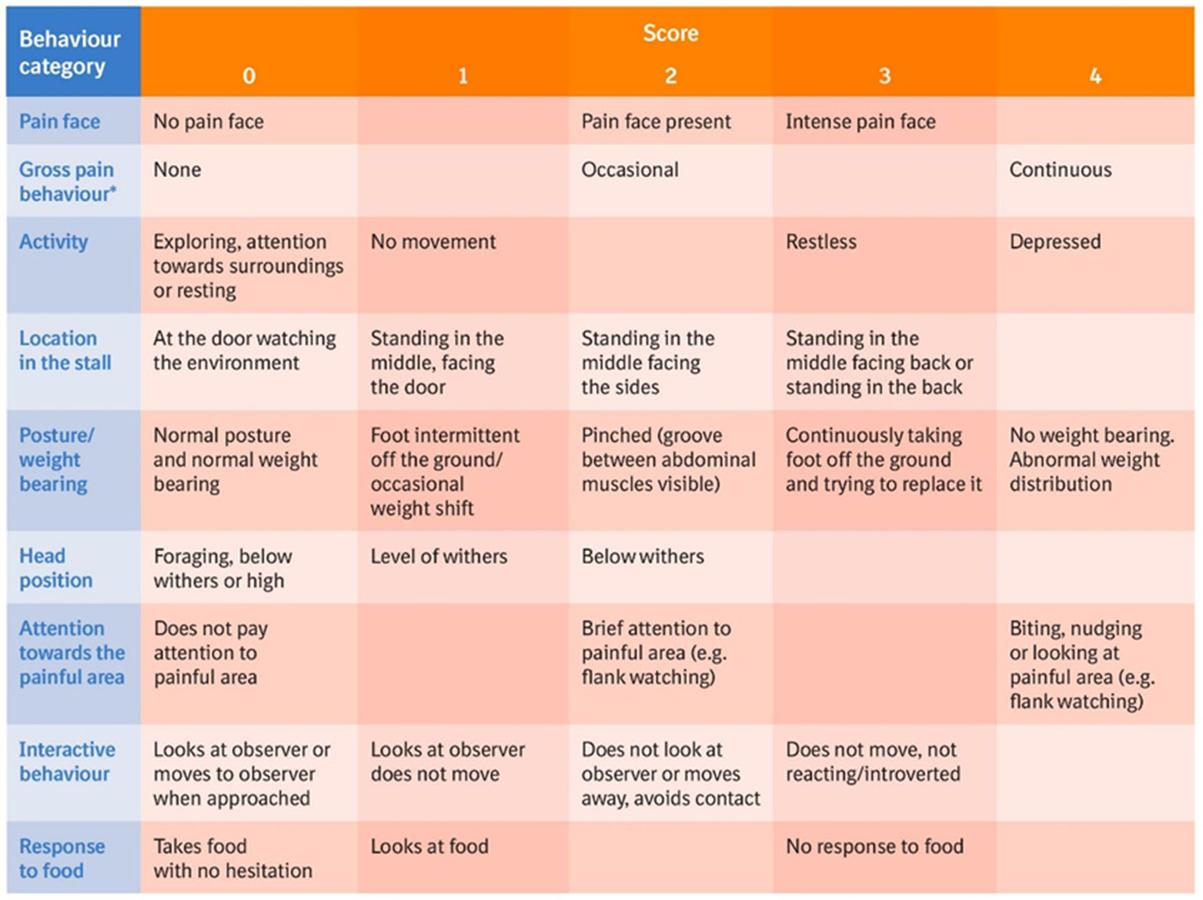
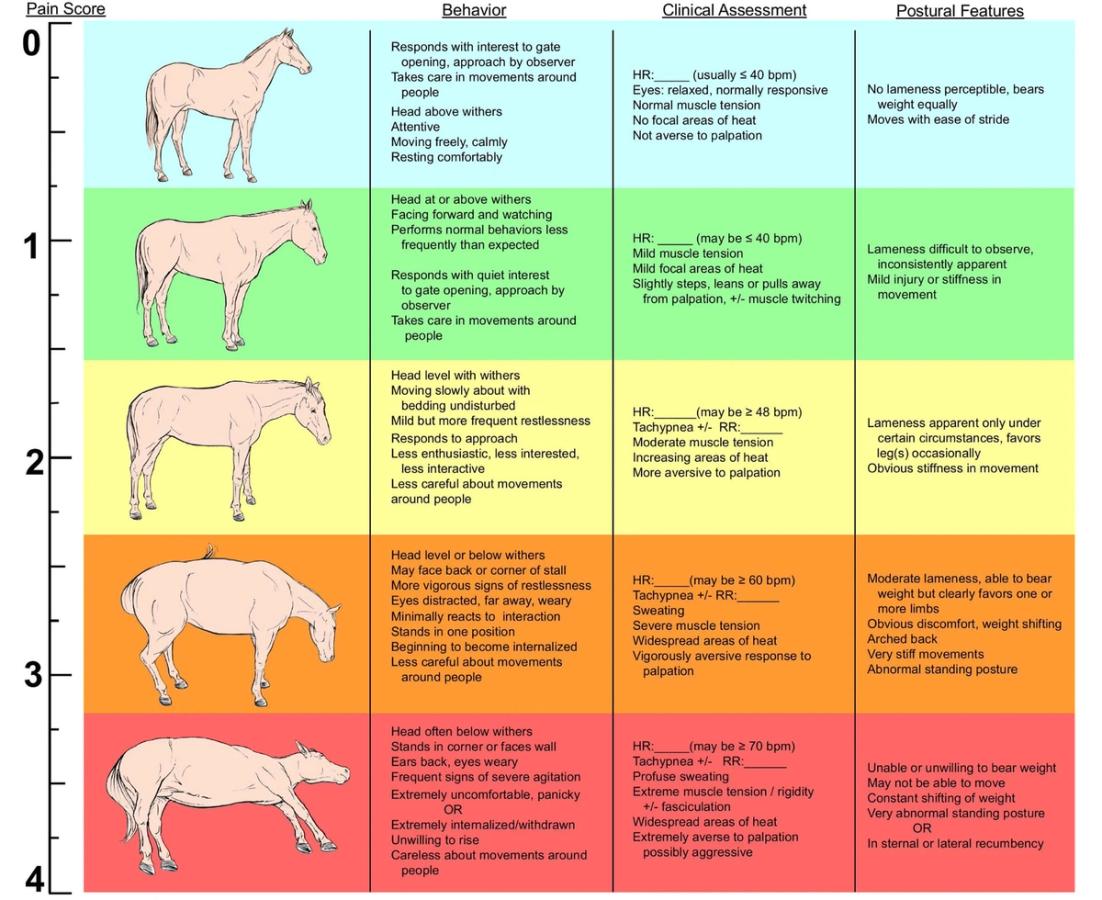
List of Behavioural Descriptors:
- Pawing
- Tail twitching
- Circling in stall
- Flaring nostrils frequently
- Frequent head shaking
- Repetitive behaviours
- Frequent weight shifting
- Rocking to-and-fro
- Stamping
- Rolling
- Flank watching
- Flank biting
- Teeth grinding
- Kicking at abdomen
- Grunting
- Thrashing
Palpation reactions:
- Splinting
- Muscle twitching
- Biting
- Striking
- Kicking
- Hyperalgesia
‘Pain Face’ or ‘Grimace’ scales
Evaluating the facial expression of the horse should be done while the horse is undisturbed. Look at the horse symmetrically; start with the ears, then the eyes, the lower head and finally evaluate the facial expression as a whole. In most cases more than one feature of the pain face is present when a horse is in pain.
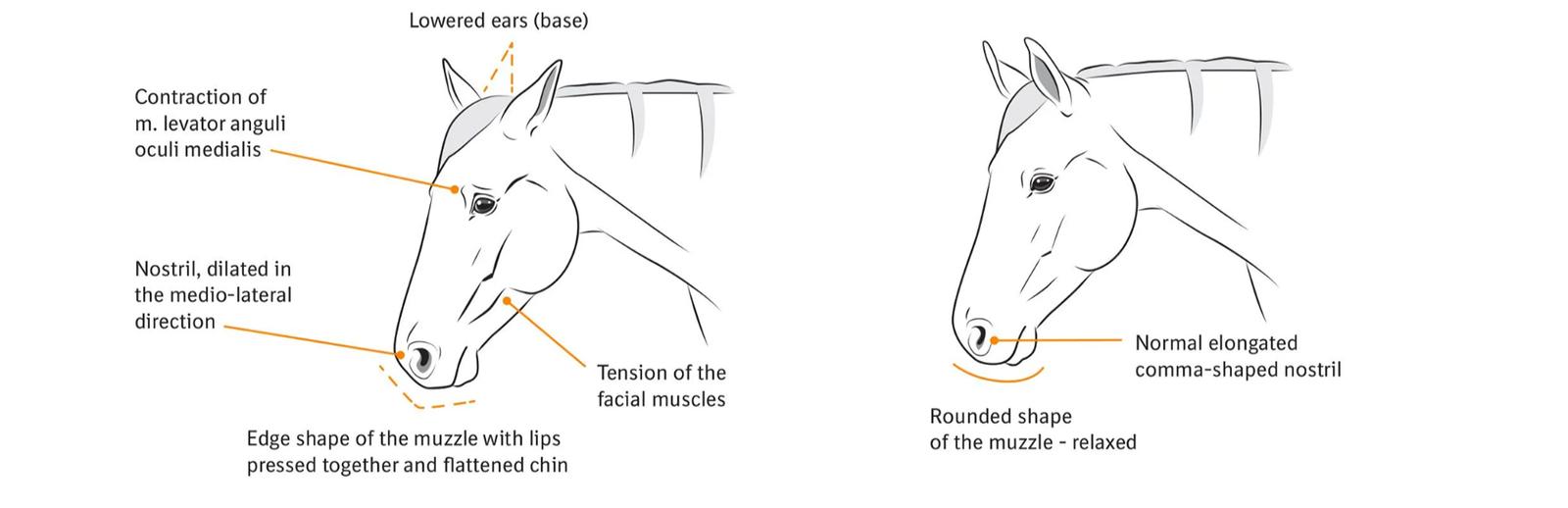
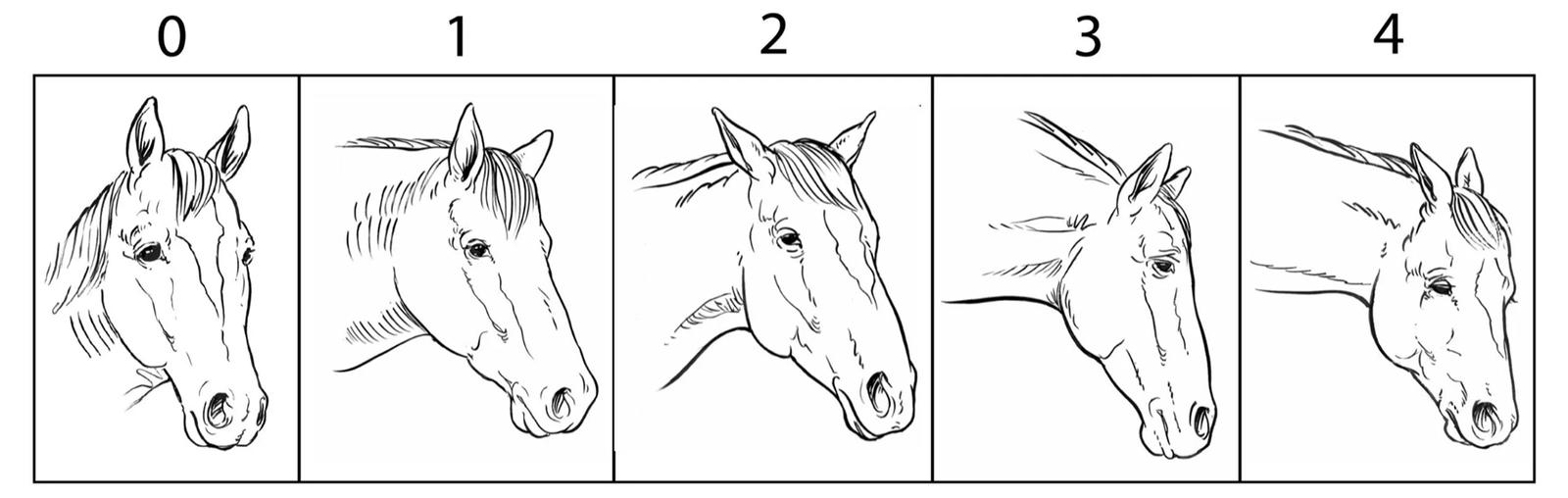
Scoring
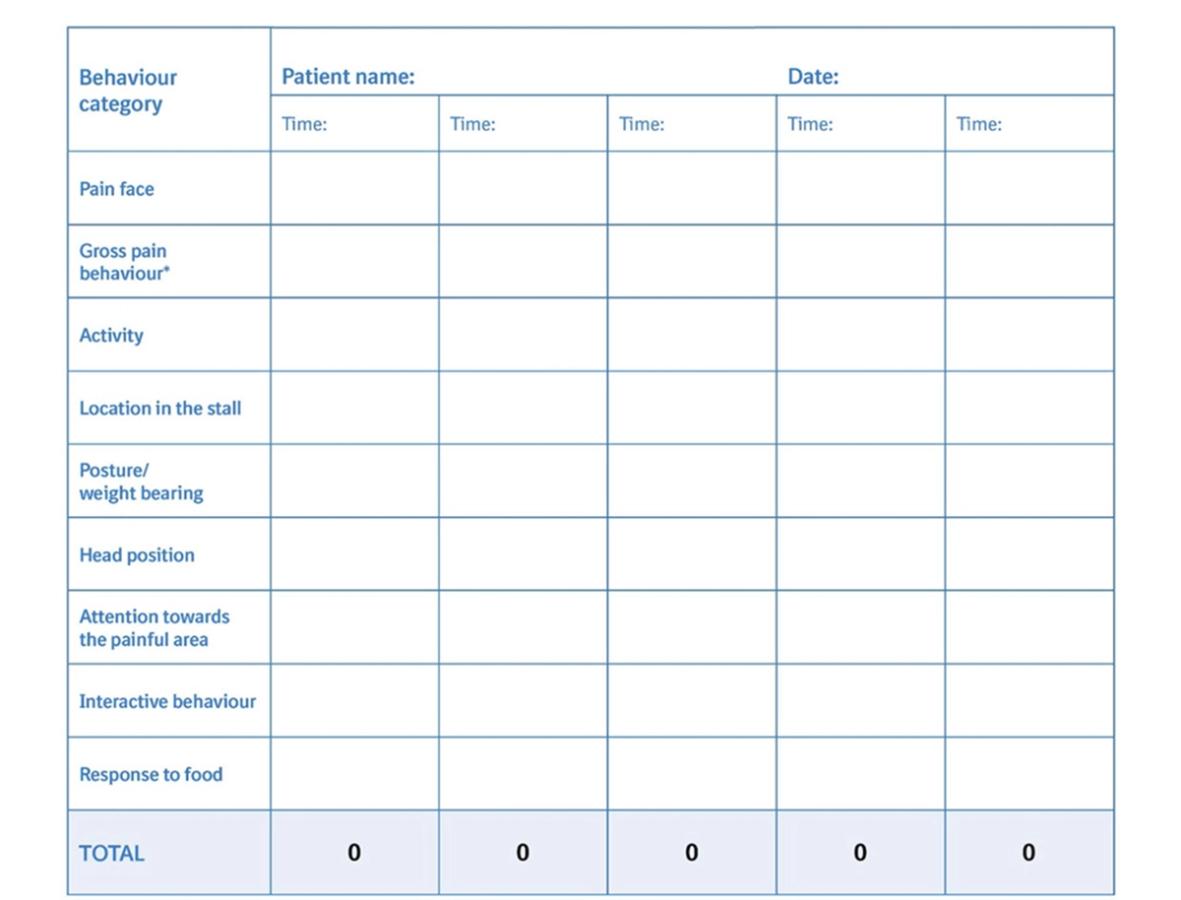
Scoring grades for each patient can be recorded such as in figure 3, using specific definitions of each grade for the categories from tables and figures 1 and 2. To obtain a pain score in any given horse, start observing the horse from a distance to score the first seven categories then approach the horse in its stall; open the door and evaluate its response, and the response to the approaching observer. Finally, offer the horse some hay or other feed that it would normally eat and observe the response to this. After scoring all nine categories, sum up the result to yield a final pain score for the specific time point.
⚠️ Interpretation: A horse scoring 4 on any parameter and or having a total pain score of 8 - 10 or above should be considered in pain and therefore in need of a diagnostic work up, immobilisation and/or additional analgesic treatment
💡 Gleerup, K. B., & Lindegaard, C. (2016). Recognition and quantification of pain in horses: A tutorial review. Equine Veterinary Education, 28(1), 47–57. https://doi.org/10.1111/eve.12383