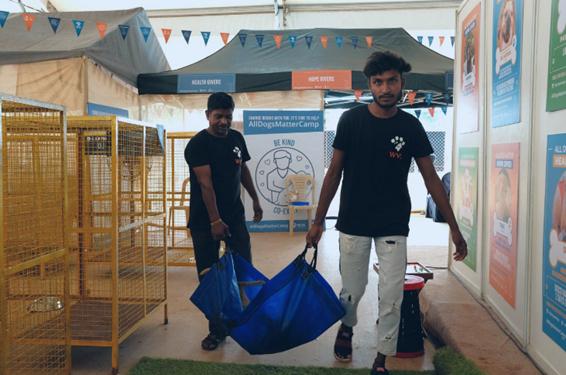

Carrying a dog correctly is essential for the safety of the clinician, and to ensure the procedure is stress-free and pain-free for the dog. Dogs must be carried into and out of transportation, onto or off exam tables, or into and out of kennels.
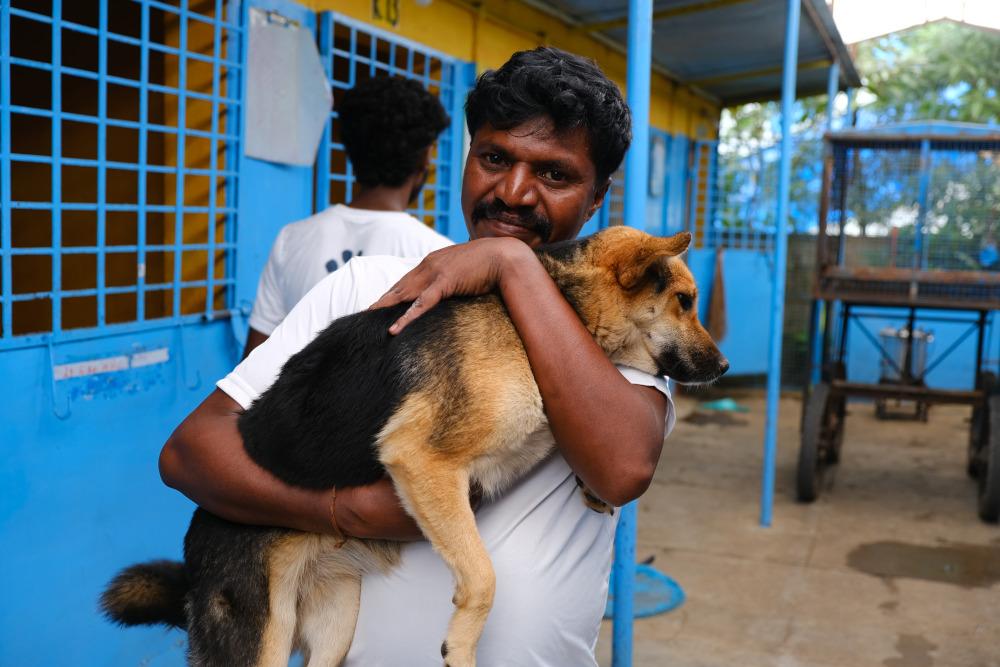
Avoid scruffing
Dogs should never be held by the scruff. Scruffing is painful and may be felt despite sedation. Rough handling, including scruffing, may be felt by anaesthetised patients upon waking up. Scruffing can seriously undermine a dog’s trust in humans, and increase future anxiety and resistance. Dogs should always have their bodies supported whenever they are handled.
Lifting a dog
The best way to lift a dog is by gently supporting its chest and abdomen. Depending on the size of the dog, this may require one or two people:
Lifting should be done with your legs, and not your back, to prevent long-term injury.
Use of a stretcher
Sedated dogs may also be carried by two people using a sheet stretcher. This reduces strain on each person and is also comfortable and pain-free for the dog. A slip lead may be placed before carrying in case the dog escapes.