

This article details specific restraint techniques for blood collection and catheterisation. Techniques should be gentle but firm, to minimise stress. Muzzles are recommended for fearful or aggressive dogs. Please see our muzzle article for further advice on how to use them correctly.
Cephalic vein access
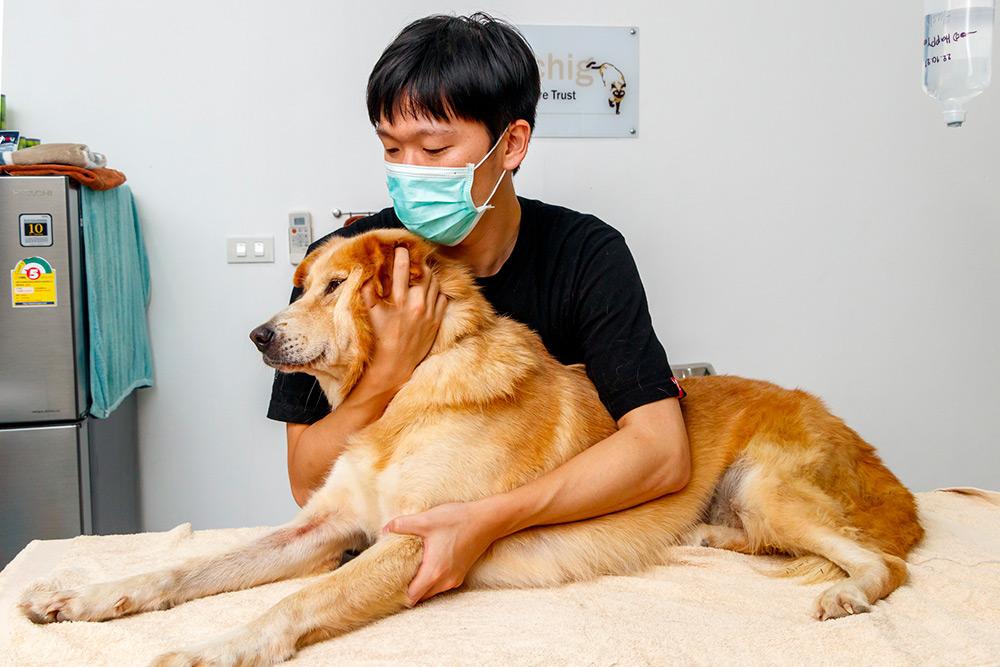
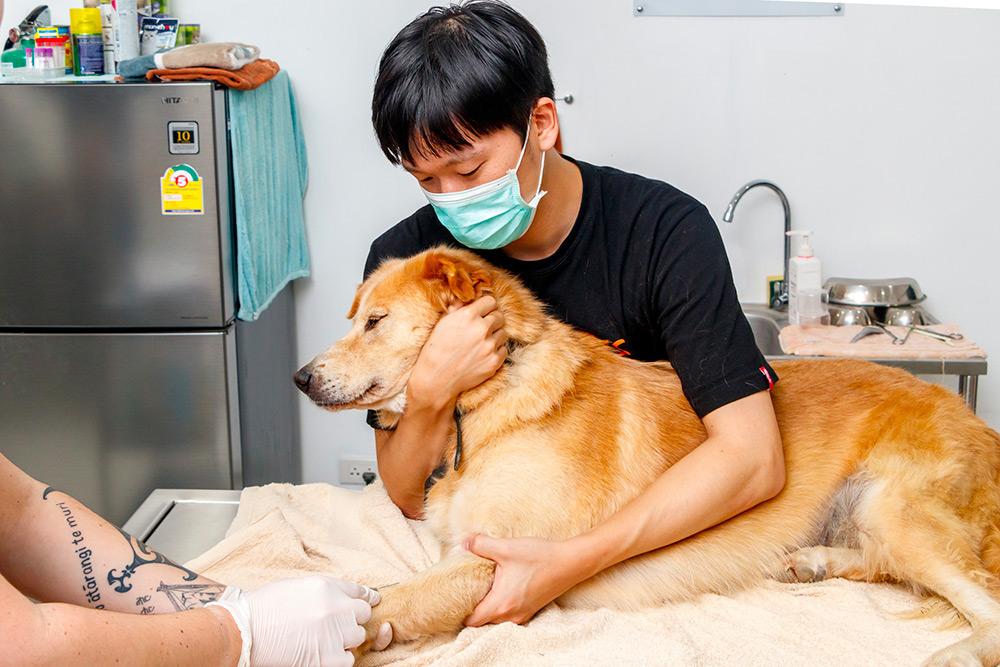
This technique is suitable for both cephalic vein blood sampling and catheterisation. It may also be useful for clinical examination or mass sampling. This restraint pulls the front limb forward, which is key to giving access to the cephalic vein.
Technique:
- This restraint works best on a table but can be adapted for the floor.
- Place one arm under the dog’s chin, with your hand holding the back of the head.
- Wrap the other arm around the side of the chest, holding the leg forward at the elbow.
- To allow blood sampling or catheterisation, press down at the crook of the leg to raise the cephalic vein. The vein distal to where you are holding will be raised (as blood is blocked from draining up the leg). This makes injections and catheterisation easier.
Check out our YouTube (@WVSAcademy) for more tips on placing an IV catheter.
Jugular vein access
Sitting restraint
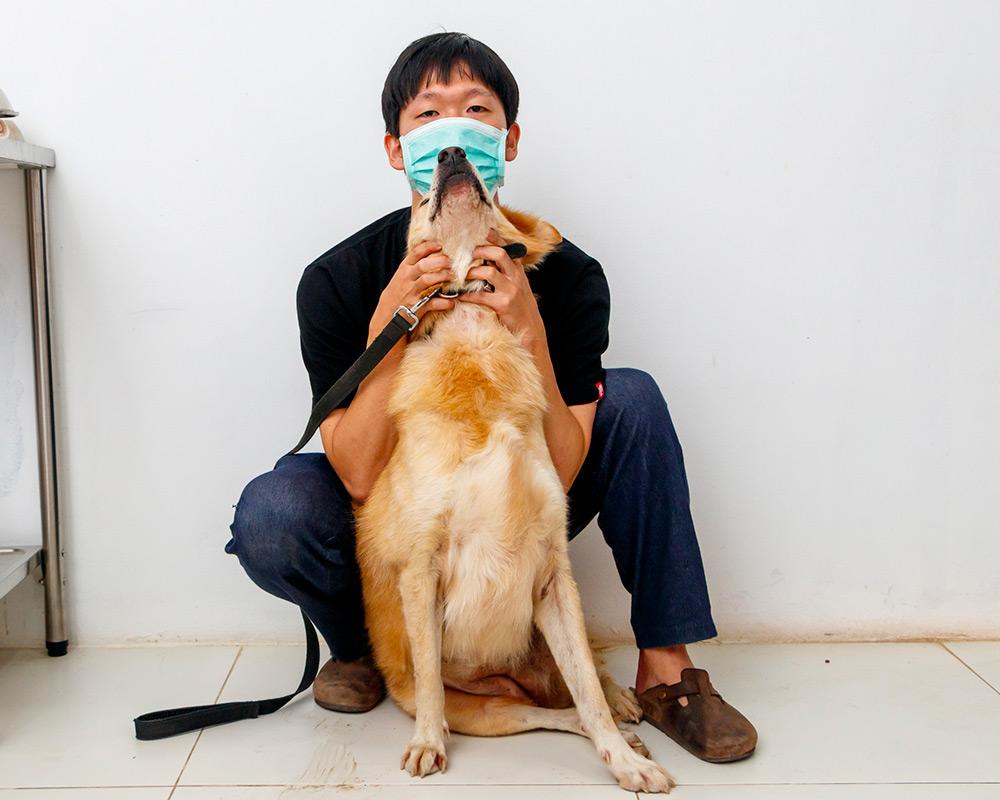
This restraint involves raising the dog’s head, which allows for jugular blood sampling by the clinician.
Technique:
- Crouch behind the dog, securing the rear of the dog between your legs.
- Lift the dog’s chin gently, with one hand on either side, to expose the jugular vein and allow easy access for the vet.
- A second person may assist by gently holding the front legs to maintain stability. There is no need to raise the vein in this position, as the vet taking blood will raise it.
Lying restraint
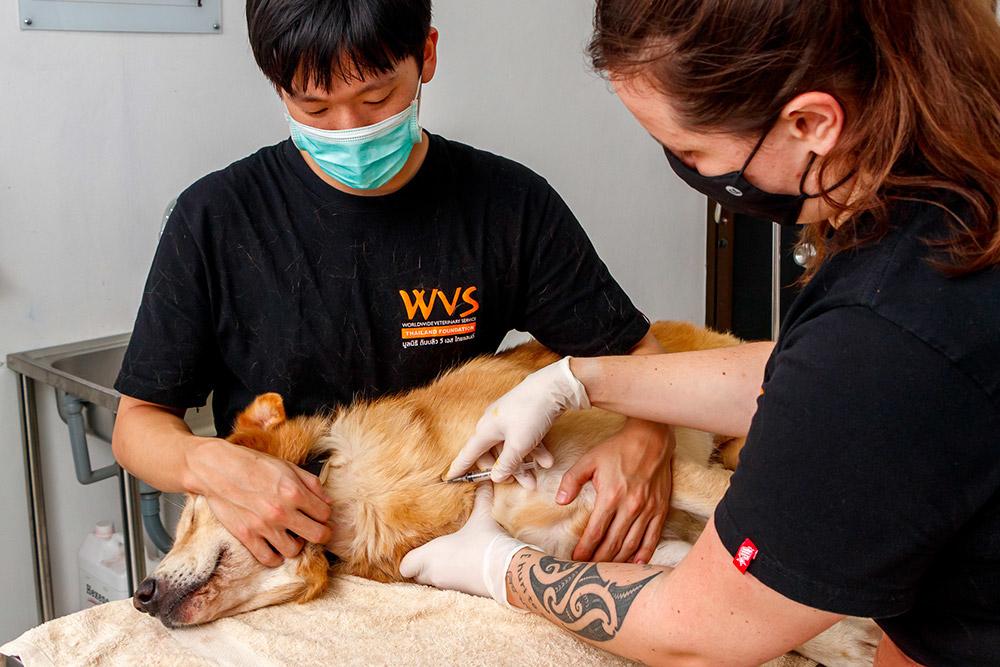
This restraint involves the dog in lateral recumbency. This method is particularly suited for sedated dogs or those unable to sit due to physical constraints.
Technique:
- Place the dog in lateral recumbency, with limbs suitably restrained.
- Hold the dog’s head upwards and secure the shoulder to keep the dog still.
- In larger and restless dogs, a second handler may be necessary to maintain control by holding the dog’s legs.
- This restraint allows the clinician clear access to the jugular vein for effective blood sampling.
These techniques ensure safe and effective restraint during procedures which require precise vein access, enhancing the safety and comfort of both the animal and veterinary staff.