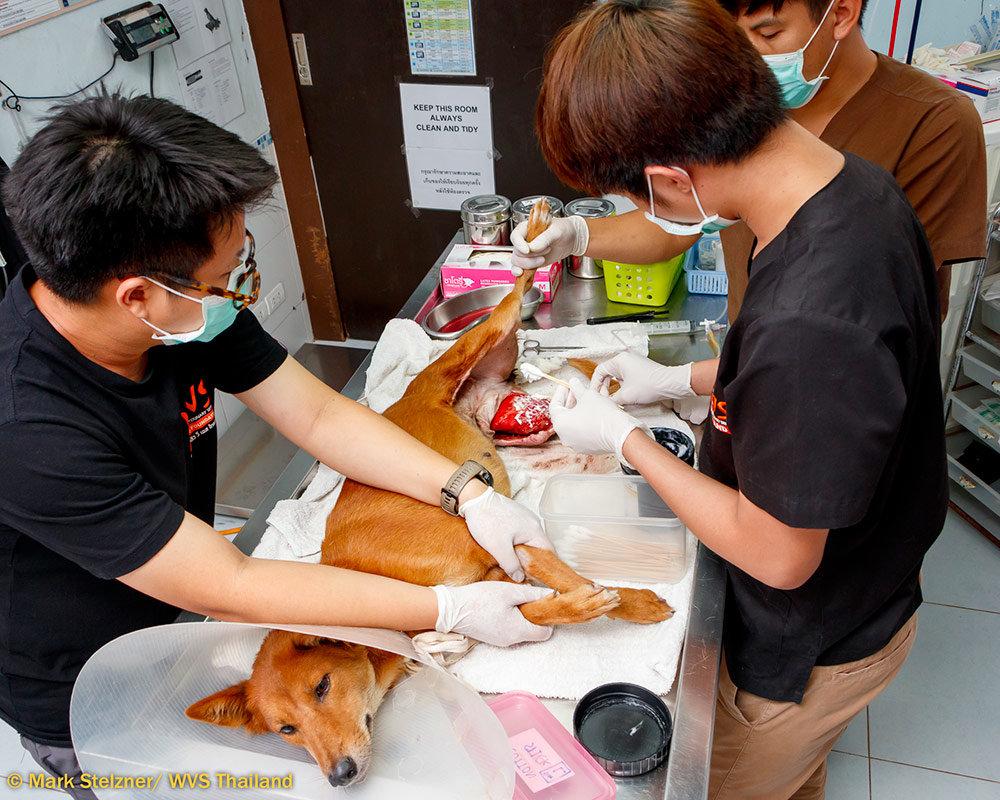

This article outlines various restraint techniques which assist clinicians in performing veterinary procedures. These techniques may be used for multiple purposes (e.g. clinical exams, vaccinations, nail trimming, etc). Following this, we will cover more specific restraints for certain procedures. Muzzles may be used for fearful dogs during all of these techniques, to ensure the safety of the handler, if needed.
Standing Restraints
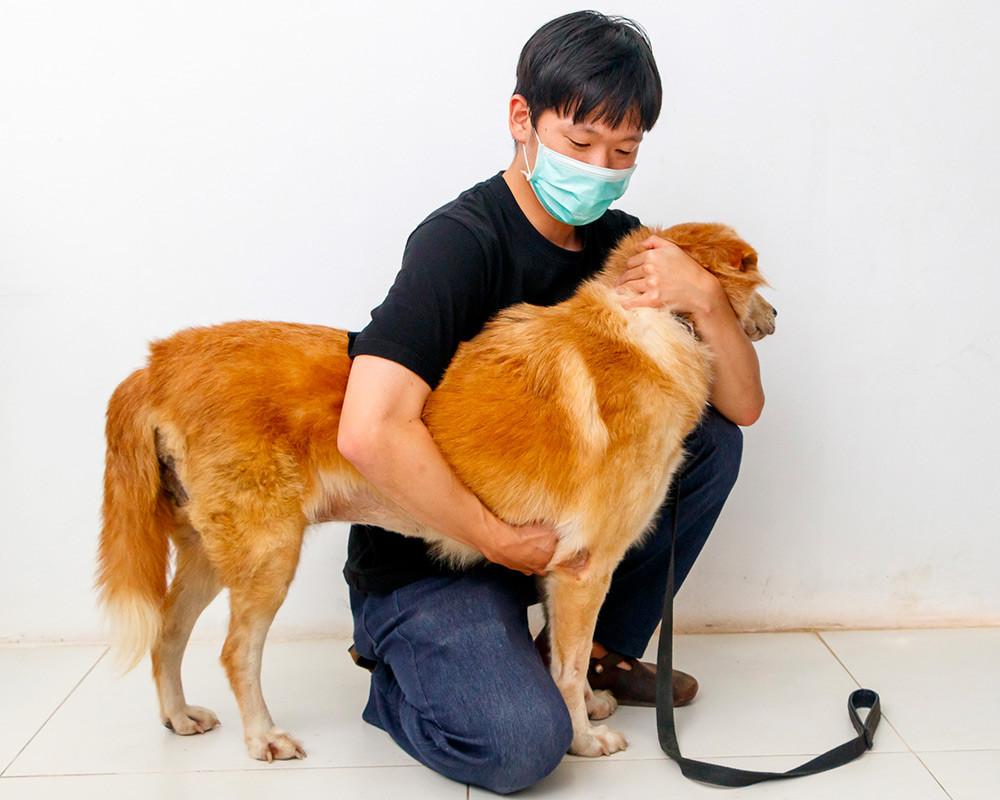
1. General standing restraint
This restraint is appropriate for general examinations, nail trimming, and sampling from wounds or masses. Perform this restraint on the floor or table.
Technique:
- Place one arm under the dog’s chin, hand around the back of the skull, and apply gentle pressure, drawing the dog’s head towards your chest.
- Wrap the second arm around the dog’s chest, with your hand between the forelimbs. Again, gently press the dog close to your abdomen (Figure 1).
- You may increase firmness if necessary to maintain control. But remember the more gentle the hold, the more comfortable the dog will be, and the less it may try to free itself.
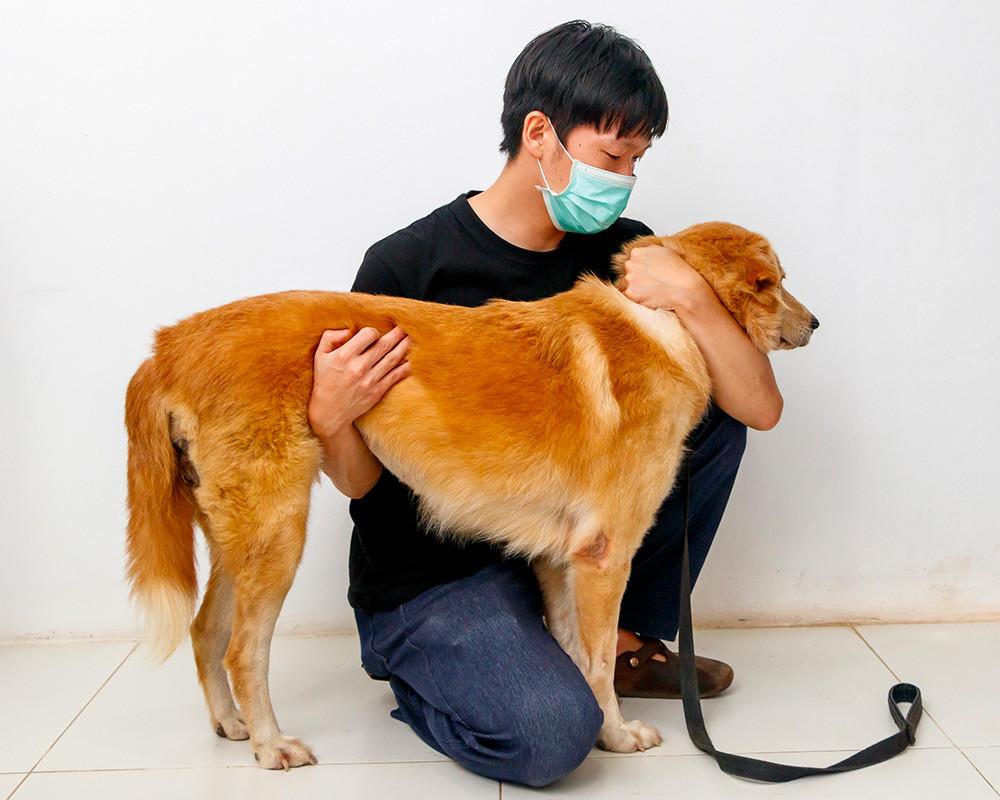
2. Standing restraint with abdominal support
This approach provides slightly more control over the dog.
This restraint may be useful for examining the rear, expressing anal glands, collecting faecal samples, and taking temperatures.
Technique: This is similar to the general standing restraint, but the second arm provides support under the dog’s abdomen (Figure 2). The arm is placed near the hips which prevents the dog from sitting down.
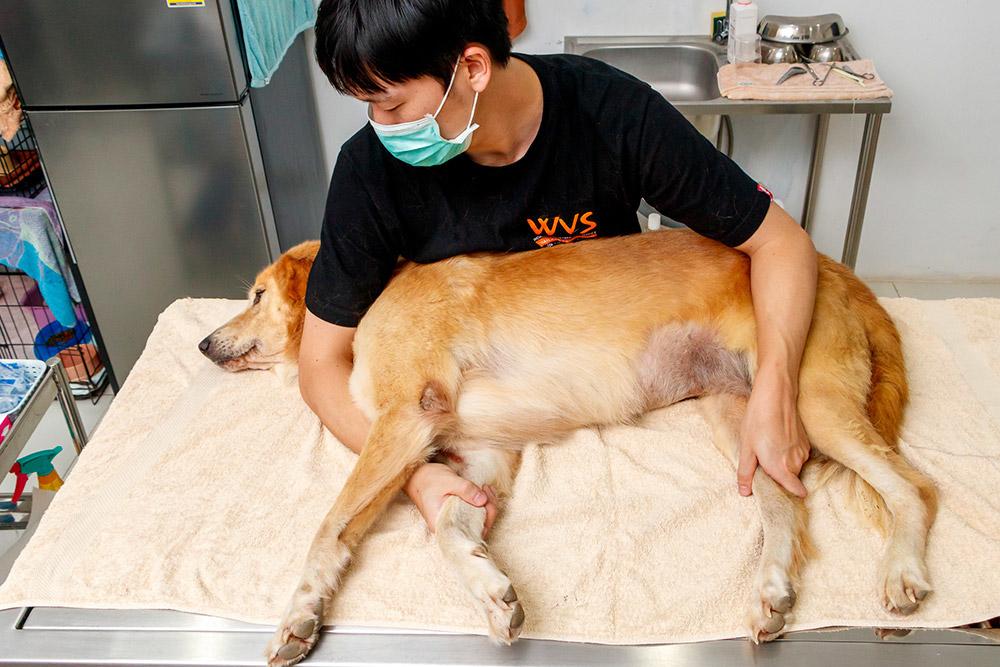
Lying Restraint - Lateral, one-person hold
This approach may be useful for situations such as examining and treating wounds on the legs, abdomen, or side, and some ultrasound techniques. This restraint is easier on a table, but is also possible on the floor.
Technique:
- Gently move the dog into a lateral position, this will likely require two people to lift and rotate the dog.
- From behind the dog, reach forward and secure the dog’s bottom forelimb with your front hand (Figure 3).
- You may use your elbow and side of your body to gently limit the dog’s head movement.
- With the other arm, reach over and hold the dog’s lower hindlimb in your hand.
Lying Restraint - Lateral, two-person hold
This is suitable for treating the same injuries, however, two handlers are used where a firmer hold is necessary, particularly for larger dogs.
Technique:
- Have one handler control the front of the dog, placing their right hand over the neck of the dog (be careful not to restrict breathing), and their left hand holds the dog’s lower front leg.
- The other handler secures the dog’s hindlimbs (Figure 4).
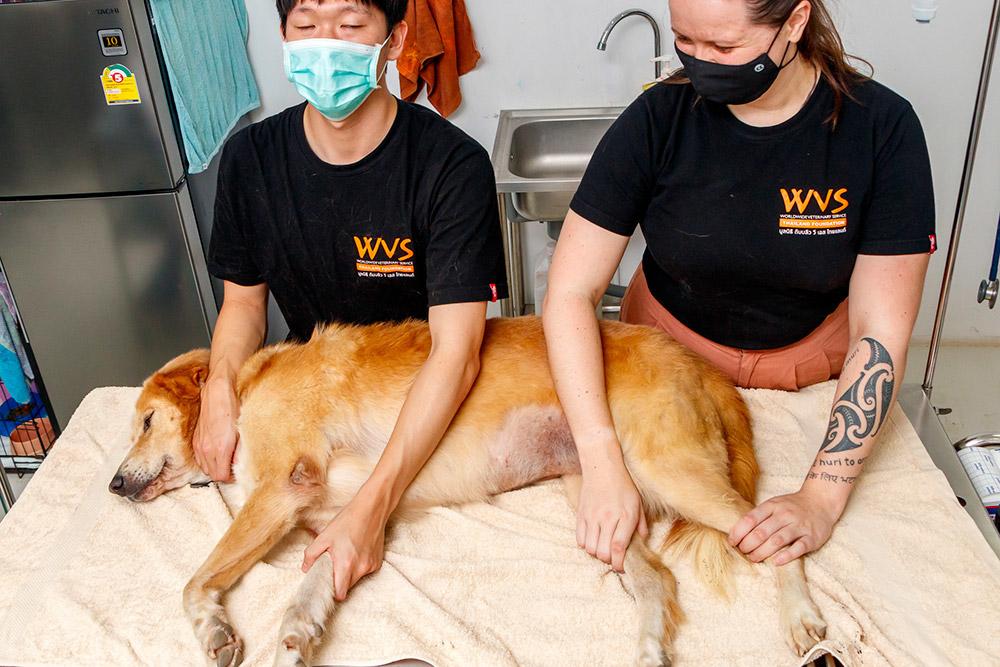
This position may be modified to allow the vet to access specific parts of the animal (Figure 5).