

General restraint techniques may also be used for subcutaneous and intramuscular injections, however, in some cases, other handling techniques provide easier access to injection sites for both subcutaneous and intramuscular injections.
Injections can sometimes be uncomfortable for dogs, depending on factors such as, the type and temperature of medicine (some may sting), the location of injection on the body, and the route (subcutaneous is often more comfortable than intramuscular). Ideally, to minimise pain, use a fresh needle (that hasn’t pierced the vaccination bottle), use the smallest gauge which is practical, and inject subcutaneously rather than intramuscularly where clinically appropriate, especially in dogs with small muscle mass (e.g. puppies).
Standing restraint
General standing restraint provides access to key injection sites for both subcutaneous and intramuscular injections. See the earlier article “General Restraint” for the step-by-step technique.

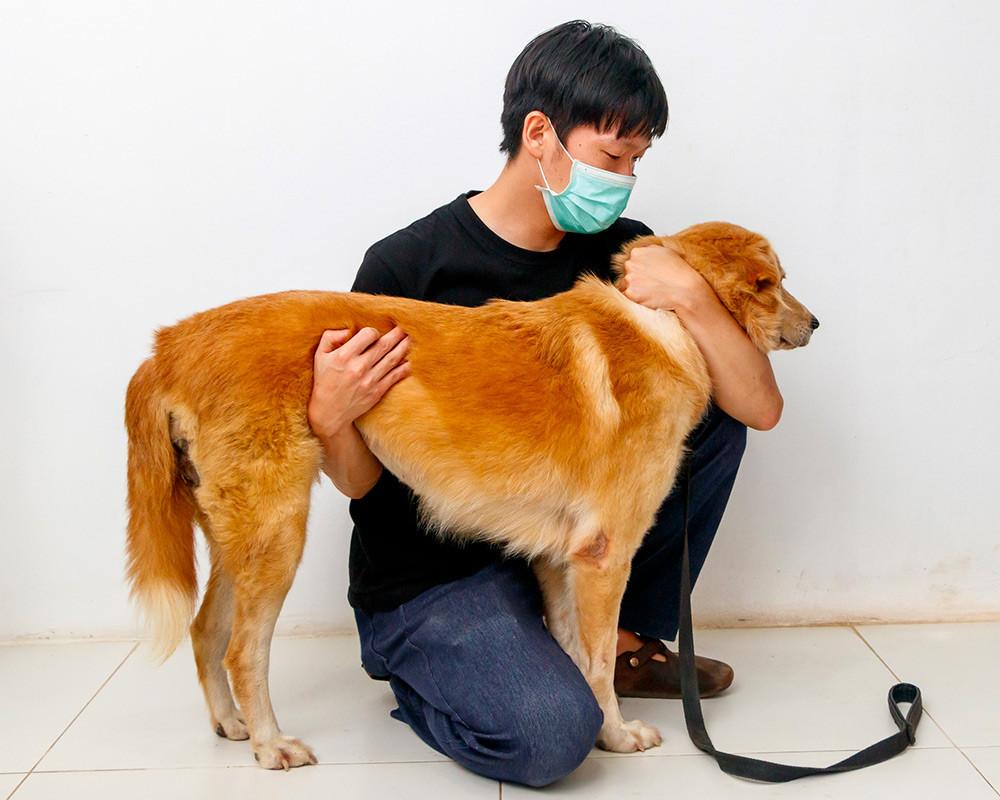
Owner assisting with restraint
Dogs often feel more comfortable with their owners, as they can provide reassurance and emotional support. For this reason, it can sometimes be helpful to ask the owner to help hold/ distract their dog for injection, providing the owner is confident and happy to do so. It’s important to assess the dog first, to make sure it is safe to involve the owner. Suitable candidates for this technique would be dogs who aren’t showing signs of aggression or reactivity. If you have any concerns about safety, it is sensible to use a muzzle and/or ask a trained assistant instead.
It’s best to explain to the owner exactly how you would like them to hold the dog. For ease of communication, showing the owner photos of the general standing restraint could be useful. You should also provide them with some safety advice - for instance, it is important not to lean over the dog’s head and bring their face too close. Owners can offer treats, strokes as well as helping with general restraint methods such as those described above.
An additional method of restraint invites the owner to stand with the dog between their legs, with the rear of the dog accessible for injection in the lumbar region, or hind legs. In relaxed dogs, the owner may also lift the front legs slightly. This position restricts movement and allows the clinician easy access to administer the injection from behind.


Restraint-free injection techniques
You may not need to use hands-on restraint for more friendly dogs. You should assess their body language throughout the procedure and be ready to move away if their behaviour changes.
If dogs are approached calmly, and have some time to acclimatise to the interaction, it is often possible to perform injections with minimal restraint, if they are provided with some attention and fuss (see photo below). This is especially the case with subcutaneous injections which are usually more comfortable for the dog, and less likely to prompt a reaction.

Holding small dogs and puppies for injections
Puppies, due to their smaller size, may be held using different techniques than larger dogs. It is often helpful to cradle a puppy with one arm, supporting the dog’s weight from underneath the abdomen, whilst using the other hand to stabilise the head or body depending on need.
Some puppies may be injected with a “hands-off” technique, pictured below. However, be aware that puppies are often more sensitive to pain from injections and may react more than larger dogs, so be ready to use gentle restraint if necessary.
Below we can see a dog correctly held for vaccination. For smaller dogs, one hand may be placed around the abdomen, whilst the other one supports the head and neck.

