

Detailed practical advice will be covered in the later modules of this course. However, there are some general considerations it is important to keep in mind, while interacting with an anxious or aggressive dog in a veterinary context.
Are you safe?
It is important to stop the procedure or interaction immediately if the dog starts to behave aggressively, or you suspect they may be about to.
Make sure you, and any other people/animals, are safely out of harm’s way and consider your next step. There may be options (such as those described below) to make the situation more comfortable for the dog, and safer for the handlers. However, if you are not sure, you should stop/ postpone your interaction. Never punish a dog for being aggressive – this will not only compromise the dog’s welfare, but will likely only exacerbate the aggressive behaviour.
Are you understanding the dog’s behaviour correctly?
Appeasement gestures (such as rolling over) are commonly misinterpreted as signs of excitement, affection, submission or guilt. This can lead to human responses which feel inappropriate from the dog’s perspective. This may lead to a change or escalation in the dog’s response.
Inhibition frequently occurs during close interactions/handling, where a dog is considered to be "behaving very well", and the signs of fear are missed by the handlers. This is of particular concern because a dog who is overwhelmed by the presence of a perceived threat may very quickly change or escalate their response to aggression (repulsion). The absence of anticipated behaviours may therefore indicate the dog is inhibited.
It is possible to mislabel a dog who is proactively displaying aggression as ‘confident’, which may influence the way in which the dog is handled. Confidence in using aggression can be the result of instrumental (associative) learning due to the success of the behaviour i.e. cowering away didn’t result in the vet moving away, but lunging and snapping did. Lunging and snapping would therefore become the behaviour of choice due to previous learning, rather than confidence.
It is important to recognise and respond appropriately to any subtle signs of stress, to reduce the need for the dog to change or escalate their response. A high level of awareness during veterinary procedures is therefore required, along with the ability to take a moment if the dog is exhibiting increasingly signs of fear. If aggression is exhibited, it is necessary to decide the best course of action, which may be changing/postponing the procedure.
Is the dog able to fully express behavioural signals?
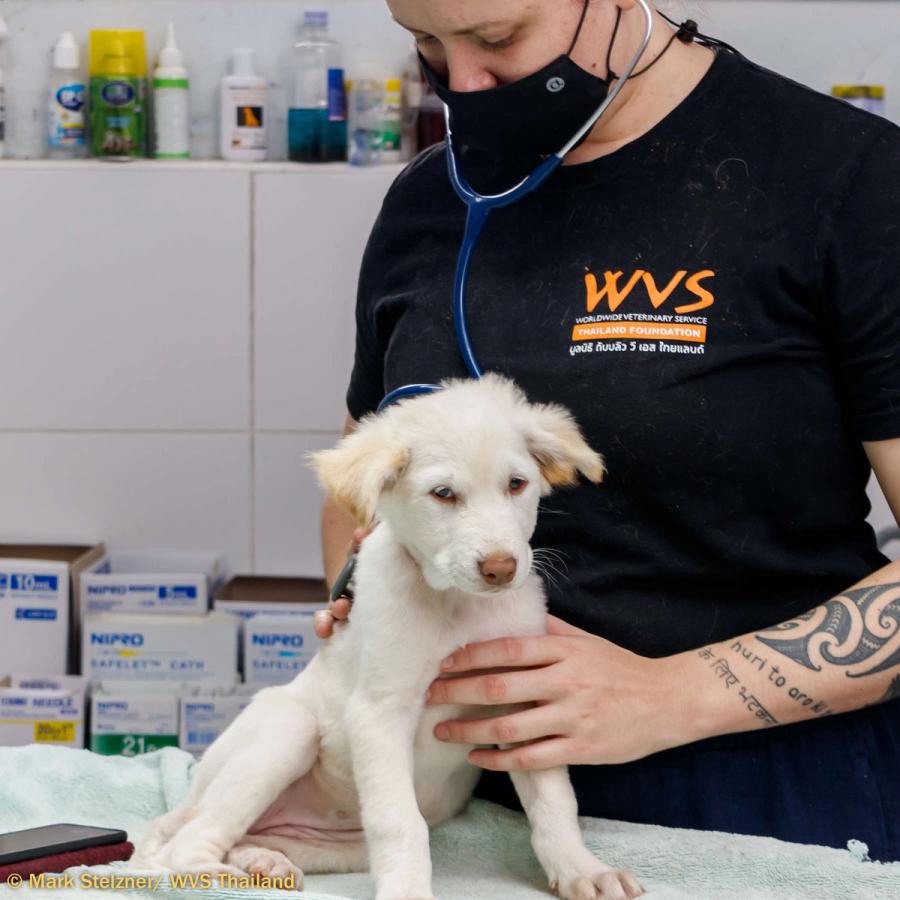
Dogs often choose avoidance as an initial strategy when dealing with a threatening situation (e.g. a veterinary procedure). If a dog is unable to use avoidance to remove themselves from a potential threat, they may be more likely to escalate their response to more overt aggressive behaviour.
It's beneficial for staff safety if dogs have the option to move away, so that staff have the opportunity to read the dog's behaviour and modify their approach as necessary, before escalation to more aggressive behaviour occurs. Therefore, it can be sensible to provide options for the dog to move away as needed, e.g. seeing the dog on the floor instead of a table, or using minimal restraint.
It’s important to remember that equipment or restraint may limit the dog’s ability to show behaviours. For instance, it may be difficult to yawn/lip lick if the dog is muzzled, or turn/move away if the dog is restrained or on a table.
Can you adapt your approach?
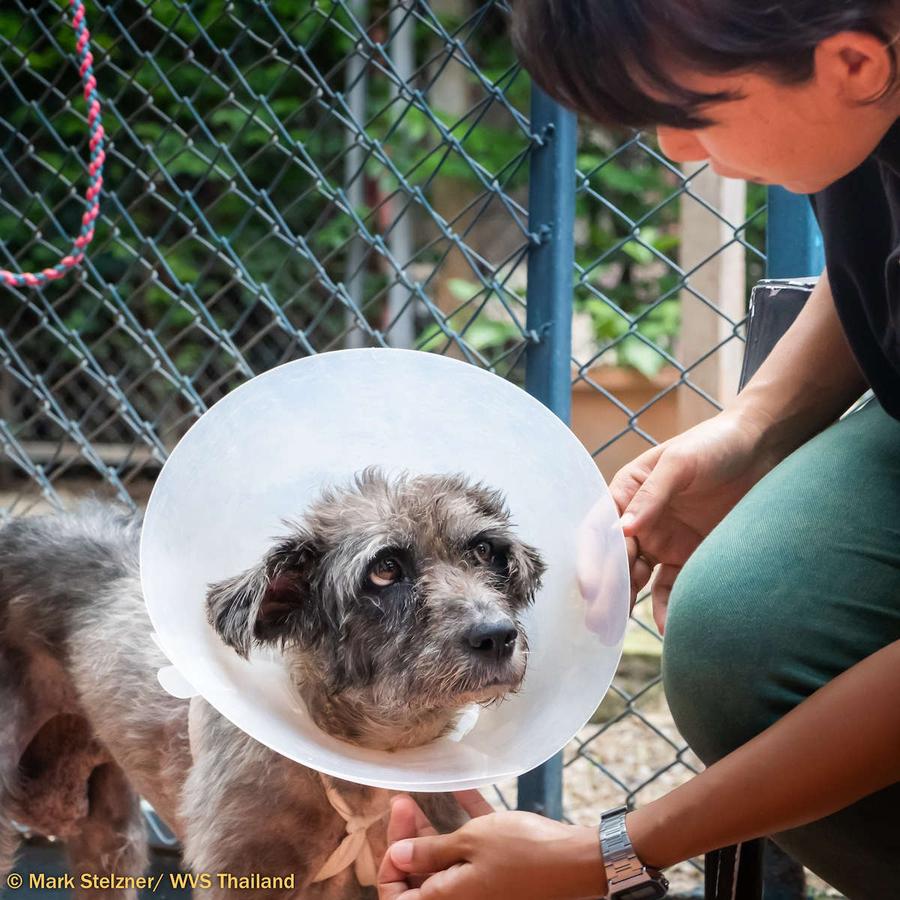
Further detailed advice on how to handle dogs and how to approach an anxious/ aggressive patient will be covered in later modules of this course. However, some practical approaches to support the dog may include:
- Pharmaceuticals to reduce anxiety/ sedation
- Allowing caregivers to remain present
- Consideration of the location in which to observe/examine the dog (e.g. in a larger room, outside)
- low stress handling techniques
- Prior to the visit, it may also be beneficial to consider muzzle training, habituation or desensitisation/counterconditioning to veterinary staff/uniform/smells/equipment.
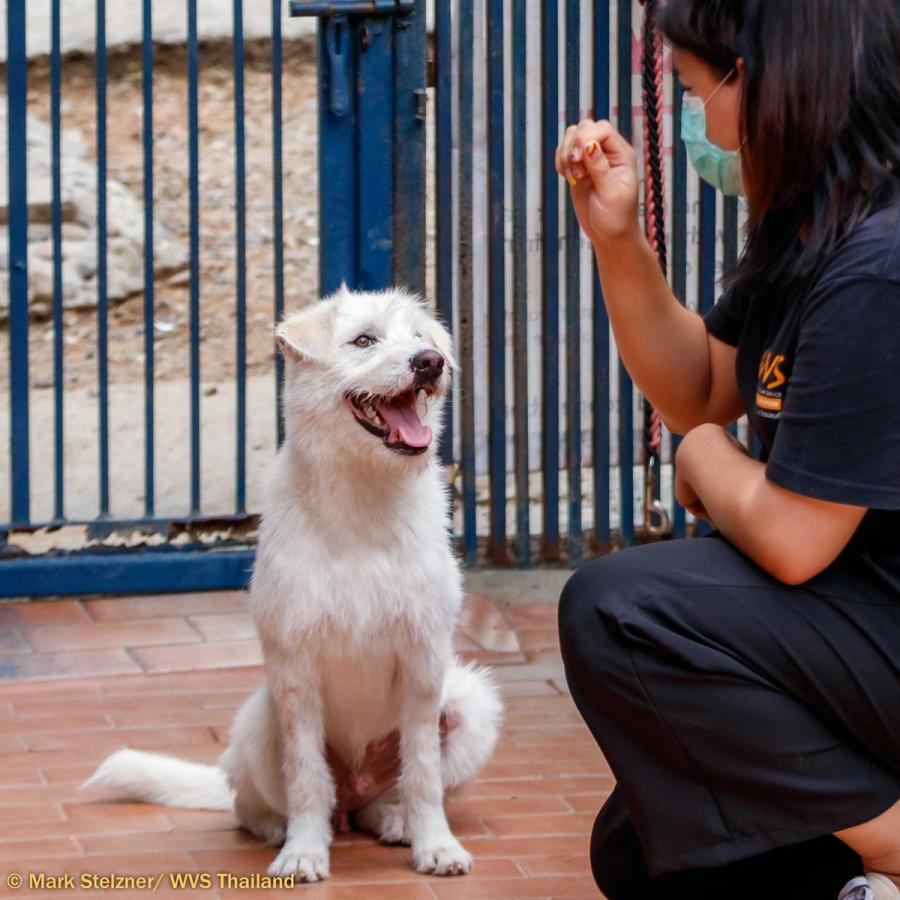
If the procedure is not essential on the day, it may be detrimental to ‘just get it done’. The future repercussions may lead to much greater risks for the staff, fewer treatment options, and poor welfare. If the dog exhibits fear or aggression, there is also the risk that the caregivers will stop seeking veterinary advice.