
Proper preparation, storage, and application are essential to ensure the disinfectant works as intended. Exact dilution rates and contact times vary between products, so you should always follow the manufacturer’s instructions to ensure safe and effective use.
Diluting disinfectants
Many disinfectants are supplied in highly concentrated forms (either as liquids or, in some cases, powders). Following the manufacturer’s instructions, these must be diluted with water to the correct working strength. The required dilution ratio varies between products and depends on the intended use, for example, some products may need to be used at a higher concentration for use on harder-to-inactivate pathogens. To ensure accuracy, concentrations should be measured precisely using an appropriate tool such as a syringe or measuring cup.
If I make the concentration stronger, will it work better?
Using a disinfectant at a higher concentration than recommended on the label does not make it more effective. In fact, it can reduce its ability to work properly! Disinfectants are carefully formulated so the active ingredients can interact with microbes in a specific way.
If the solution is stronger than recommended:
- Residue may be left behind, interfering with the disinfectant’s action and making surfaces sticky or unsafe for animals.
- It increases risks to staff and animals as the chemical may be stronger than is safe for contact with skin.
- Overly strong solutions may dry faster. This can mean the disinfectant doesn’t reach the required contact time needed to effectively eliminate microorganisms.
For these reasons, disinfectants work best at the manufacturer’s specified dilution, not stronger or weaker!
Storing disinfectants
Once diluted, disinfectant solutions should be changed regularly, as their potency can degrade over time. The stability and shelf life of a diluted disinfectant vary significantly depending on the specific product and brand. Some potassium peroxymonosulfate products remain stable when diluted for up to 7 days, however bleach only starts to lose efficacy after 24 hours, and therefore should be prepared fresh again each day. Always refer to the manufacturer’s guidelines for information on how long a solution remains effective after dilution.
If the solution is stored in a pre-mixed spray bottle, the bottle itself should be routinely cleaned to prevent bacterial build-up and cross-contamination.
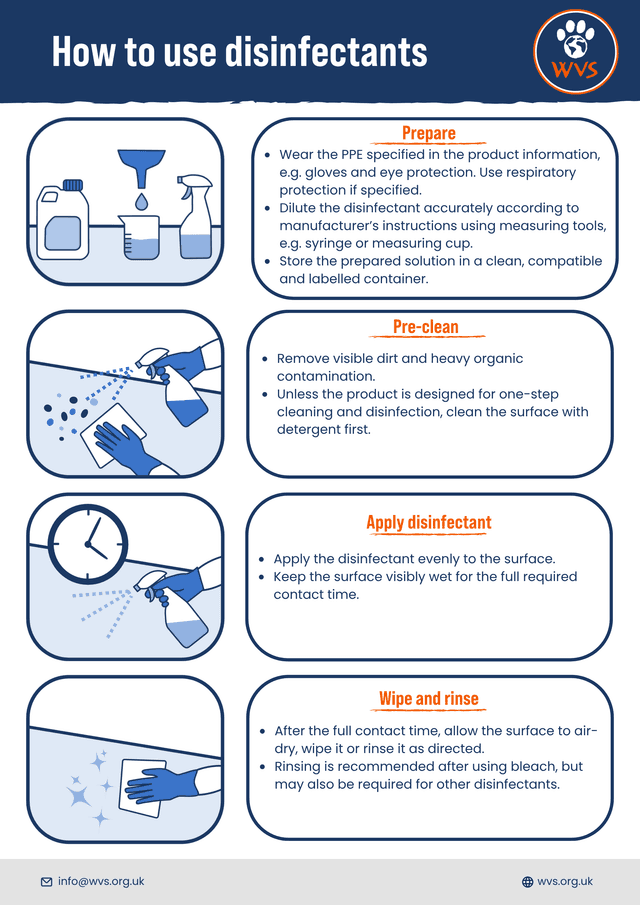
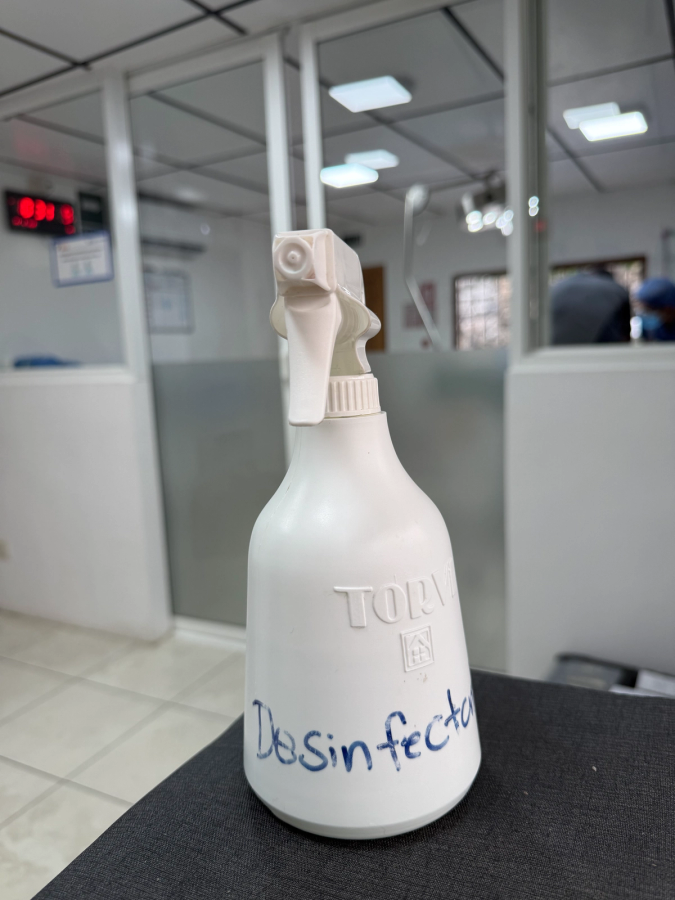
Store the prepared solution in a clean, compatible and clearly labelled container. Use a spray bottle only if spray application is permitted by the product instructions. Never use a container that previously held another chemical.
Empty reusable containers before refilling, rather than adding a new solution to old solution. Discarded disinfectant should be disposed of according to product instructions and local requirements.
Correctly using disinfectants
Preparation
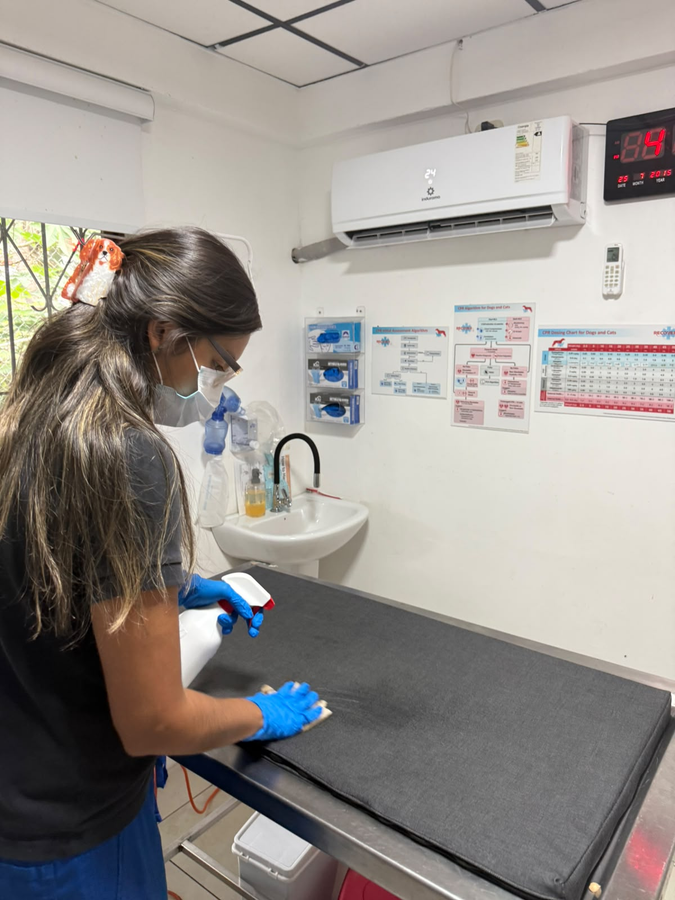
- Wear the PPE specified on the product label and safety data sheet. This may include gloves, protective clothing and eye protection. When handling powdered concentrates, avoid creating or breathing dust and use respiratory protection if the product instructions require it.
- Dilute the chosen disinfectant accurately, using a syringe or measuring cup to measure quantities. Always follow the product‑specific dilution instructions.
- Store the prepared solution in a suitable container, such as a clean spray bottle that has not previously contained another chemical (as this can interfere with your disinfectant).
Use
- Pre‑clean surfaces. Remove visible dirt and heavy organic contamination before disinfection. Unless the product is specifically designed for one-step cleaning and disinfection, you should then clean the surface with detergent and rinse where required. See our article ‘General cleaning guidelines’ for more practical advice on proper cleaning.
- Apply the disinfectant evenly onto the surface using a spray bottle.
- Allow the required contact time. This varies between products and required use, so always check the manufacturer’s instructions. Keep the surface visibly wet for the entire time stated for the product and target pathogen, reapplying the product if necessary.
- Wipe the surface after the contact time has been met using clean paper towel.
- Rinse the surface thoroughly: to prevent irritation or toxicity, particularly in food preparation areas, animal housing, and around food or water bowls. This step is particularly important when using bleach. Some products such as AHP and potassium peroxymonosulfate may not require rinsing.
Contact time: the length of time a surface must remain visibly wet with the disinfectant for it to kill or inactivate the target microorganisms.