
Total solids (TS), also know as Total Protein (TP), is a measure of the amount of plasma proteins in the blood; these include albumin, globulins and fibrinogen. TS measurement is normally performed after PCV and both values together can provide important information about the clinical status of your patient, and how to proceed with diagnostic work up or treatment.
Equipment
You will need the following equipment:
- A haematocrit tube containing the blood sample that has been spun in a microcentrifuge
- A refractometer
- Some water in a syringe (for calibration)
- Clean, non-sterile gloves
- Tissue or paper towel
To revise how to prepare your sample in a haematocrit tube, refer to the previous article on PCV.
Procedure
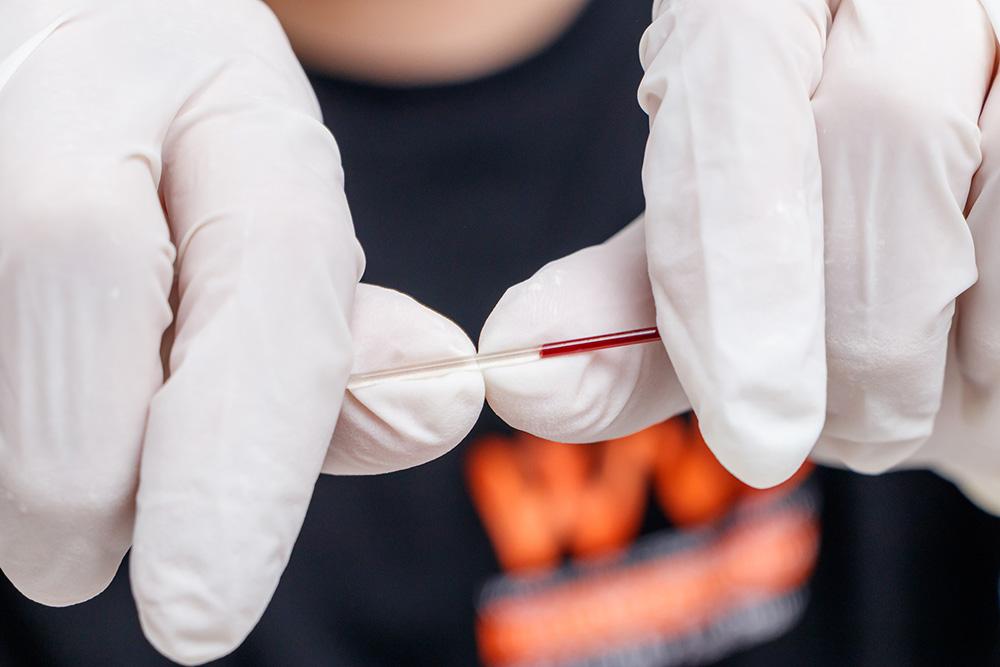
Access the plasma sample. Break the microhaematocrit (capillary) tube near the top of the plasma fraction using the technique shown below, using your thumbs to guide the position. Be careful not to include any red blood cells.
Apply sample to refractometer. Lift the clear plastic cover and wipe the surface of the refractometer with some water, then wipe dry using the paper towel or tissue. Using the unbroken end of the tube, gently touch the refractometer surface to apply the plasma sample. Be careful not to cut yourself on the broken end of the tube.
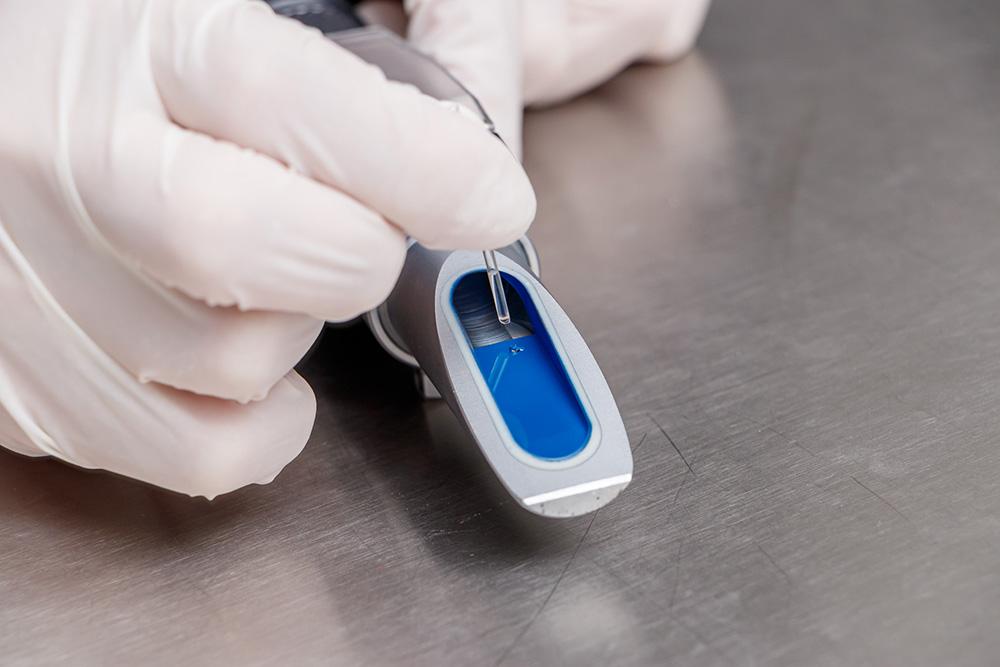
Replace the cover on top of the sample and press gently.
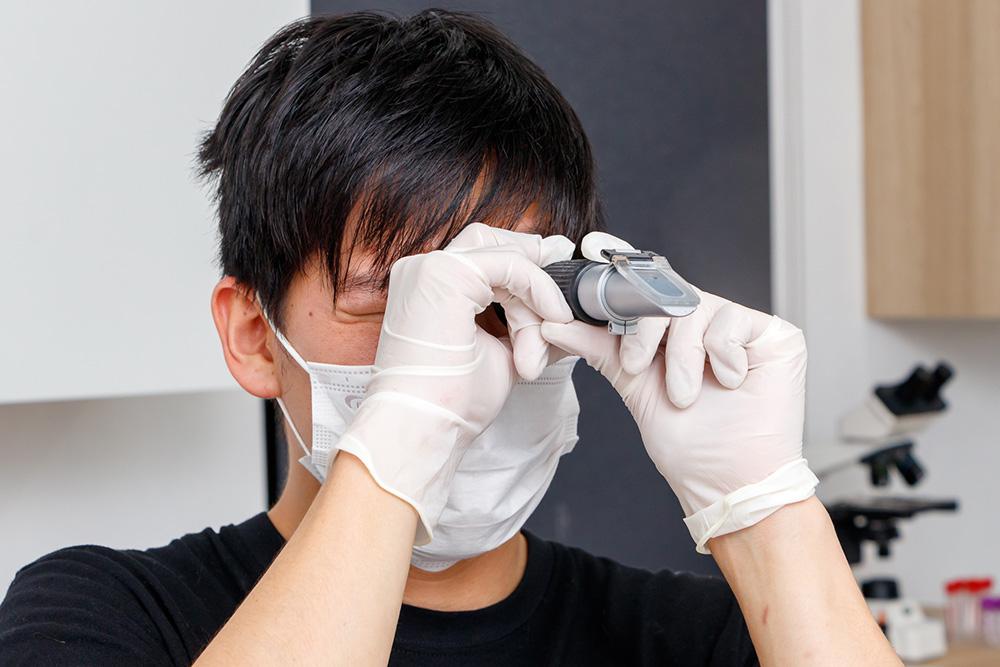
Read the value. The plasma protein concentration can be measured by holding the refractometer in the position below and looking through the eyepiece.
Read the scale labelled 'S.P' on the left (highlighted in the red box below). The division between the white and blue areas is where you take the measurement (arrow).
In the example below, the TS is 6.2g/100mL (g/dL), or 62g/L.
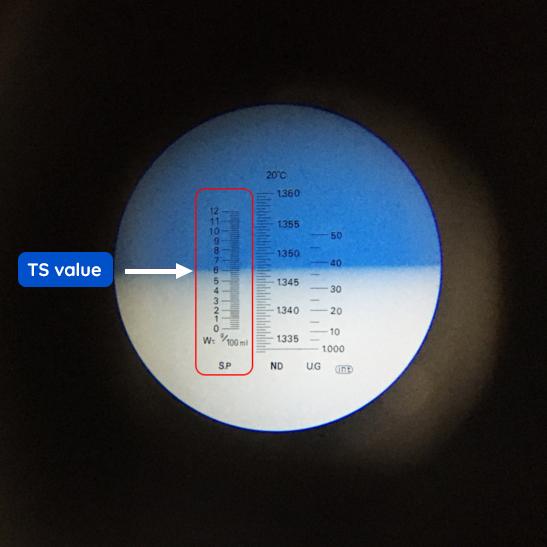
Note: if the line between blue and white areas is blurry, press firmly on the refractometer lid.
Remember to dispose of the glass tube in the sharps bin after use.
Normal values for TS
Values range depending on factors such as breed and age, but normal is considered to be between 5.4-7.5 g/dL (dog) and 6.0-7.9 g/dL (cat)1.
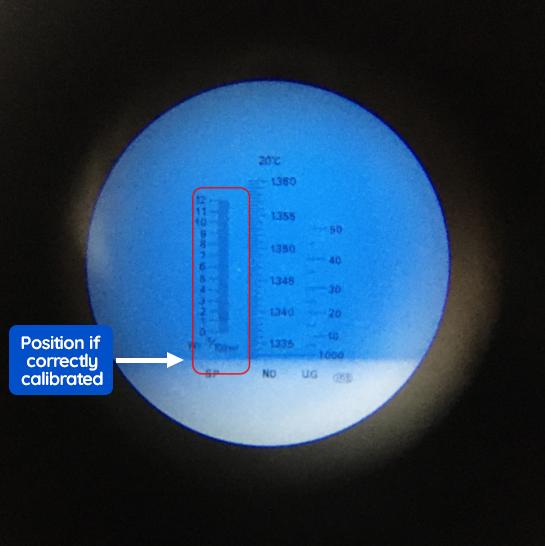
Calibrating the refractometer
It is good practice to calibrate the refractometer regularly so ensure it is giving you the correct reading. To do this, lift the lid and clean the glass surface with water, pat dry with a clean tissue or paper towel, then drop a small amount of distilled water onto the surface before taking a reading. The line between white and blue should appear at the bottom of the scale, as shown below.