

This article provides an introduction to the major systems assessment, with a focus on wound management. For a comprehensive understanding, including conducting the major systems assessment and patient stabilisation, refer to our “Emergency and Critical Care” course.
A major systems assessment (initial triage) is critical for determining treatment priorities for patients with traumatic wounds. The clinician evaluates the patient’s vital signs and the physiological functions of three major systems (Neurological, Respiratory and Cardiovascular), to identify and prioritise immediate needs. For example, an infected wound may seem like the primary problem, however a major systems assessment may reveal severe hypovolaemia or respiratory distress that must be treated first. These systemic issues must be addressed first.
1. Major systems assessment: key steps
- ABCs: Assess Airways, Breathing and Circulation.
- Address immediate problems: Haemorrhage, seizures, obstructed airway, cardiac arrest, hypovolaemia or shock. Obvious problems (profuse haemorrhage) can be addressed simultaneously with the ABCs (one person assesses ABCs, another treats haemorrhage).
- Assess neurological function.
- Assess additional body systems: Administer pain relief to ensure adequate analgesia. Identify fractures and wounds. Check the abdomen, urinary system, and perform an ocular exam.
- Take emergency database.

2. Stabilisation
After the major systems assessments, stabilise the patient by addressing life-threatening issues like shock and haemorrhage. An emergency database can be taken at this point (CBC, PCV and Total solids, blood glucose, lactate etc). Basic wound management such as lavage, debridement and dressing should be performed once the patient is stable, with bleeding and pain controlled.
Stabilisation treatments include:
- Oxygen supplementation
- Analgesia (reassessment and adjusting treatment plan)
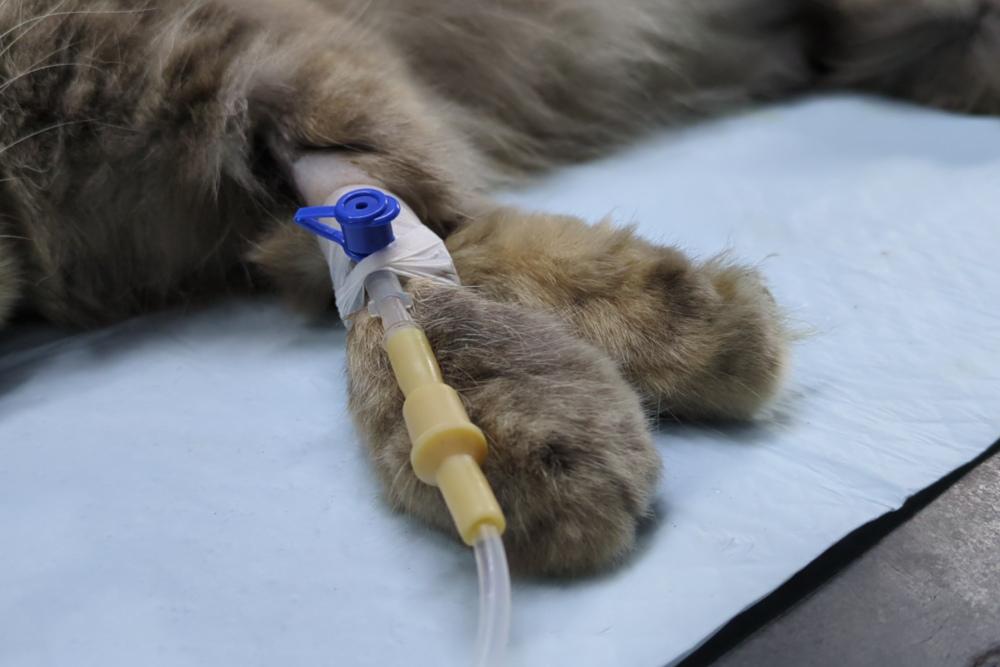
- Fluid therapy
3. Analgesia
Following the major systems assessment, address pain with analgesics (pain relief) alongside stabilisation. Pain compromises animal welfare and hinders healing processes. Treating pain should always be a priority.
Depending on the wound’s severity, a single drug or a combination may be given. In cases with fractures, stronger analgesics like opioids (methadone and buprenorphine) may be administered alongside NSAIDs (meloxicam or carprofen), local blocks (lidocaine) and adjunctive analgesics (ketamine, paracetamol in dogs, gabapentin).
The table below summarises various classes of analgesic drugs, examples, indications, contraindications and potential combinations.
| Drug class | Examples (Level of pain relief: +, ++ or +++) | Indications | Contraindications | Additional notes |
|---|---|---|---|---|
| NSAIDs | Meloxicam (++), Carprofen (++), Tolfenamic acid (++) | Moderate pain, inflammation, post-surgical analgesia | Hypovolaemia, GI ulceration, kidney or liver disease. | Cannot be combined with corticosteroids. |
| Opioids | Methadone (+++), Morphine (+++), Fentanyl (+++), Buprenorphine (++), Butorphanol (+) | Severe pain, can be used in unstable patients (with careful monitoring). | Respiratory depression, liver disease. | |
| Local anaesthetics | Lidocaine (+++), Bupivicaine (+++) | Localised block (line block), nerve blocks (leg amputation, enucleation) | (If using systemically): Pre-existing cardiac conditions, hypersensitivity reaction, liver disease | |
| NMDA Receptor Antagonists | Ketamine (+++) | Severe (breakthrough) pain, adjunctive analgesia, CRI. May be used in cardiac-compromised patients. | Increased intracranial pressure or hypertension. | |
| Gabapentinoids | Gabapentin (+) | Neuropathic pain (IVDD, nerve damage, amputation), adjunctive analgesia. | ||
| Corticosteroids | Prednisolone, Dexamethasone | Severe inflammation, immune-mediated pain. | Infection, diabetes mellitus, gastrointestinal issues | Cannot be given with NSAIDs. No direct analgesia but can relieve pain related to inflammation |

For more detailed articles on triage, including the major systems assessment, analgesia plans, and stabilisation, see our “Emergency and Critical Care” section.