

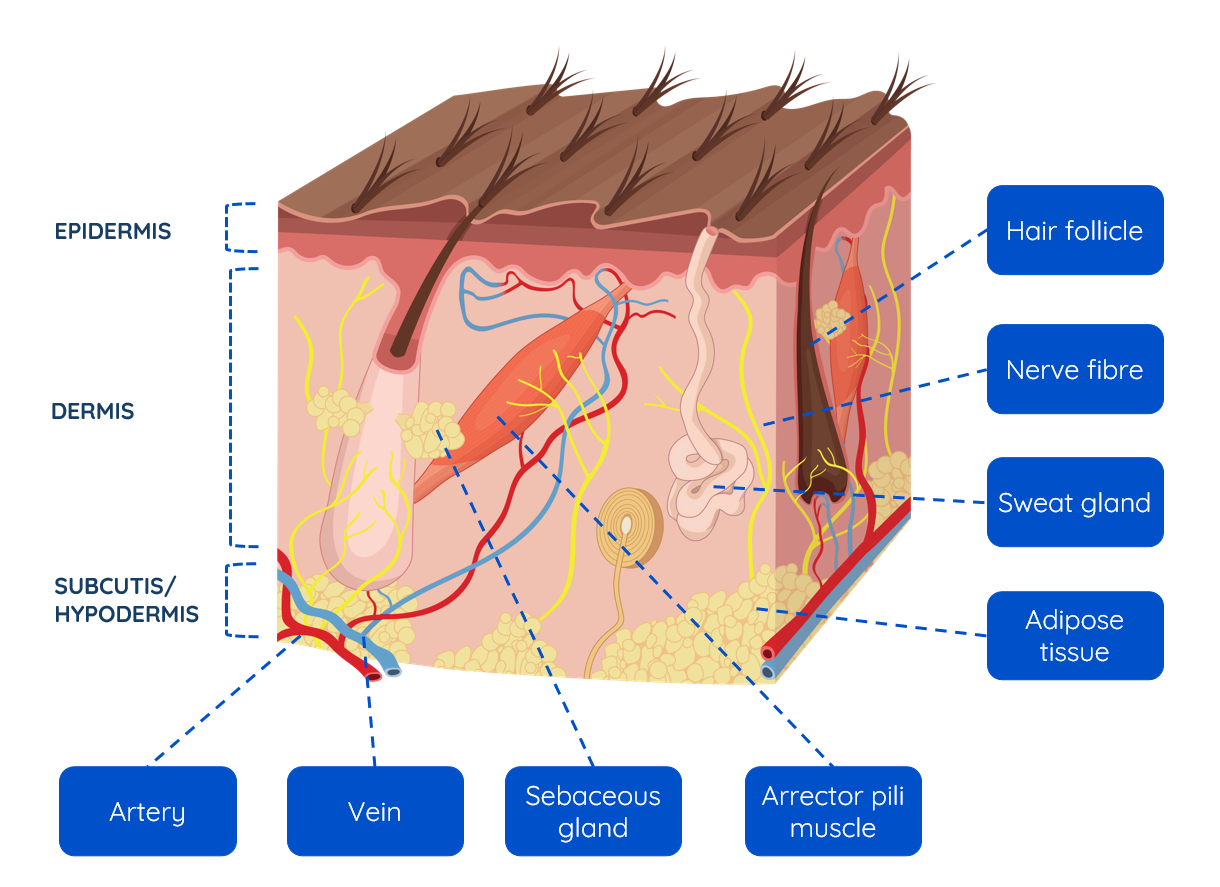
The skin is made up of three layers:
- the epidermis (outermost layer)
- the dermis
- the subcutaneous or subcutis (innermost layer). This is also sometimes called the hypodermis.
The epidermis and dermis lie close together to form a fibrous, outer layer. They sit on top of a much looser connective tissue layer, called the subcutis.
Epidermis
The epidermis is the outermost layer of skin and is made up of a cornified, stratified squamous epithelium. This layer constantly renews itself, to replace cells which are sloughed off naturally at the surface.
There are five strata (layers) of cells within the epidermis. Cells at the bottom (keratinocytes) migrate upwards through the strata, and by the time the cells reach the surface, they are keratinised, hard, and provide an effective barrier for the skin. These dead, keratinised cells form the stratum corneum, which is the outermost layer of the epidermis. The epidermis is thicker in areas of the body which are exposed to more wear and tear (e.g. foot pads) and/or lack hair (e.g. nasal planum).
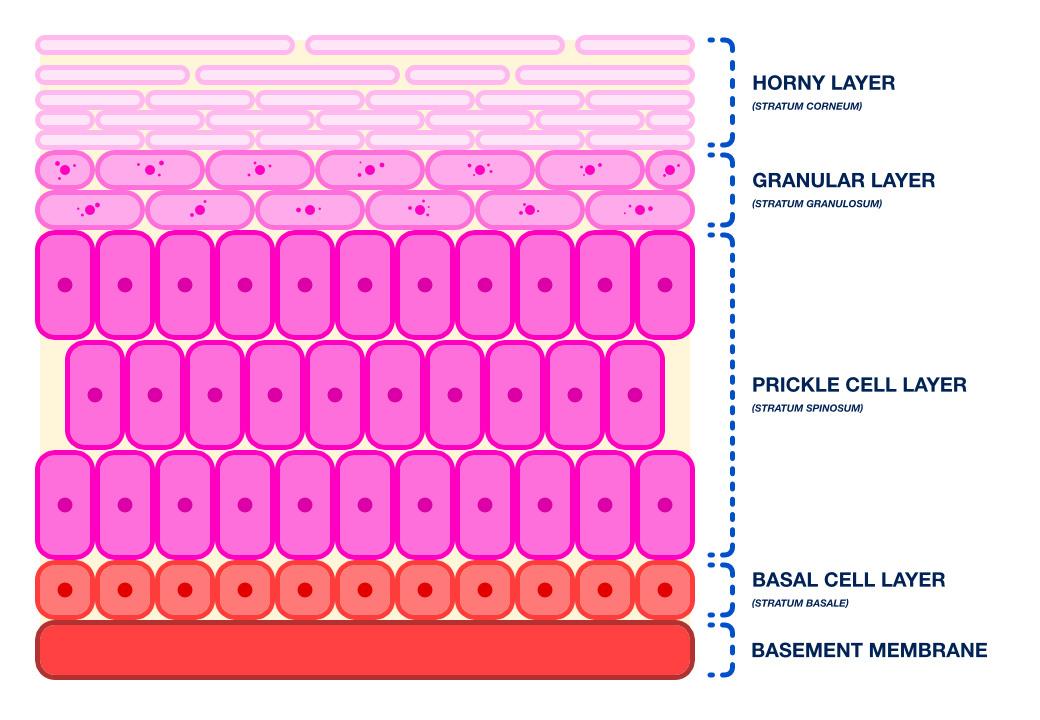
There are various cell types in the epidermis, including sensory (Merkel cells), immune (Langerhans cells), and those which produce melanin pigment (melanocytes). The epidermis contains no blood vessels, but is supplied by diffusion from the deeper dermis layer.
Dermis
The dermis lies directly beneath the epidermis. The two layers are closely connected and well-adhered to each other. This layer contains many blood vessels and is generally well-innervated. Sensory nerves allow the animal to sense temperature, pressure, pain and touch. The dermis also contains collagen (an abundant structural protein derived from fibroblasts) which provides support, and elastic fibres which make the skin pliable. It is the elastic fibres which cause wounds to gape, as the elastic fibres pull the edges of the wound apart.
Functions of the dermis:
- Structural support (provided by the proteins collagen and elastin).
- Rich blood supply to provide oxygen and nutrients to the skin, and clear waste products.
- Temperature regulation: vasoconstriction/vasodilation and sweat gland activity.
- Sensory function, facilitated by sensory receptors.
- Immune functions. First-line immune cells within the dermis help identify and eliminate pathogens or foreign material.
- Skin appendage production, including hair follicles and sweat glands.
Subcutis
The subcutis, or subcutaneous layer, sits deep to the skin. It contains loose connective tissue and fat, and the cutaneous trunci (twitch muscle). The subcutaneous fat gives heat insulation, and protective padding, whilst also acting as a fluid and energy reservoir. The thickness of the subcutis varies by animal and by location on the body.