

Lateral Flow Devices
Lateral Flow Devices (LFDs) use an immunoassay to detect RABV antigens. They are small, light devices which contain freeze-dried chemicals along a cellulose strip. Most lateral flow devices are sold as a kit including the following items:
- Lateral Flow Device
- Pipette
- Cotton bud
- PBS (phosphate-buffered saline) pot
A sample of the brain of the deceased animal is required and this must only be attempted by specifically trained personnel. More details can be found here.
Protocol
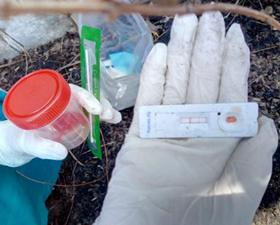
- A small sample of brain material is pushed from the sampling straw onto a firm covered surface
- It is macerated using a scalpel blade and the cotton bud is used to add a sample to the PBS sample pot
- The sample is mixed thoroughly with the PBS solution and a small amount of liquid is drawn into the pipette, trying to avoid brain material as much as possible
- Four drops of the liquid are placed in the sample well on the test kit
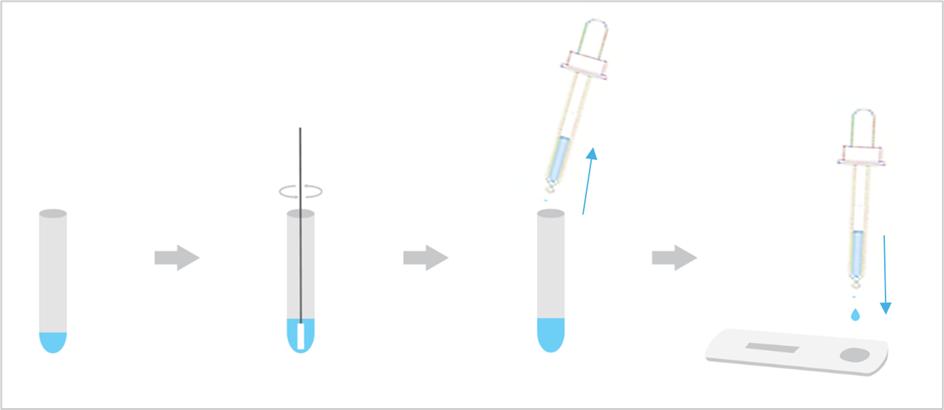
When a sample is added to the sample well the test is activated (figure 2):
- Conjugated chemicals bind to the RABV antigen (where present) at the beginning of the strip
- The sample travels through the material
- Unbound molecules are captured at the control line forming a visible line, indicating the test has functioned correctly
- Bound molecules are detected at the test line a producing a colour change
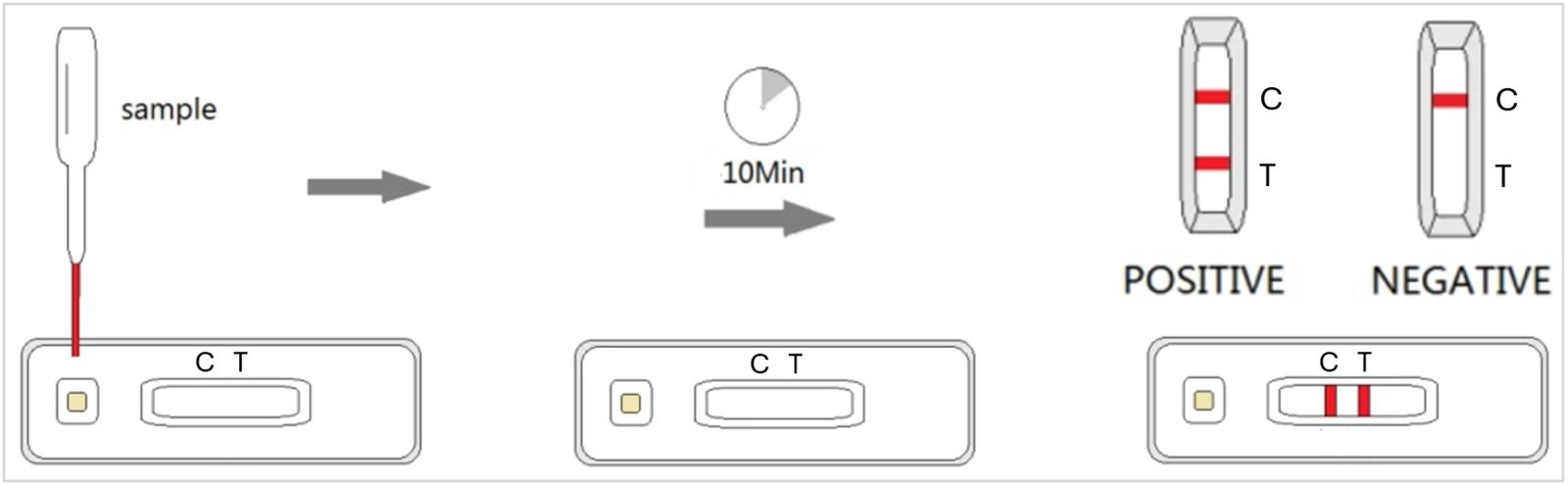
- The test can be read after 10 minutes
Results
After 10 minutes, the results are ready to review. If there are two lines, even if the line is feint, the test should be considered as positive (figure 3).
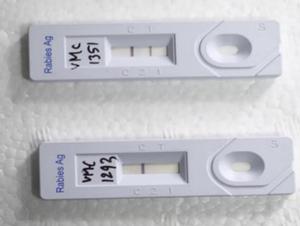
At the time of writing commercially available Lateral Flow tests have not undergone adequate validation to be a recognised test by WHO, however studies have shown good specificity and sensitivity of some LFA products.