

The door-to-door vaccination method should be considered in places where turnout to static point clinics fails to achieve sufficient coverage in the population, even with optimised awareness and public engagement efforts. In high density areas one vaccination team may be able to reach over 150 vaccinations per day, however an average rate of vaccination is 70 dog / team / day in most higher density regions and 40 dog / team / day in lower density regions.
Door-to-door vaccination involves vaccination teams travelling through a community visiting households one-by-one seeking vaccination of any eligible dogs at the location. The method still relies on strong public engagement to ensure that dog owners actively present dogs to the teams and assist in holding them for vaccination.
Team structure
Door-to-door teams need to have excellent communication and dog handling skills to maximise vaccination output and coverage. The Team Lead should be able to speak in the local language to communicate with the public about the campaign and engage dog owners to present their dogs for vaccination.
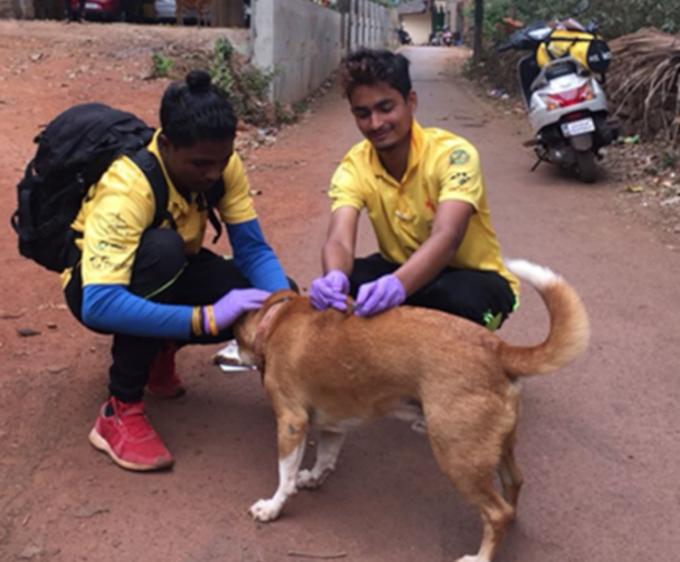
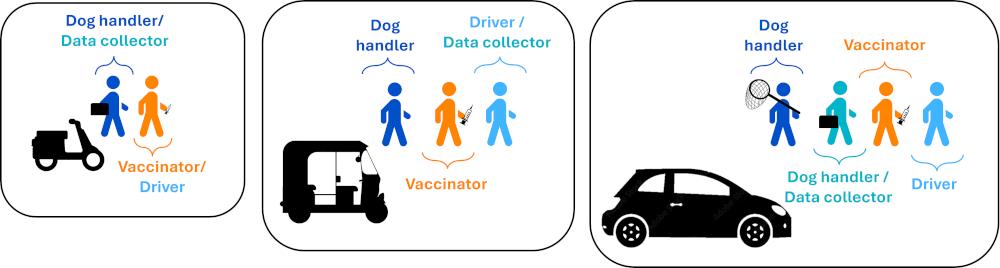
Each team should consist of at least two people for safety and efficiency; a vaccinator and a dog handler/assistant. If one person gets injured or bitten, the other can take the lead to seek help and manage the situation. Two-person teams will usually travel by two-wheel scooter, with one of the team driving (Figure 2).
In some settings it can be more effective to have teams of three or more people; a vaccinator, a dog handler, and an assistant/data collector (Figure 3). Larger teams will need to travel by three-wheeler auto-rickshaw or in a small vehicle. They may also carry additional equipment, depending on the dog population, such as a net to assist in the restraint of dogs who are not readily amenable to handling for vaccination by their owner.
Equipment
The general vaccination team equipment list is provided in the team logistics article. Additional equipment for door-to-door teams:
- Megaphone for announcing their presence
- Sturdy walking shoes
- Suitable backpacks for carrying equipment over distance
- Additional restraint aids depending on the dog population, such as a net.
Team direction
Door-to-door teams should be allocated a specific Working Zone to vaccinate each day. They should understand the extent of their assigned area to be vaccinated (Working Zone) using maps or a vaccination app such as the WVS App and they should aim to travel down every street in the community to ensure that all households are offered vaccination for their dogs. Areas not covered during the day should be returned to the following day until the whole zone is complete. Only then should the team be reassigned to a new vaccination Working Zone.