
In many settings, vaccination of only dogs that can be readily handled by an owner or trained dog handler for vaccination does not reach high enough vaccination coverage in the population to control rabies. Therefore more advanced methods of catching and restraining dogs have been developed to boost vaccination coverage. There are several examples where this has been done on a large scale, vaccinating hundreds of thousands of dogs a year, such as in Bali, Indonesia and Goa, India.
Team structure
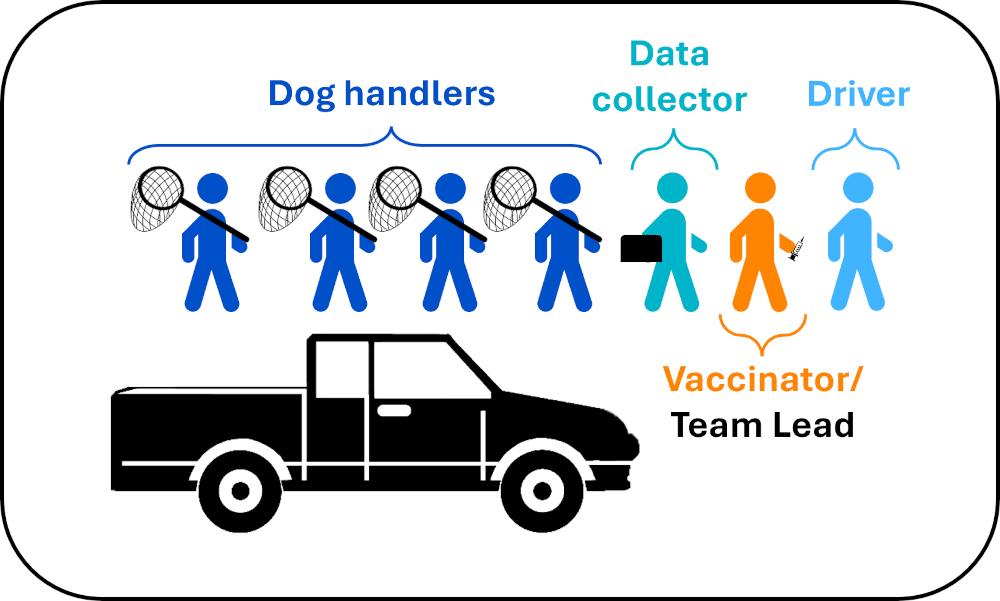
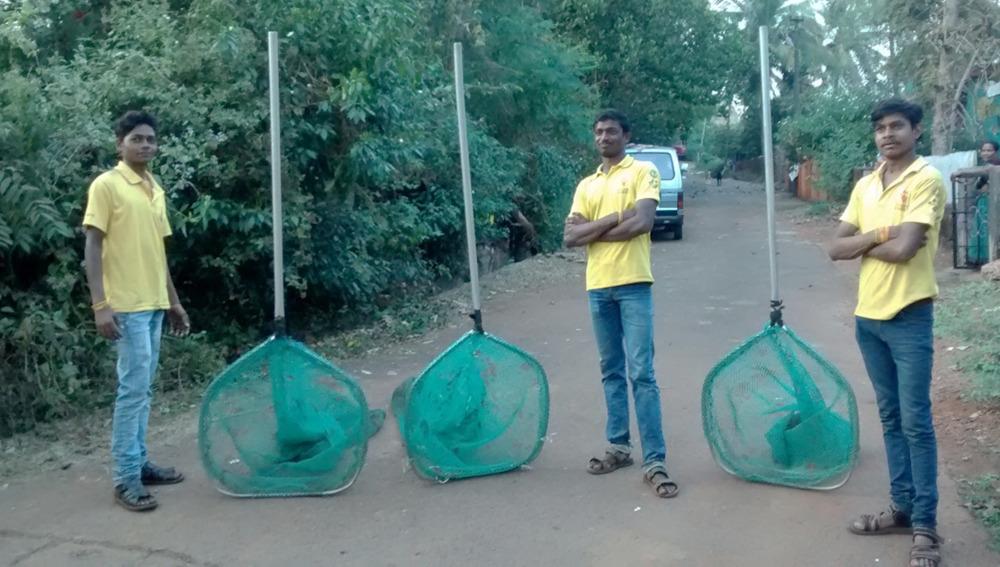
Net catching teams typically consist of between four to seven people and require a large vehicle to transport the team and their equipment through the community (Figure 1). This is typically a vaccinator, a driver, a data collector, and three to four catchers. Sometimes teams have fewer catchers, however often three or more is optimal in places with unhandleable dogs to maximise chances of free-roaming dogs. The driver may double-up as a dog handler, however the team will often move on foot for periods of time through the community and the vehicle needs to follow or meet them at a distant location, meaning the driver cannot leave the vehicle.
Equipment
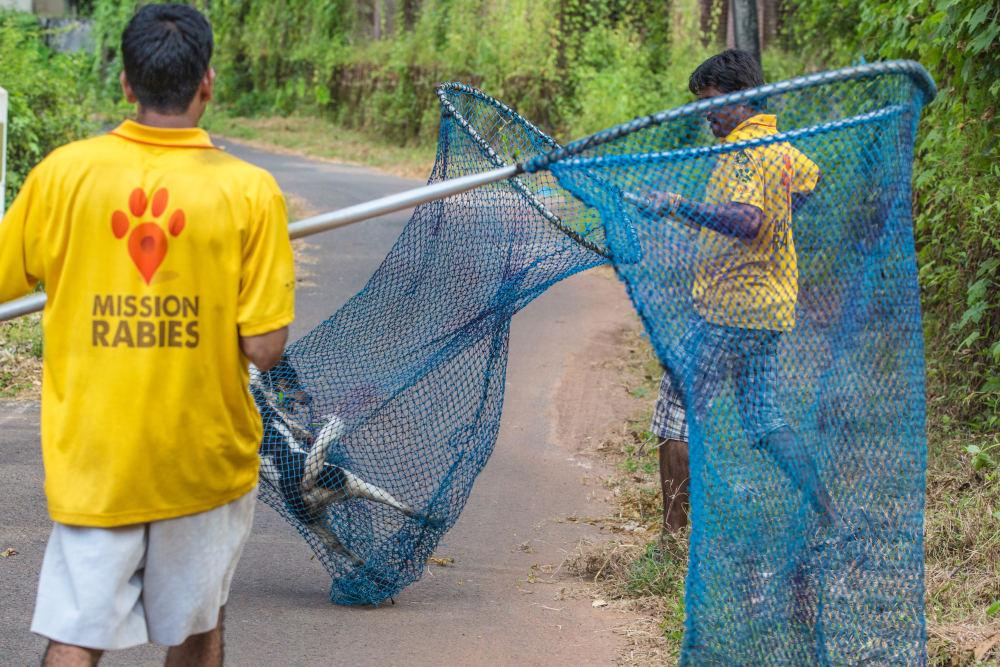
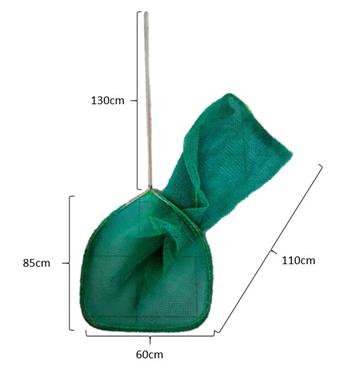
The most common tool for the capture of free-roaming dogs is the butterfly-net. These nets consist of a blind-ending polythene netting secured around an aluminium hoop at the end of a pole. The hoop is passed over the dog so that the dog becomes trapped inside the net.
Net equipment
The pole should be approximately 130cm long, the diameter of the hoop approximately 80cm and the depth of the net around 110cm. Designs have also been created to allow for detachment of the pole for transport of dogs, however these are not needed for vaccination campaigns, where the dogs are immediately released after vaccination.
Materials
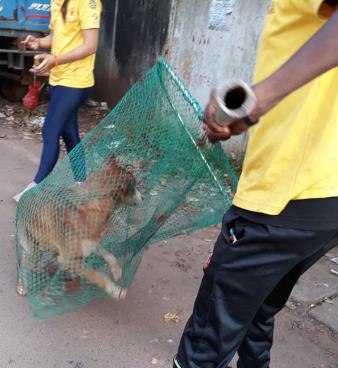
Aluminium metal is the preferable material for the frame due to it’s light weight making handling much easier than heavier materials such as iron. The netting should be carefully selected to prevent injury to the dog as it moves inside. Knots in the net should be small as these can otherwise catch on the nose or eyes. The material should be soft to prevent abrasion of the nose and the size of the holes should be approximately 2cm in diameter - wide enough to enable easy cleaning and removal of dirt from within the net.
Catching preparation
Equipment checks
Check equipment for faults and cleanliness before each vaccination session. Unclean nets pose a risk of spreading diseases such as distemper or parvovirus. The smell of dirty nets can also alert dogs from a long distance of the presence of the catching team and reduce the chances of catching.
No-catch zones & forbidden actions
During a catching attempt, each dog catcher is responsible for the safety of the dog catchers, the dog and the public. CVR is a fast-paced technique, where the animal and handler are typically moving quickly. Dogs will often try to avoid capture and may not be aware of dangers around them such as moving vehicles. This can pose a risk to the dog, handler and public. It is the responsibility of the dog handler to read a situation and minimise the risk to all involved.
Catching should be avoided in the following settings:
Crowded public spaces. Dogs may run into people or cause someone to fall or equipment may hit someone causing injury.
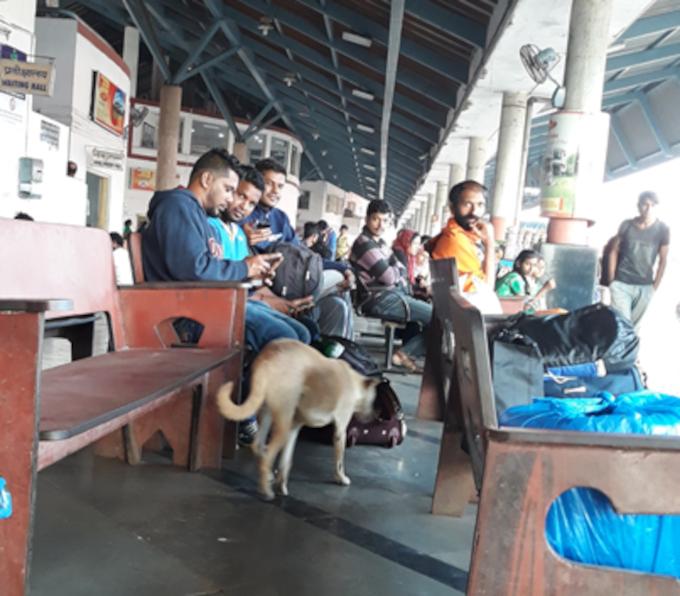
Busy roads. Dogs are at risk of suddenly running into roads with a risk of causing traffic accidents. Catching within 30 metres of high-speed roads should be avoided at all times and catching close to roads should be prioritised at the least busy times of day such as early in the morning before traffic increases.
Heights. As dogs try to avoid capture, they may jump over edges without knowing how far the ground is on the other side. Therefore catching on roof-tops or above ground level should be avoided. Likewise avoid catching dogs next to wells or where there is a large drop nearby.
Throwing nets. A catcher should never let go of the pole of their net. Sometimes a catcher may feel the urge to throw the net in a last-ditch attempt to net a dog that is out of reach or out of frustration, but this is never acceptable. There is an increased likelihood of injuring the dog, or the net pole bouncing in an unexpected direction and causing damage to surrounding objects (e.g. cars) or people. Net catchers seen to let go of their net should be reprimanded to create a culture where this is not accepted practice.
Catching approach
Catching dogs with nets is a physical and skilled task, which takes time to master. Working as a team is of fundamental importance to communicating and anticipating a dogs movements so that it can be effectively caught by one of the net catching team.
Training typically involved an induction to the approach through practical exercises using footballs to practice the movements of handling the net to catch a moving object. These exercises can be run like games to also help to build a sense of team cohesion which is equally important on the field.
The net catching approach intends to safely and humanely catch dogs that are otherwise not amenable to handling for parenteral vaccination. The safety of the dog, handler and people around is the top priority.
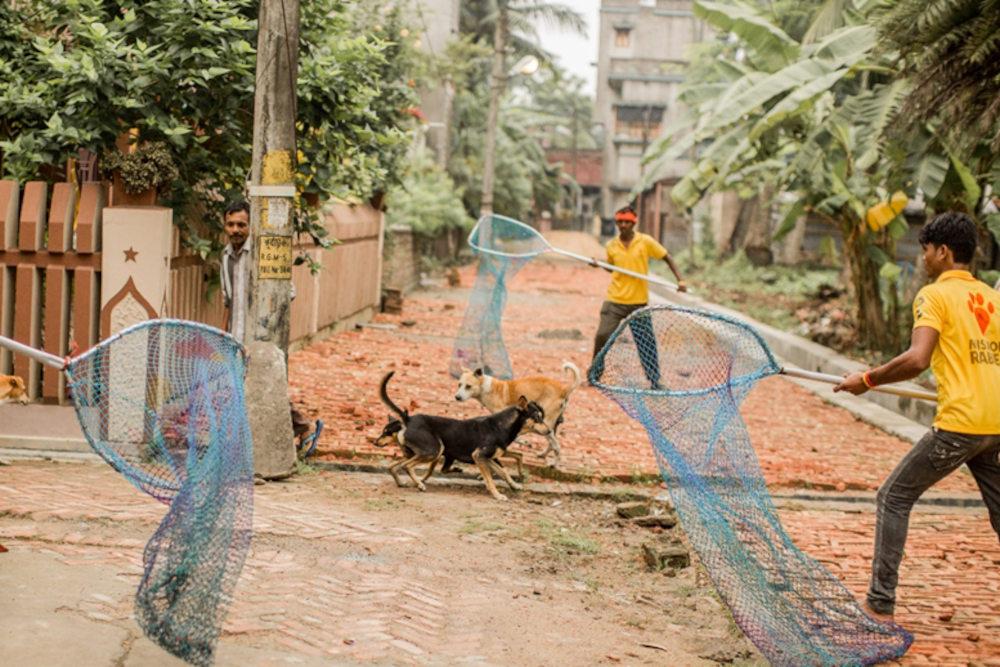
Catching teams should have pre-defined scenarios that are revised and agreed, so that everyone in the team knows the approach when the situation arises. These scenarios may include:
- Dogs under a vehicle - First the team should assess if the dogs are friendly and can be hand vaccinated. Where this is deemed unlikely, the net team space out around the vehicle and one person is assigned to encourage the dogs to move out from underneath toward the direction of others in the team.
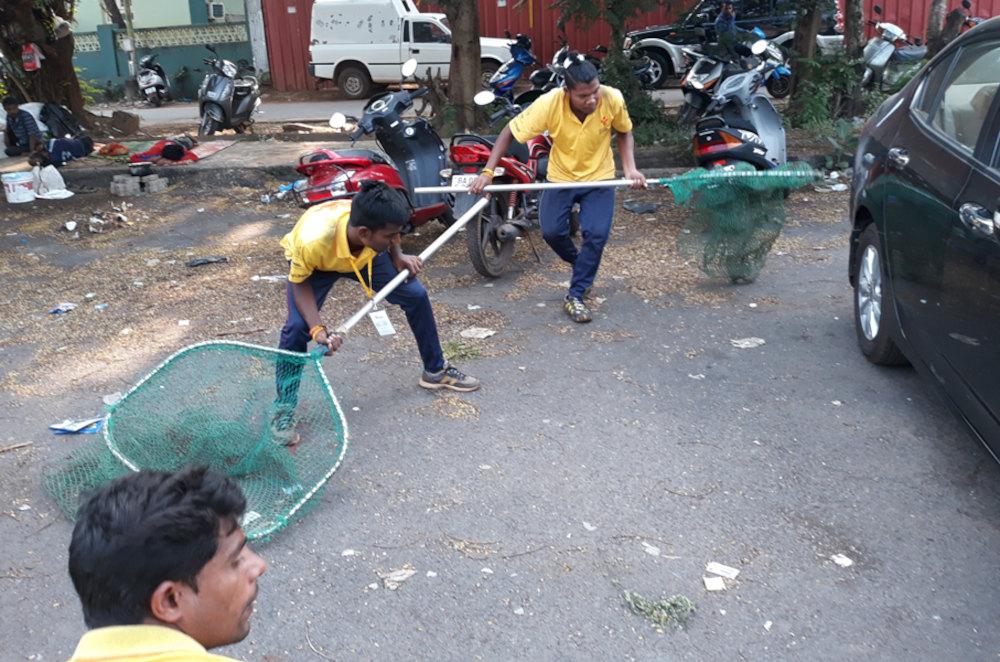
- Escape technique - Where dogs are seen in an ally way or street, the team should spread out to position catchers at each of the possible escape routes. Once everyone is in position, the less experienced handlers should be more visible / vocal to encourage the dog to attempt to escape towards a more experienced handler. This handler shows the dog a clear escape route with their net positioned ready to catch the dog as the pass through the escape route.
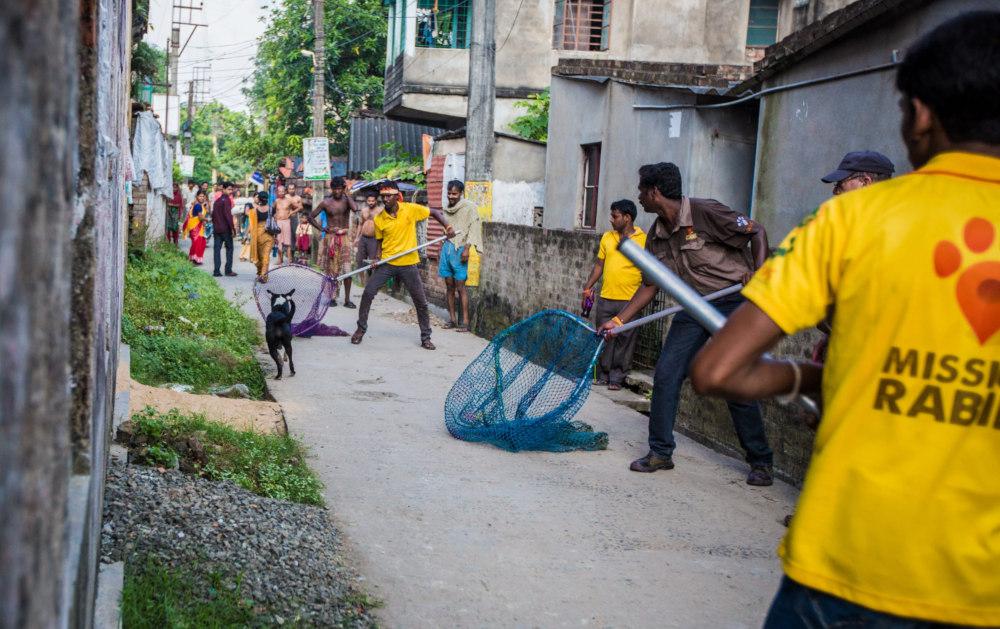
- Distraction technique - Where a dog is alerted to a specific net catcher and already barking at them, it is unlikely that this catcher will get close enough to net the dog. However it may be possible for another catcher to quietly approach from behind whilst they are distracted and successfully net them. Sometimes dogs will return when others in their group have been caught and will approach the dog in the net to investigate. Other net catchers should be prepared after a catch to approach these dogs quietly from behind to net them whilst they are distracted.
- Dog sleeping - efforts should be made to check with people in the area if the dog has an owner and if it is friendly and could be handled for vaccination if it is woken up. If the community report that the dog is not handleable or owned, then it is best to attempt catching before the dog wakes up so that the dog can be vaccinated. The dog should be approached silently by a single catcher until within net catching range, with other catchers at a distance to block potential escape routes in case the dog wakes and tries to escape. The net is quietly positioned as closely as possible and then suddenly placed over the dog in a single action.
Restraint
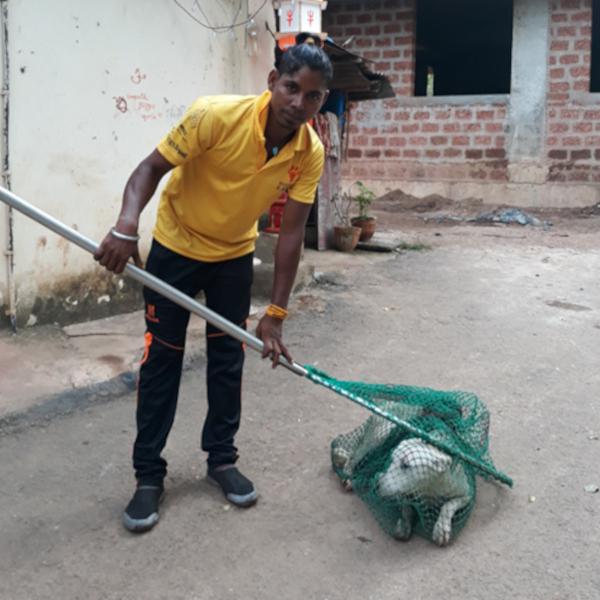
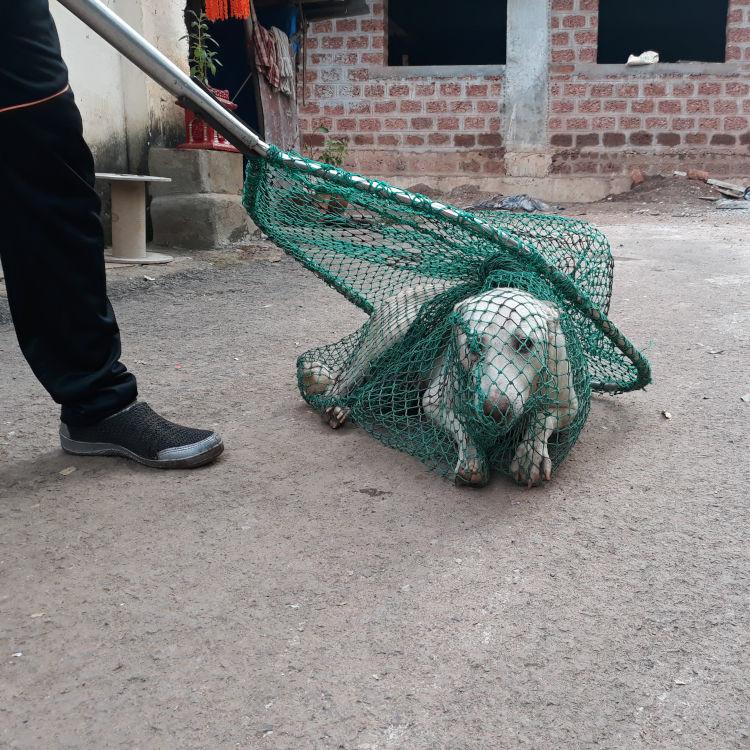
Once secure in the net, the pole/hoop can be rotated to twist the neck of the net and then folded over the dog to gently hold the dog. Care must be taken to avoid pinching any part of the dog under the frame - be careful of toes and limbs. Dogs will typically settle quickly in this position and should be monitored for any signs of distress. If you are concerned the net should be loosened for further examination of the dog immediately.
Equipment maintenance
Cleaning
Catching equipment should be cleaned thoroughly at the end of each vaccination session to avoid transmission of diseases between dogs and to prevent strong smell which can alert dogs top the catching team from a long distance away. Nets should be cleaned with disinfectant like chlorhexidine or viricidal agent. More information on net cleaning can be found in the net equipment article.
Damage
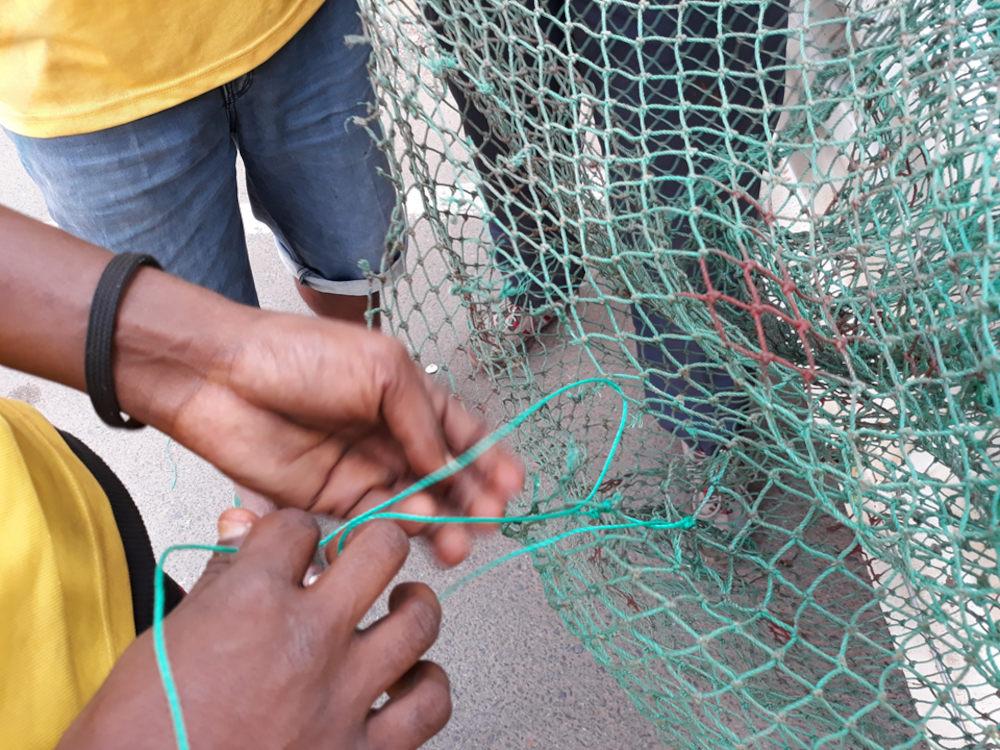
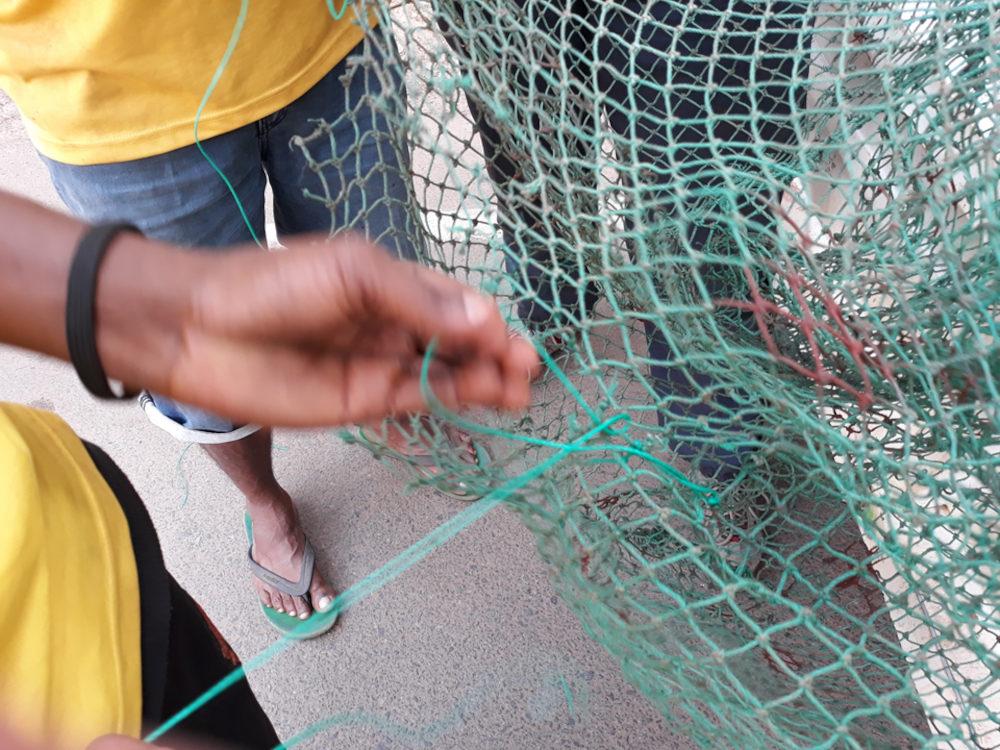
Both the net and frame must be inspected for damage before each vaccination session. Holes in the net can result in dogs escaping and becoming difficult to catch a second time, thus hampering rabies control efforts. Routine patching of holes should be done outside of catching sessions, however small holes occurring during catching can also be repaired on-the-fly.
Weakening of parts of the frame may also result in breakages during catching which could cause injury to the handler or dog. If a frame becomes bent during catching this will create a weakness in the structure of the metal. Frames with areas of weakness should not be used.