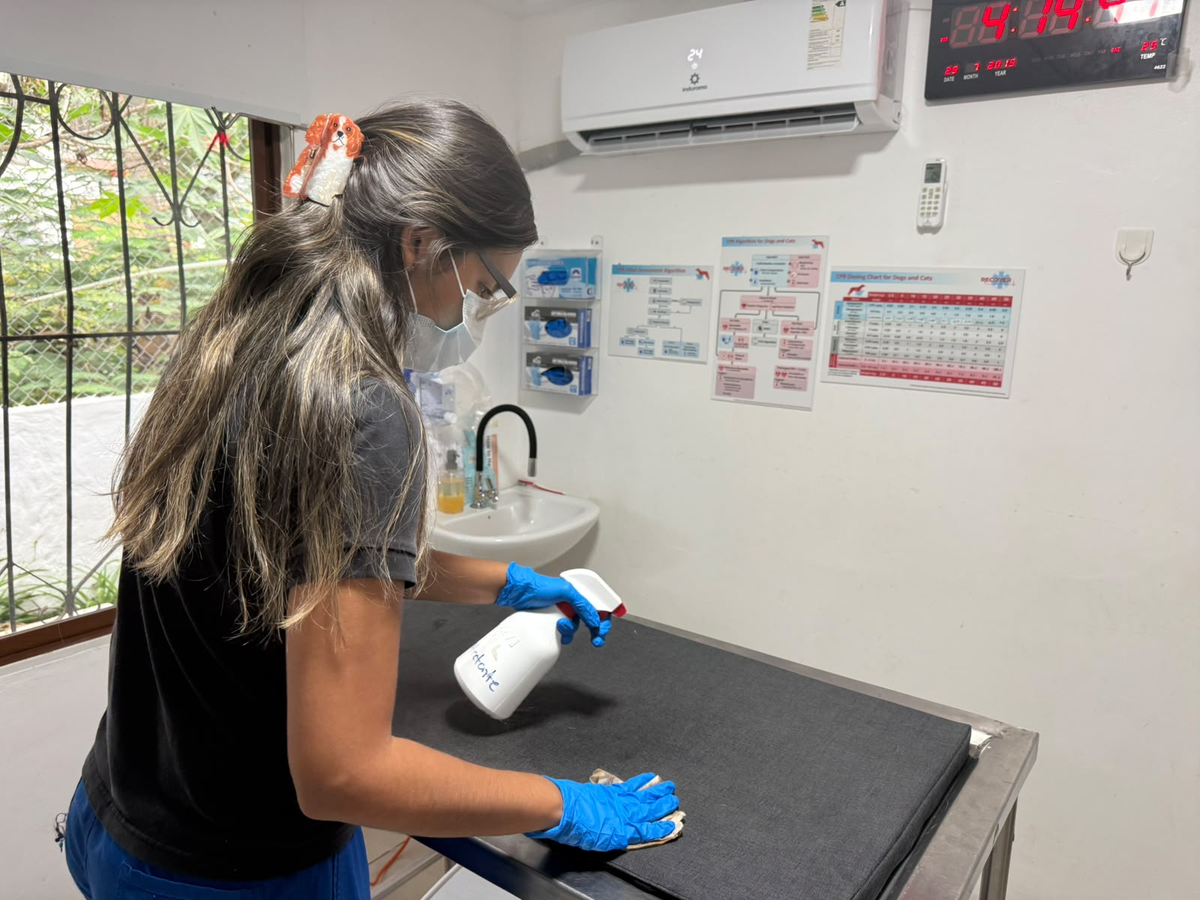

Cleaning surfaces and equipment is a key component of infection control. The articles in the next topic, ‘Disinfectants’, will expand on different types of disinfectants, and provide more detail on area-specific cleaning protocols. First, it’s important to understand the general principles which will underpin what you learn next.
Key terms:
Cleaning: Physical removal of dirt and organic matter (faeces, urine, dirt, food)
Disinfection: To kill or inactivate most harmful microorganisms, reducing them to a level that is unlikely to cause infection. Disinfection does not necessarily remove or destroy all microorganisms, particularly bacterial spores.
Sterilisation: Complete elimination of all microorganisms, including spores
Disinfectant: Product used on external environment to kill or inactivate microorganisms e.g. on surfaces
Antiseptic: Product used topically on the body to kill microbes (e.g. chlorhexidine)
Purpose of cleaning and disinfection
The primary goal of cleaning and disinfection in a veterinary setting is to significantly reduce the number of harmful microorganisms in the environment, preventing the spread of infectious diseases to animals, staff, and clients.
It's important to understand that disinfection is only effective after proper cleaning has been performed. Organic material such as dirt, faeces, blood, and food waste can protect pathogens from exposure and even deactivate many disinfectants. This is why the surface needs to be cleaned using a detergent, to remove all visible contamination before it can be disinfected.
Water alone is not sufficient. A surface may look clean after being washed with water, but invisible traces of faeces, blood and other organic material may still remain. Detergents help to break up this residue so it can be washed away. Without detergents, pathogens can remain shielded by the dirt, preventing disinfectants working effectively. There are many detergent products available, including those that are specifically designed for use with animals.
What’s the difference between a detergent and a disinfectant?
Detergents: these are cleaning products which use surfactants to suspend and loosen dirt, grease, and organic material, allowing them to be washed away. They do not kill harmful microorganisms, but help remove them physically from surfaces.
Normal dish soap can be used as an easily available and cost-efficient detergent.
Disinfectant: An agent that kills or inactivates harmful microorganisms. Does not necessarily remove dirt or grease.
Some disinfectants are formulated with detergent properties, eliminating the need for a separate pre-cleaning step. However, each brand and formulation can vary, so it’s essential to follow the manufacturer’s guidelines for proper use, dilution, and contact time.
Importance of cleaning between all patients
It’s important to maintain consistent and thorough cleaning and disinfection practices between every patient, not just those with suspected or confirmed contagious illnesses.
Animals may carry and shed pathogens without showing any clinical signs. Asymptomatic carriers can still spread infectious agents to us, the environment and other animals. This means that even routine patient contact can result in contamination of equipment, surfaces, clothing, or hands, allowing pathogens to spread indirectly between patients.
That’s why it is essential to:
- Clean and disinfect surfaces and equipment between each patient.
- Practice good hand hygiene before and after handling any animal.
- Treat all patients as potential sources of infection, regardless of how healthy they appear.