

It is essential to identify infectious patients early, to reduce the risk of disease transmission in veterinary clinics. Prompt recognition allows infection control measures to be implemented quickly. Each clinic should have its own infectious patient protocol to ensure a consistent and appropriate response in these situations.
Before arrival
Where possible, potentially infectious patients should be identified before they arrive at the clinic. This can be achieved during appointment booking or telephone triage by asking about clinical signs such as vomiting, diarrhoea, coughing, or sneezing, as well as the animal’s vaccination status.
Having this information in advance allows the team to prepare appropriately. This may include gathering personal protective equipment (PPE), preparing an isolation area or alternative treatment space, or eve arranging for the patient to be assessed outside the clinic and away from other animals. Early planning helps reduce the risk of exposure within general clinical areas (and the waiting room). In some cases, clinics may not be able to treat animals with highly contagious diseases (e.g. parvovirus) inside the hospital, due to the significant risk of environmental contamination and spread to other patients.
On arrival
Staff should be able to recognise the common signs of infectious disease. These may include:
- Vomiting or diarrhoea
- Coughing
- Sneezing
- Nasal or ocular discharge
- Lethargy or fever in combination with the above symptoms
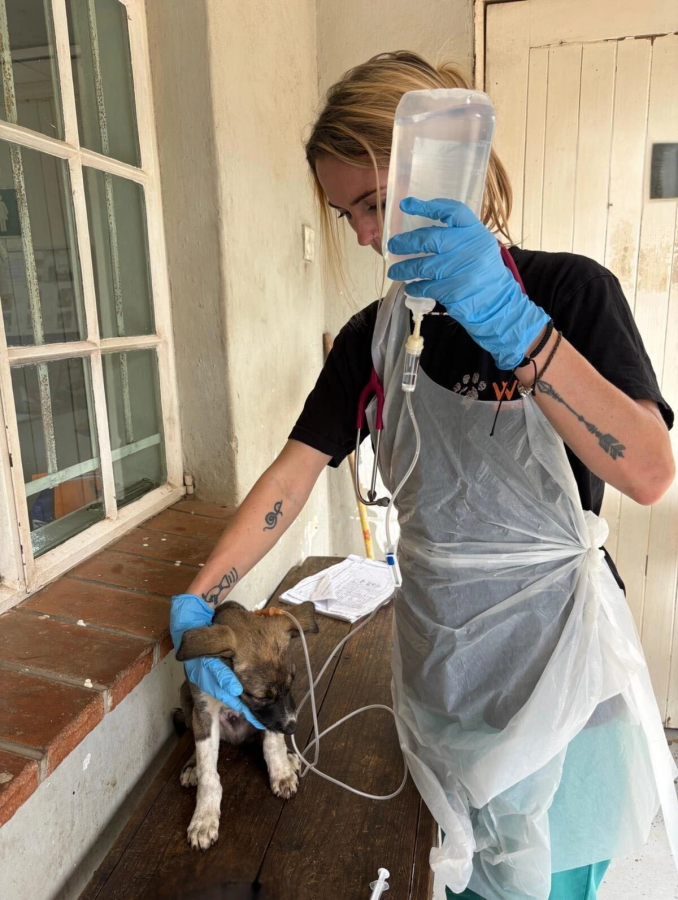
Any patient showing these signs should be treated as a potential infection risk until proven otherwise. To minimise spread, these animals should not enter reception or other general areas of the clinic. Instead, they should be directed for assessment outside or taken straight into a designated treatment area.
Inside the clinic
Inside the clinic, care should be taken to minimise contact with other patients and avoid shared spaces wherever possible. Potentially infectious animals should not be allowed to walk through the clinic, as this increases the risk of environmental contamination. Instead, they should be transported in a carrier or carried by staff wearing appropriate personal protective equipment (PPE), following a planned route that limits exposure to other areas.
Reminder: Cleaning and disinfection protocols should be followed between all patients, not only those suspected of infectious disease to maintain general infection control standards.
Patient flow and order of treatment
To reduce disease transmission and protect vulnerable patients, animals should be treated in a planned order. Consider both their infection risk and their susceptibility to disease. Younger animals and those with weaker immune systems are generally more vulnerable, so they should be treated before patients that may be infectious. Suspected or confirmed infectious cases should be treated last whenever possible (and clinically safe to do so) to reduce the spread of pathogens within the clinic.
To reduce the risk of spreading disease within the clinic inpatients should be treated and handled in the following order:
- Healthy juveniles
- Healthy adults
- Unwell juveniles
- Unwell adults
- Potentially infectious or high-risk cases (isolation cases)
This order is a guide only and must not delay urgent or necessary care. Clinical need and patient welfare always take priority, and the order should be adjusted when an animal requires prompt assessment or treatment.