

Assessing and emptying the urinary bladder in the anesthetised patient prior to being scrubbed for surgery can make a big difference in ensuring a smooth spay-neuter procedure.
A simple step in preparation which can make a big difference to your surgery
Reasons for bladder expression
Interference with surgical site. A distended bladder is space-occupying and in female dogs displaces the uterus, making it difficult to access and reducing space for visualising the ovarian pedicles during ligation.
Damage. A distended bladder is more likely to be damaged accidently by the surgeon, risking perforation and increased morbidity to the patient.
Contamination. Emptying of the bladder during surgery will contaminate the surgical drapes resulting in a breach in sterility due to strike-through; in addition, the urine will wet the patient, resulting in unnecessary heat lose and predisposition to hypothermia.
Patient comfort. A distended bladder is uncomfortable, even painful.
Manual expression of the bladder
You must ensure that the depth of anaesthesia is sufficient before attempting to express the bladder. If the patient is not sufficiently relaxed, there will be a resistance to this procedure with consequential risk of damage. Never use excessive or sudden force as this can bruise or even rupture the bladder.
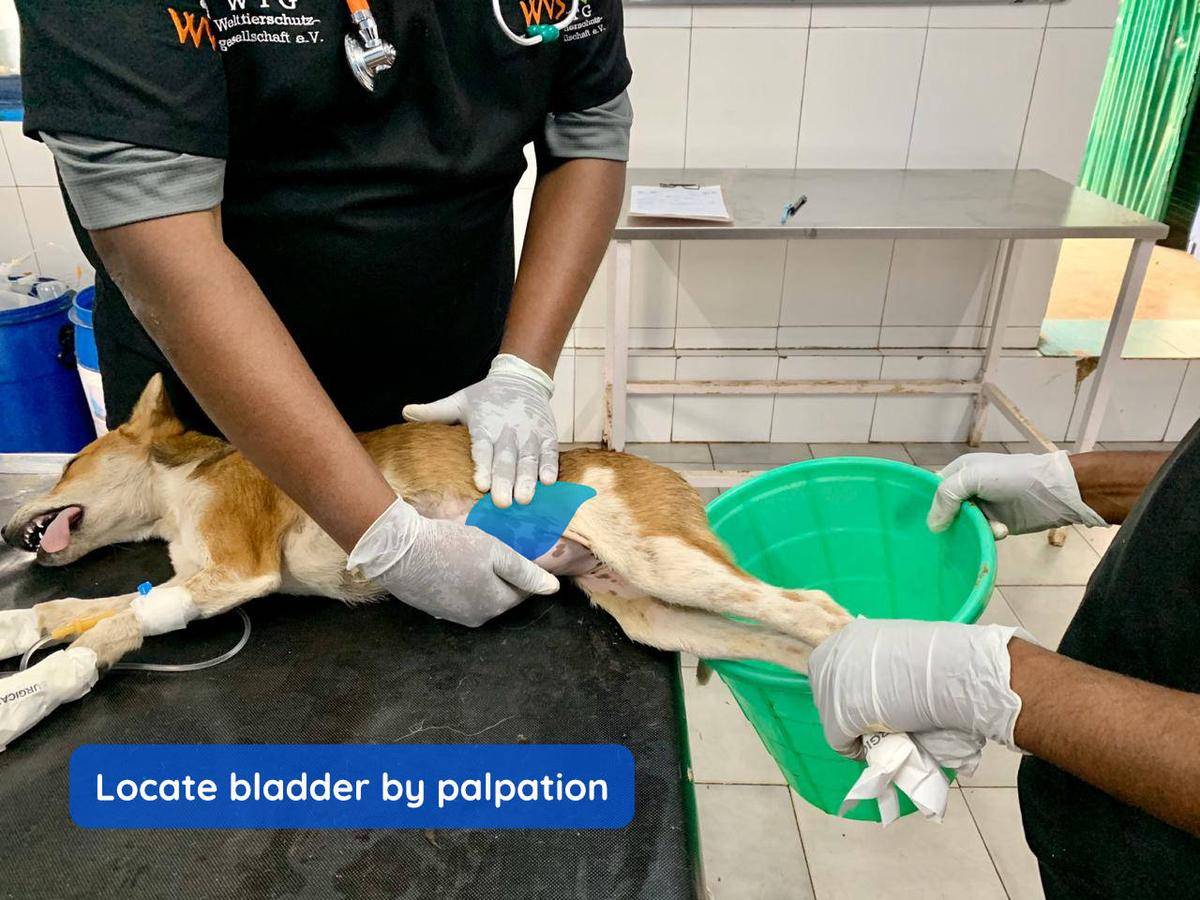
Palpate the bladder. Locate the bladder by palpating in the midline of the ventro-caudal abdomen; if there is sufficient urine present, it will feel like a small balloon (Figure 1).
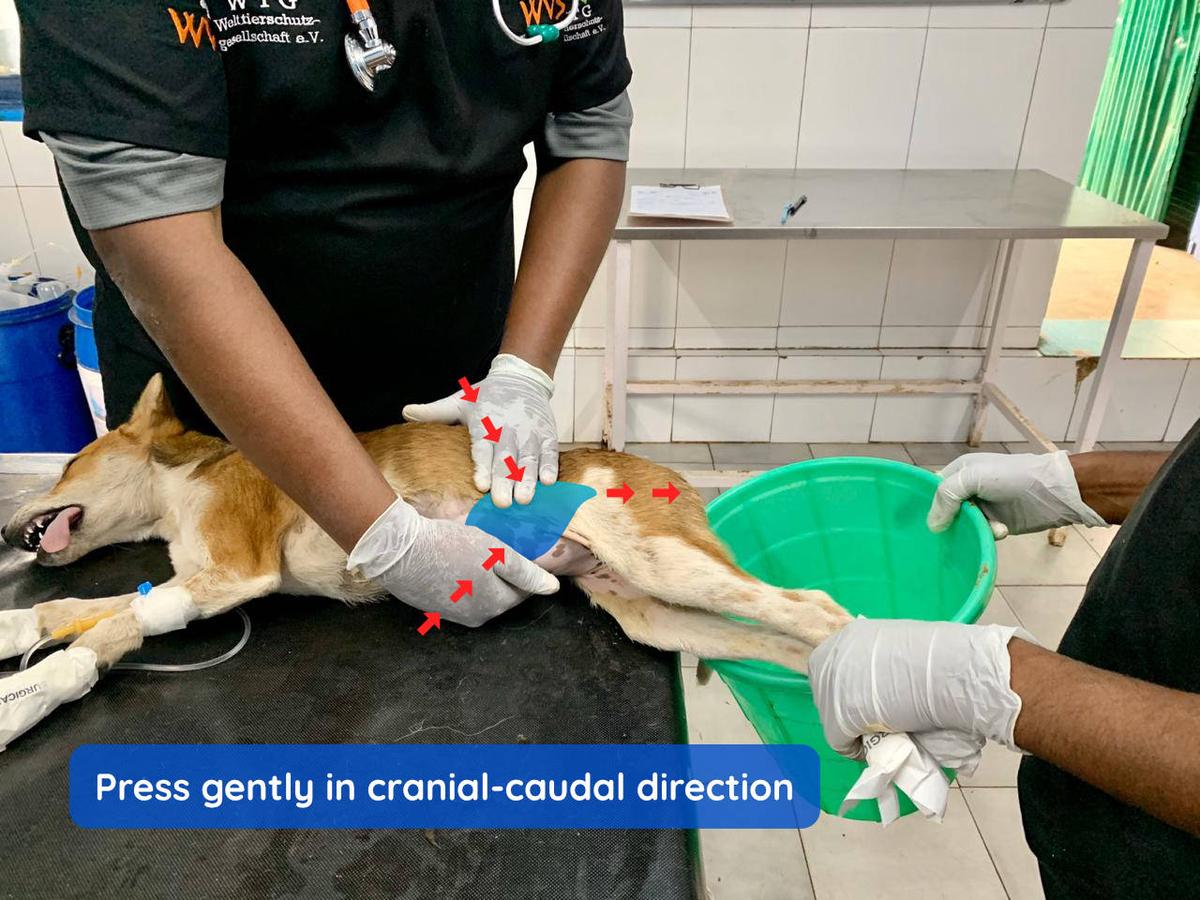
Express with gentle pressure. Place a bowl between the hindlimbs to catch the urine, varying the position depending on whether the patient is male or female. Using one hand for small or two hands for larger dogs, steadily and slowly squeeze the bladder in a cranial to caudal motion in order to encourage urine to flow caudally (if female) or through the penis (if male) (Figure 2). Do not use excessive or sudden force; be gentle, use flat hands and take your time. Never push fingers into the bladder.
During ovariohysterectomy, especially if the patient is receiving IV fluids, the bladder may need to be emptied again. The surgeon can gently apply pressure directly to the bladder with flat hands whilst an assistant holds a bowl caudally. The procedure is the same except that the patient is in dorsal recumbency. Never push fingers into the bladder which risks bruising. Care should be taken to preserve the sterile field and contamination of drapes with urine.