

It is important to understand the concept of asepsis and,
to living tissues) and sterilisation (referring only to inanimate objects such as surgical equipment).
Sterilisation. The complete destruction of microorganisms, including spores, by physical or chemical means. This usually refers to the preparation of equipment used during surgery, such as surgical instruments, needles and catheters, where harsh chemicals or high temperatures can be used to achieve this. It's not technically correct to use this term when referring to the preparation of body surfaces such as the patient's skin or the surgeon's hands because we cannot completely remove all microorganisms from the skin's surface by washing techniques alone.
Disinfection. The process of eliminating microorganisms, except bacterial spores, on inanimate surfaces or objects.
Disinfectant. A germicidal chemical solution that will kill microorganisms (although not necessarily their spores). Used for cleaning inanimate surfaces or objects such as tables, instruments etc.
Sepsis. The presence of bacteria or other infectious agents, or their toxins, within the bloodstream of a patient. It is also known as septicaemia.
Asepsis. The absence of microorganisms on living tissues that can potentially result in disease. Can be used to describe body surfaces of the patient and surgical team.
Antiseptic. A chemical agent that either kills pathogenic microorganisms or inhibits their growth. This term is used for agents that may be applied to body surfaces such as skin. An example of a commonly used antiseptic for skin is chlorhexidine (4% w/v chlorhexidine gluconate solution) used for patient and surgeon preparation.
Categories of surgery
Surgical neutering is an elective procedure; it is performed on an animal that is otherwise fit and healthy for the purpose of removing the gonads and preventing future reproduction. This type of wound is therefore called a surgical wound.
Clean surgery. Is a surgery where the incision is made through a sterile field, there is no break in sterile technique and the gastrointestinal tract is not entered. Routine spay-neuter surgeries should fall into this category (Figure 1).
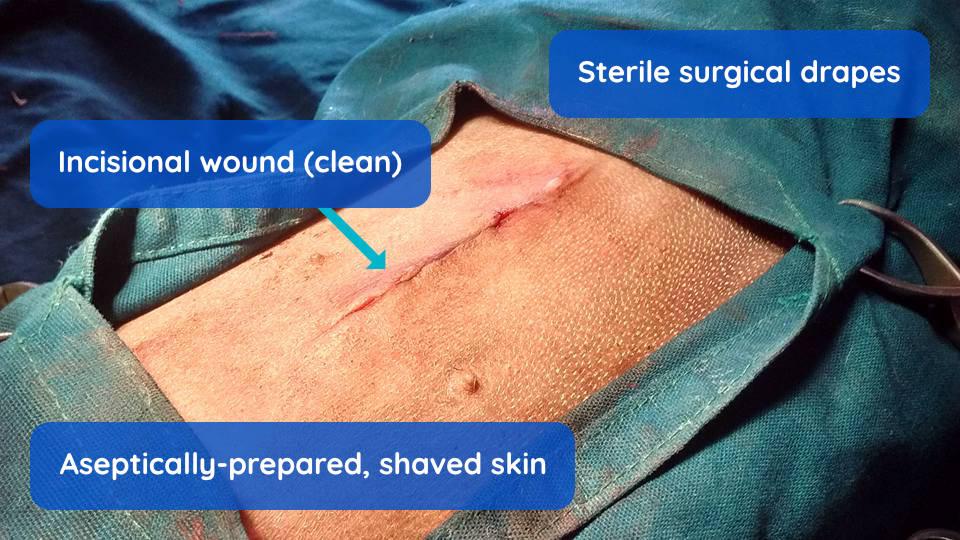
Figure 1 - An incisional (clean) wound created by the surgeon in a patient that is healthy is classified as "clean".
Clean-contaminated surgery. Involves entry into the respiratory, gastrointestinal or urogenital tracts (e.g. an enterotomy) in controlled conditions so that no gross contamination occurs.
Contaminated surgery. Is where there is a major break in sterile technique or there is gross spillage from the gastrointestinal tract. Surgery involving traumatic wounds that are more than 12 hours old should also fall into this category.
Dirty surgery. Surgery involving a wound or cavity in which purulent material (pus) is present or traumatic wounds with devitalised tissue.
Although we cannot eliminate all microorganisms from the operating environment, by sterilising equipment and adhering to strict aseptic techniques and surgical principles, the chances of infection during routine spay-neuter surgeries are minimised. Therefore, our goal is to create a surgical wound that heals well without complications. But what other factors will affect whether a wound will become infected? These are discussed in the next section on wound healing.