

The aim of asepsis is to prevent contamination of the surgical wound by protecting the operative site from the surrounding, non-sterile environment. The locations where contamination by microorganisms can occur, such as bacteria, are outlined in Figure 1.
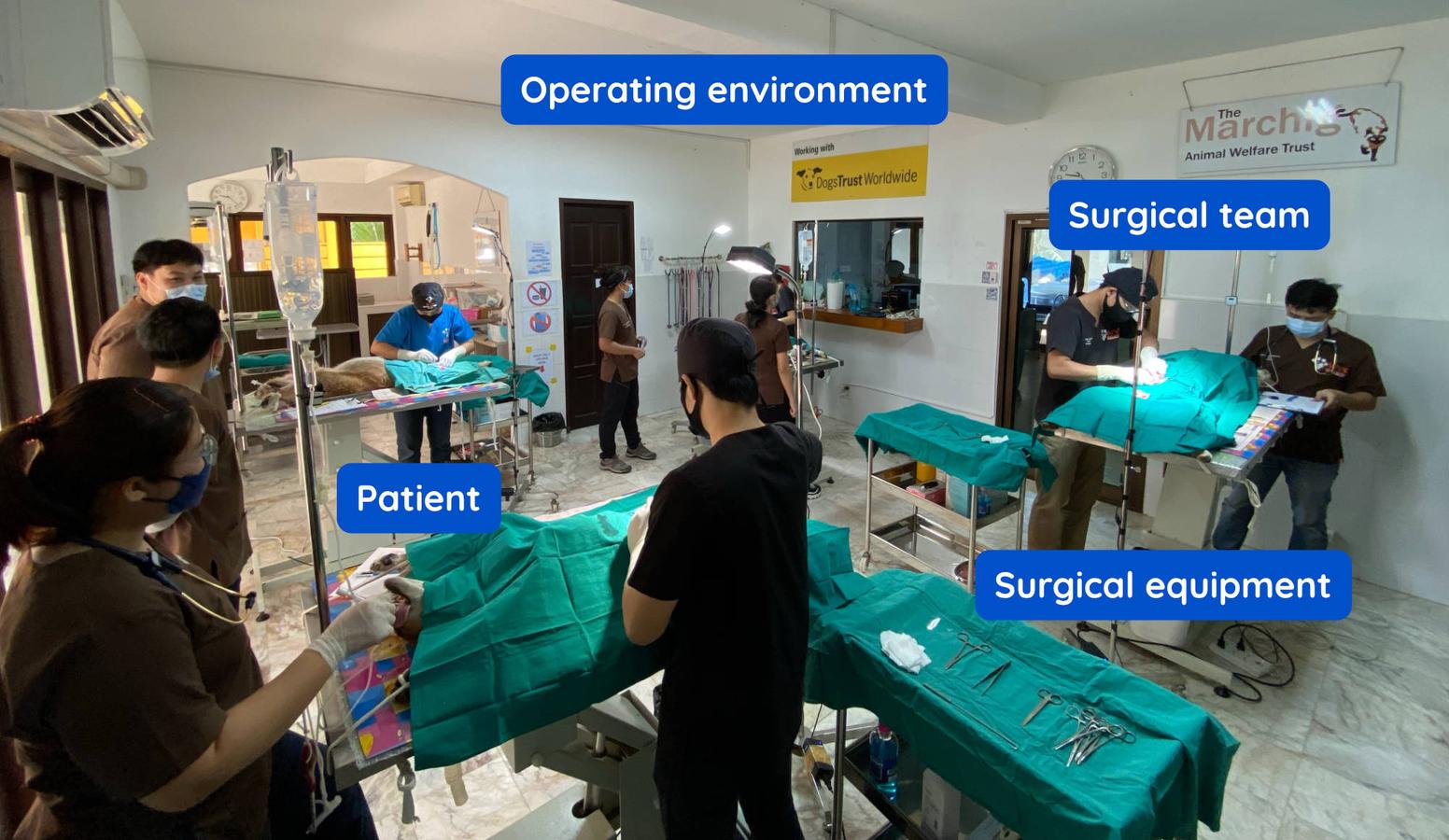
Patient. The patient's flora comprises both exogenous (contaminant bacteria on the exterior, such as the haired skin) and endogenous (microflora from locations such as the oral cavity, gastro-intestinal tract) microorganisms. Thorough patient preparation, such as clipping/shaving, scrubbing and draping, will help to minimise the opportunity for bacterial contamination.
Surgical equipment. Equipment must be sterilised effectively to ensure that microorganisms are eliminated from all surfaces.
Surgical team. The number of personnel in a theatre should be kept to a minimum. Sometimes this is difficult in a spay-neuter setting where multiple surgeries are being conducted concurrently. Nevertheless, only essential staff members should be present and the theatre should not be a thoroughfare to other areas of the clinic. Dedicated theatre clothing and accessories should be used in the operating theatre to minimise contamination. Staff members who are part of the surgical team must prepare their hands by aseptic techniques which include scrubbing, drying and gloving.
Operating environment. Many bacteria are airborne and are the most common source for contaminating a wound. Therefore, the operating and ancillary areas must be easily cleanable, and kept free from unnecessary clutter. Additional measures, such as reducing draughts, help to reduce excessive air movements that may facilitate bacterial movement.
These four areas of importance will be described in greater detail in this module.