

Gloving is an important sterile barrier for reducing the risk of contamination between the surgeon and the patient. Gloving is carried out after the surgeon has scrubbed and dried their hands.
Pairs of surgical gloves are individually wrapped in a sterile packet (always check that the packet is correctly sealed). They are available in different sizes and the surgeon must know what size they require before they start scrubbing. Gloves can be powdered on the inside with maize starch or be powder-free; the latter are often preferred as starch can cause allergic skin reactions.
Using gloves should never be a substitute for poor hand washing technique!
There are two main types of gloving techniques:
Open gloving. This method is used when the surgeon isn't wearing a gown or will be replacing gloves between consecutive operations. This is commonly the method of choice in a spay-neuter setting.
Closed-gloving is performed with the hands remain inside the sleeves of a gown, with less risk of contamination. It is commonly performed in locations or situations where sterility is of particular importance.
Open-gloving
When gloving, the surgeon's skin must only ever touch the inside of the gloves and never the outside. Conversely, the outer surface of a glove must only touch the outer surface of the other glove and not the inside. These rules ensure that sterility is maintained.
The method for open gloving is described below:
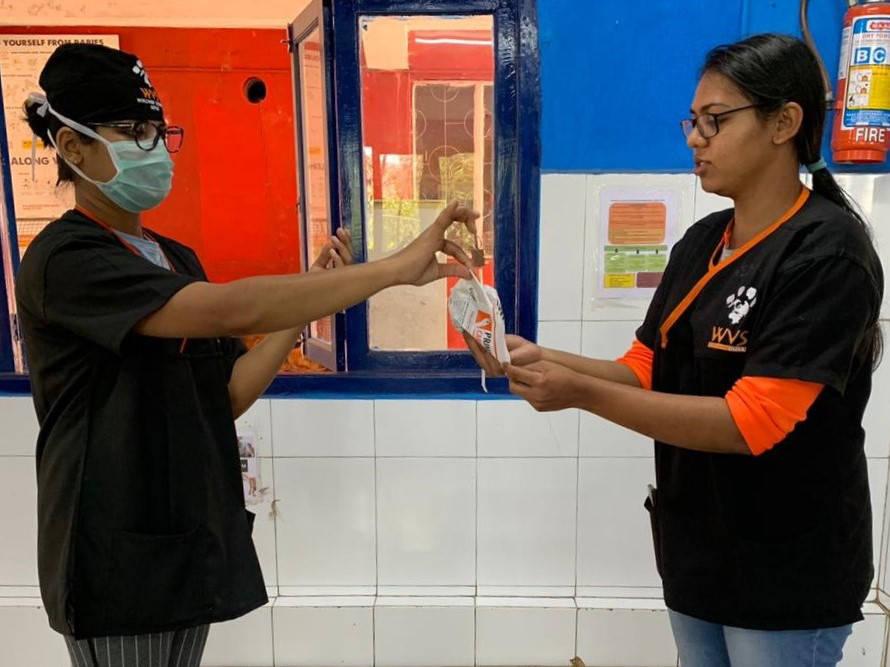
Open the glove pack. The outer glove pack is opened by an assistant and the inner pack removed by the surgeon (Figure 1).
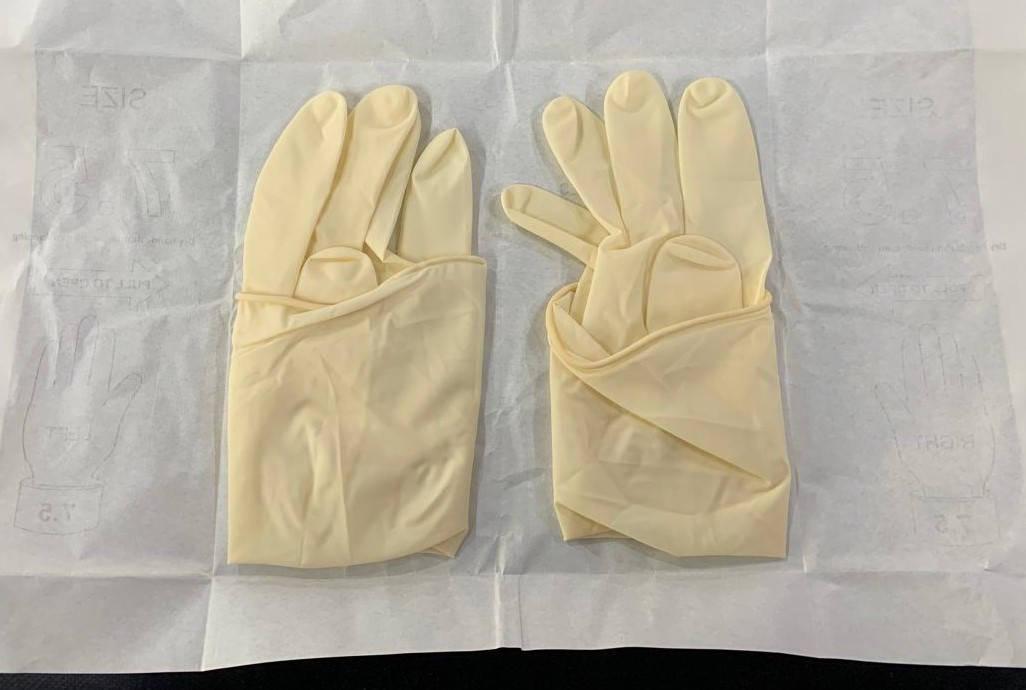
The inner pack is placed on a clean, dry surface and opened carefully, avoiding touching the table (Figure 2).
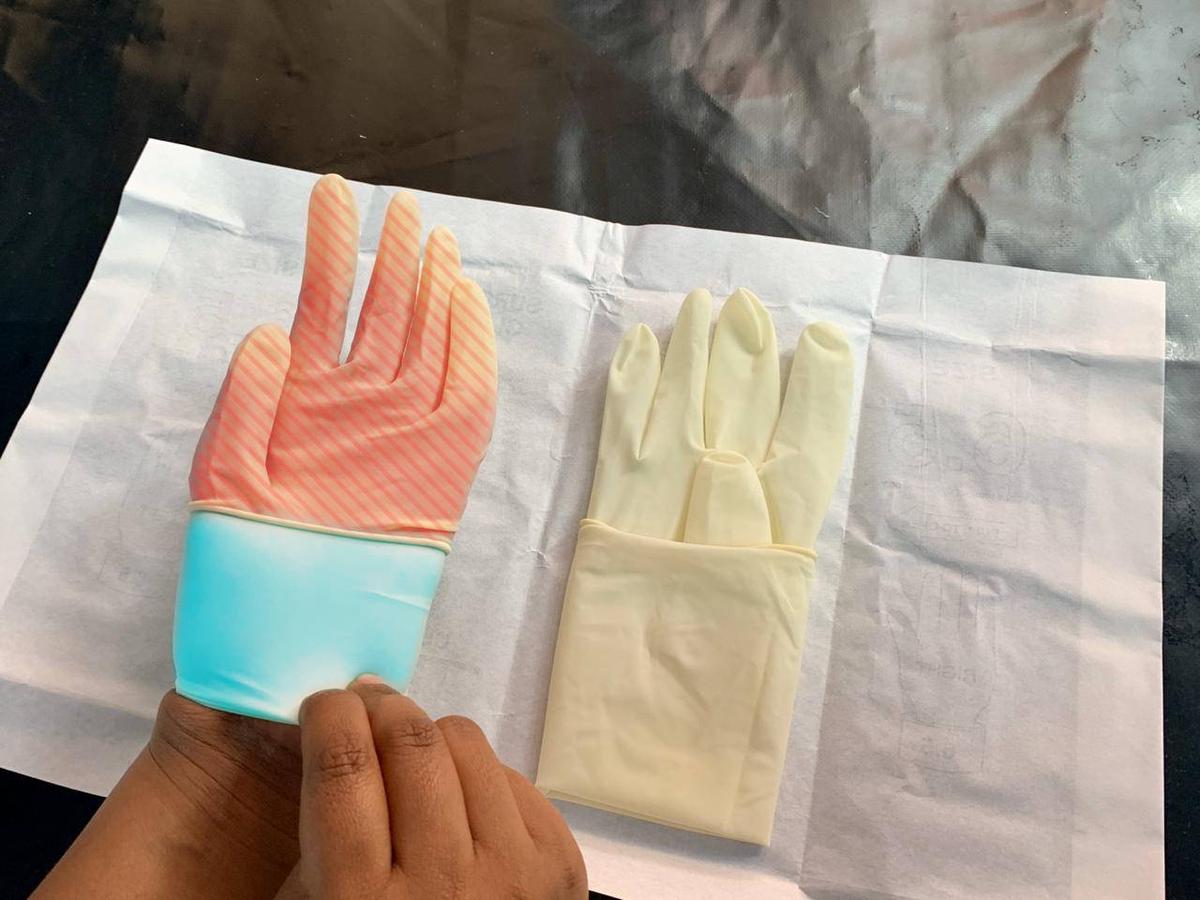
Insert hand into first glove. With the right hand, the left glove is picked up by touching the inner surface of the turned-over cuff. The glove is pulled on to the left hand, inserting all the fingers into position. Do not unfold the cuff at this stage (Figure 3).
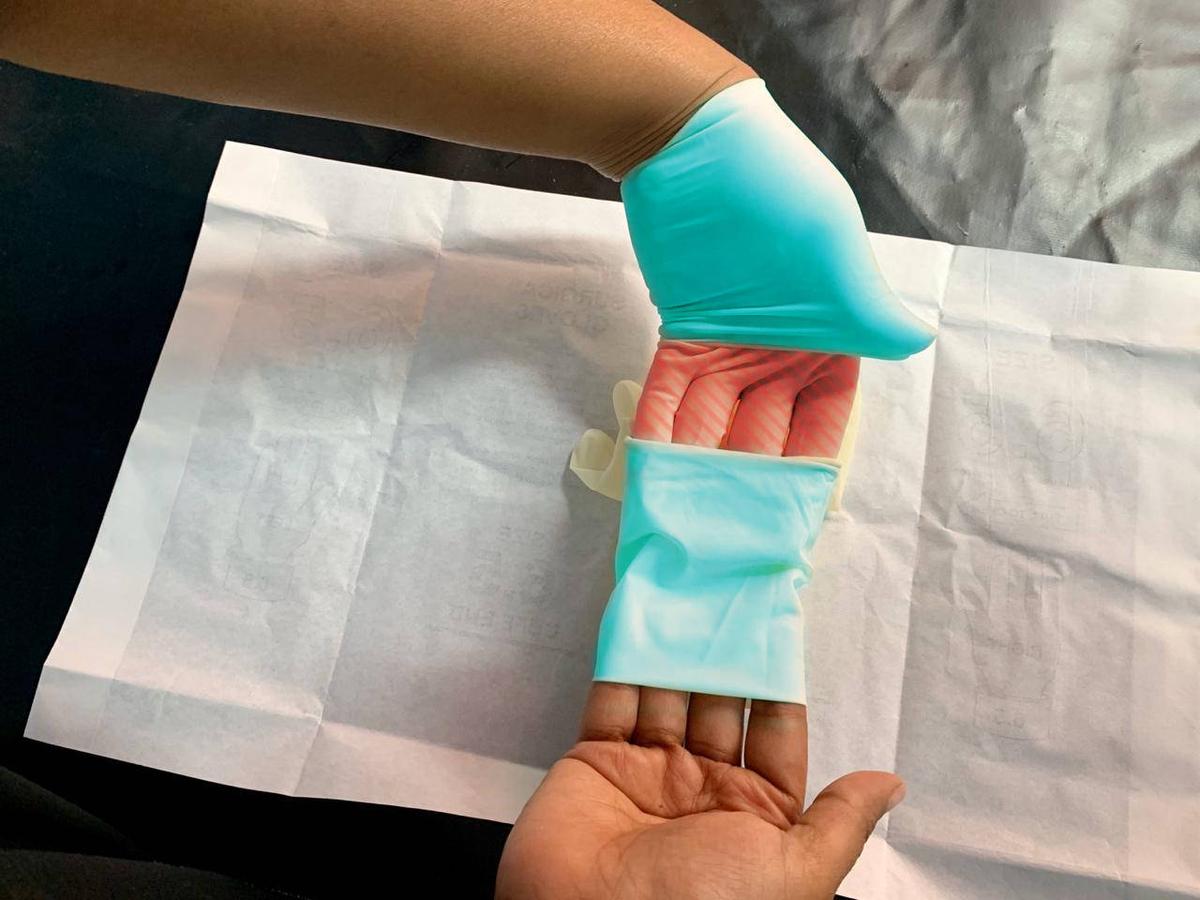
Insert hand into second glove. The gloved fingers of the left hand are placed under the cuff of the right glove so that they touch the outer surface only, and used to pull the glove onto right hand (Figure 4).
Reposition the left glove. The rim of the left glove is hooked over the thumb (Figure 5).
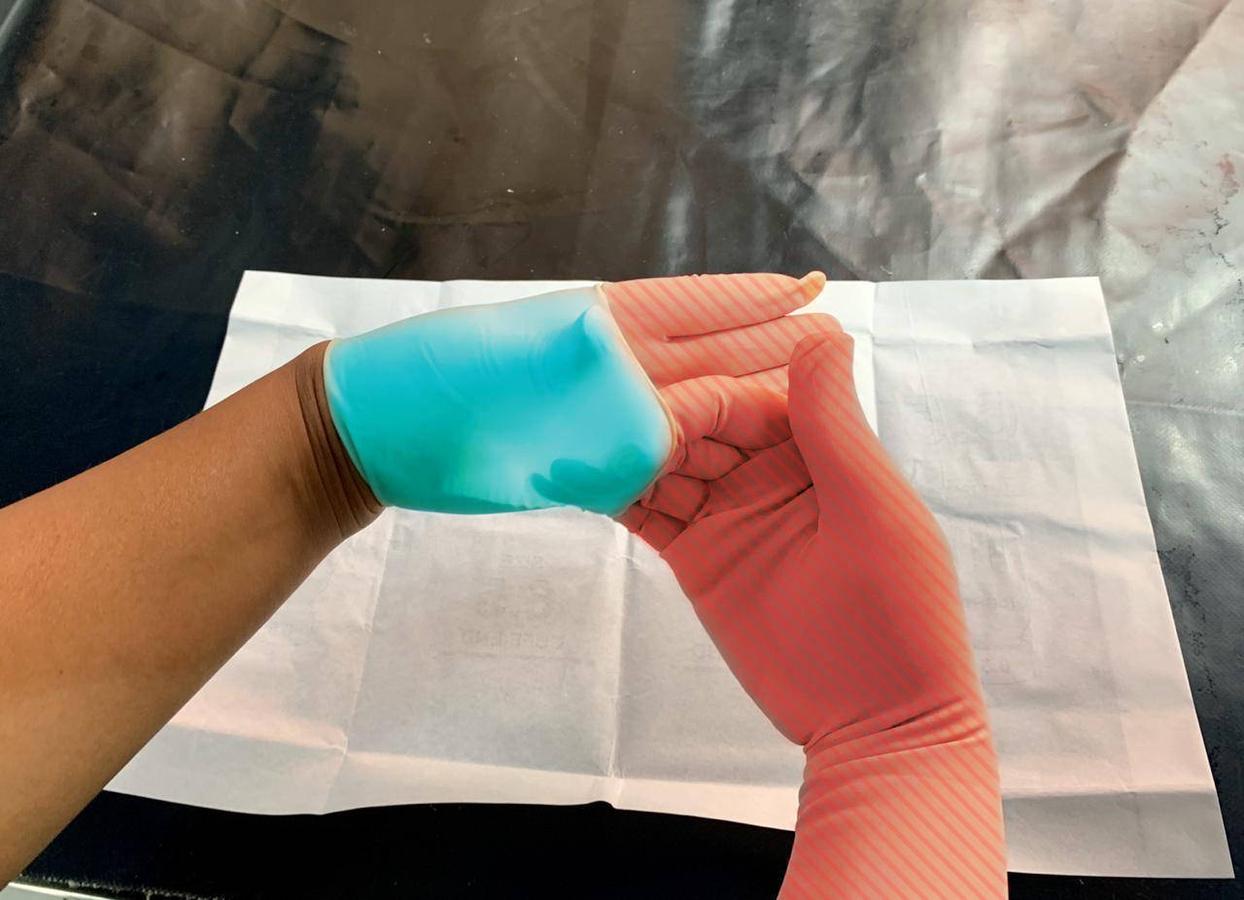
The cuff of the left glove is pulled over the wrist using the fingers of the right hand (Figure 6).
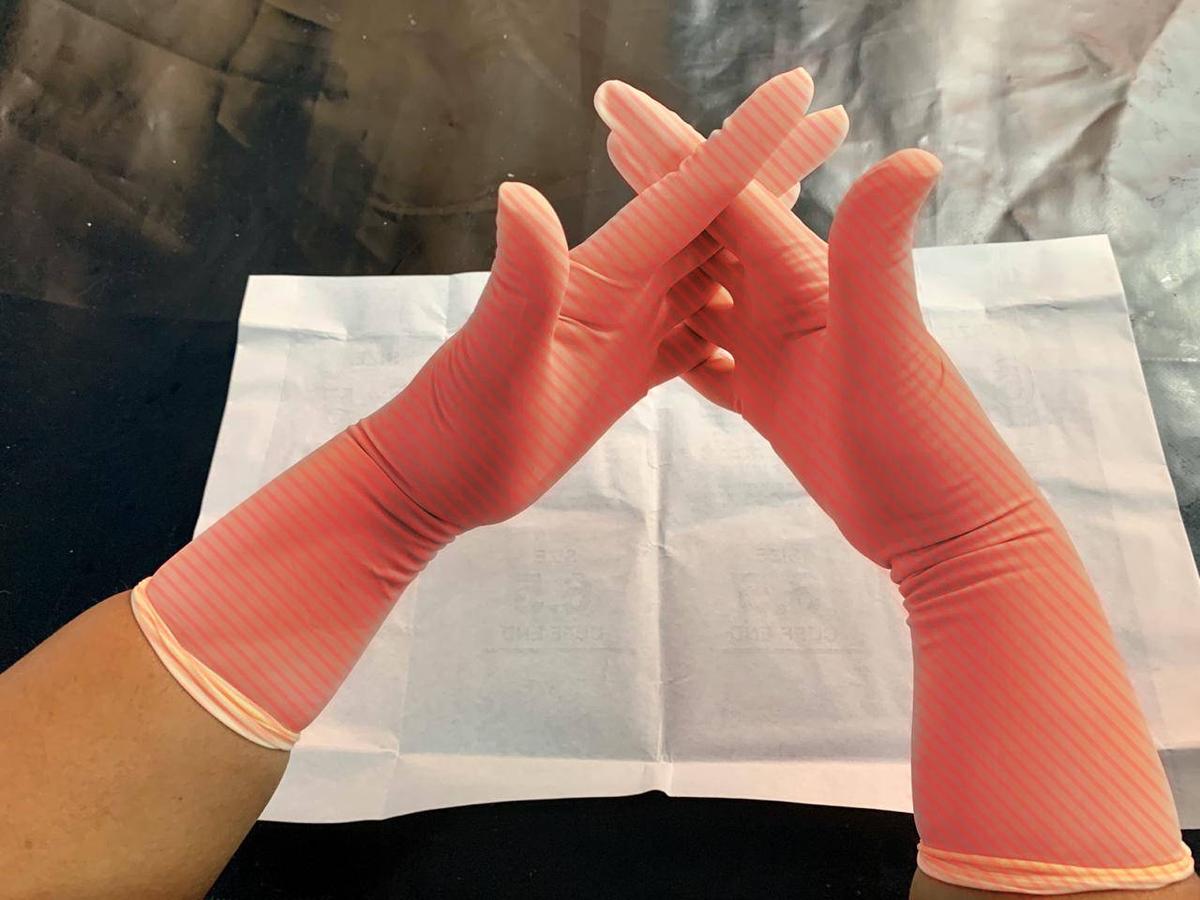
Be careful not to touch any surface with your gloves that are not sterile. If, at any point, sterility is broken, the surgeon must stop and the gloves replaced with fresh ones, using the same method.
Closed-gloving
This technique is an alternative to open-gloving; it is used commonly in many purpose-built veterinary facilities where high levels of sterility are required and where infection poses a serious risk to the patient. Closed gloving is of particular importance in procedures such as fracture repairs involving implants. In these situations, surgeons will commonly wear surgical gowns and perform the closed-gloving technique where only sterile surfaces of the gown come into contact with the outer surfaces of the gloves. A description of this technique will be covered in another course.