

Once you have surgically scrubbed your hands, they must remain sterile prior to gloving. Hand drying is performed immediately to minimise the chances of contamination by air-borne contaminants which can become trapped on the wet surface: water can then drip onto the surgical site, thereby risking a surgical site infection. Having wet hands also makes putting on sterile gloves very difficult!
70% alcohol can be used to aid drying and provide an additional degree of antisepsis; the volatile nature of alcohol assists in rapid drying. An assistant sprays the surgeon's hands and arms and ensures complete coverage (Figure 1).
Remember, the surgeon's hands should stay held up, higher than the elbows to avoid movement of liquid from unclean-to-clean.
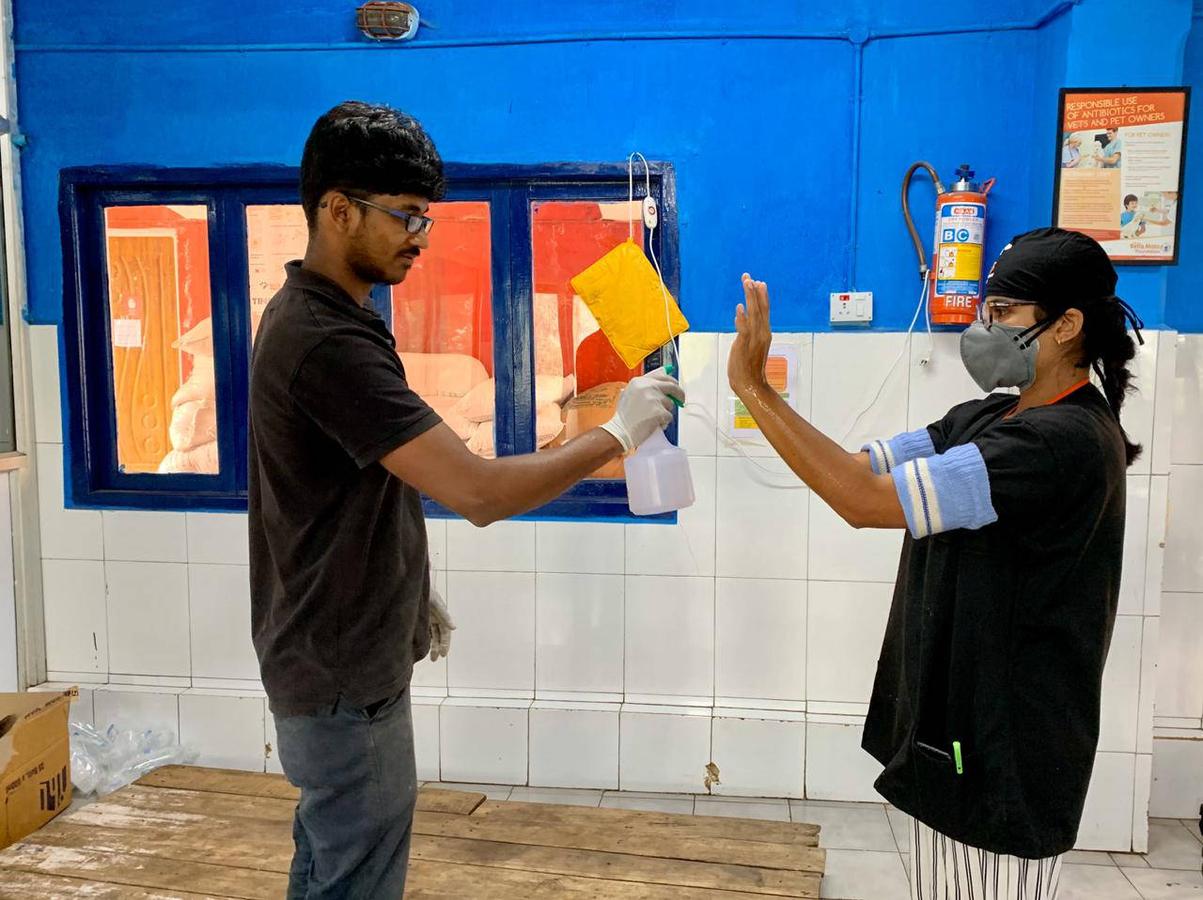
In warm climates, hands may dry completely using this method. If you do not use alcohol or are in a colder climate, hands should then be dried thoroughly with a single towel.
Method for hand drying
Keeping hands higher than the elbows, take a sterile hand towel and hold it at arm's length. Use a separate quarter of the towel to dry hands and arms, in turn, in the following manner:
- Front and back of one hand (Figure 2)
- Front and back of other hand (Figure 3)
- Front and back of one arm, up to the elbow (Figure 4)
- Front and back of other arm, up to the elbow
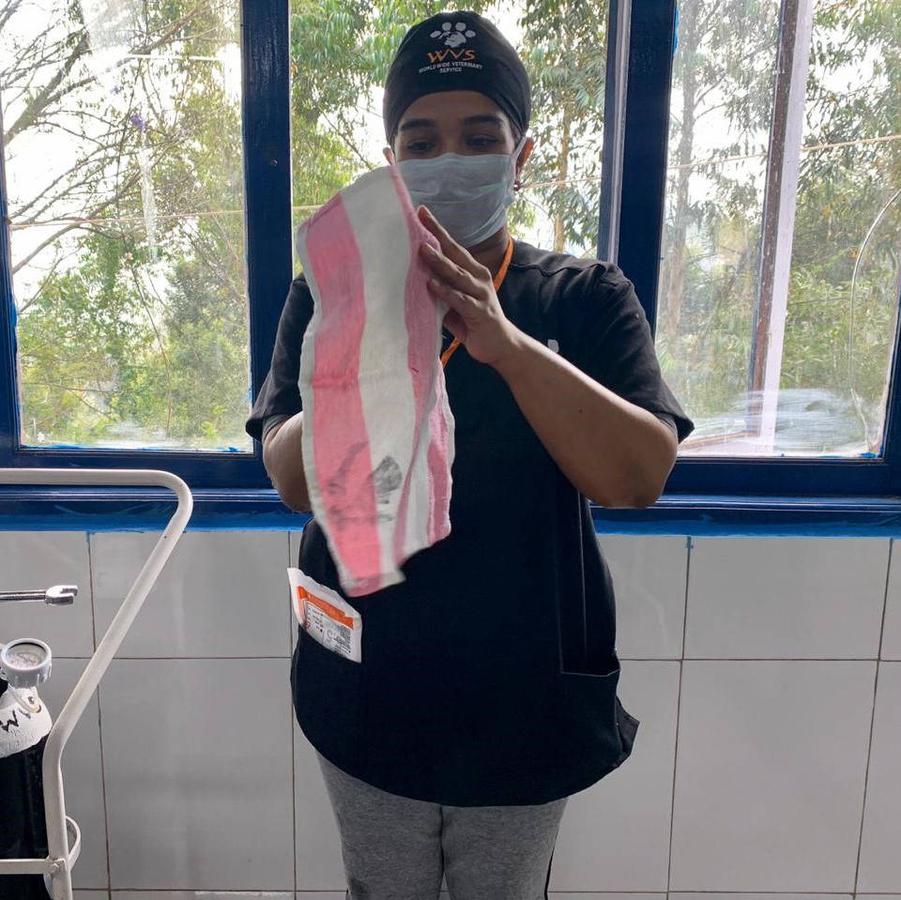
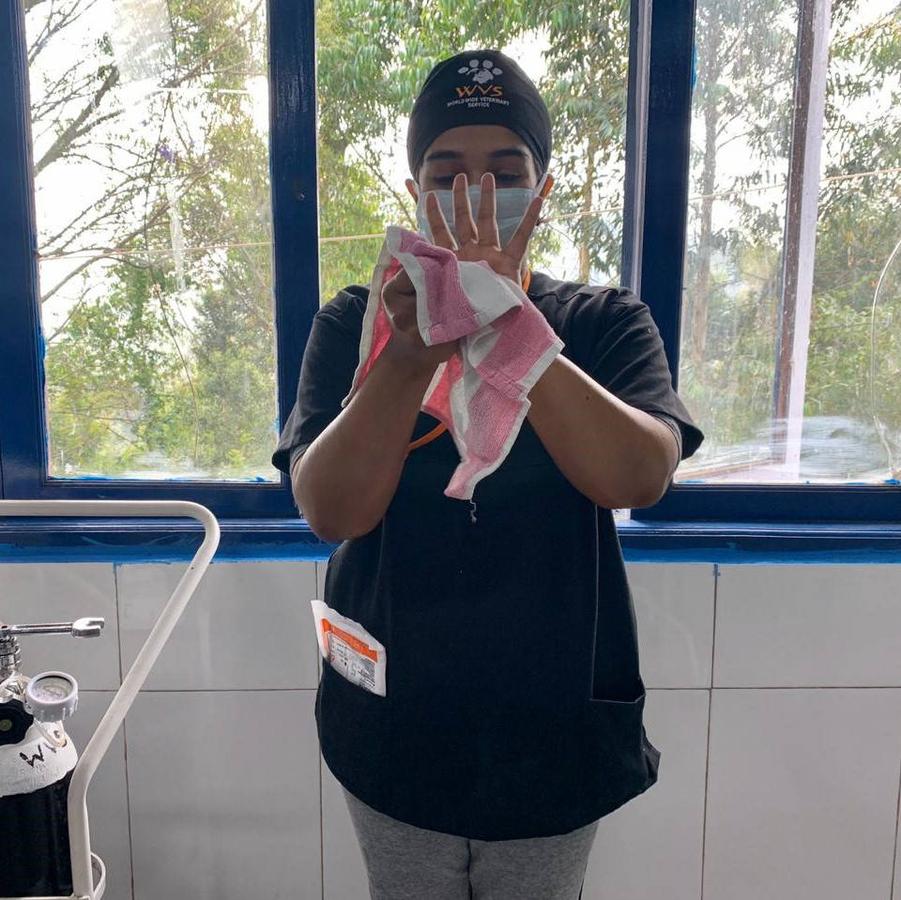
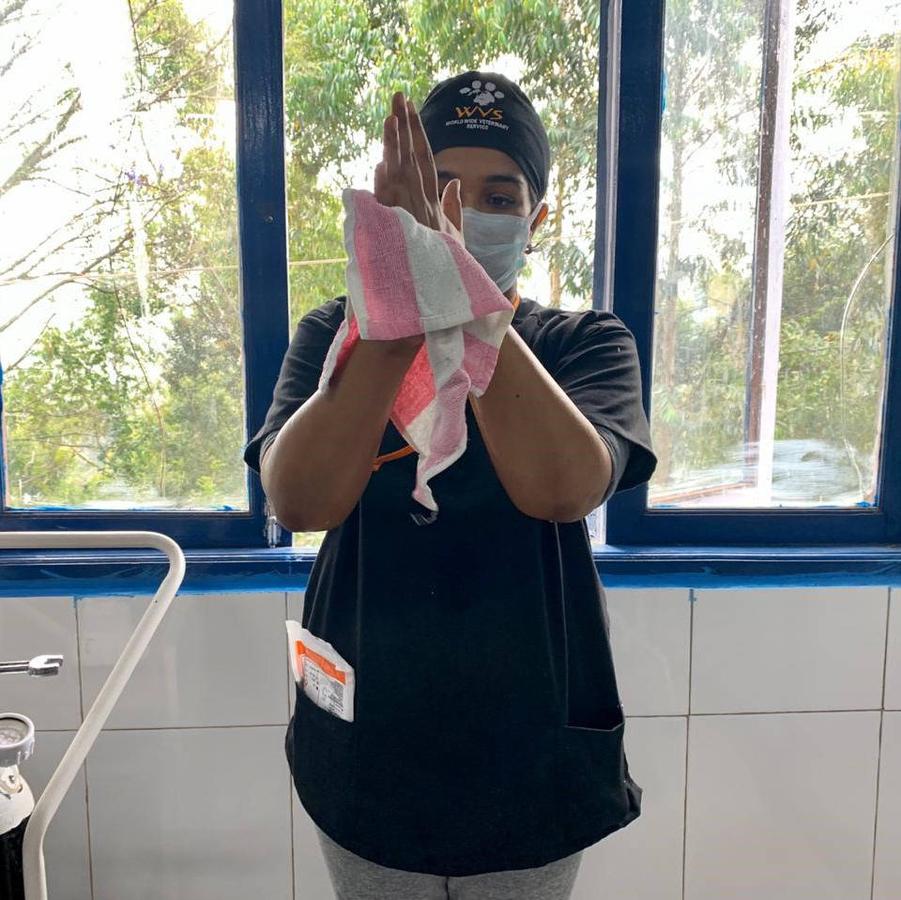
Once this is completed, discard the towel carefully in a designated container ready for laundering and re-sterilising, ensuring you do not touch anything.
You are now ready for surgical gloving.