

Surgical scrubbing involves cleaning of the surgeon's hands and arms using a set methodology that ensures effective reduction of surface bacteria. This must be performed before each operation. There is no one method for doing this, however the principles of using a systematic method to clean all areas of the hands and maintaining contact time with the disinfectant solution applies to all approaches. Using a fixed protocol for hand scrubbing before each surgery effectively reduces surface bacteria.
Scrub area
Maintain a clean scrub area! All staff should understand that this is an area where surgeons prepare immediately before surgery. Gross contamination of the area risks direct transfer to the surgical site.
Use. The scrub area should only be used for scrubbing and not for any other purpose such as instrument cleaning or emptying mop buckets.
Water source. The water source needs to be clean. Where piped water is not available, a raised water bottle or tank can be positioned with a tap for this purpose, however the water should be changed daily.
Taps. The taps should be hands-free. These can either be so the surgeon can turn them with the elbows after scrubbing or an assistant turns the tap off after scrubbing is complete.
Location. The scrub area should be located close to the operating theatre and should have enough space around it to enable the surgeon to turn and dry their hands without risking touching objects or other people.
Scrub Agents
Cleansing solutions are non-irritant and include:
- Chlorhexidine
- Povidine iodine
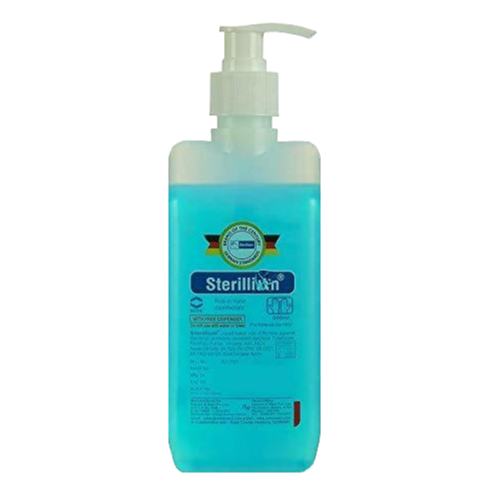
- Sterillium
In countries were surgical scrub solution is not available or hard to source, use a suitable antiseptic e.g. 10% povidone iodine, dilute to the correct concentration, and add a small amount of surfactant e.g. liquid soap, to create a mild lather. This will be suitable for srubbing your hands prior to surgery.
Preparation
Before you begin your scrub protocol ensure that:
- Fingernails are short
- Jewellery and watches are removed
- Nails and hands are clean prior to scrubbing and nail varnish removed
- Surgical attire, including head cover and mask, is placed correctly
Contact time
Many antiseptic agents destroy bacteria depending on a minimum contact time. For Hibiscrub the minimum contact time required is 5 minutes, whilst for Sterillium it is 2 minutes. Use a clock or hands-free timer next to the scrubbing area to ensure the minimum contact time has elapsed before finishing the hand-scrub protocol.
Hand scrub protocol
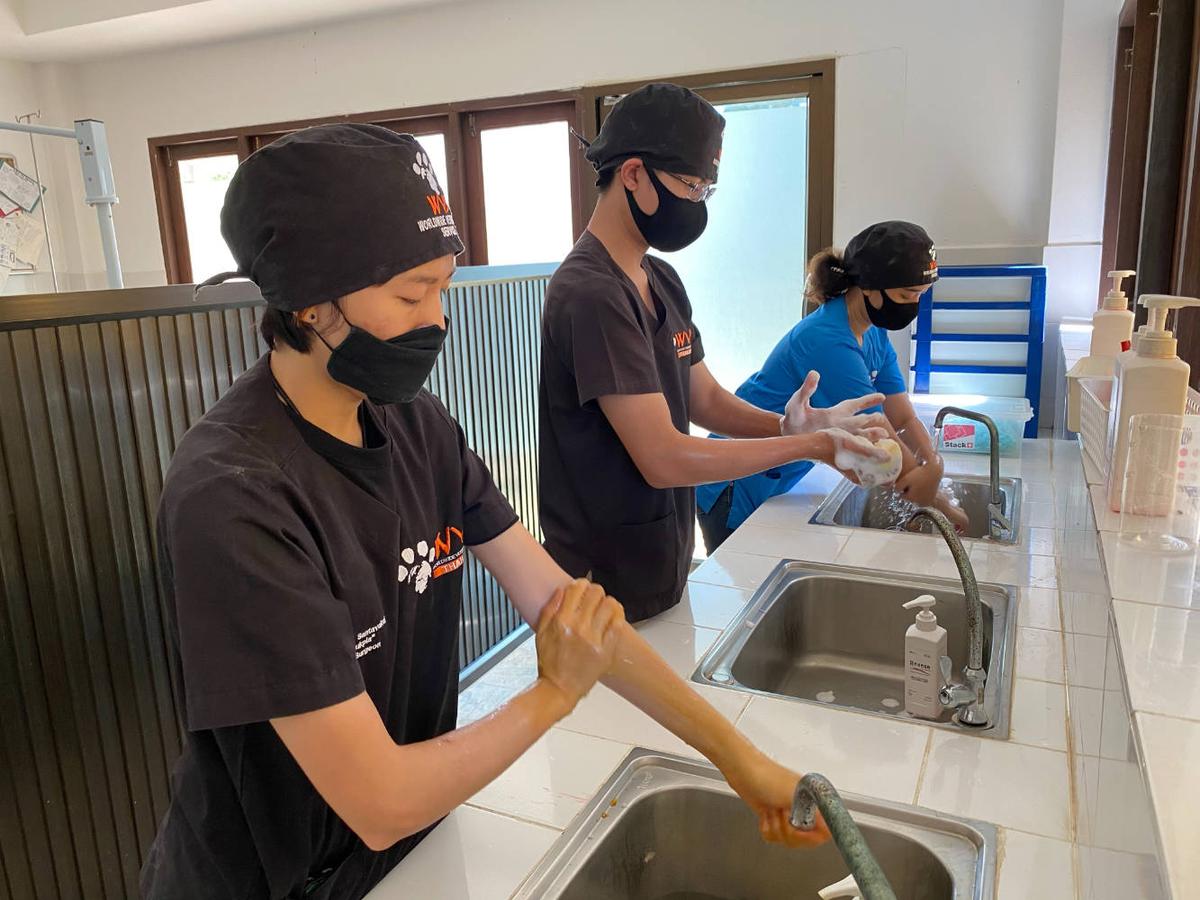
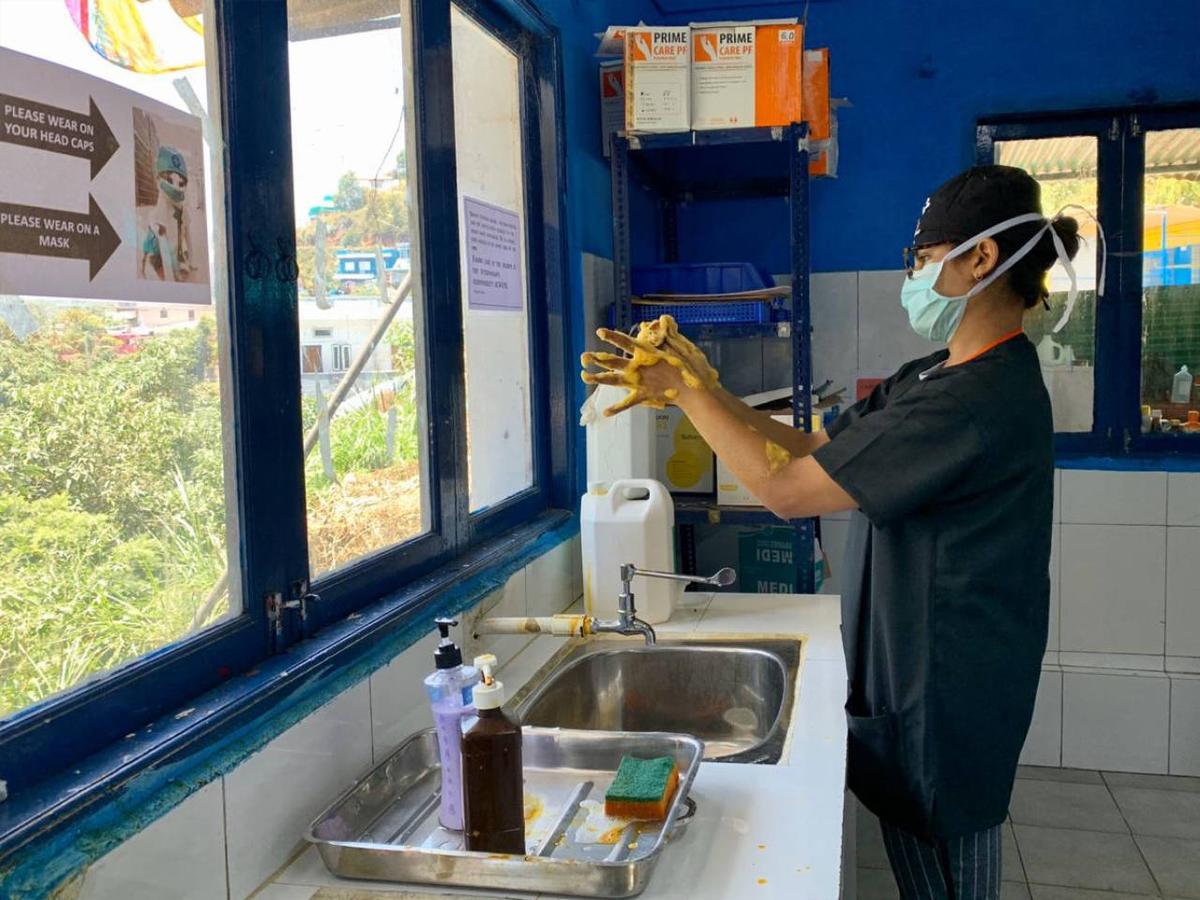
Initial wash. Perform an initial wash of the hands and forearms to the level of the elbow to remove dirt and debris. Wet the hands and arms and with a few drops of scrub solution work up a heavy lather. If dirt is present underneath the fingernails, remove this using a nail pick. Rinse the hands and arms are thoroughly before beginning the scrub, allowing water to run from hands to elbows (Figure 2).
Apply scrub solution. First apply the scrub solution to all surfaces of the hands and forearms using hands and work up a lather. The agent contact time now starts, so check the clock and ensure the scrubbing protocol continues until the required contact time has elapsed.
"Start the clock"
Hands up. From now onward ensure the hands remain above the elbows so that water only flows from the hands (most clean) to the elbows (most dirty).
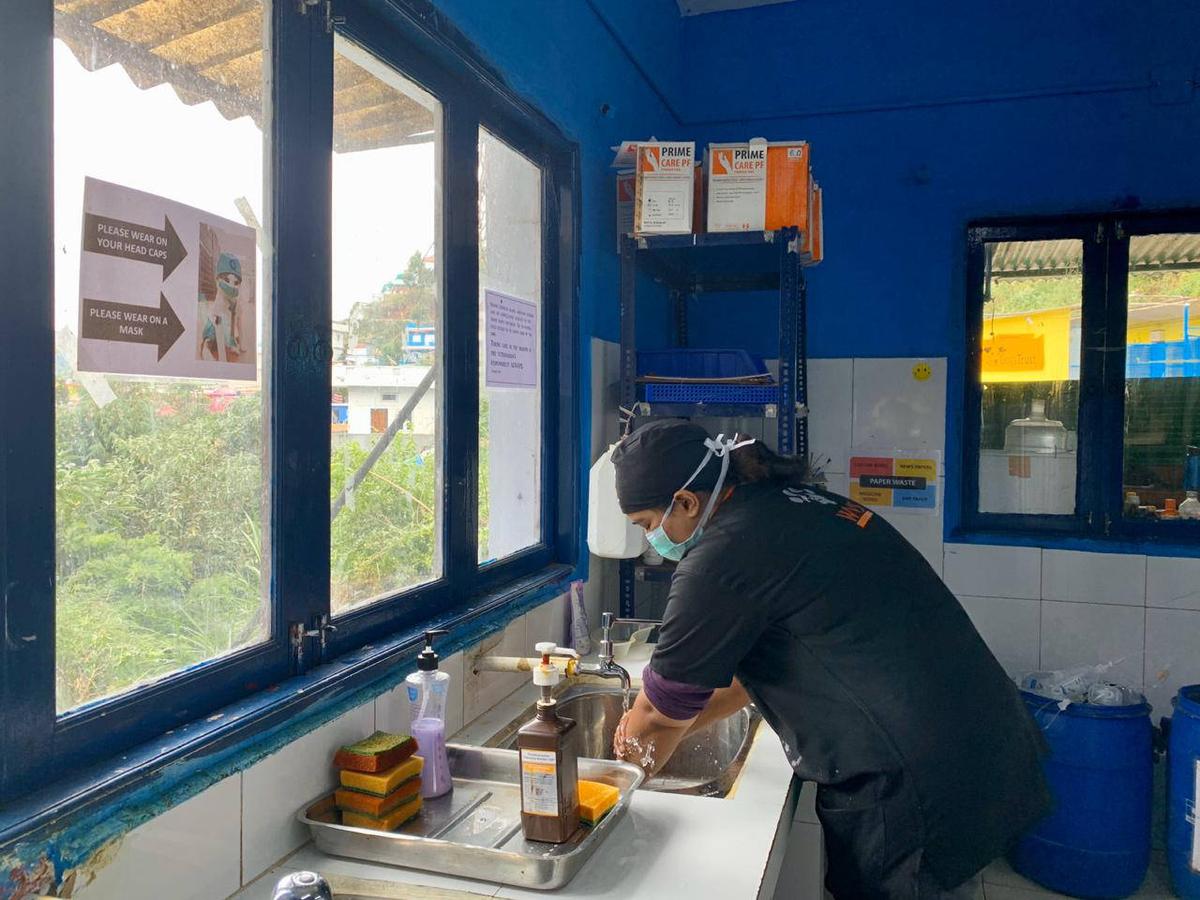
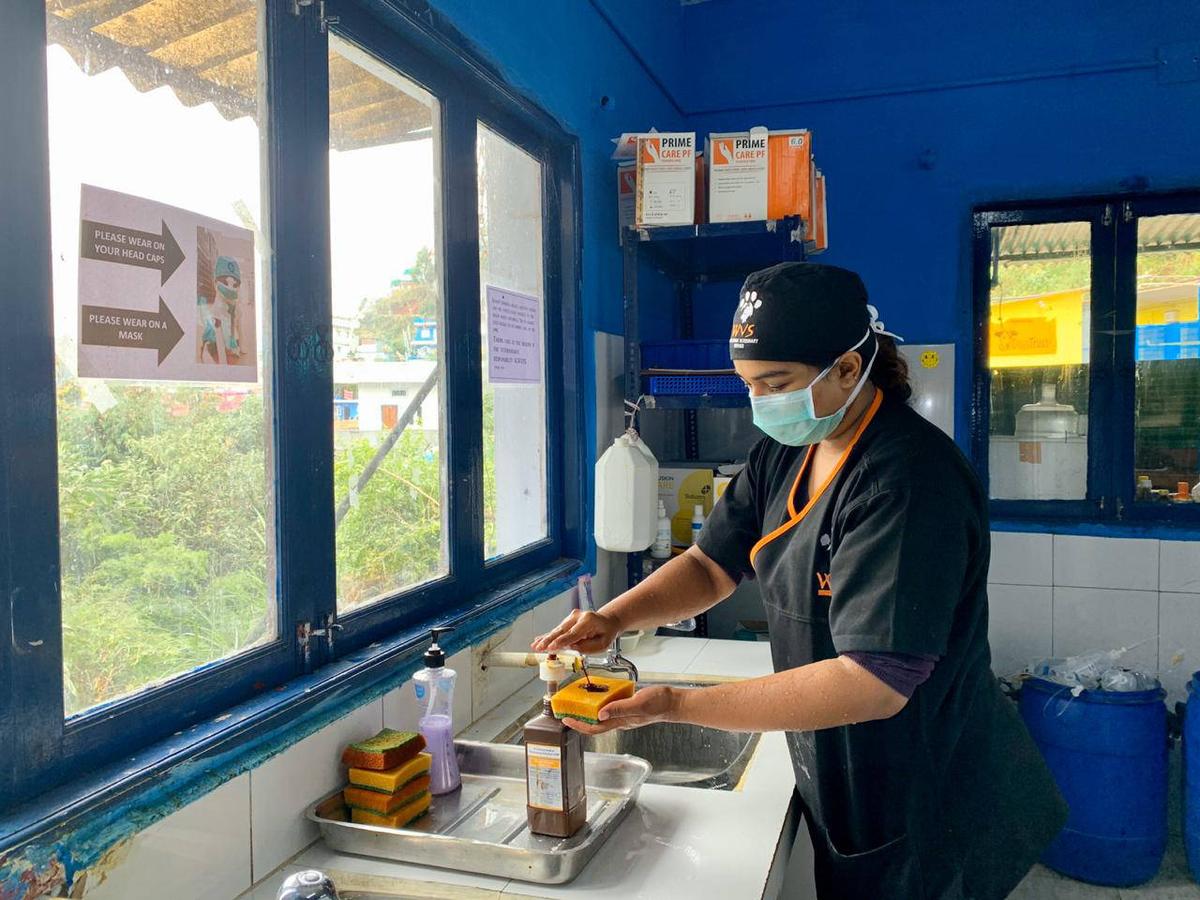
Finger scrub. Dispense the scrubbing solution directly onto the brush. Systematically scrub each of the four sides of each finger (and thumb), one by one. Then use the bristles to scrub under the finger nails of one hand, then the other. Scrubbing the backs of the hands and the arms causes excoriation of the skin which can then predispose to infection; therefore, do not scrub these areas with the brush (Figure 2).
Scrub routine
Create a lather. Rub the palms together with scrub solution to create yourself a lather.
Palm-to-backs. Rub the right palm over the back of the left, interlacing the fingers. Complete five strokes back-and-forth. Then repeat left palm over right hand.
Palm-to-palm. Rub hands palm to palm, interlacing the fingers. Complete five strokes back-and-forth.
Clasp fingers. Clasp fingers, right hand into left palm and vice-versa. Rotate the hands backwards and forwards for five strokes.
Thumb rub. Clasp the right thumb in the left hand and perform rotational rubbing for five strokes, then repeat on the other hand.
Fingertips. Rub the fingertips of the left hand in the right palm for five strokes and then repeat on the other hand.
Forearms. In a rotating action, rub the hands from wrist, up each forearm to just below the elbow.
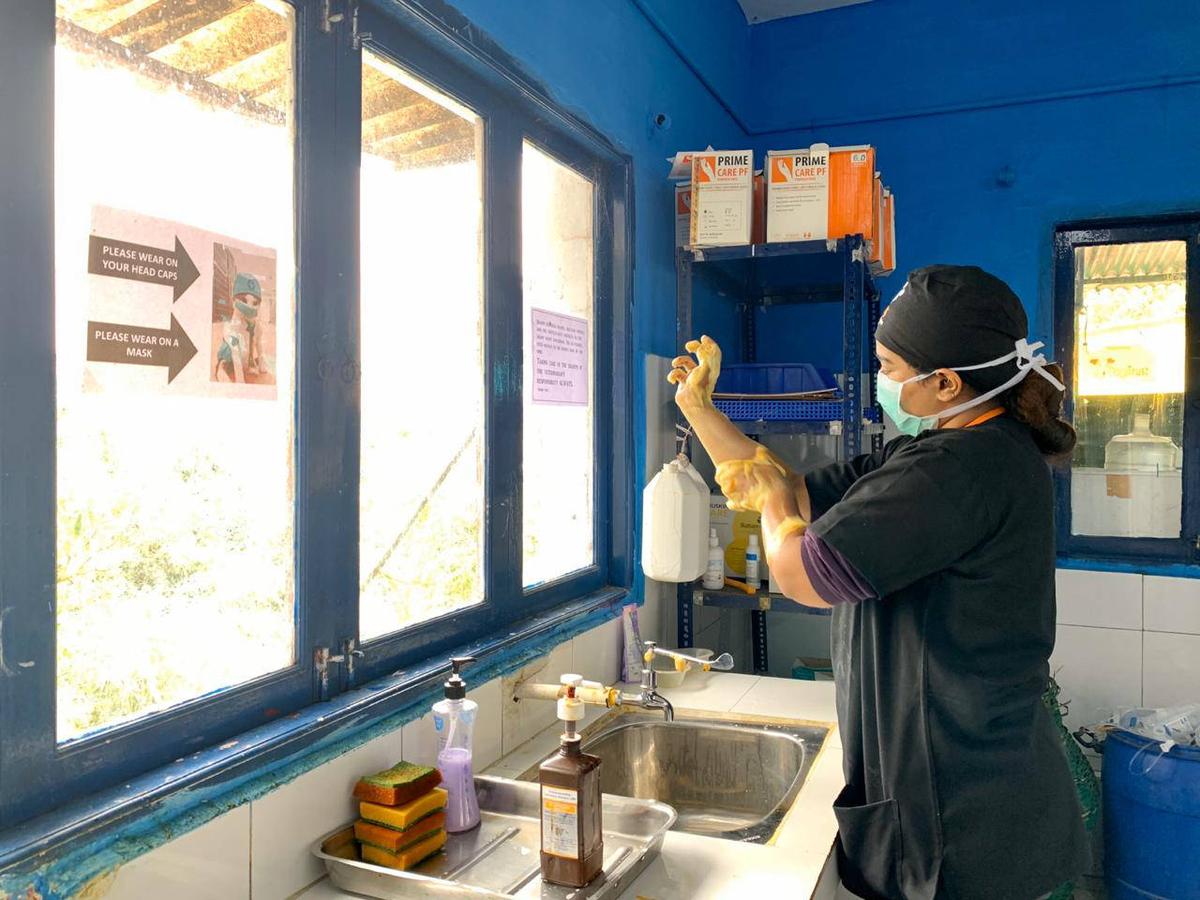
Rinse and repeat. Rinse the hands and arms, now repeat the scrub routine, but on the second round only cover two-thirds of the forearms to maintain cleanliness of the hands (Figure 3).
Final rinse. After the second scrub rinse the hands in running water, allow the water to run only from the fingertips to the elbows. Turn the tap off with your elbows or ask and assistant.
Multiple surgeries
In a spay-neuter setting, you will be performing surgeries many times in one day.
If you are moving from one clean surgery immediately to another, it is acceptable to remove your gloves, apply alcohol gel or spirit to the hands, allow them to air-dry and then put on a new pair of sterile gloves without breaking sterility. If you break sterility at any time, your should perform a full scrub routine.
Sterillium
After washing hands with soap and water for the first scrub of the day, the Sterillium method of hand hygiene replaces the traditional method of hand scrubbing with chlorhexidine and water. This method is now widely replacing traditional hand scrubbing in many clinics. In a spay-neuter setting, this may not be available to use; however, effective asepsis is achieved with the traditional methods described above.
The process takes 2 minutes, using a timer, and the hands must remain moist for all of this time. Immediately before starting, the Sterillium timer is set and starts counting down.
Hand sterilising procedure using Sterillium
- A minimum of 1.2 ml Sterillium is dispensed into the palm of one hand
- The fingers of the opposite hand are dipped into the solution, working it under the nails
- The solution is spread onto the palm, fingers and back of the first hand
- This is repeated with the other hand, using another 1.2 ml Sterillium
- Another 1.2 ml Sterillium is dispensed into the palm of one hand and spread onto the forearm
- This step is repeated with the other forearm
- Finally, another 1.2 ml Sterillium is dispensed into the hands, which are rubbed until the 2 minute timer sounds and the hands are dry
- The hands are kept in a vertical position and are ready for gloving