

Non-sterile barriers help to maintain asepsis by providing a clean barrier between the patient and the surgeon (Figure 1). The effectiveness of each barrier in achieving this is discussed below.
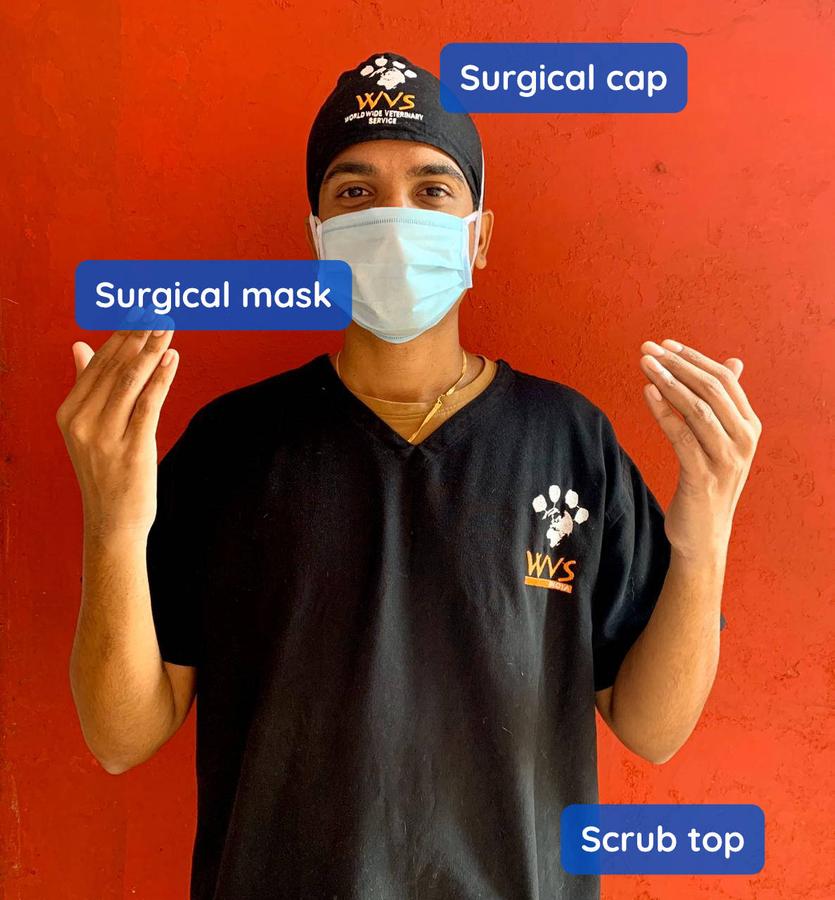
Scrub top
The use of clean scrub tops (and trousers) have numerous benefits to the patient and the care team:
Cleaning. Can be routinely cleaned at high temperatures or with harsh chemicals, making them cleaner than regular clothing.
Contamination. The same scrub clothing should not be worn outside of theatre. An example of this is a vet who has been examining patients in kennels should change to a different scrub top when entering theatre, and vice-versa. This helps to prevent the introduction of gross contamination into the surgical environment.
Fibres. Made from lint-free fabric so that fibres do not contaminate the surgical site.
Identification. Wearing scrub clothing clearly identifies a person as working in the clinical environment and potentially contaminated with bodily fluids. They should therefore not be worn in non-clinical areas such as offices.
Protection. Used instead of normal clothing in order to avoid contamination from bodily fluids.
Surgical cap
As the surgeon is positioned directly over the incision, hair falling from the head and face can directly contaminate the wound. By wearing a surgical cap that covers all areas of the head where hair is present, this risk is minimised. Surgeons with beards should also wear a face cover for the same purpose.
Face mask
Masks protect the surgical site from contamination by droplets from the nose and mouth; these are emitted particularly from the mouth during talking.
Shoes or shoe covers
Footwear is a major source of gross contamination and so changing shoes when entering the operating theatre helps to maintain a clean environment and protect patients during surgery. This is best achieved by designating specific shoes, such as clogs, for use only in theatre, which can be thoroughly cleaned. Shoe covers are an alternative solution; however, whichever approach is used, it must be strictly enforced in order to be effective. This emphasises to everyone that the theatre is a clean environment and that personnel working in outside areas should avoid casually dropping in and out.
These non-sterile barriers are only of benefit if used routinely and in the correct scenario. In many cases, it is inconvenient to change into a new scrub top before entering theatre, or to change shoes. However, by understanding the purpose of each piece of equipment, the surgical team can help to police the theatre environment in order to reduce introduction of contaminants and the risk to their patients who are undergoing surgery.