
Lavage is the process of flushing a wound with sterile saline or water. It removes debris and reduces contamination in a wound. Thus, it’s a vitally important step when treating a wound. Whilst it’s impossible to eliminate bacteria completely, appropriate lavage significantly reduces the number of bacteria present and reduces the risk of contamination progressing to infection. For severely contaminated wounds where an owner is hours away from appropriate veterinary care, they may initially cleanse the wound with lukewarm tap water to help decontaminate it.
Clip widely around the wound
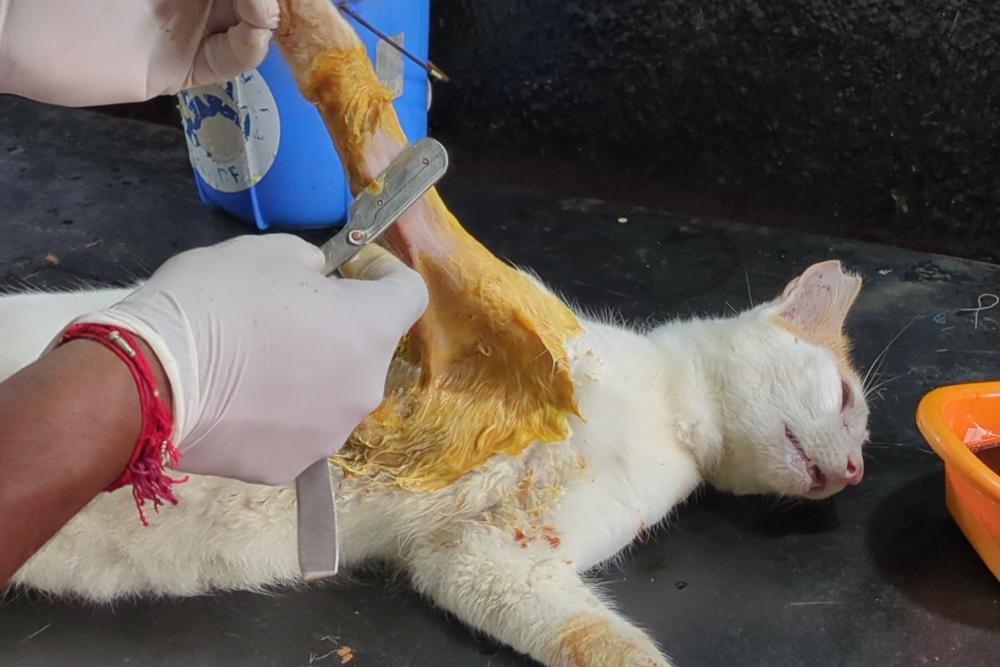
- Cover. Apply water-soluble gel (K-Y jelly) on the wound, or cover the wound with damp sterile gauze, to prevent hair from entering during clipping.
- Clip. Clip a large area around the wound using electrical clippers or a straight razor. Scrub with iodine before using a straight razor. This improves visualisation, allows direct skin treatment, and prevents hair from contaminating the wound. Clipping a large area may also reveal hidden wounds.
- Flush. Flush the gel away from the wound using sterile saline.
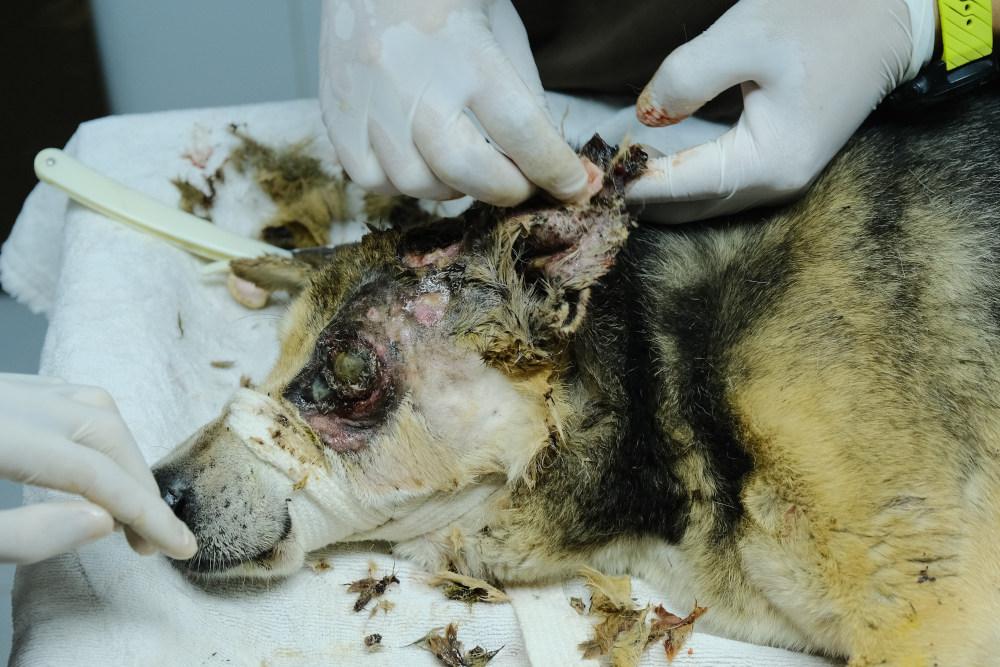
Manually remove visible debris
- Scrub. Scrub the skin around the wound with a clean swab soaked with dilute chlorhexidine (surgical scrub). Avoid introducing chlorhexidine into the wound as it can damage tissue and interfere with healing.
- Remove debris. Remove large debris within the wound using tweezers or a saline-soaked swab. Dab gently to avoid damaging healthy tissue and causing bleeding.
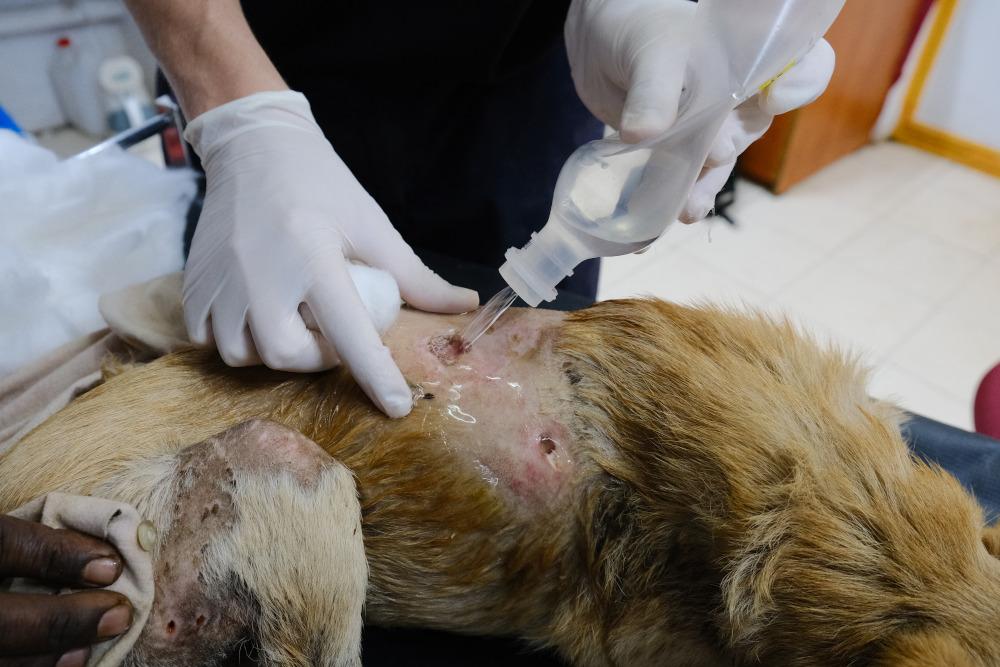
Perform lavage
Use sterile saline or clean water, to flush the wound with large amounts of the solution. A 20ml syringe and 18-gauge needle or catheter are commonly used to achieve the necessary pressure. Attaching the syringe and sterile saline bag to a three-way tap can improve syringe filling speed and allow greater lavage volume.
Ensure enough pressure to flush bacteria and debris without causing tissue trauma or driving bacteria deeper into the wound.
Use ample lavage solution to maximise the removal of contaminants.
Repeat after debridement
After debriding dead and dying tissue (next article), repeat these steps to ensure contaminants and sources of infection are removed.