
Maintaining clean kennels is essential for preventing the spread of infectious agents and ensuring the wellbeing of all patients in the clinical environment.
It is important to consider the animals’ welfare during the cleaning process. The use of water and disinfectants, particularly splashing or spraying, can cause fear, distress, or discomfort to animals if they are accidentally sprayed or startled during cleaning. Where possible, the animal should be removed or separated in the kennel, especially during full cleans. This could include containing on one side of the kennel, in a separate exercise area, or whilst the dog is being walked, depending on the facility layout and available setup.
The following guidelines outline the daily recommendations for kennel cleaning for hospitalised patients, and for cleaning of kennels between patients, as well as specific requirements for managing commonly used equipment and items. This article does not cover guidelines for infectious or isolation patients. For further guidance on cleaning isolation kennels, see the following Isolation topic.
The methods referenced here are intended as general recommendations only. Always follow local regulations, manufacturer guidance, and your organisation’s approved protocols when selecting and using cleaning and disinfection products.
General principles
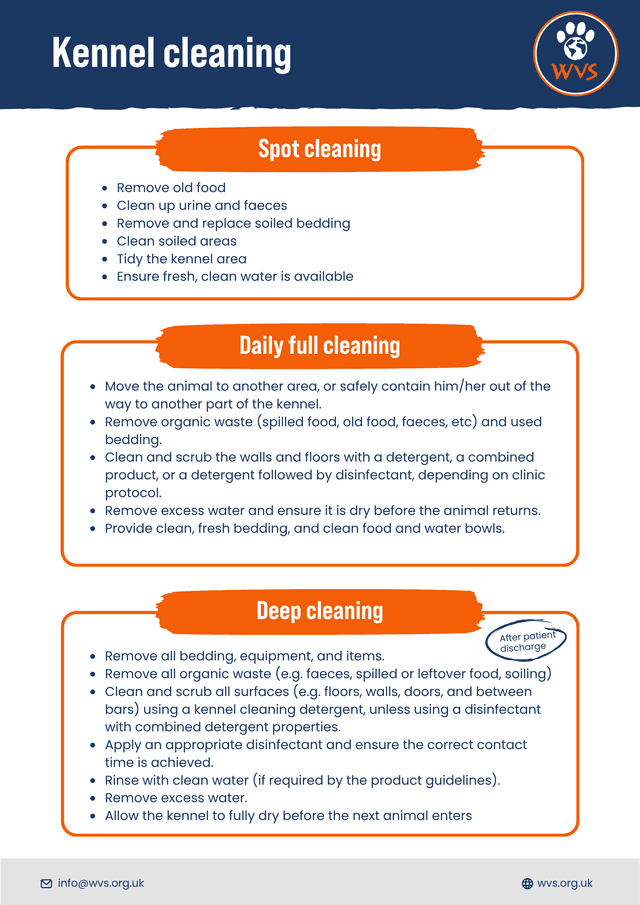
Kennel cleaning can be split into 3 categories:
- Spot cleaning: quick cleaning to remove visible dirt and maintain hygiene throughout the day with minimal disruption to the animal.
- Daily full cleaning: a thorough, structured clean performed daily to fully clean and disinfect the kennel environment.
- Deep cleaning: an enhanced decontamination process carried out after an animal leaves, before a new occupant arrives.
These principles apply to the cleaning of large outdoor kennels, and small indoor kennels, as well as cages, though the exact methods and equipment used to clean them differs slightly.
Spot cleaning
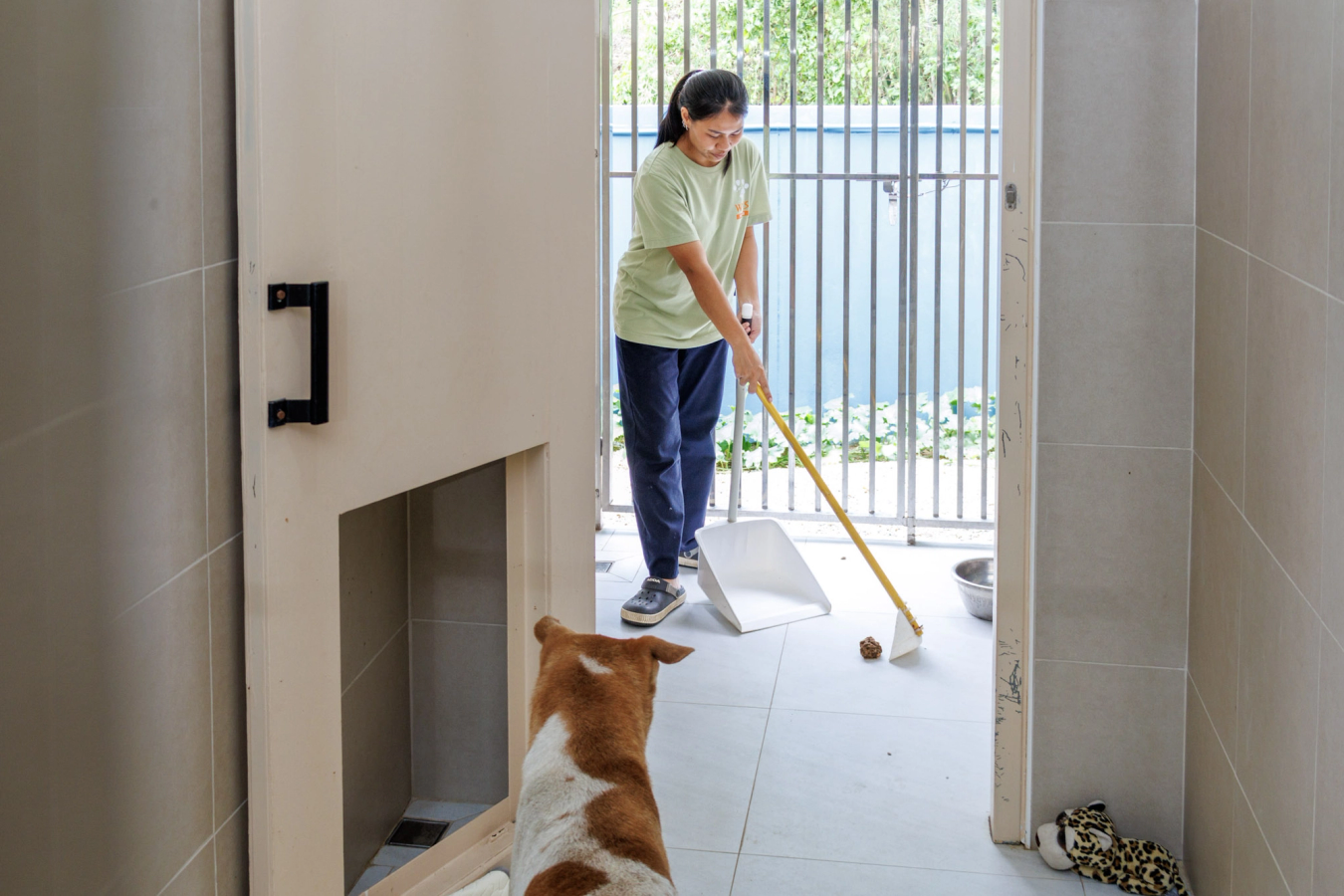
Spot cleaning involves cleaning up obvious messes and soiling as they happen. It can be done throughout the day to maintain hygiene and comfort, without fully disturbing the kennel setup.
Spot cleaning involves:
- Removal of old food
- Cleaning of urine and faeces
- Removal and replacement of soiled bedding
- Cleaning of soiled areas
- Tidying of the kennel area
- Ensuring access to fresh, clean water
This can be completed either around the animal while he/she remains in the kennel, or while the animal is temporarily removed for exercise or enrichment.
Spot cleaning is generally less stressful for animals, as it involves minimal handling and allows familiar scents to remain within the environment.
Daily full cleaning
A daily full clean is a scheduled, comprehensive clean of the entire kennel environment to ensure consistent hygiene and infection control.
Daily full cleaning involves:
- First moving the animal to another area, or safely containing him/her out of the way to another part of the kennel.
- Removing organic waste (spilled/old food, faeces etc.)
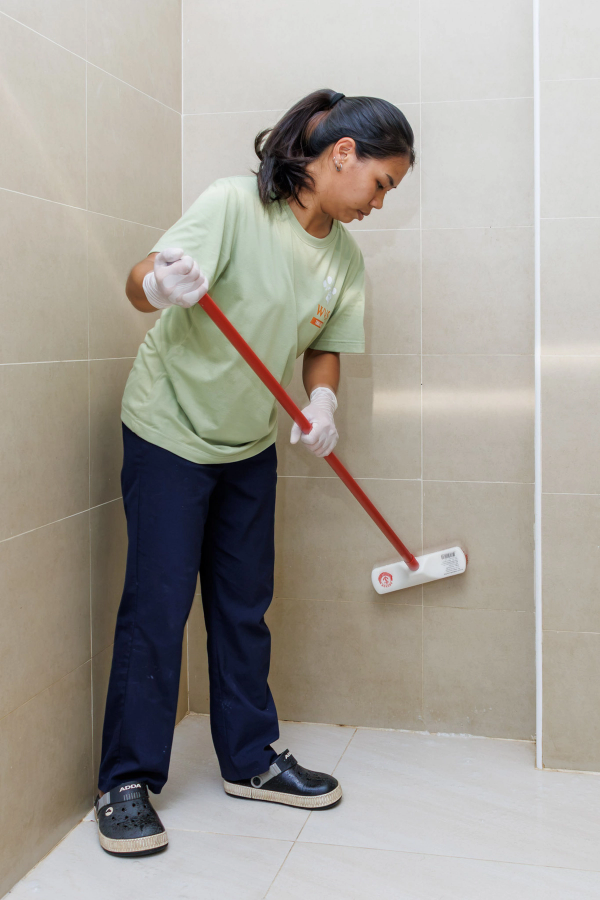
- Cleaning and scrubbing the walls and floors. Ideally this should be done using a suitable kennel detergent followed by an appropriate disinfectant for the full contact time (and rinsing where required). Some clinics/ shelters may opt to use only a detergent for daily cleans, depending on the contamination level, and use disinfectant at the deep clean (see below).
- Removing excess water and allowing the surfaces to fully dry. Animals may develop sores or skin irritation if returned when the floor is still wet. If the animal is still in the kennel (contained to one side) or soon to return, you can actively dry the floor using a squeegee and/or paper towel.
- Removing old bedding and replacing it with clean, fresh bedding.
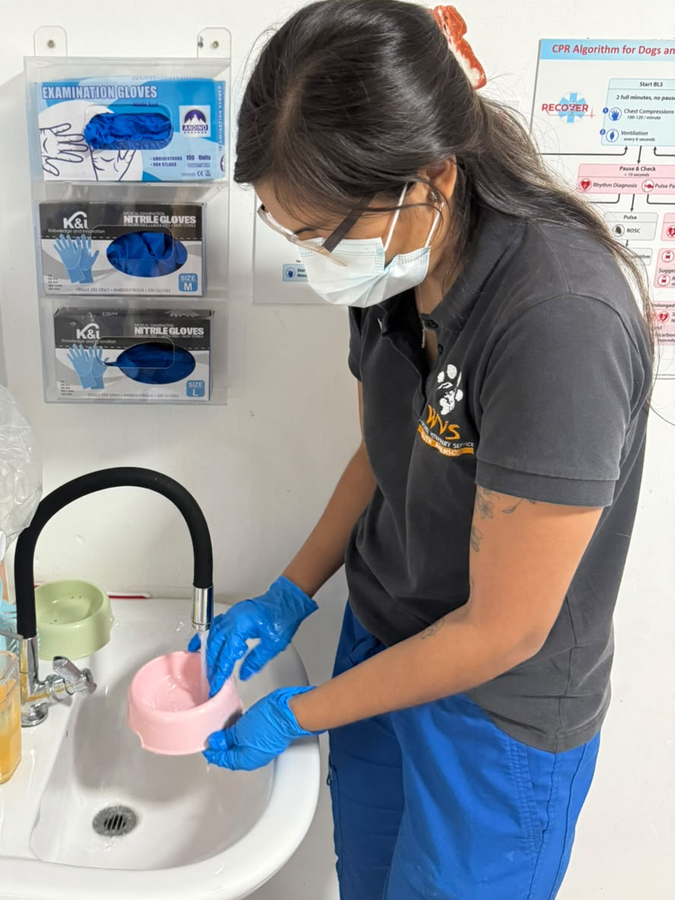
- Cleaning food and water bowls.
What equipment to use?
When cleaning large kennels, additional equipment such as a mop or a broom is required to properly scrub and disinfect the surfaces.
For outdoor kennels which are tiled or made from concrete and have good drainage systems, a plastic broom can be used as a scrubbing brush. This allows detergent and disinfectant products to be worked into surfaces and rinsed away easily.
In facilities without drainage systems, or when cleaning large indoor kennels, mops may be used to apply and scrub disinfectant, while avoiding excessive wetting of the area. However, when mops are used it’s important to ensure strict hygiene measures are followed as mops can harbour pathogens and potentially spread contamination between areas. This includes: regular cleaning and disinfection of mop heads, replacing them frequently, and using separate mops for different areas to reduce the risk of cross-contamination.
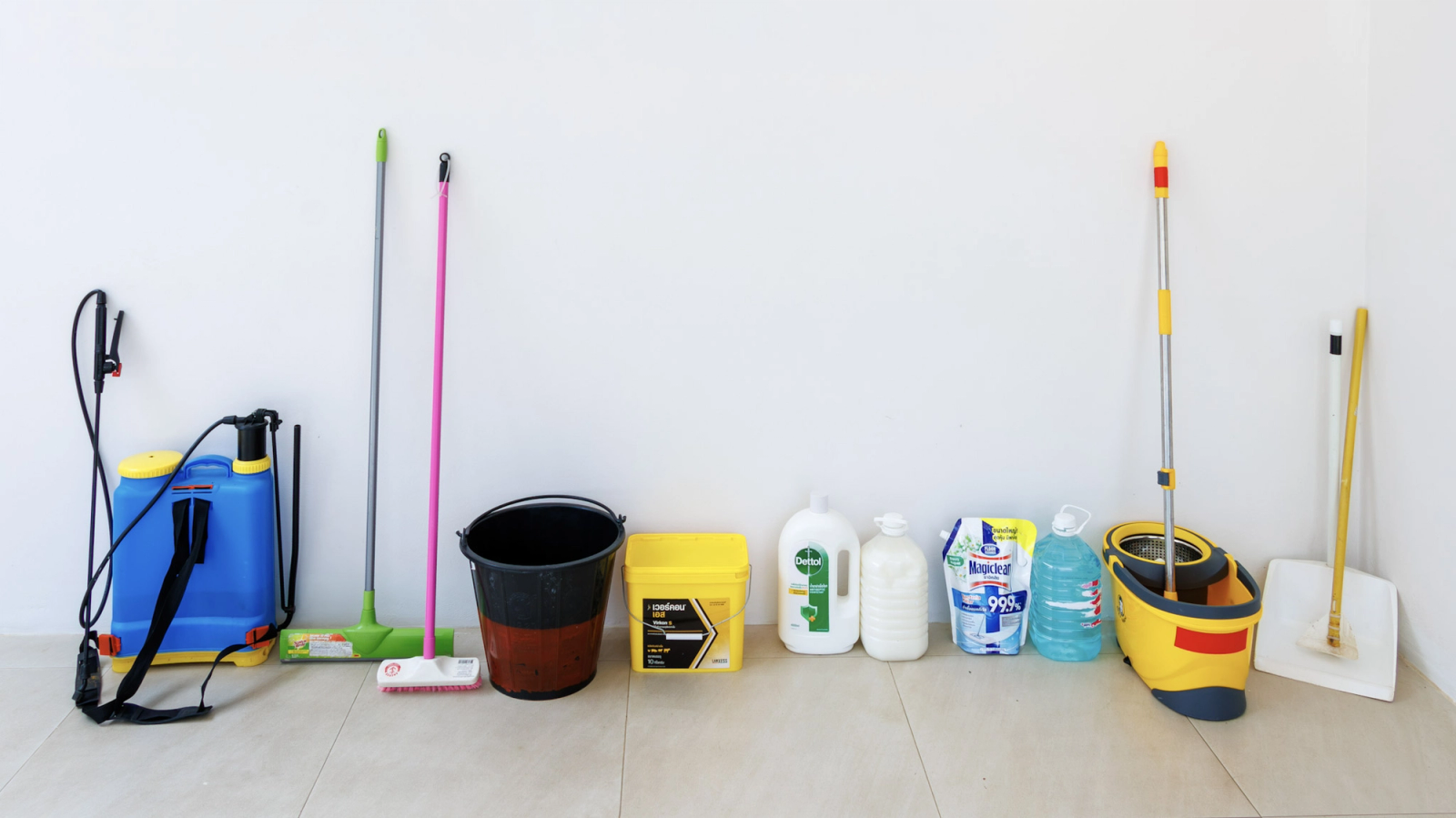
A watering can is an easily available and useful tool for applying water to a kennel, as it allows for more precise and controlled pouring than a bucket, helping to prevent overly wetting the kennel.
Deep cleaning
A deep clean is carried out after a kennel has been vacated and before a new animal moves in, to prevent cross‑contamination and transmission of infectious agents between patients. This stage is completed only when the kennel is empty (between animals) and must involve disinfectant products.
Deep cleaning is required regardless of the duration of occupancy or whether the kennel appears visibly clean, and if the animal appeared to be healthy.
A deep clean follows similar principles to a daily full clean, but requires a more thorough approach, with an emphasis on effective disinfection.
Reminder: Animals may look healthy but can still carry and spread infection. Even normally harmless organisms can cause illness in other patients, especially those with weakened immune systems.
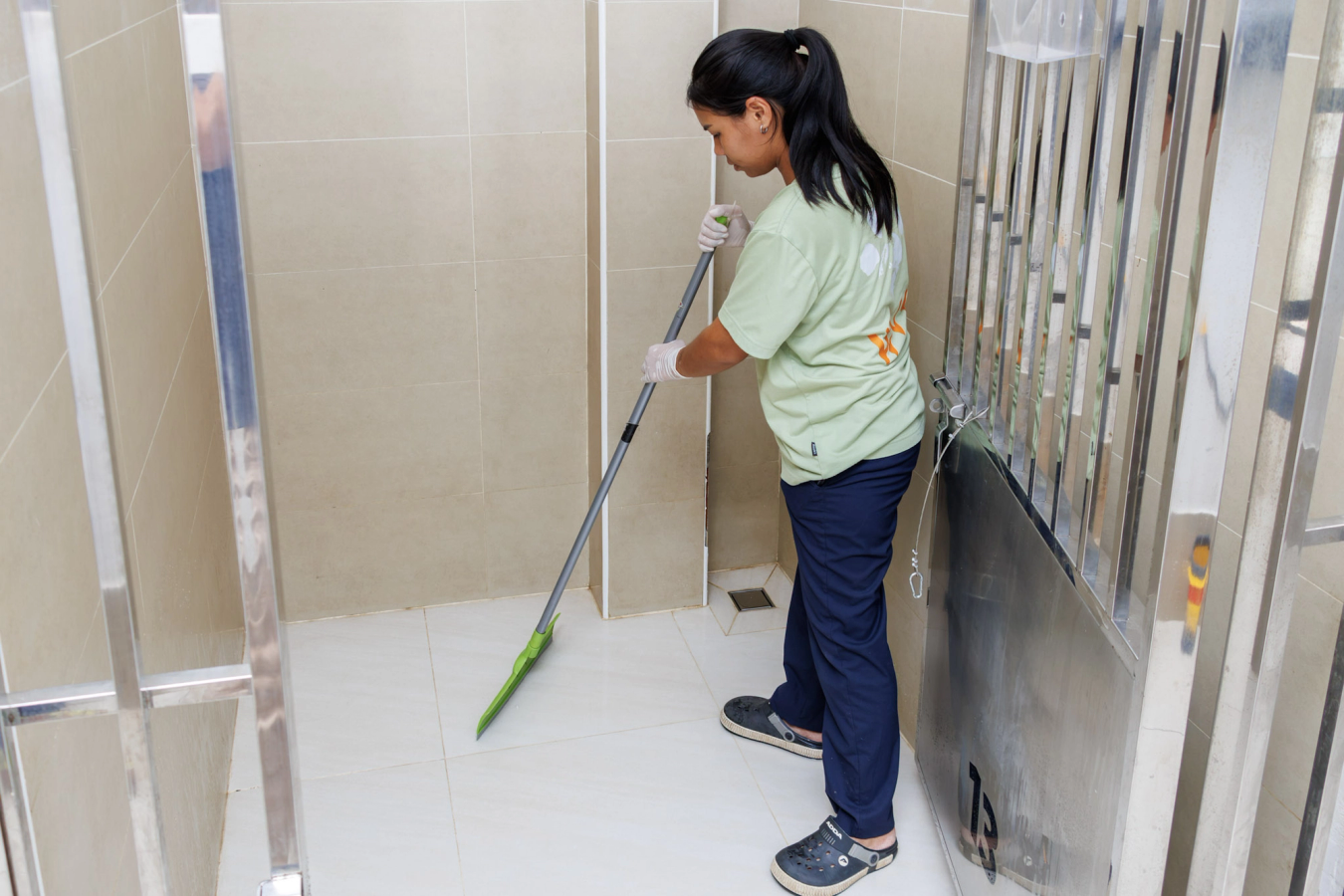
Deep cleaning steps:
- Remove all bedding, equipment, food/water bowls and any other items.
- Remove all organic waste (e.g. faeces, spilled or leftover food, soiling)
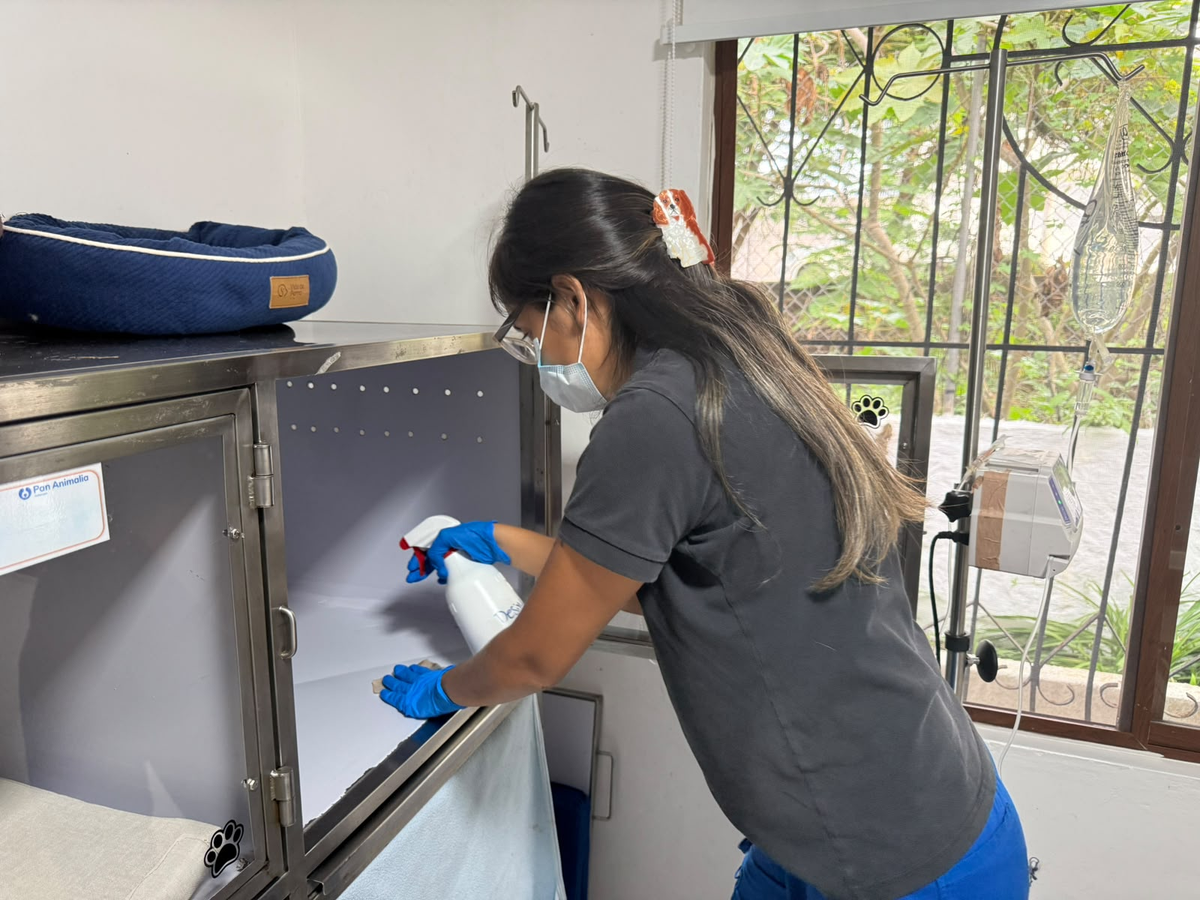
- Clean and scrub all surfaces (including floors, walls, doors, and between bars) using a kennel cleaning detergent, unless using a disinfectant with combined detergent properties.
- Apply an appropriate disinfectant and ensure the correct contact time is achieved
- Rinse with clean water (if required by the product guidelines)
- Remove excess water
- Allow the kennel to fully dry before the next animal enters
Equipment and items
All equipment used within kennels must be appropriately selected, maintained, and disinfected.
Food and water bowls should be made from materials that are easy to clean and disinfect, such as plastic, ceramic, or metal. Each animal should have their own bowl (do not use communal bowls). They should be thoroughly cleaned and disinfected between occupants and whenever visibly soiled.
Collars, leads and muzzles used for inpatients must also be cleaned, disinfected or laundered between patients, following the clinic’s laundry guidelines to ensure proper decontamination.
Toys should be made from hard, non-porous materials such as rubber or plastic, which can be easily cleaned and disinfected. Avoid soft, fabric, or porous toys, as these are more difficult to disinfect effectively and may harbour pathogens. Clean and disinfect toys between patients or when dirty. Inspect regularly and replace any that are damaged.
For feline patients, cat litter trays require particular attention. These trays must be cleaned between patients and should ideally be cleaned in a separate location from food and water bowls to prevent cross‑contamination. If a separate cleaning area is not available, these tasks should be carried out at different times, ensuring that litter tray cleaning is not performed alongside the cleaning of feeding equipment, and the cleaning area itself should be cleaned and disinfected afterwards.
Kennel cleaning guidance sheet
Download our poster summary of the steps involved in effective kennel cleaning and disinfection
Download