

Laundering bedding, towels, drapes, gowns, and scrubs is a vital component of infection control in veterinary clinics and shelters. These fabric items can act as fomites, carrying infectious organisms between patients, staff, and surfaces. Effective laundering is therefore essential to minimise the risk of disease transmission.
This is especially important for surgical textiles, such as drapes and gowns, which, when laundered correctly, provide a cost-effective and potentially lower-waste alternative to single-use disposables. These items need to be cleaned properly before being sterilised, as any residual debris and organic matter can interfere with effective sterilisation.
Successful cleaning of laundry depends on several factors:
- Removal of gross contamination
- Appropriate detergent
- Mechanical action (agitation and scrubbing)
- Adequate water and wash time
- Appropriate water temperature
- Thorough rinsing
- Complete drying
- Proper handling and separation of contaminated items
- Additional disinfection (e.g. with an appropriate bleach dilution) if the pathogen requires it.
Machine washing
The preferred method for laundering veterinary textiles is using a washing machine on a high-temperature cycle. Use the hottest suitable cycle permitted by the textile and machine instructions. A 60°C (140°F) cycle may be used where available and appropriate. Machine washing generally provides more consistent cleaning through controlled agitation, rinsing, and detergent dilution, while reducing direct handling of contaminated textiles.
Washing machines can accumulate dirt and bacteria over time, especially with frequent use and heavily soiled loads. Periodic cleaning of the machine may be required. Always remove solid contaminants from items before placing them in a washing machine to reduce contamination of the machine. Avoid shaking dirty laundry, as this can disperse microorganisms and contaminated dust into the environment.
Hand washing
Where machine washing is not available, alternative methods must still meet strict hygiene standards to be as effective as possible.
There is limited veterinary evidence evaluating the effectiveness of specific hand-washing protocols for laundry. The recommendations here therefore combine established infection-control principles with pragmatic guidance for settings where machine washing is unavailable or impractical, but should not be considered a formally validated protocol.
Warm or hot water assists cleaning where safely available, but effective laundering also depends on detergent, mechanical action, thorough rinsing, and complete drying. Water should never be so hot that it creates a risk of burns or scalding.
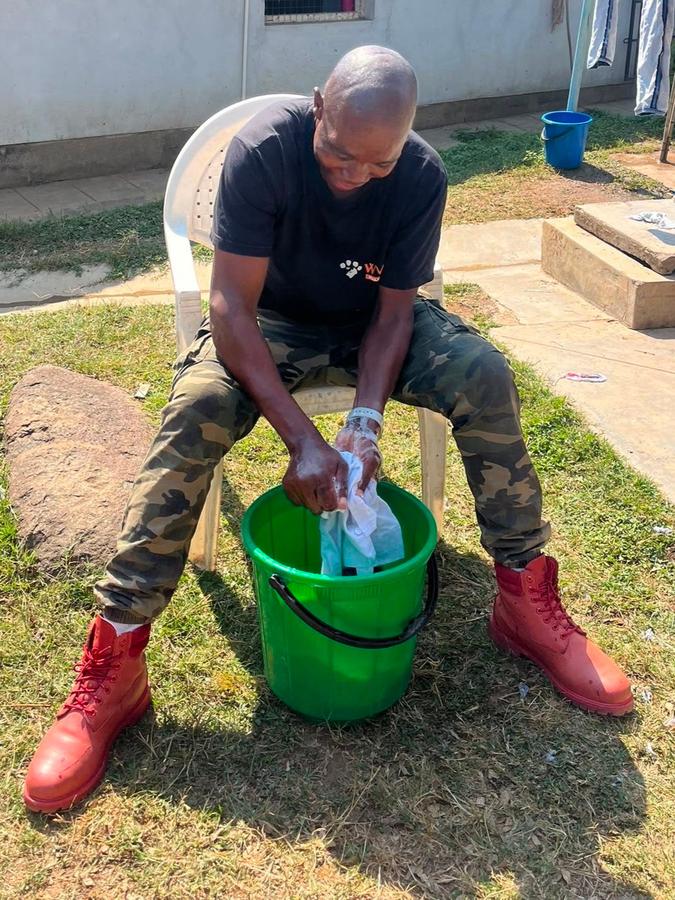
Step-by-step guide to hand washing
- Wear PPE: consider appropriate PPE (e.g. gloves) before handling potentially infectious laundry.
- Sort and separate: General-use items (bedding, towels) from surgical textiles (gowns, drapes).
- Remove solid contaminants: use disposable paper towels to remove any large amounts of faeces, vomit, or other organic material. Dispose of used towels in clinical waste.
- Inspect items: discard any items that are excessively soiled, damaged, or unsafe to reuse.
- Place items in a dedicated wash basin or container.
- Add appropriate laundry detergent (according to the manufacturer’s instructions).
- Wash using agitation and scrubbing, especially heavily soiled areas. Mechanical action is an important part of effective cleaning.
- Allow items to soak for the period recommended by the detergent manufacturer (or typically 10-20 minutes).
- Rinse thoroughly with clean water until no detergent remains.
- Repeat: if the wash water becomes visibly dirty, drain it and repeat the process using fresh water and detergent.
- Dry completely (see below).
Drying
Thorough drying is just as important as washing to reduce the risk of microbes surviving on textiles.
Heat drying (using a tumble dryer) is ideal, as high temperatures also help destroy residual pathogens while drying. However, not all clinics have access to tumble dryers.
Air drying is an alternative, but must be done properly:
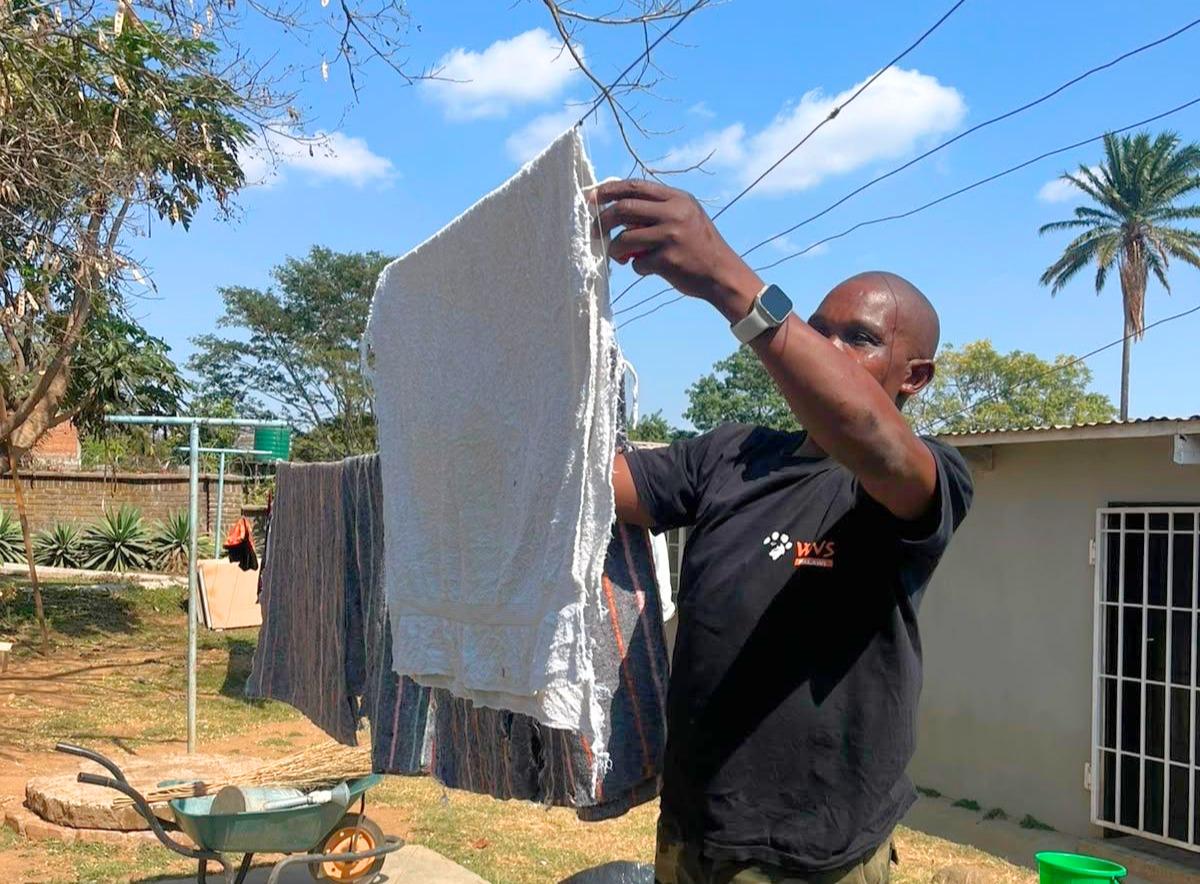
- Hang fabrics in direct sunlight where possible to assist drying. UV rays from the sun can offer some natural disinfection but this should not be relied upon alone for disinfection.
- Ensure full drying before use. Damp fabrics may support microbial growth and, in some environments, may attract flies and other pests.
- If sun drying is not sufficient, consider ironing to provide a final level of heat to finish drying.
Special considerations
Surgical textiles (e.g. gowns, drapes) must be laundered separately from general-use items like bedding or towels to prevent:
- Accumulation of animal hair on surgical fabrics.
- Cross-contamination of pathogens from other items.
Textiles used by animals in isolation or with suspected/confirmed contagious disease must also be laundered separately and handled with enhanced precautions:
- Wear suitable PPE (e.g. gloves, apron) to handle items, and carefully dispose of any visible waste/ organic matter prior to laundering in the appropriate waste bin.
- Do not mix with general laundry under any circumstances.
- If bleach is a suitable disinfectant for the pathogen in question, pre-soak in a 1:10 bleach solution (1 part bleach to 9 parts water) for 10–15 minutes to reduce pathogen load before washing (assuming a 5% household bleach concentration).