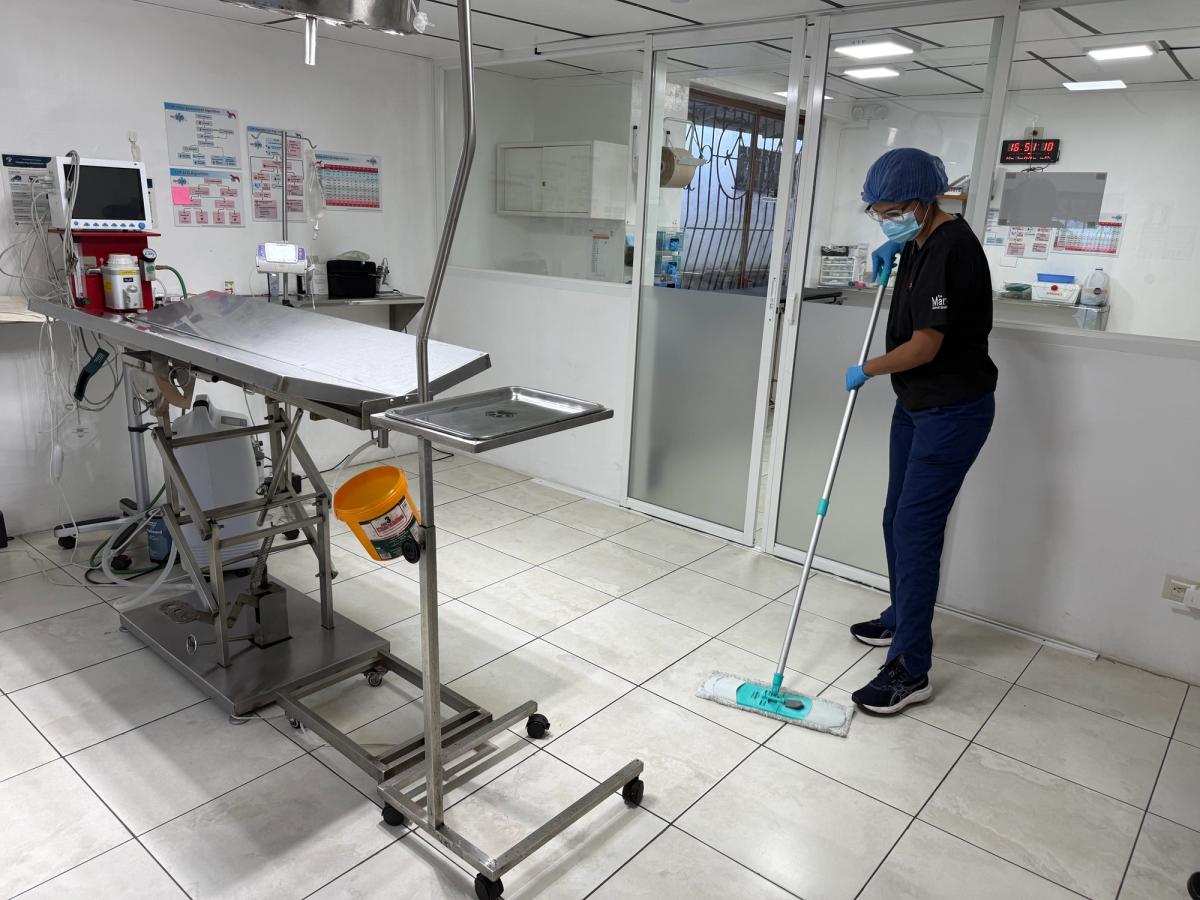

Strict cleaning and disinfection protocols play a vital role in reducing microbial contamination in the operating theatre, helping to lower the risk of surgical site infections (SSIs) and improve overall patient outcomes. To learn more about asepsis and the principles of the operating environment, see articles elsewhere on our website. A clean operating environment can also help to reduce reliance on antibiotics by preventing infections before they occur, supporting responsible antimicrobial use. More information on the responsible use of antibiotics and antimicrobial stewardship can be found here.
Strict cleaning protocols must be maintained and followed throughout the day, in between surgeries, and at the end of the day before closing the theatre. Cleaning protocols may vary depending on the clinical setting and workload. High-throughput settings (such as animal birth control centres) may organise between-patient cleaning more efficiently, but essential cleaning and disinfection standards should still be maintained.
The type of surgery being performed also plays a significant role in determining the appropriate cleaning protocol. Certain procedures require enhanced cleaning measures due to a higher risk of contamination. Procedures involving infection or gross contamination (e.g. pyometra surgery where infected material has leaked or spilled), should be followed by more thorough cleaning and disinfection before the operating theatre is used again. However, “clean” procedures, such as routine spay and neuter procedures, may be performed sequentially in the same operating room without enhanced cleaning between each case, provided that appropriate between-patient cleaning and disinfection are carried out.
In-between “clean” surgeries
After each operation, all used items must be removed promptly and disposed of appropriately. This includes sharps, syringes, and other single-use materials, which must be discarded in accordance with local clinical waste protocols. Particular care should be taken to ensure that all sharps are disposed of immediately in designated sharps bins.
All used surgical kits and instruments should be removed from the operating area and transferred for cleaning and sterilisation in line with clinic protocols. Surgical drapes must also be removed; single-use disposable drapes or towels should be discarded immediately, while reusable cloth drapes should be separated and placed in the designated laundry area according to clinic guidelines. We have further advice in our laundry article.
Once the area has been cleared and tidied, the surgical table should be thoroughly cleaned and disinfected using an appropriate disinfectant. Any positioning aids such as sandbags should also be cleaned and disinfected. Any visibly soiled areas, especially the floor surrounding the surgical table, must also be cleaned and disinfected. This is typically carried out by mopping with a suitable detergent and disinfectant solution to ensure effective removal of contamination.
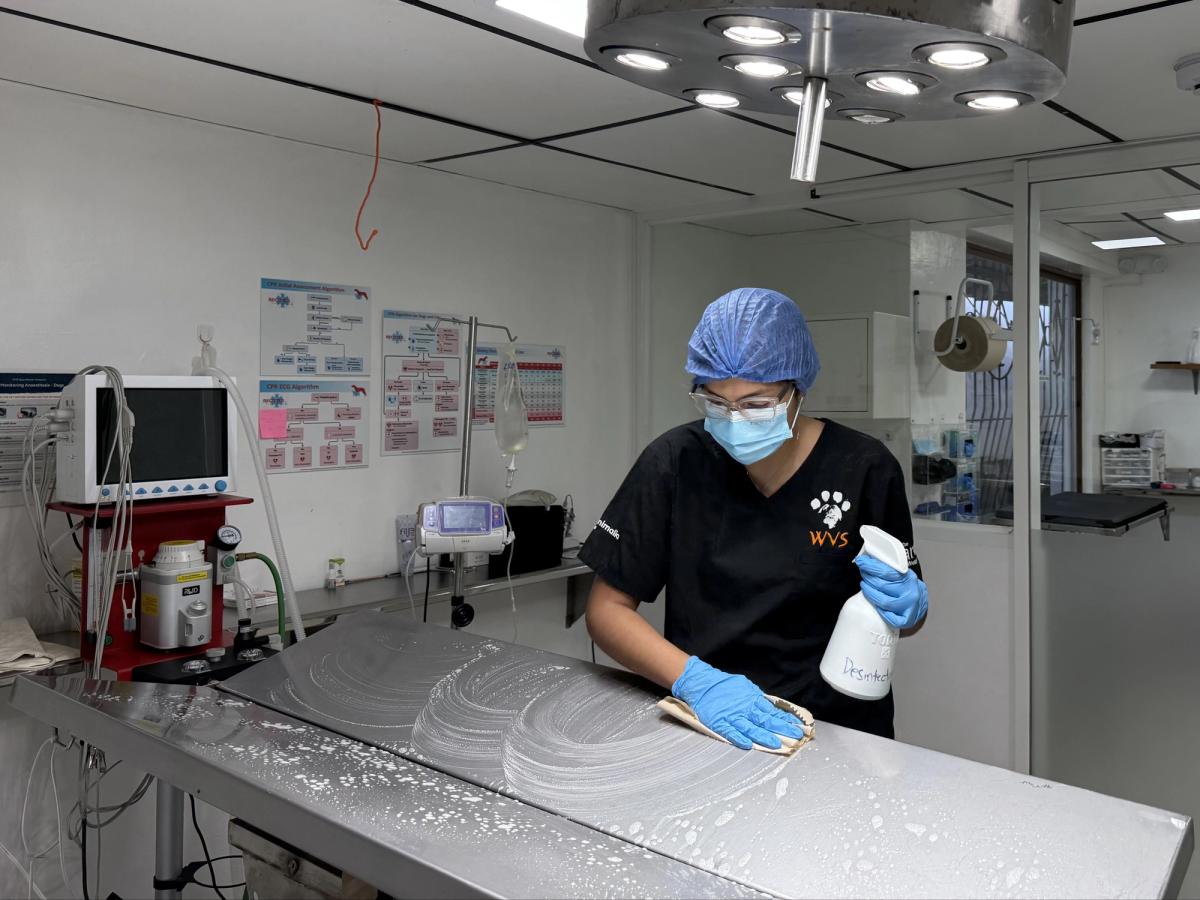
If a high-contamination-risk surgery has been performed, a full deep clean of the operating room is required before it is used again. See guidance below.
End of day cleaning/deep cleaning
A deeper clean should be carried out at the end of the day, or after contamination of the operating theatre from a “dirty” procedure.
All used items must first be cleared and removed from the operating area. This includes disposables, instruments, and surgical drapes, which should be handled and processed according to clinic protocols. Once cleared, a methodical approach should be taken to clean and disinfect:
- The operating table, including the surface, edges, legs, controls.
- Any other tables/ trolleys.
- Any positioning aids/cradles: clean and leave them separately to dry.
- High-touch surfaces, including light handles, door handles, switches, taps, and bin lids.
- External surfaces of anaesthetic equipment.
- Other monitoring equipment such as multiparameter machines. Particular care and attention must be given to cables and wiring, as these areas can easily harbour contamination but are also more susceptible to damage. Cleaning of electronic equipment should always be carried out in accordance with the manufacturer’s guidelines.
- All walls should also be cleaned and disinfected.
You should also:
- Empty all waste bins, ensuring that clinical and non-clinical waste is disposed of appropriately in accordance with local regulations.
- Sweep the floor, including corners and underneath equipment.
- Mop the entire theatre using an appropriate disinfectant and ensure the surface stays wet for the required contact time.
- Return clean equipment to the correct place and restock essential supplies.