

Barrier nursing refers to the infection-control procedures used when caring for an animal with a known or suspected infectious disease. The following guidance outlines the fundamental considerations and provides a practical step-by-step approach for safely managing patients in isolation.
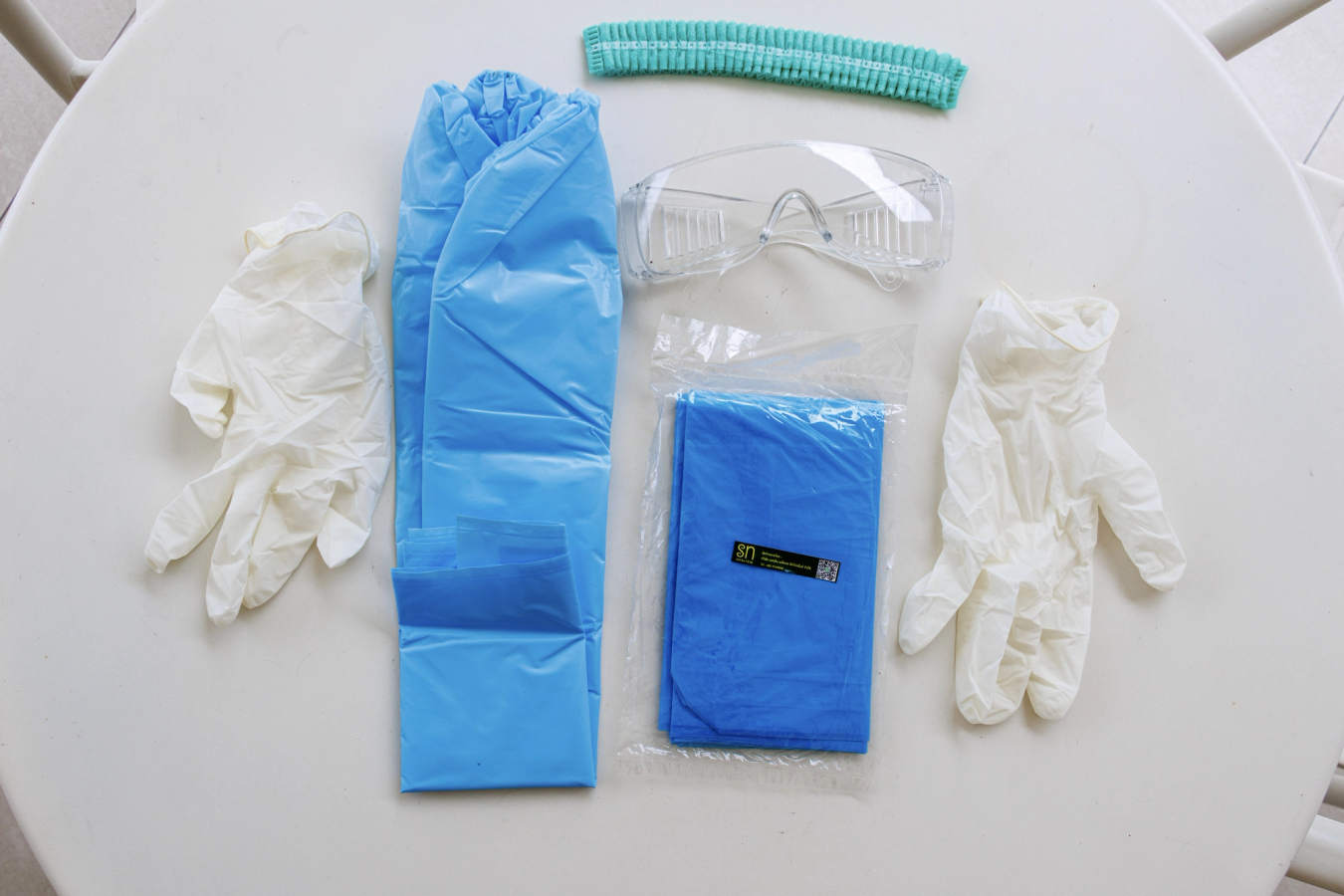
Barrier nursing
General principles of barrier nursing:
- Keep the patient isolated from other animals
- Where clinically appropriate, attend to other patients before the infectious patient
- Keep the patient in the same kennel wherever possible and minimise unnecessary movement outside the isolation area
- Use separate equipment, such as food bowls and thermometers
- Wear PPE appropriate to the infection risk and route of transmission, such as gloves, an apron or gown, and dedicated or protective footwear where required
- Keep waste and used bedding separate from other patients
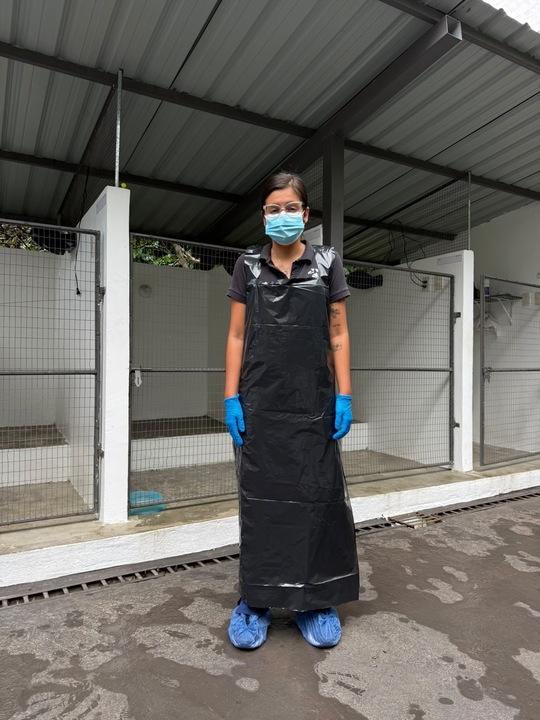
No disposable apron available? In resource-limited settings, a clean, unused plastic bin bag may be adapted to provide a temporary protective covering when purpose-made aprons or gowns are not available. It should cover as much of the front of the body and clothing as possible, fit securely without restricting movement, and be discarded after use. Take particular care when removing it to avoid touching the contaminated outer surface, and always perform hand hygiene afterwards.
An improvised plastic covering does not provide the same predictable protection as purpose-designed PPE and should not be relied on for procedures where significant splashing, soaking, or exposure to infectious body fluids is expected.
Protocol for entering and exiting isolation
- Remove any outerwear (lab coat, jacket) and equipment or personal belongings (stethoscope, scissors, watch, mobile phone etc.) and leave them outside the isolation area.
- Leave any patient paperwork (hospitalisation sheets, treatment notes etc.) outside the isolation area.
- Gather the supplies and medications required for the patient’s treatment.
- Perform hand hygiene before entering isolation. Use alcohol-based hand rub if hands are visibly clean, or wash with soap and water if they are visibly soiled or if required for the specific pathogen.
- Put on all required PPE, such as gloves, protective clothing and shoe covers where appropriate.
- Attend to the patient and provide treatment and care as needed.
- Clean and disinfect any equipment that needs to leave the isolation area before it is used elsewhere.
- Remove PPE carefully to avoid self-contamination. Dispose of single-use PPE and place reusable items in the appropriate area for cleaning and disinfection.
- Wash your hands with soap and water.
Entering and exiting isolation kennels protocol
Download a printable protocol for entering and exiting an isolation area, here.
Download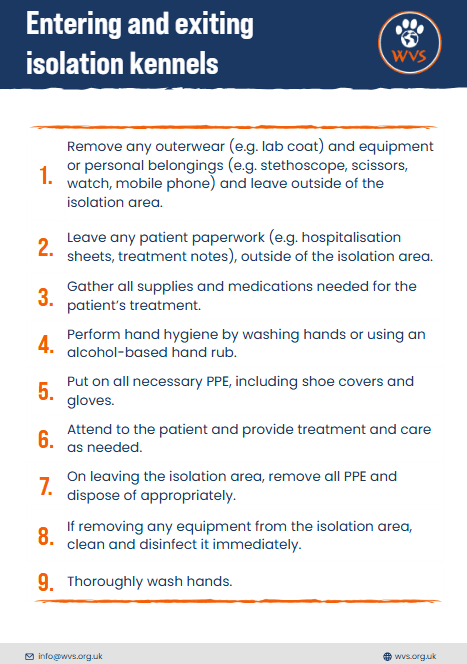
Shoe covers vs foot baths?
Foot baths may be less effective if footwear is dirty, as organic matter can reduce how well the disinfectant works. They also rely on the disinfectant being used at the correct concentration and staying in contact with the footwear long enough to work.
Disposable shoe covers or dedicated washable footwear, such as clogs, can both be practical alternatives in isolation areas. Shoe covers should be removed carefully to avoid spreading contamination, while reusable footwear should be cleaned and disinfected appropriately after use.
Reverse barrier nursing
Reverse barrier nursing, also known as protective isolation, is a practice aimed at protecting vulnerable patients from potential sources of infection, including pathogens transmitted by staff, animals, or the clinical environment.
While standard barrier nursing is designed to prevent the spread of infection from a patient to staff or other animals, reverse barrier nursing works in the opposite direction, protecting the patient from external threats.
This approach is particularly important for:
- Vulnerable neonates or young animals
- Immunocompromised patients, including animals with conditions or treatments that significantly weaken their immune response
Reverse barrier nursing can be especially important for vulnerable patients in busy clinical settings, where frequent movement of staff and animals may increase the risk of exposure to infectious pathogens. However, reverse barrier nursing is an additional layer of biosecurity and is not a substitute for routine hygiene protocols.
Reverse barrier nursing uses many of the same infection-control measures as standard barrier nursing, but the focus is on preventing pathogens from reaching the vulnerable patient:
- Use clean, appropriate PPE (gloves, apron/gowns) when handling the patient
- Housing in a clean, low-traffic area, such as kennels at the end of a ward
- Minimising the number of staff handling the patient
- Strict hand hygiene before and after contact