

Every veterinary shelter or clinic should maintain a designated isolation area for animals with confirmed or suspected infectious disease. Isolation plays a critical role in protecting healthy animals, reducing the risk of outbreaks, and supporting the overall wellbeing of the resident population and other animals attending the facility for treatment.
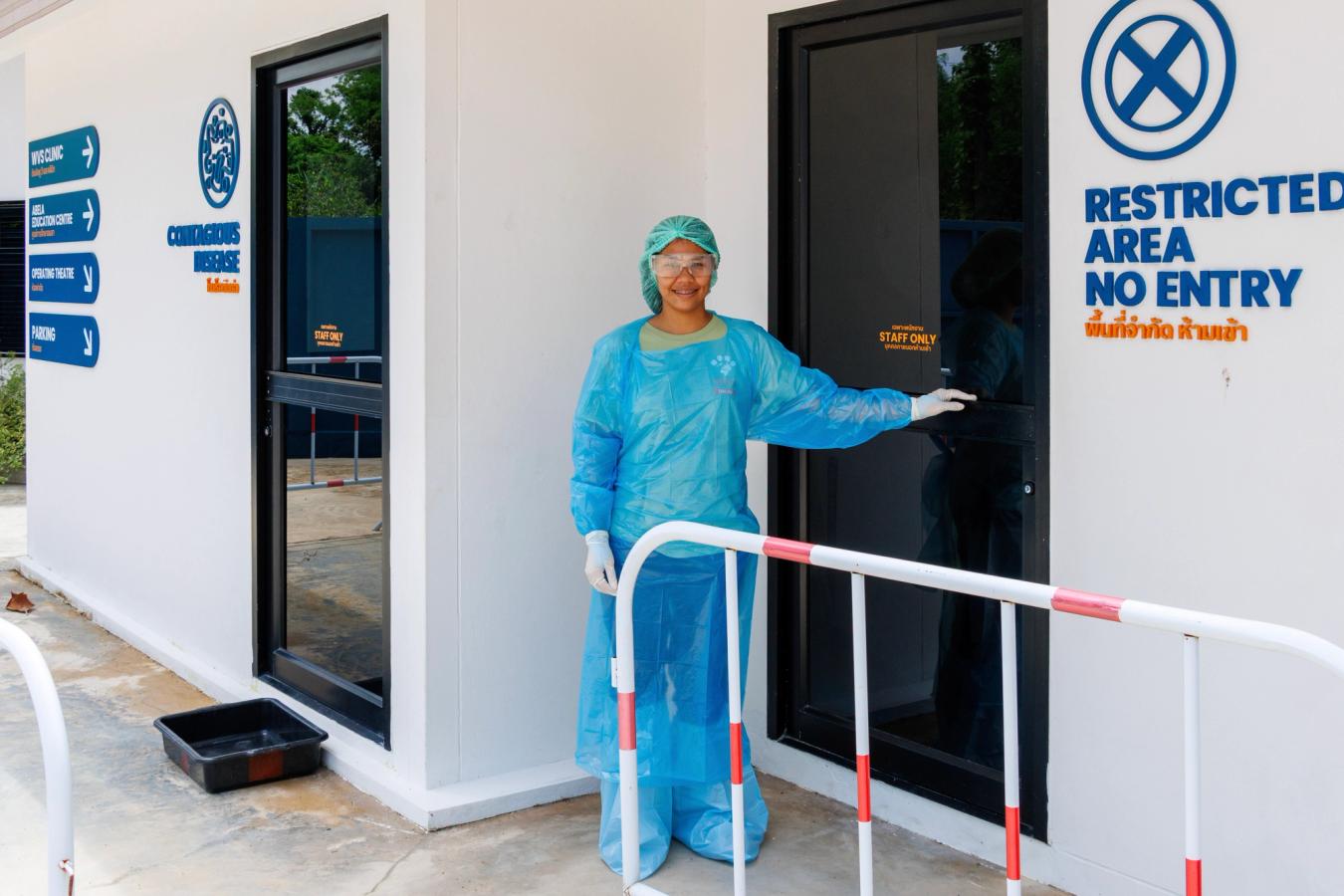
Design of isolation facilities
Ideally, isolation facilities would be designed with the following principles in mind.
Physical Separation: the isolation room should be fully separated from other animal housing areas with solid walls to prevent cross-contamination.
Ease of cleaning and disinfection: isolation areas should be designed to be easily cleaned and disinfected. Use washable materials for floors, walls, and ceilings. Floors should be sealed, smooth, and free of cracks to allow thorough cleaning and proper drainage. There should also be minimal furniture and storage, with only essential supplies and equipment kept inside.
Handwashing facilities: provide sinks with running water, soap, and drying facilities immediately adjacent to isolation entrances to promote hand hygiene. Where this is unavailable due to existing facility design or layout, provide alcohol hand gel as an alternative.
Dedicated supplies: equip the isolation area with dedicated equipment, treatment supplies, and storage to prevent cross-contamination. It’s best to avoid items being carried in and out of the isolation area and potentially used on other patients. Separate, dedicated cleaning supplies such as mops, buckets and brooms should also be provided. These can be colour-coded so that they can be clearly differentiated from those for general use.
Ventilation and temperature control: where possible, facilities should implement a ventilation system that promotes even distribution of fresh air while avoiding draughts. The use of air filtration systems is recommended to help remove infectious particles and environmental contaminants. In resource‑limited settings, where advanced systems are not available, the use of a simple extractor fan can provide a basic level of ventilation and air exchange. Temperature control should also be considered, aiming to maintain a comfortable range of approximately 15 to 27°C to support animal health and recovery.
Waste management
Waste from isolation or infectious kennels should always be treated as potentially infectious and managed with a high level of caution. This includes bedding, disposable materials, PPE, and any items contaminated with bodily fluids. Key principles of infectious waste management include:
- Waste should be separated at the point of use and placed into appropriate, clearly labelled containers.
- All waste should be bagged or contained within the isolation area, with a suitable waste container kept close to the animal’s kennel to allow immediate disposal of contaminated materials.
- When waste is removed from the isolation area, it should be handled in a way that prevents contamination of clean areas, surfaces, or equipment. This may involve placing the waste bag inside a second, clean outer bag as it leaves the isolation area, or carrying the sealed waste directly to the designated disposal area without allowing it to contact surrounding surfaces. Leak-proof bags should be used where there is a risk of leakage or spillage.
- Staff should wear appropriate PPE when handling waste and avoid direct contact with contaminated materials.
- Waste should be securely stored in designated areas and removed regularly.
- All waste must be transferred to authorised facilities for treatment or disposal according to local regulations.