

Effective management of an isolation area helps reduce the risk of infection spreading to other animals, staff, equipment, and shared areas within the facility. This article covers general practical measures for managing the isolation environment, including equipment and consumables, signage and communication, and animal movement. Guidance on barrier nursing and the direct care of animals in isolation is covered separately.
General principles
- Keep patient records outside the isolation area to prevent contamination.
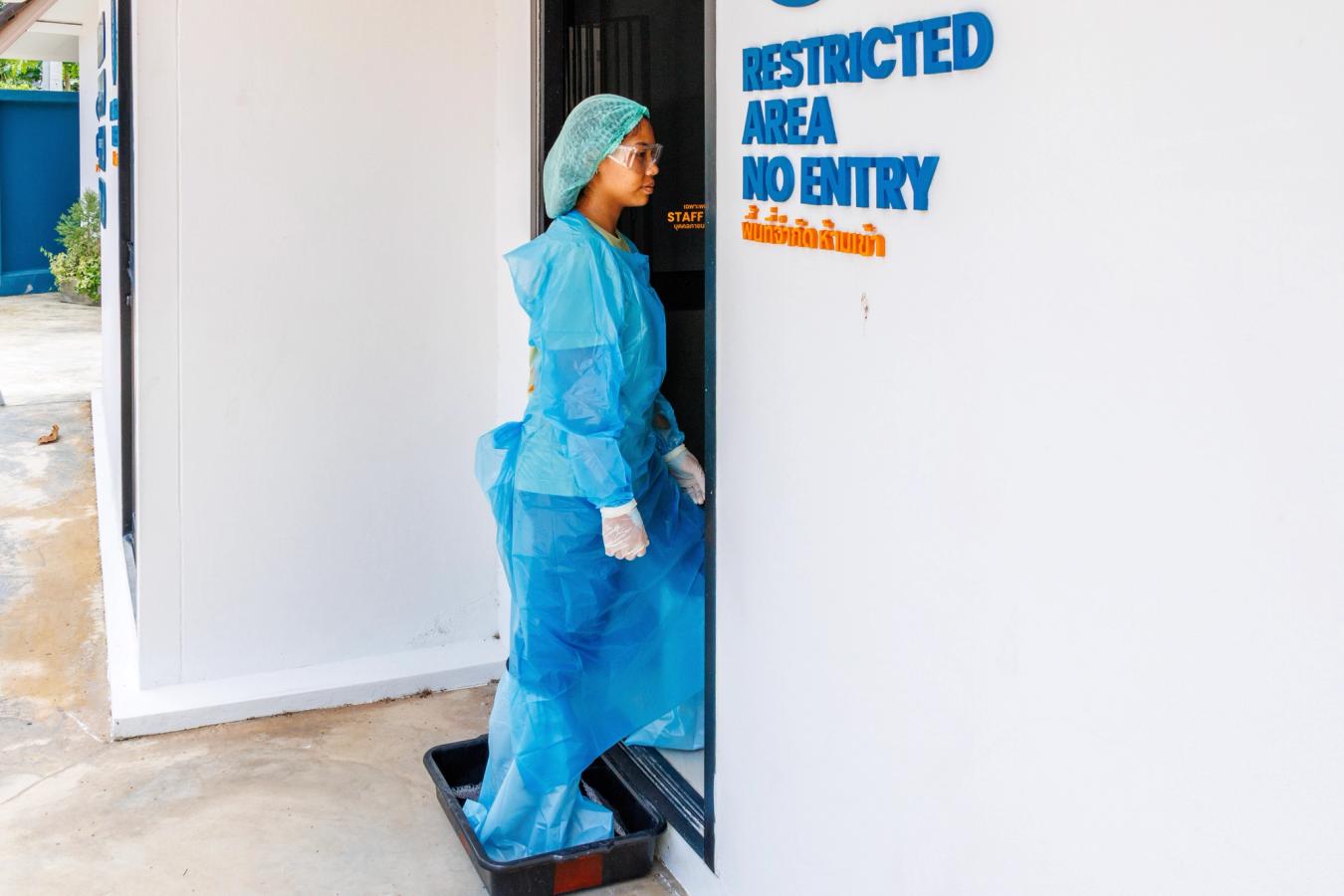
- Ensure appropriate PPE is readily available at the entrance to the isolation area.
- Limit equipment and consumables to what is essential for each individual patient.
- Inform all staff members when an animal is placed in isolation to maintain awareness and reduce unnecessary contact.
Equipment and consumables
To reduce the risk of cross-infection:
- Wherever possible, assign dedicated equipment (e.g. thermometers, stethoscopes, muzzles, collars and leashes) to each individual patient.
- If equipment must be shared due to limited availability, it is essential to clean and disinfect it thoroughly between uses.
- Keep the number of items in isolation areas to a minimum, reducing both cleaning demands and contamination risks.
- Equipment requirements may vary depending on the patient’s specific needs, so only case-specific essentials should be present.
- Avoid storing consumable supplies (e.g. bandaging materials, needles and syringes) in isolation areas. Instead, bring in only the quantity needed for each patient, as items taken into isolation may become contaminated and may need to be discarded or decontaminated before removal.
Signage and communication
Clear communication is a key part of effective isolation:
- Ensure clear and visible signage is displayed on all isolation areas, indicating:
- Isolation status
- Infection risk
- Required PPE and precautions
- Signage is particularly important in temporary or converted isolation areas, helping to alert all staff and limit unnecessary entry.
- Proper signage supports compliance with infection-control protocols and helps reduce the number of personnel involved in patient care.
Animal management and movement
- Avoid exercising animals in shared areas or allowing them to urinate or defecate in areas used by other patients.
- When transporting animals, use a secure carrier where appropriate and minimise contact with shared surfaces. If the animal must be carried, wear appropriate PPE and clean and disinfect any surfaces or areas that become contaminated afterwards.