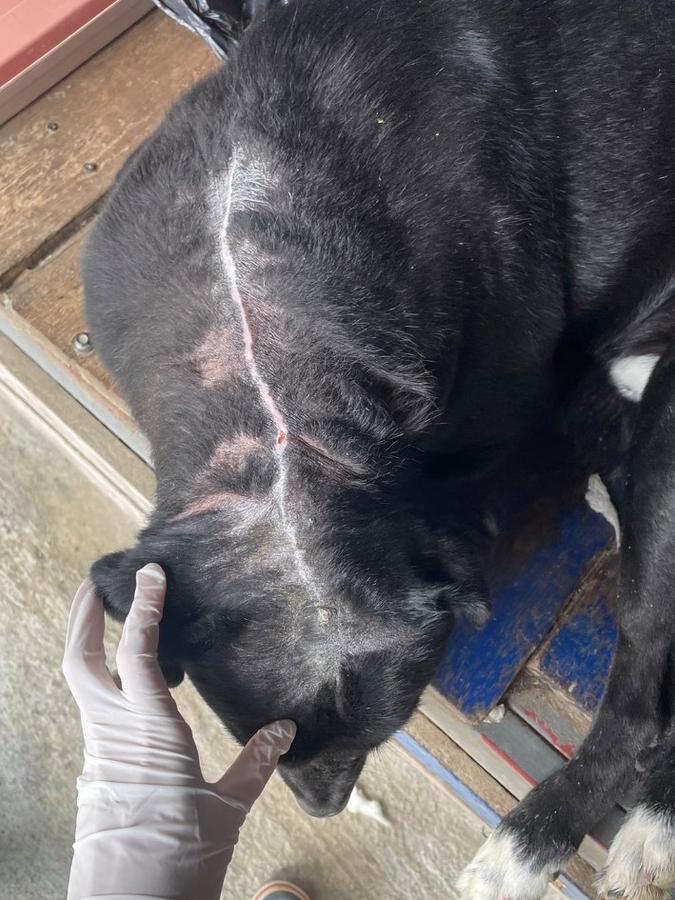

Key Points
- Granulation tissue is remodelled into scar tissue.
- Collagen fibres are reorganised and the wound may contract further.
- Wound strength slowly improves.
Maturation
The final stage of wound healing begins around three weeks after the initial injury. During maturation, the newly formed granulation tissue gradually remodels into scar tissue and matures to achieve optimal strength. This process continues for months and may take up to a year or more.
The primary mechanism for maturation is collagen remodelling. Collagen fibres within granulation tissue are randomly arranged and relatively weak. During remodelling, these fibres are broken down and reorganised to form larger collagen bundles, with crosslinks between fibres. As scar tissue matures, it contains fewer but better-organised collagen fibres.
Wound strength is very slow to improve. At around three weeks after injury, the tissue is about 20% of its pre-injury strength. This increases over several weeks, but the scar will never reach its original strength, reaching a maximum of 70-80% pre-injury strength. There is some evidence that the strength of wounds may be lower in cats than dogs, especially in the earlier stages of healing and remodelling.
As the collagen is remodelled, the size of the scar may reduce, and wound contraction continues in the maturation phase. Over time, the capillary network continues to regress into avascular scar tissue.