

This article looks at the options for analgesia in the field with the focus on short term analgesia for surgical procedures and the immediate aftercare. For a more in depth look at pain see the section in Welfare on Pain management and control.
The drugs covered here include:
- Non-Steroidal Anti-Inflammatory Drugs (NSAIDS)
- Alpha-2 agonists
- Opioids
- Local anaesthetics
NSAIDS
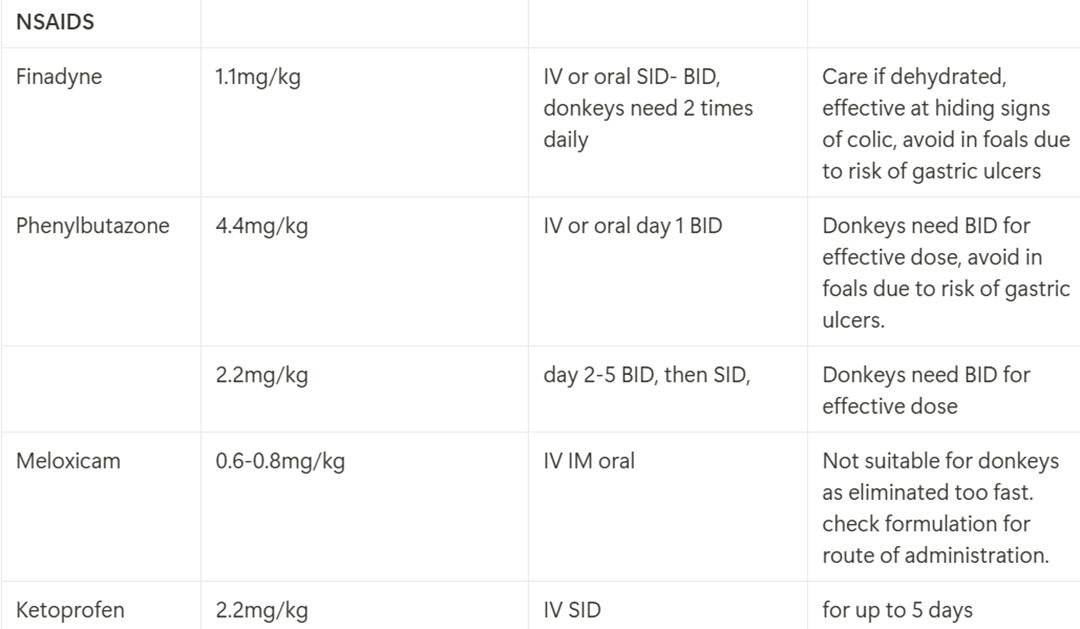
NSAIDS are often used before a field surgery as part of a multimodal analgesia regime (table 1). They should be given before the surgery at the same time as a pre-medication or induction. Finadyne is the most commonly used. These drugs are often continued in an oral form after the surgical procedure. Note how the dosing frequency is increased in donkeys due to the fact donkeys have increased clearance of most NSAIDS.
💡 Avoid use in dehydrated equines due to the risk of renal failure, and in young foals due to the risk of gastric ulceration
Alpha-2 agonists
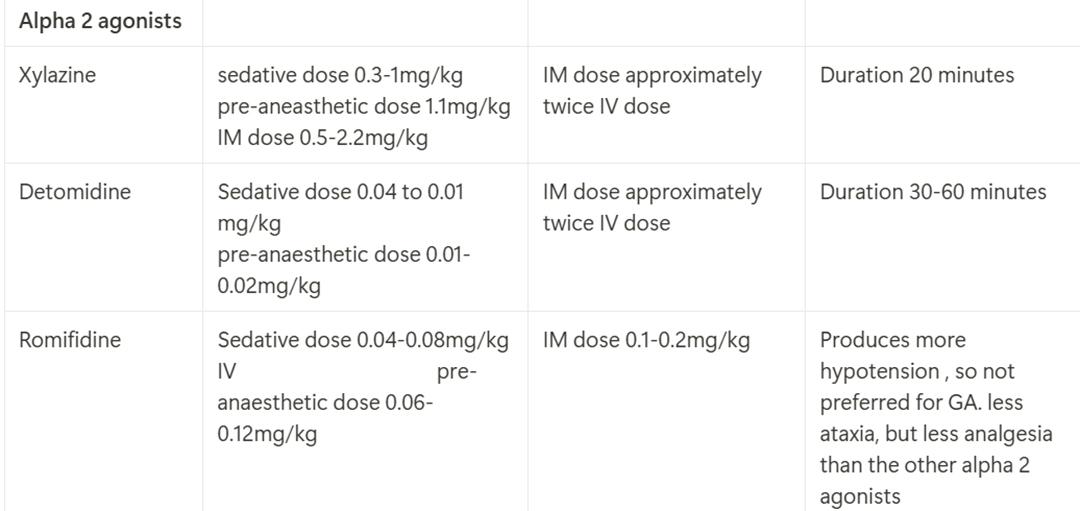
These have mild analgesic effects but there main use is for sedation (table 2), alone or combination with an opioid, known as neuroleptanalgesia. The available equine alpha-2 agonists are detomidine, xylazine and romifidine. They all have similar side effects including bradycardia, arrhythmias, decreased cardiac output, respiratory depression, sweating and reduced gastrointestinal motility.
Care should be taken in the administration to critically ill patients, such as those with blood loss or cardiovascular compromise. Conversely, anxious horses or those with higher circulating catecholamines may require increased doses. Intramuscular doses may be needed in animals where intravenous access is impossible and the dose needs to be doubled to be effective by this route.
- Xylazine is the shortest acting of the alpha-2 agonists (10 to 20 minutes) and useful to provide sedation for short procedures, such as examination for colic or sedation for nerve blocks given at a lower dose, e.g. 0.3mg/kg
- Detomidine will provide 30-60 minutes of sedation, and is considered a potent sedative that may even mask signs of colic
- Romifidine provides 60-90 minutes sedation. It produces less ataxia than the other agents and is often preferred for procedures such as radiography
- Atipamezole can be used to reverse the effect of alpha-2 agonist in the event of adverse reactions. The dose is 0.05-0.1mg/kg IV; this reverses sedation and analgesia
- Do not use IV sulphonamide antibiotics within 20 minutes of sedation with alpha-2 agonists due to the risk of cardiac arrhythmias
- Avoid in pregnancy, especially the final trimester
- Mules that are unused to handling and are stressed may need up to 50% more of any alpha-2 agonist.
Opioids
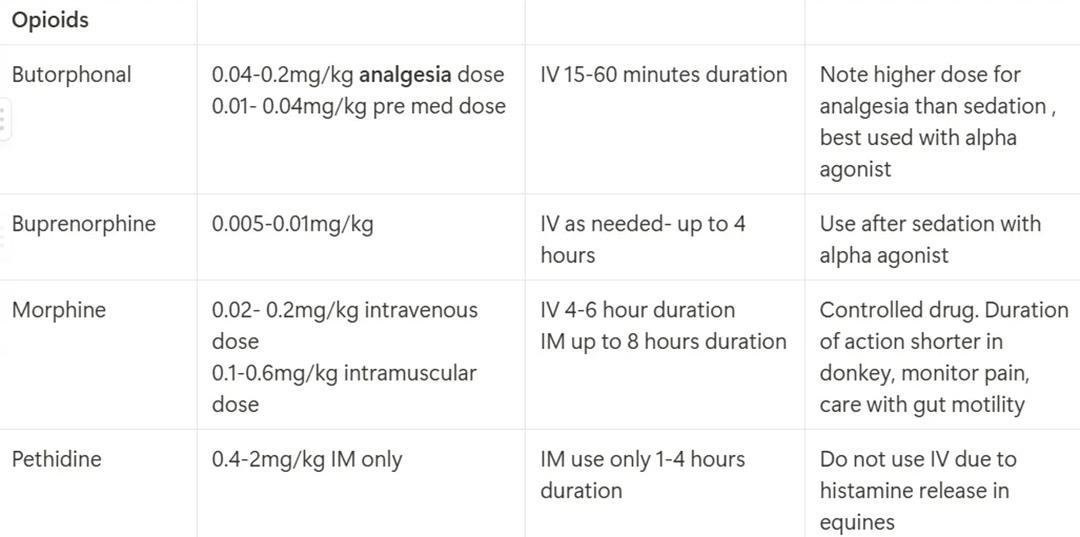
The partial-agonist opioids butorphanol and buprenorphine are often used in combination with alpha-2 agonists as part of a neuroleptanalgesia combination (table 3). Used this way they act synergistically and can reduce the risk of an equine kicking when a painful stimulus occurs. They are commonly used as part of a pre medication mix, or for standing procedures such as wound suturing. At these sedative combination doses they have relatively short lived analgesic effects.
📚 Higher doses of opioids are needed to provide analgesia as the sedative part of the combination wears off
Donkeys seem to need more frequent dosing to provide analgesia and pain scoring can be used to decide when further analgesia is required. The opioids morphine and pethidine are subject to controlled drugs regulation and are unlikely to be available in the field. Opioids do reduce gastrointestinal motility and can cause excitation, but these effects are minimised if the equine is in severe pain and when used after administration of an alpha-2 agonist. Equines that receive multiple doses of opioids should have gastrointestinal sounds and faecal output monitored.
Local anaesthetics
Local anaesthetics are a vital part of a field anaesthesia. Time is limited and one of the most significant ways to reduce the need for increased anaesthetic depth is by using local anaesthetics. They can be used as regional blocks, ring blocks, intra-testicular or as topical ‘splash blocks’ directly onto an area. Specific local blocks are covered in separate sections. Excess local anaesthetics are irritant directly to wounds, and if absorbed systemically where they cause muscle weakness and tremors.
| Local anaesthetics | |||
|---|---|---|---|
| Lignocaine | 10-40mg per nerve block site | Duration 30-120 minutes | Allow 5-10 minutes for onset. Safe dose is <4mg/kg |
| Bupivicaine | 0.5-2mg per block site | Duration 30-90 minutes | Allow >10 minutes for onset |
| Mepivicaine | 30mg per site | Duration 60-120 minutes | Allow >10 minutes for onset |
Table 4 Local anaesthetics used in equines