
This section covers the drugs required and process of anaesthesia under the following headings:
- Drug dosage charts
- Pre-meds and induction
- Maintenance
- Recovery
- Post-op care and complications
Drug dosage charts
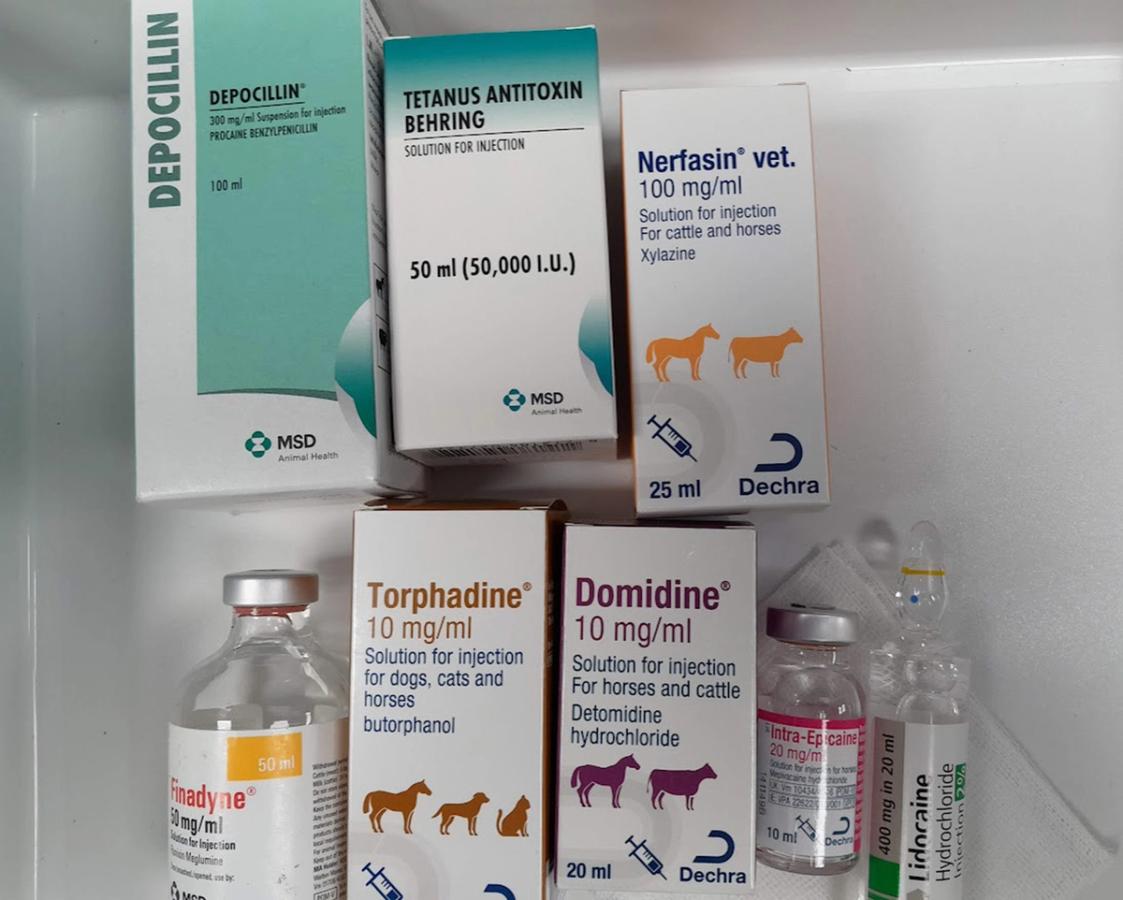
Experience with use of the drugs mentioned here allows a familiarity with dose volumes and the difference in patient response. It is normal for anaesthetists to prefer one combination of drugs as they develop their skills. Use the section on sedation in the previous article in conjunction with Table 1 for working out dosages, and always check manufactures guidelines and updated advice (figure 1). Any equine that is anxious/stressed or hyper-aroused may need an increase on the sedation quoted; however if the patient cannot be relaxed enough to achieve a ‘head-below-withers’ posture prior to induction, the procedure should be delayed and efforts made to reduce stress levels. Techniques that are useful to minimise stress include:
- Calm handler and surroundings
- Keeping a companion equine close by
- Minimise onlookers and helpers
- Use intramuscular sedation with ACP and allow the equine to relax in a quiet space for 30 mins prior to intravenous sedation
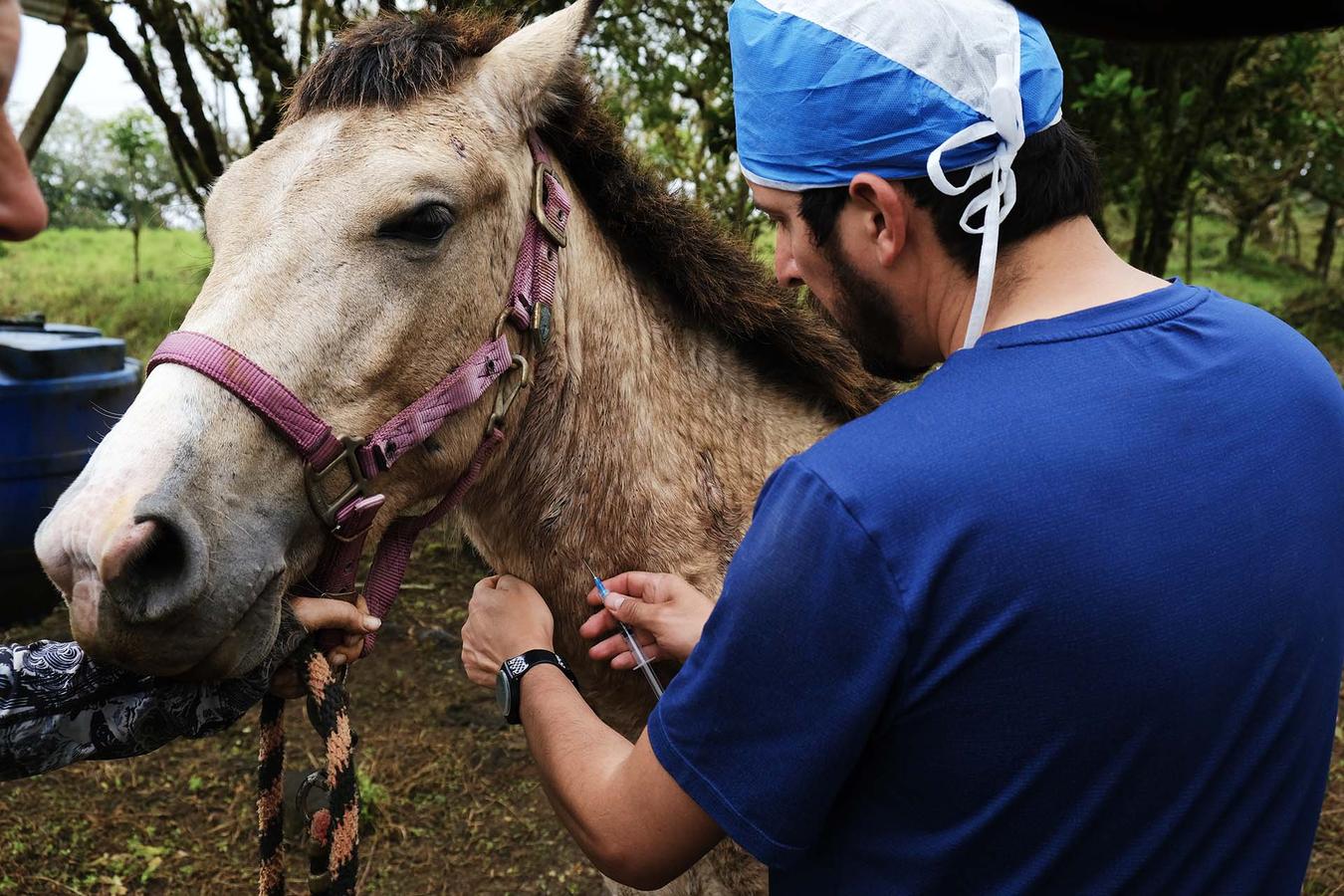
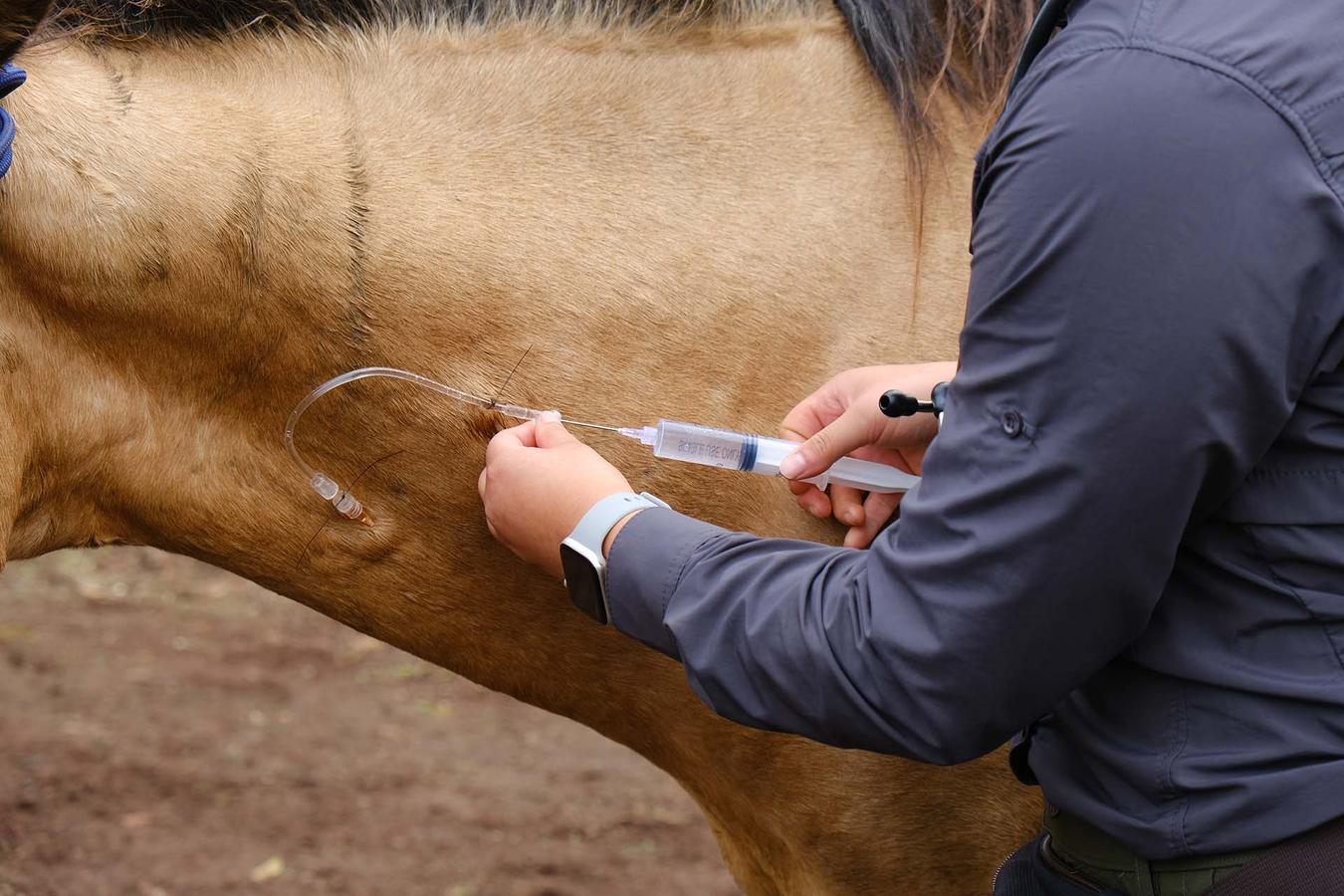
- Use a small dose of sedative IV or IM to help place the intravenous catheter (figure 2)
- Allow forage until the equine is sedated (for a short GA) and keep away from other equines being fed to reduce stress
| Drug: sedative anxiolytic/cardioprotective | Dose Horse | Dose Donkey | Top up dose | Comments |
|---|---|---|---|---|
| ACP acetylpromazine | 0.04mg/kg IV or IM 30 minutes before induction | 0.03mg/kg IV or IM 30 minutes before induction | Avoid in compromised patients due to hypotensive effect. Avoid in mature stallions | |
| Drug: aplha-2 agonist sedationUSE ONE OF THESE ONLY | Doses of all these drugs may need adjusting according to patient temperament, health and state of arousal. | |||
| Detomidine | 0.02mg/kg IV | 0.02mg/kg IV | 1/3 to 1/2 induction dose after 30 minutes | Detomidine provides a slower recovery which may not be ideal eg in very hot weather |
| Xylazine | 1-1.1mg/kg IV | 1.1mg/kg IV | 1/3 to 1/2 induction dose after 15 minutes | This is the shortest acting and may be useful when a quicker recovery is needed |
| Romifidine | 0.1 mg/kg IV | 0.12 mg/kg IV | 1/3 to 1/2 induction dose after 60 minutes | Causes more hypotension that other alpha agonist and less analgesia |
| Drug: Analgesics | ||||
| Butorphanol | 0.02mg/kg | 0.02-0.05mg/kg IV | A single dose is insufficient for post-op analgesia, but potentiates effect of alpha agonists | |
| NSAID Finadyne | 1.1mg/kg IV | 1.1mg/kg IV | Given before surgery to prevent wind-up pain | |
| Drug: Induction agents | ||||
| Ketamine | 2.2mg/kg IV | 2.2-2.8mg/kg IV | 1/3 induction dose every 10 minutes in donkeys due to faster metabolism | Ketamine and diazepam are usually administered in the same syringe |
| Diazepam or Midazolam | 0.04-0.1 mg/kg IV | 0.1mg/kg IV | Note higher dose in donkeys.Diazepam reacts with plastic in the syringe and should only be drawn up when it is needed. |
Table 1 Drugs used for field anaesthesia in the horse and donkey
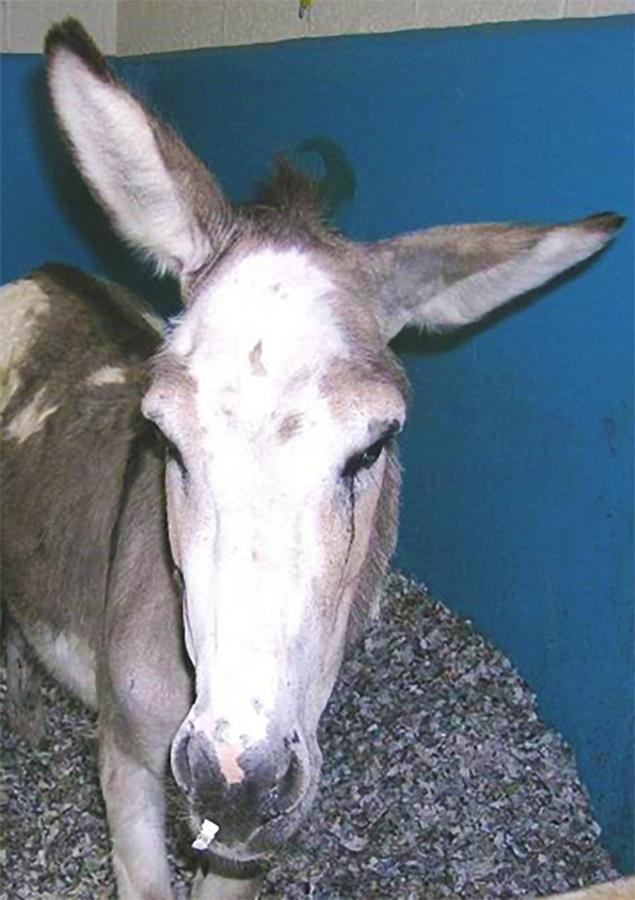
Donkeys can be more challenging for those not used to dealing with them for a few reasons:
- Thicker skin; it is recommended to use local anaesthetic and make a small scalpel incision before inserting an IV catheter to avoid damaging the catheter tip
- Jugular vein; this may be hard to find as the cutaneous colli neck muscle is well developed. Hold the head up high to visualise it and look in the upper third of the neck
- Faster metabolism of ketamine means that timed top ups are required at 10 minute intervals
- Shorter time to recumbency with guaiphenesin means care is needed with overdosing
- Donkeys require gentle handling or they develop a marked “freeze” or “fight” stress response. It is better to allow more time when working with this species and to maintain a calm manner
Mules can provide challenges when they have not been well handled and are stressed around humans. It may be necessary to increase doses of aplha-2 agonist by 50% or more, and to use the IM route first to allow access to the jugular vein after the IM sedation has taken effect. The use of stocks is recommended to avoid injury.
A useful intramuscular sedation dose for mules is :
- Detomidine 0.02mg/kg
- ACP 0.03mg/kg
- Butorphanol 0.05mg/kg
- Mix all in the same syringe and use 1ml of the mixture/100kg body weight
- Leave the mule unstimulated for 30 minutes
‘Triple Drip’ for Total Intravenous Anaesthesia
This is a combination suitable for providing total intravenous anaesthesia. The advantage is that it provides a smoother level of anaesthesia without the impact of boluses of drugs when the patient becomes intermittently light then deep. The combination uses an alpha agonist, ketamine and guaphenesin, which is a centrally acting muscle relaxant. Guaphenesin is not an anaesthetic or analgesic and must not be used on its own; it is also extremely irritant when given extravascularly and must be administered through an intravenous catheter.
Animals will appear lighter when under triple drip anaesthesia than under gaseous anaesthesia, and there is a delay of up to 60 seconds when the drip rate is changed. As the drug creates muscle relaxation and is cumulative, it is easy to overdose leading to poor recoveries. TIVA should not be used for more than 30-45 minutes without the ability to supply extra oxygen. TIVA with triple drip can be used after a standard induction protocol as above.
💡 Donkeys are more sensitive to the effect of guaphenesin and care must be taken not to overdose
‘Triple drip’ for Horses:
- 500ml of 10% guaifenesin
- 1g ketamine
- 10mg detomidine/500mg xylazine/50mg romifidine
- Infuse at 1ml/kg/hr to 2ml/kg/hr, reducing infusion rate after 30 minutes to avoid accumulation
‘Triple drip’ for Donkeys:
Donkeys require a smaller volume of guaphenesin to induce recumbency than a horse and the mixture for donkeys is adjusted as below:
- 300ml 0.9% saline (take 200ml from a 500ml bag of 0.9% saline) then add:
- 225mls of 10% guaphenesin
- 225mg xylazine
- 900mg ketamine
- Infusion rate: 1-2ml/kg/hour
- The lethal dose for horses is 300mg/kg and as donkeys are mores sensitive to the drug than horses it is recommended to avoid doses over 150mg/kg as cardiorespiratory depression will occur.
- 150mg/kg is equivalent to 1.5ml/kg of 10% guaphenesin (10%=100mg/ml)
- For example: a 180kg donkey should not have more than 180 X 1.5 = 270ml guaphenesin
Preoperative medications (pre-meds) and induction
For a general anaesthetic a catheter should always be placed to provide prompt intravenous access for top-ups or emergency drugs. The catheter may be placed with a small amount of sedation or using local anaesthetic depending on the temperament of the equine. Pre-med drugs are given as per doses suggested in the drug dosages section. It is usual to also give an NSAID for analgesia at this stage. If used, antibiotics should be given 30- 60 minutes prior to surgery.
ACP is also a useful pre med to provide mild sedation and a reduction in anxiety 30 minutes prior to the induction. (ACP can produce hypotension and should be avoid in compromised patients. It is unsuitable for mature stallions due to the risk of prolonged penile prolapse.) An alpha-2 agonist combined with butorphanol provides good pre-medication sedation sufficient to process to induction of anaesthesia. Butorphanol potentiates the sedative effect of the alpha agonist, but does not provide enough analgesia to continue into the post-operative phase.
Sedation
- After administration of the sedative doses of alpha-2 agonist the equine must be left undisturbed for a minimum of 5 minutes to allow the full effect to take place
- The horse/donkey should have the head below the withers and be minimally responsive to stimuli after the pre-medication
- If the equine is alert with head above the withers then the dose of pre- meds should be topped up
- Only when the equine’s head is below the withers and they are deeply sedated it is safe to proceed to induction
- Do not proceed to give the induction agents in a semi-alert equine, or the induction will be poor with a hyper-excitable ataxic animal
- Flush the IV catheter with heparinised saline after each drug is administered
Induction
At this stage only one person should be holding the equine, while the anaesthetist proceeds to inject the induction agent. Ketamine and diazepam should be injected over a short period to induce anaesthesia. The equine can be expected to fall to recumbency in 30-60 seconds.
- One person should take responsibility for restraining the equine after the induction drugs are given and the area around should be clear of people, as the equine will fall unpredictably. Ideally by holding the head firmly and low from in front, the equine should relax back and sideways, then sink to the ground. Do not apply pressure to the shoulder as many horses and donkeys will push against the pressure and fall towards the handler
- Diazepam reacts with plastic in the syringe and should only be drawn up when it is needed
- The anaesthetist should allow the drugs to take effect for 1-2 minutes before allowing anyone to move or re-position the equine at this stage, as undue stimulation can reduce the effectiveness of the drugs
- Use a soft towel under the head, to protect bony prominences and the dependant eye. Apply ocular lubricant and cover the uppermost eye
- Remove or loosen the head collar to avoid pressure on the facial nerve
- Use padding between the upper and lower limbs
- Cotton wool can be placed in the ears to reduce sound stimulation
Positioning of the equine
The horse/donkey can be positioned in dorsal or lateral recumbency:
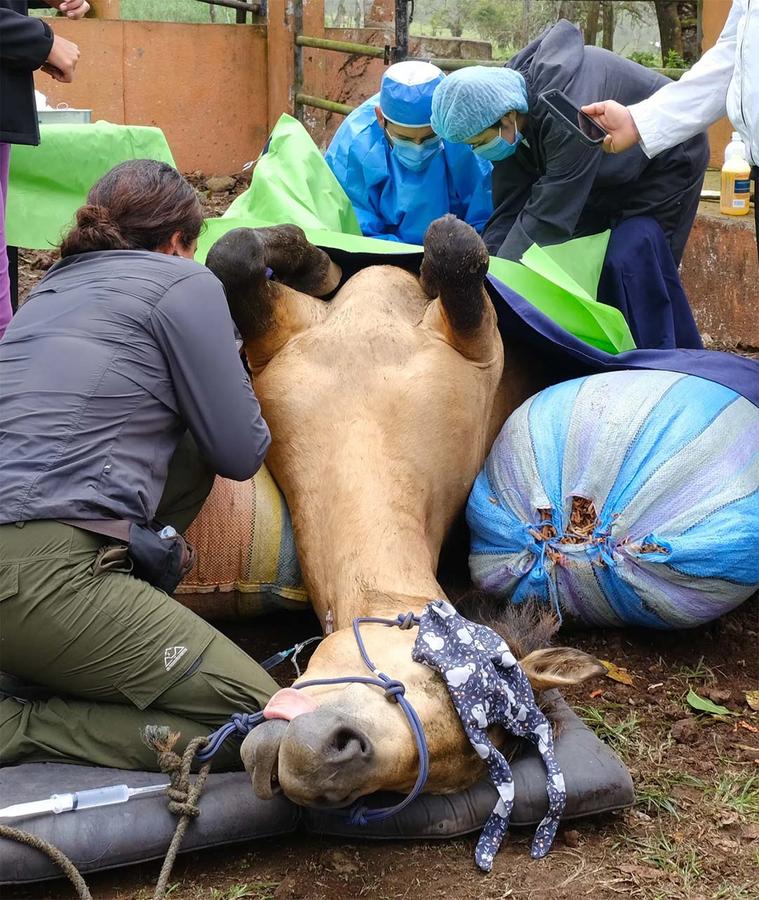
- To position the equine in dorsal recumbency (figure 4) use padding such as feed sacks , straw bales, etc. This position reduces lung capacity as the gastrointestinal contents push against the diaphragm, and should not be used for long procedures without supplemental oxygen. The head needs supporting in dorsal or turned and placed on a pad. Overextension of the head can damage the recurrent laryngeal nerves.
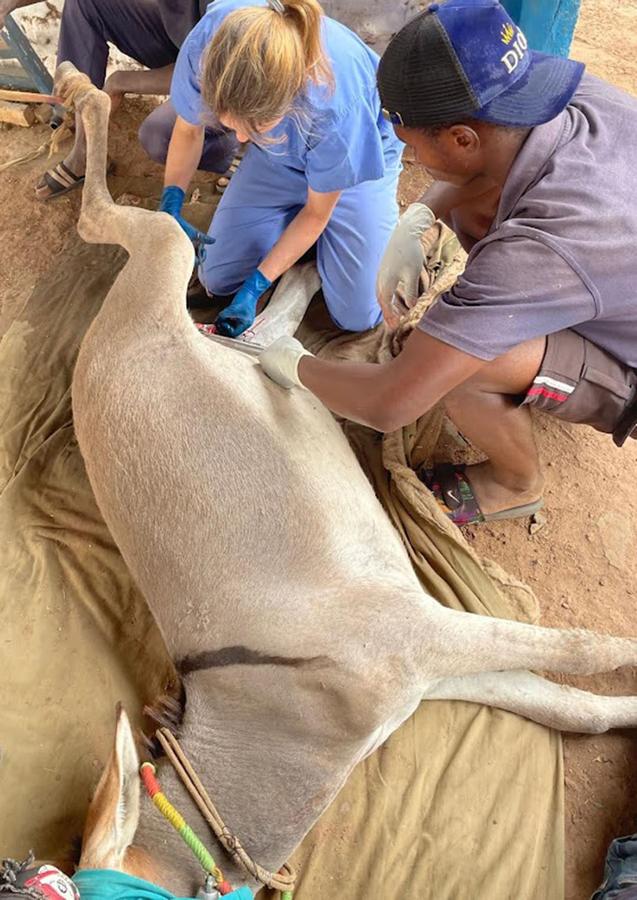
- In lateral recumbency (figure 5) a leg can be held out the way using ropes, and the head requires padding; the dependent eye needs protecting from dirt. The lower lung field will be compressed, so the equine should not be turned mid procedure or there can be sudden onset severe hypoxia . The lower forelimb should be pulled forward to reduce pressure from the upper triceps mass. Padding can be used between the fore and hind limbs to take excess pressure away from the dependant limb.
Maintenance of anaesthesia
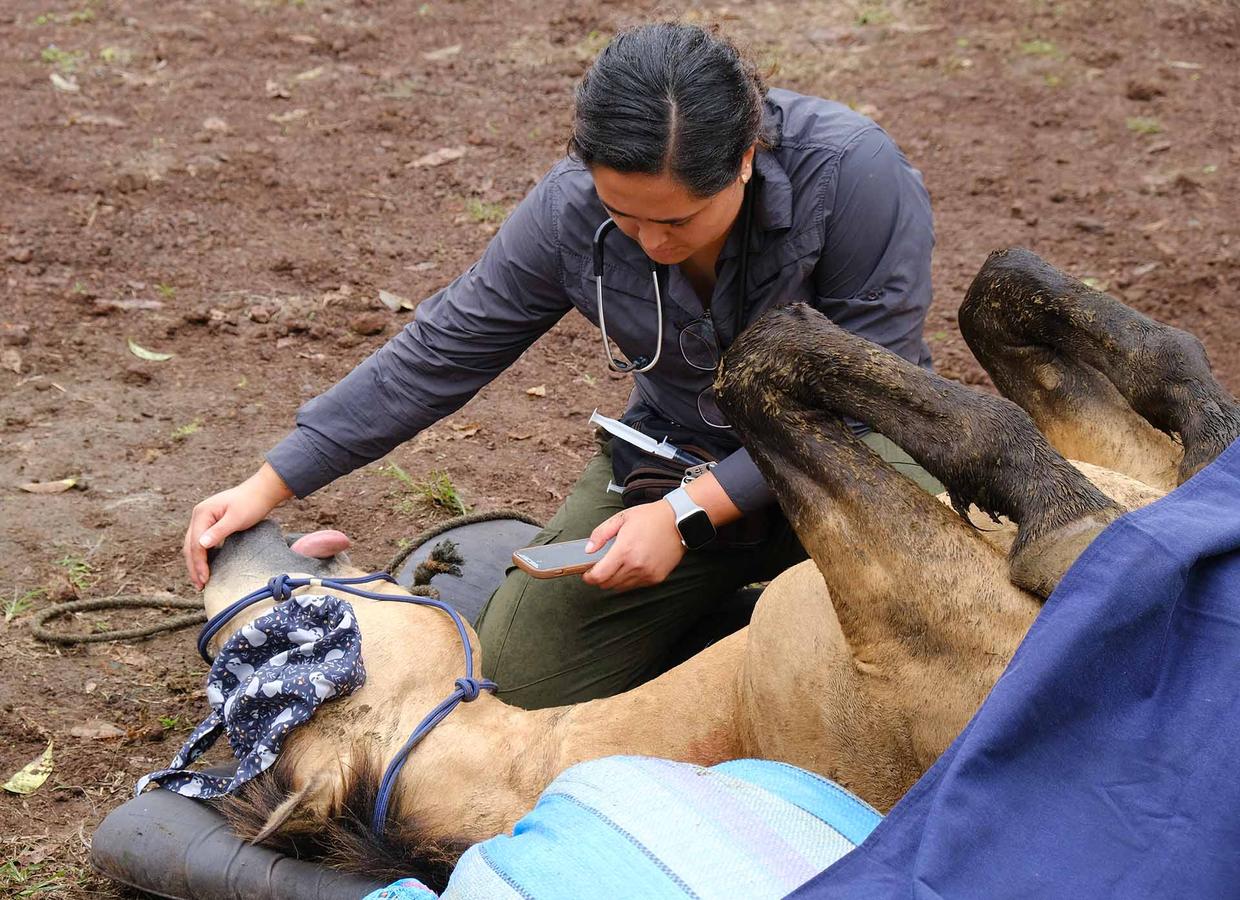
During anaesthesia in the field situation the anaesthetists role is to monitor the patient and assess the depth of anaesthesia (Figure 6). They should communicate with the surgeon at all times. The aim to is to maintain the equine at a surgical plane of anaesthesia, where the patient is unconscious but physiologically stable and uncompromised. The following parameters are monitored when there is no access to monitoring equipment:
- Palpebral reflex; this should be maintained during anaesthesia, only disappearing when the patient is becoming too deep. The palpebral reflex is a blink of the eyelid when a finger is drawn across the free part of the upper lid.
- Eye position/signs; the eye remains central with some lacrimation under TIVA and with short ketamine based anaesthetics. The eye rotates ventromedially and looses the palpebral reflex as anaesthesia deepens. A dilated fixed pupil in an eye with no corneal reflex indicates that the depth of anaethesia is too deep. The corneal reflex is a blink that occurs when the cornea is lightly pressed.
- Lacrimation and nystagmus; these are signs that the equine is becoming light
- Jaw and anal tone; when these are strong the patient is light
- Respiratory rate; generally higher in donkeys due to their smaller lung capacity expect 12-14bpm (breaths per minute), versus a horse 6-10 bpm. Breath holding and increasing depth of respiration can be a sign of a light plane of anaesthesia
- Heart rate; monitor for changes, regularity , bradycardia and tachycardia
- Mucous membranes; should be pale pink and moist with a refill time <2 seconds
- Limb movement; moving limbs is a sign that the patient is very light and may wake soon
Equines are at risk of hypotension under anaesthesia and without oxygen delivery through an endotracheal tube this is difficult to rectify. Field anaesthesia over 30 minutes increase the risk to the patient. Field anaesthesia techniques in the horse are expected to provide 5-15 minutes of surgical anaesthesia. It can be as short in 10 minutes in the donkey, hence the need for top-up drugs.
Maintaining a surgical plane of anaesthesia
The skill of the anaesthetist lies in safely allowing the surgeon to perform the surgery, while keeping the patient healthy, pain free and in a good physiological condition ready to recover when the surgery is over. Top-ups of sedatives and induction agents are used when needed to maintain surgical depth of anaesthesia. Local anaesthesia is also important to reduce pain stimuli, this can be in the form of regional blocks, local infiltration, or topical application ‘splash blocks’.
In donkeys use timed top ups of ketamine at 10 minute intervals. If a horse/donkey has had more that two top-ups of ketamine they are likely to have an ataxic recovery so to avoid this 1/3 to 1/2 of the initial sedation dose of alpha can be administered. The time interval required for aplha-2 agonist top up depends on the initial agent used as per table 1.
Emergency drugs
Although emergencies are rare during field anaesthesia, there can be unexpected complications. There is a limit to how effective resuscitation can be without facilities to intubate the patient. The main medications for use in cases of bradycardia /cardiac arrest are outlined in table 2.
| Drug | Indication | Dose | Comments |
|---|---|---|---|
| Adrenaline 1mg/ml | Cardiac arrest Asystole Severe bradycardia | 0.01mg/kg IV | |
| Atropine 1mg/ml | Severe bradycardia | 0.01mg/kg | Possible side-effects of tachycardia, mydriasis and post op colic |
| Buscopan | 0.02mg/kg | Fewer side-effects than atropine, but less potent |
Table 2 Medications in cases of bradycardia /cardiac arrest.
Recovery
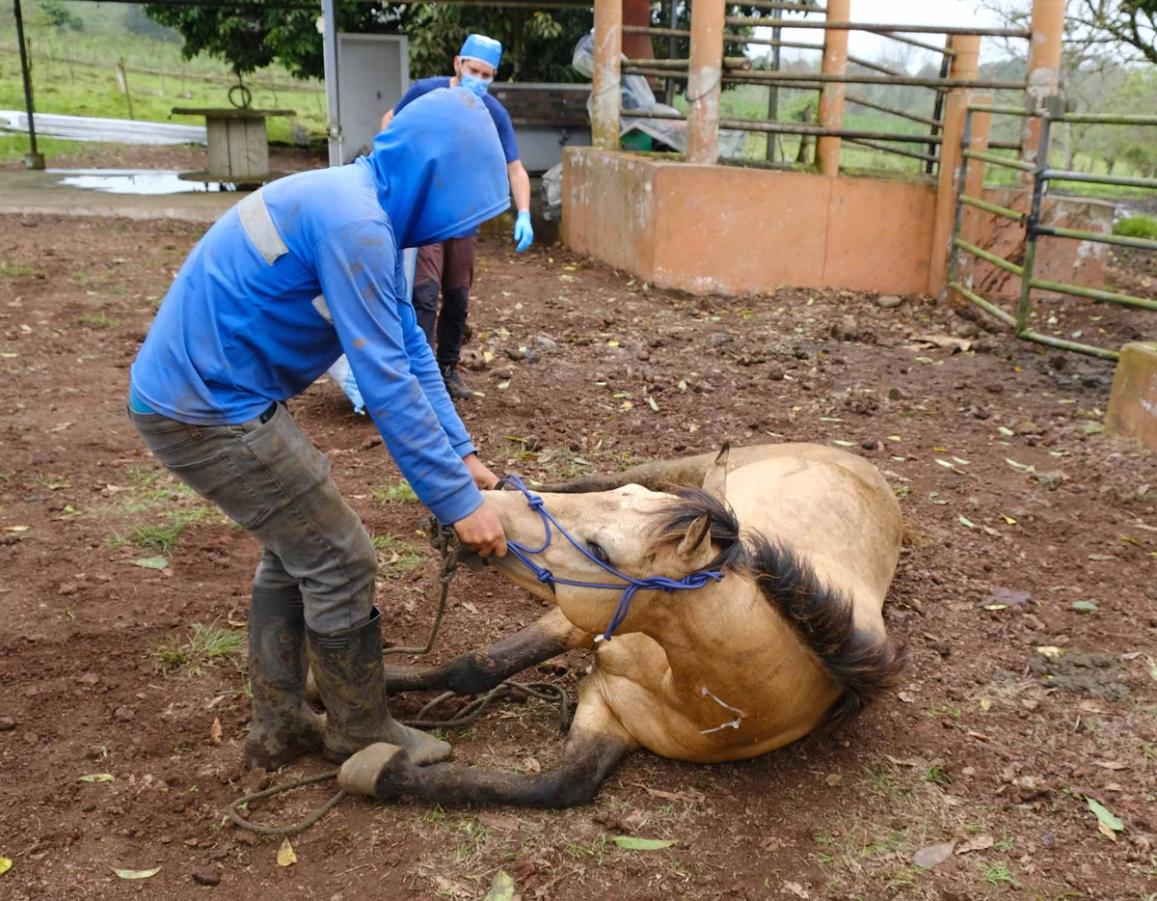
During this process the equine needs to be left quietly and unstimulated to allow for time for return of consciousness and limb control. An equine that attempts to stand too early is at risk of falling and fracturing limbs. It is helpful to keep a towel over the upper eye to reduce light stimulation, until the equine is waking well. Equine in dorsal recumbency should be lowered to lateral recumbency. Patients in lateral recumbency should not be turned over or there is a risk of collapsing both lungs and causing respiratory distress.
Most equines recover well with one person in control of the head (figure 7), a tail lift can be used in some patients, but human safety is paramount, and helpers need appropriate PPE. It is usual for an equine to return to sternal recumbency within 10 minutes of the final top up, or cessation of triple drip, and to stand within the next 20 minutes. There is no rush for the patient to stand and they are usually best left to get up when ready.
In cases of very prolonged recumbency or unsuccessful attempts to rise, the team should request help and perform a full patient assessment, if necessary turning the patient to assess the dependant limbs for myopathy or fracture. Fluid therapy can be useful to increase excretion of drugs, and further pain relief may be needed. Pain and stress lead to poor recoveries so ensure good analgesia and adequate sedation before starting the recovery process.
Post operative care and complications
The post-operative period is a time when the equine needs to recover and regain co-ordination.
- Offer water within an hour
- Offer feed within 3 hours if the equine is fully awake
- Keep sheltered from the elements (heat/cold, rain)
- Rejoin companions when they are fully awake
- Monitor for myopathy or neuropathy
Complications
- Myopathy; this occurs when there has been a period of hypoxia in a muscle group, which then swells and is extremely painful as the swelling is contained within fascia. Long duration field anaesthesia with incorrect positioning, and lack of oxygenation are risk factors Affected animals will need good analgesia and fluid therapy, and intensive nursing care.
- Neuropathy; this occurs when there has been excess pressure on, or stretching of a nerve due to poor positioning (figure 8). Cases may recover slowly, but the prognosis depends on which nerves are affected. Radial and femoral neuropathy carry a guarded prognosis, as nerve recovery is extremely slow. Topical and systemic anti-inflammatories are used to reduce perineural swelling and oedema.