

Many procedures can now be performed in standing equines which reduces the risks that general anaesthetics carry of hypotension, myopathy and injuries on recovery. The technique is used when a longer and smoother plane of sedation is required than can be achieved with bolus delivery of drugs. This section provides basic information on the following:
- Indications
- Pre-op checks
- Drug doses
- How to calculate a CRI
Indications
Standing surgery is performed in increasingly complex cases including some lower limb fracture repairs, laparoscopies and upper respiratory surgery. For ambulatory vets the usual indications are in cases where longer sedation is required than with one bolus and a smoother plane of anaesthesia is desirable:
- Wound repair
- Dental surgery
- Gynaecological procedures
- Minor orthopaedic procedures; patellar desmotomy, tenotomy etc
Pre-op considerations
The technique requires an IV catheter in place to deliver drugs and as a minimum a three way tap to allow administration from more than one fluid delivery line. In some cases a catheter may be placed in both jugular veins. The requirements are:
- Suitable clean environment free of hazards
- Quiet environment (or ear plugs of cotton wool) to reduce stimuli
- Stocks to reduce patient moving
- Head rest/ support
- Non abrasive, non slip floor surface in case of falls
- The ability to convert to a general anaesthetic is required can be useful
- Dedicated anaesthetist, monitoring sheets
- Drugs and top ups
- Pre- op patient checks
- IV catheter
- Using locoregional anaesthetic techniques reduces the amount of sedative required (figure 1 and 2)
- Temperature regulation; the equine will thermoregulate poorly when sedated for a long period, so in hot climates, supply shelter and fluid. In cold climates supply rugs, leg wraps and heaters (figure 3)
- Fluids/Nutrition support during and after a long procedure, especially involving dental structures. The equine may need support with fluids, nasogastric intubation or feeding. Ensure there is good post op pain scoring and nursing care
- Urine output; alpha-2 agonists can cause hyperglycaemia and diuresis. The discomfort of a full bladder can make equines move after 30-45 minutes. Consider bedding on the floor to soak up urine, having a bucket nearby, or using urinary catheters
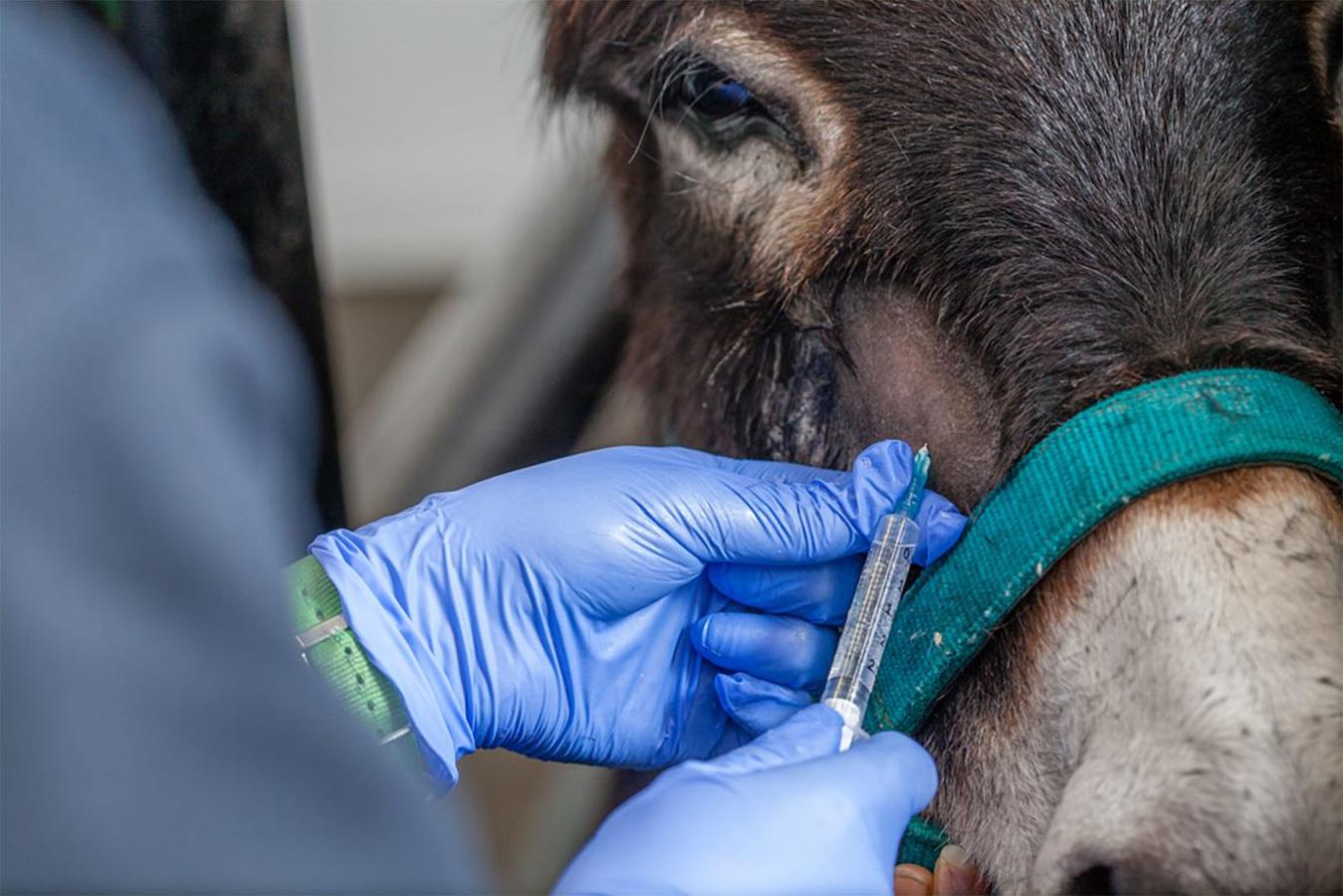
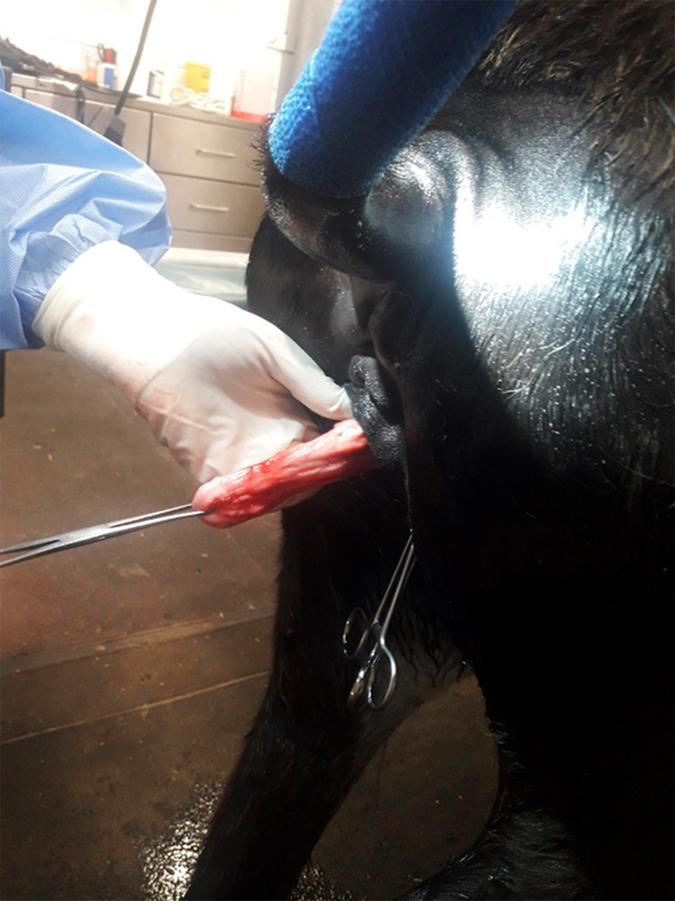
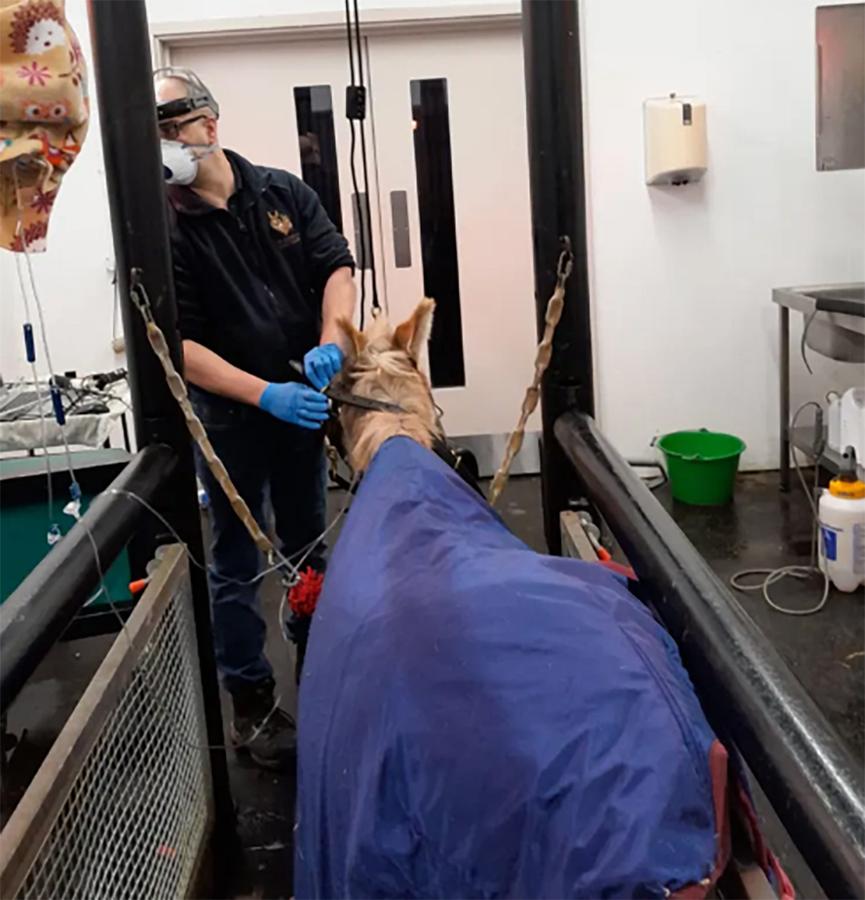
Drug doses
The patient is usually sedated with Acetyl promazine (ACP) 30-45 minutes before the procedure and an intravenous catheter placed. Analgesia and local anaesthetic blocks are used pre- or post sedation, depending on the temperament of the equine. Alpha-2 agonists given through an infusion are the most commonly used drugs to acquire a smooth plane of sedation.
Experienced anaesthetists may supplement with continuous rate infusions (CRI) of other agents such as ketamine , lidocaine, or opioids. In a hospital setting CRIs are often delivered with an infusion pump, as this is impractical in the field using a drops/second is generally possible. See table 1, and always check drug dosages with manufacturers guidelines and updated information.
| Medication | Medication class | Bolus dose | Comments (all doses here provide 80 minute sedation for horse of 450kg) |
|---|---|---|---|
| Detomidine | Alpha-2 agonist | Bolus: 0.005- 0.01mg/kg IV | Add 25mg detomidine to a 500ml saline. Infusion rate 0.04mg/kg/hour. Use 1 drop per second in a 10 drop/ml giving set. Use 2 drops per second in a 20 drop/ml giving set. See worked example 2 |
| Romifidine | Alpha-2 agonist | Bolus: 0.1mg/kg IV | Add 20mg romifidine to 500ml saline. Infusion rate 0.03mg/kg/hour. 1 drop /second in a 10 drop/ml giving set. 2 drop/second in a 20 drop/ml giving set |
| Xylazine | Alpha-2 agonist | Bolus: 0.5-1 mg/kg IV | Add 400mg xylazine to 500ml saline. Infusion rate 0.5-0.65mg/kg/hour. 1 drop /second in a 10 drop/ml giving set. 2 drop/second in a 20 drop/ml giving set |
| Butorphanol | Opioid (controlled drug) | Bolus: 0.02-0.1mg/kg IV | Add 15mg butorphanol to 500mls saline. Infusion rate 0.02 -0.05mg/kg/hr. 1 drop /second in a 10 drop/ml giving set. 2 drop/second in a 20 drop/ml giving set |
| Morphine | Opioid (controlled drug) | Bolus: 0.05-0.1mg/kg IV | Add 30mg morphine to 500mls saline . Infusion rate 0.03-0.05mg/kg/hr. 1 drop /second in a 10 drop/ml giving set. 2 drop/second in a 20 drop/ml giving set |
| Lidocaine | Local anesthetic | Bolus: 1.3-2 mg/kg IV (over 15 minutes to avoid ataxia) | Mix 2000mg lidocaine in 500ml saline. Infusion rate 0.025-0.5mg/kg/min. Halve rate 2 hours in and discontinue 30 minutes from the end of surgery to avoid ataxia/myoclonus in recovery. |
| Ketamine | Analgesic at sub-anaesthetic doses. Dissociative anaesthetic (controlled drug) | Bolus: 0.1-0.2 mg/kg IV | 200mg ketamine in 500mls saline. Infusion rate 0.3-0.6mg/kg/hour. 1 drop /second in a 10 drop/ml giving set. 2 drop/second in a 20 drop/ml giving set |
Table 1 Suggested drugs dosages as boluses and CRI for standing sedation
How to calculate a continuous rate infusion; worked examples
To calculate the CRI drip rate you need:
- Weight of equine
- Concentration of drug
- CRI infusion rate
- Number of drops /ml in your giving set
Then work out how much drug is needed to add to a 500ml bag of saline for a one hour procedure.
Example 1
Follow this example for calculating a CRI for Detomidine, assuming drip will run in over an hour:
- Detomidine; supplied as 10mg/ml
- Pony weight 300kg
- Loading dose 0.01mg/kg for 300kg pony = 0.01 x 300 = 3mg = 0.3ml bolus IV
- CRI rate 0.04mg/kg/hour = 0.04 x 300 = 12mg/hour (drug concentration is 10mg/ml)
- Volume of detomidine needed for 1 hour = 12/10 = 1.2ml/hour
- Put 1.2ml detomidine into 500ml saline and calculate drip rate to run in over 1 hour
- 500ml/hour = 8.3ml/min = 0.138 ml/sec
- Drip set = 20 drips/ml
- Rate:
- 2.7 drops /second using 20drip/ml giving set
- 1.3 drops/second using 10drip/ml giving set
Example 2
- Detomidine; supplied as 10mg/ml
- Horse weight 450kg
- Loading dose 0.01mg/kg = 0.01 x 450 = 4.5mg = 0.45ml bolus IV
- CRI rate 0.04mg/kg/hour = 0.04 x450 = 18mg per 60 minutes = 24mg per 80 minutes
- Volume of detomidine needed for 80 minutes = 24mg (25mg for ease of calculations)=2.5ml
- Put 2.5ml detomidine into 500mls saline and calculate drip rate to run over 80 minutes
- 500/80 = 6.25ml/minute = 0.1ml/sec
- Rate:
- 2 drops /second using 20 drip/ml giving set
- 1 drop/second using 10 drip/ml giving set
When using a CRI it is sensible to start the infusion slowly and monitor the depth of anaesthesia and ataxia at 5 minute intervals. Once the equine is sedated at the correct level the drip rate can be reduced, and towards the end of the procedure it can be stopped, the equine should have good motor control and be able to walk 10-15 minutes after the infusion is stopped.
📚 For a full ranges of doses and techniques in this rapidly evolving topic the reader is advised to consult a text such as: Creighton, C.M. (2022). Standing Sedation. In Manual of Equine Anesthesia and Analgesia (eds T. Doherty, A. Valverde and R.A. Reed). https://doi.org/10.1002/9781119631316.ch20