

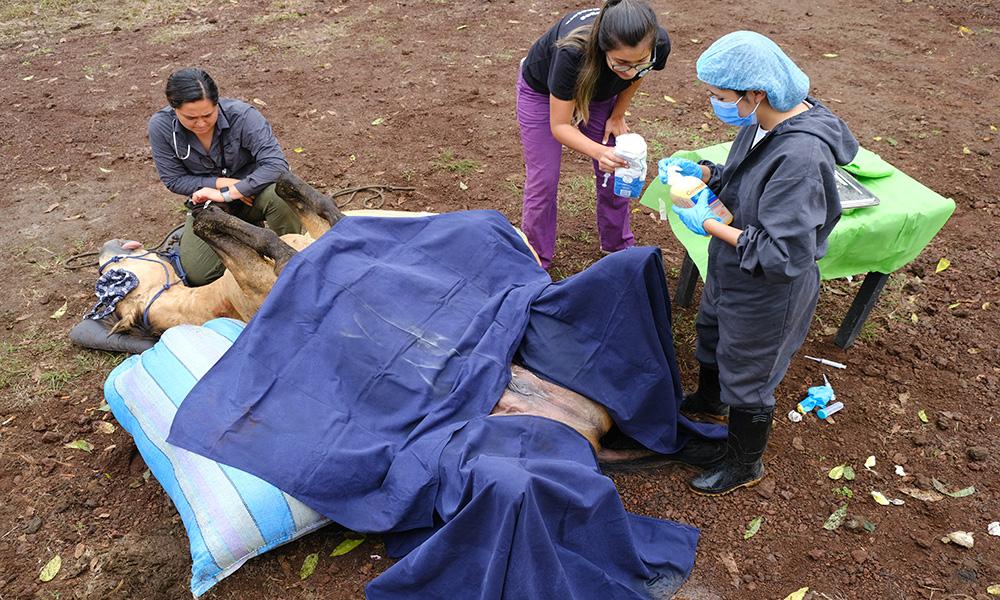
Field anaesthesia is often required in ambulatory equine practice, for elective procedures such as castration, and for emergencies such as wound management. Not all drugs mentioned here will be available in all parts of the world, but there should be enough flexibility with protocols to perform safe sedation and anaesthesia.
Working equines may be dehydrated, underweight or have other co-morbidities, so always perform a full clinical exam on these types of animalsbefore performing sedation or anaesthesia. They need rest and aftercare in most situations, so owners and care givers need a good understanding of what is required of them. Anaesthesia is a high risk procedure for handlers and equines so always prepare well and ensure safety is the priority.
The following sections are included and should be read as a whole:
- Sedation
- Analgesia
- Field anaesthesia - part 1
- Field anaesthesia - part 2
- Standing sedation for surgical procedures