
These section covers the basics of field anaesthesia for ambulatory equine vets and those in resource limited settings. An anaesthetic is a significant procedure for any animal with risks involved, for equines that are in hard work, low body condition score or have co-morbidities the risk will be higher. The aim of this article is to help plan how to perform a procedure, and provides straightforward information for routine cases. The use of anaesthetic monitoring equipment and inhalation anaesthesia in a theatre setting is not covered. The information and drugs doses should always be checked against data sheets and any updates noted.
The topics covered are divided in to parts 1 and 2 :
Part 1
- Indications
- Facilities
- Equipment
- Medications
- Pre-op check
Part 2
- Drug dosage charts
- Pre meds; sedation and induction
- Maintenance
- Recovery
- Post-operative care
- Complications
Indications
Modern standing sedation can be safely prolonged and allows many procedures to be performed in the standing equine such as enucleation, dental extractions, and lower limb joint flushes. However, the indications for a field anaesthesia are usually to perform a procedure that cannot be performed under standing sedation due to location or the safety of the equine or handler. This includes procedures such as wound management when local anaesthetic blocks may be difficult, castration of small equines and donkeys, joint flushes, correction of dystocia and hoof surgery in some cases. Local anaesthetic blocks should always be used to assist in reducing the dose of drugs needed for general anaesthetic, and to assist in the provision of multi-modal analgesia.
Field anaesthesia cannot provide the appropriate support for procedures over 45-60 minutes such caesarian sections and colic, in these cases inhalation anaesthesia with oxygen and full monitoring is necessary.
Facilities
This is a list of basic equipment that is required for field anaesthesia. One of the main considerations is finding a safe space away from hazards (roads, car parks, ditches, obstructions etc ). When an equine recovers from anaesthesia they will be ataxic and potentially dangerous for handlers and the public, who need to be kept at a safe distance.
- Dedicated person(s) to monitor and perform anaesthesia
- Safe space free of hazards for the equine (and handler) on induction and recovery when they may be ataxic
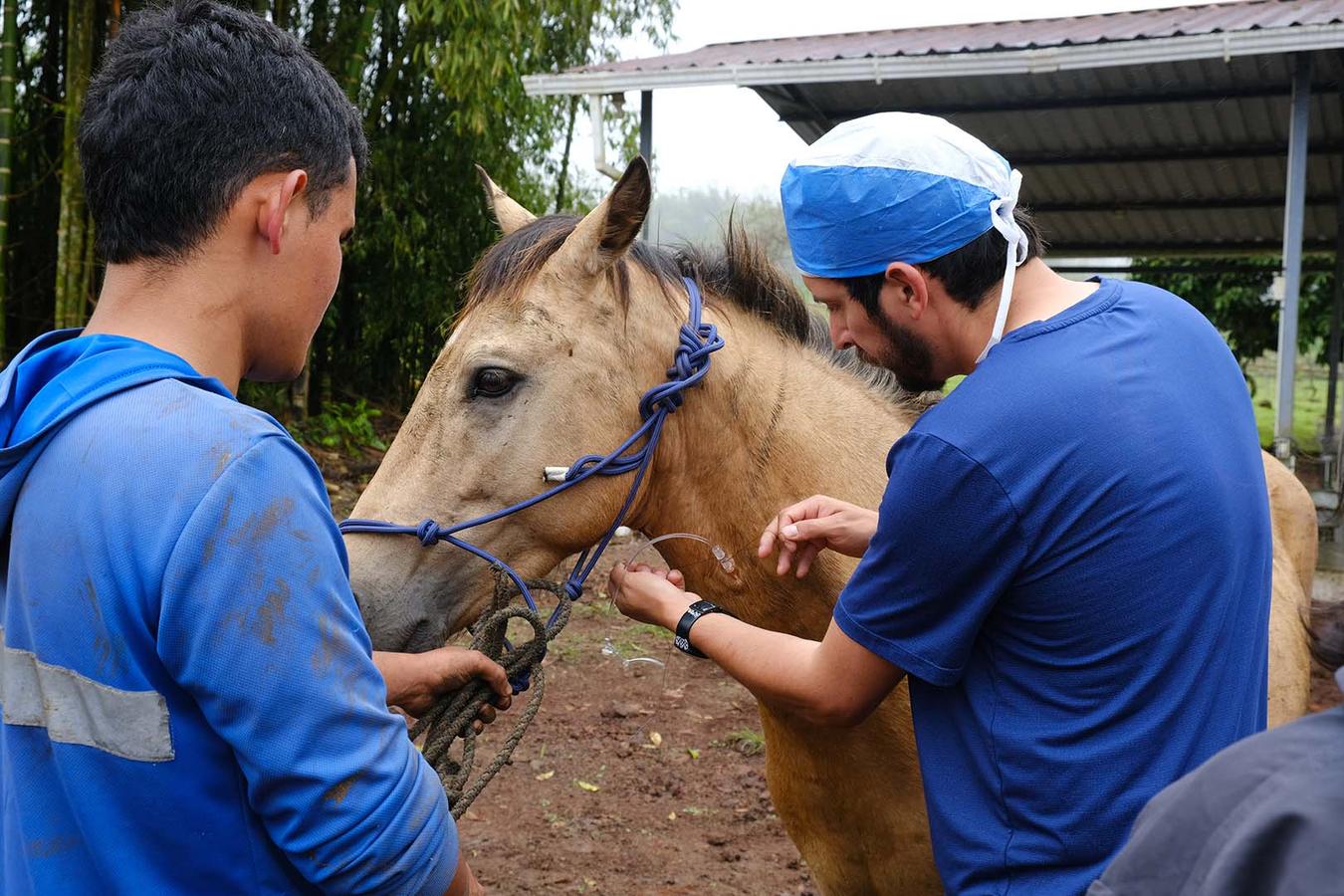
- Shade/cover from extreme heat or rain (figure 1)
- Padding for under the head
- Towel to cover the uppermost eye
- Headcollar and long ropes to assist with holding limbs out of the surgical field , and for assisting recovery
Equipment
This list provides the basis of what is needed for a safe field anaesthesia. These can be prepared in advance and checked off as needed. Having a laminated list of equipment for certain procedures is recommended. Unfortunately some anaesthetics and surgeries will encounter unexpected complications even death of the patient, so it is vital that owners understand this when they sign a consent form. There must be drugs available for humane euthanasia in the event of this situation.
- Consent forms for the owner to sign; informed consent means fully explaining the risk of the procedures and risks; translation may be required
- Anaesthetic monitoring forms.
- Stethoscope
- Clippers/scissors
- IV catheters; a range of sizes, extension sets, suture material, heparinised saline
- Eye lubrication
- Urinary catheters for longer procedures, these are easy to place and can make recovery smoother for many equines who would otherwise struggle to rise to quickly due to the discomfort of a full bladder
- Consumables; pens for charts, marker pens for identifying syringes with drugs, syringes, needles
- PPE for handlers; Hard hats/steel- toe cap boots/gloves
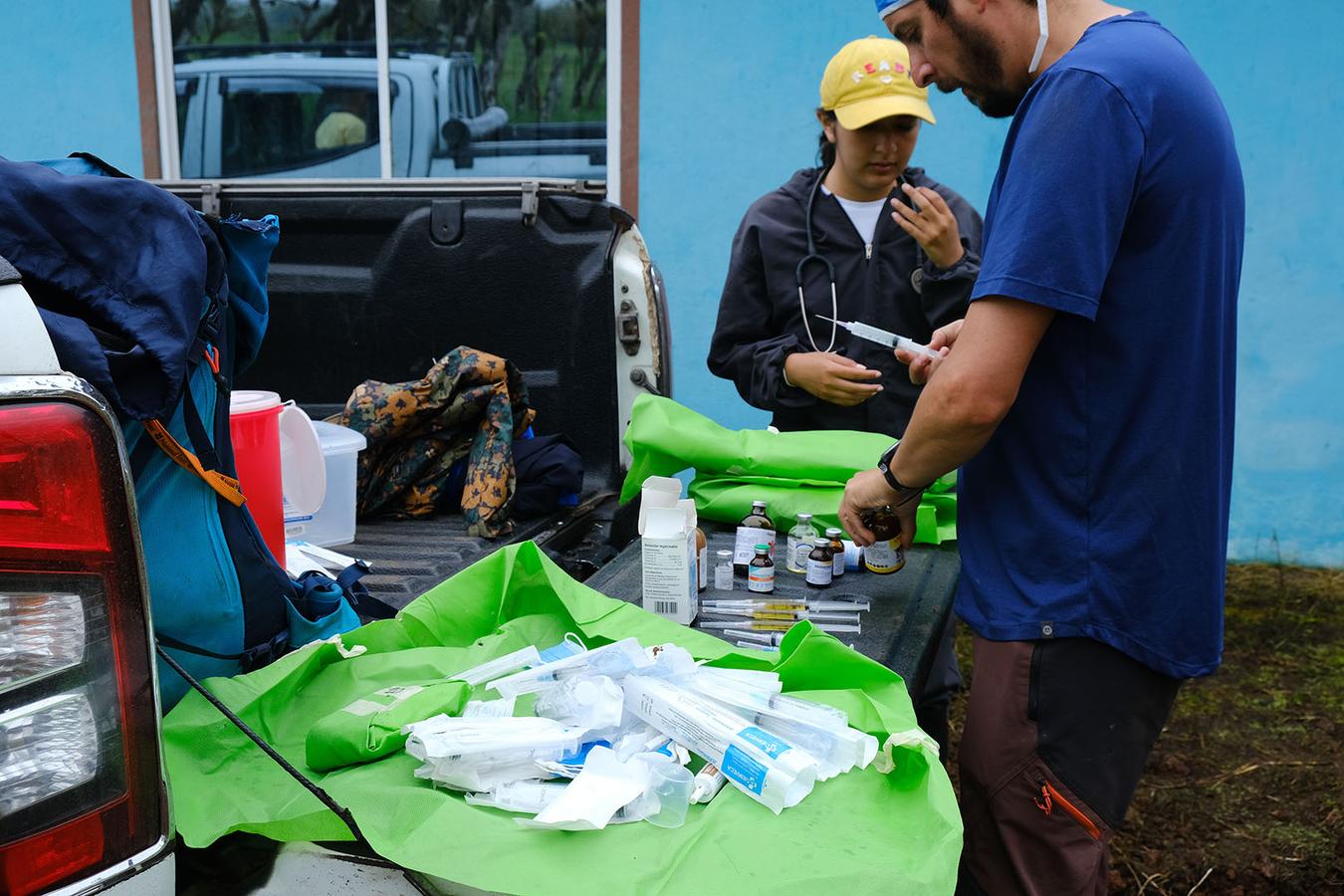
- Drugs; alpha agonists, ketamine, diazepam, Triple Drip (see Part 2), analgesia, tetanus antitoxin
- Emergency drugs and euthanasia agent
Pre-op checks
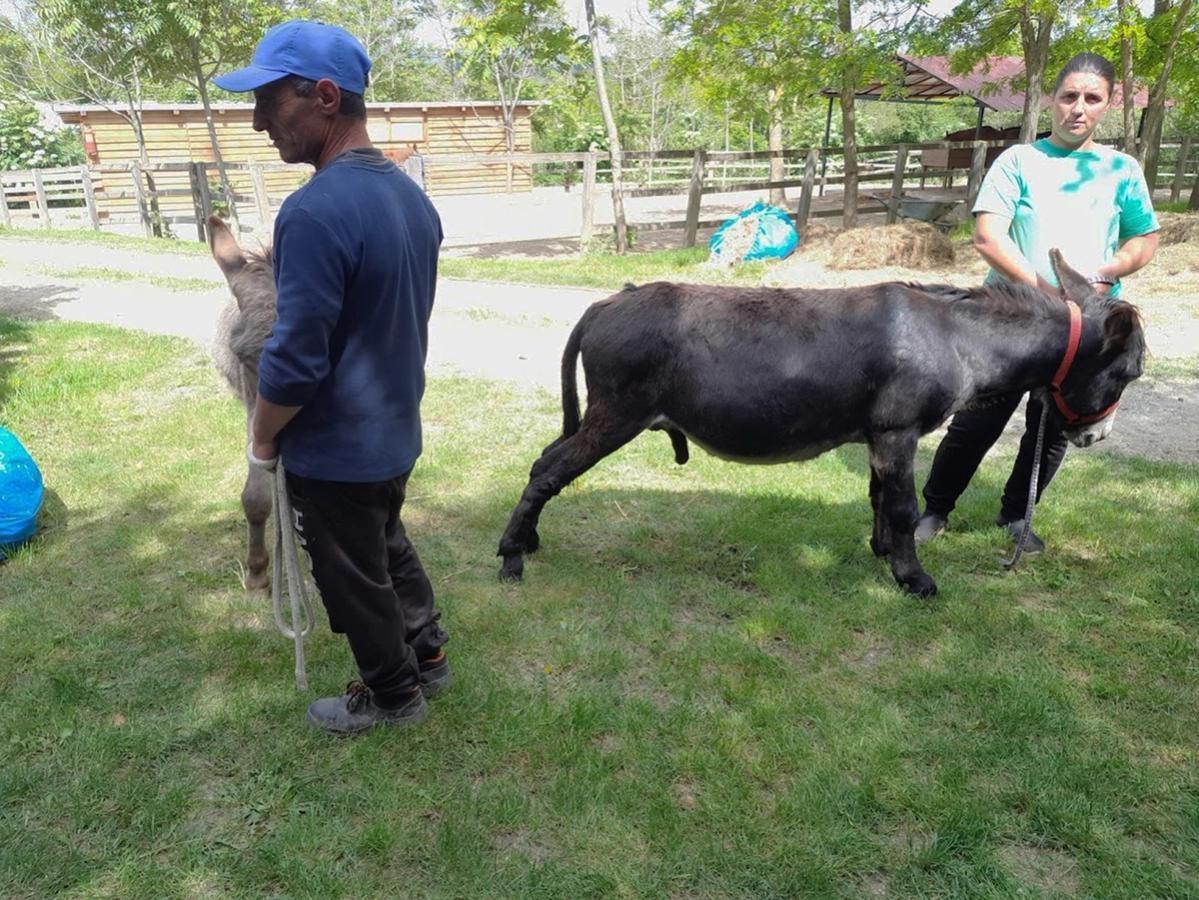
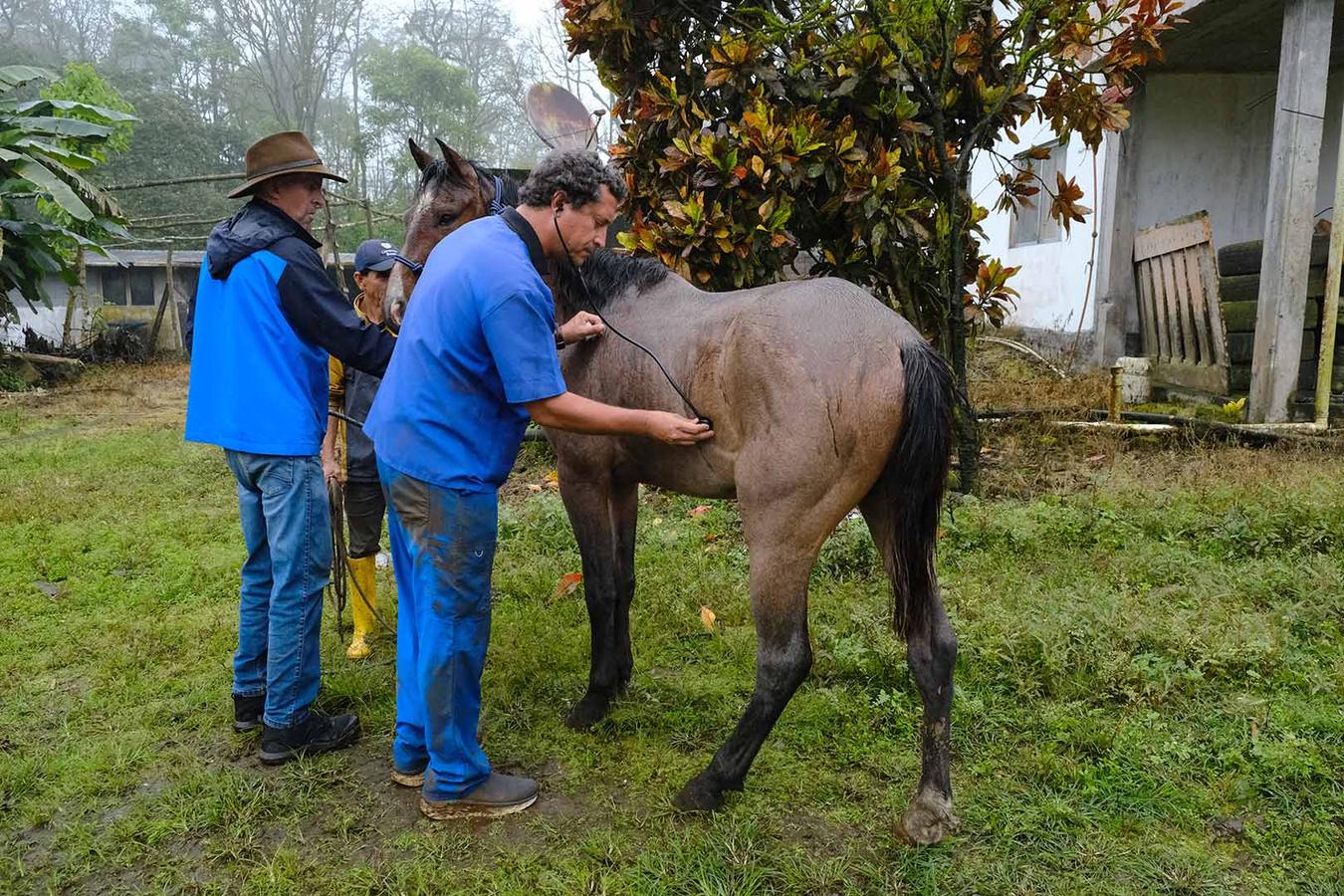
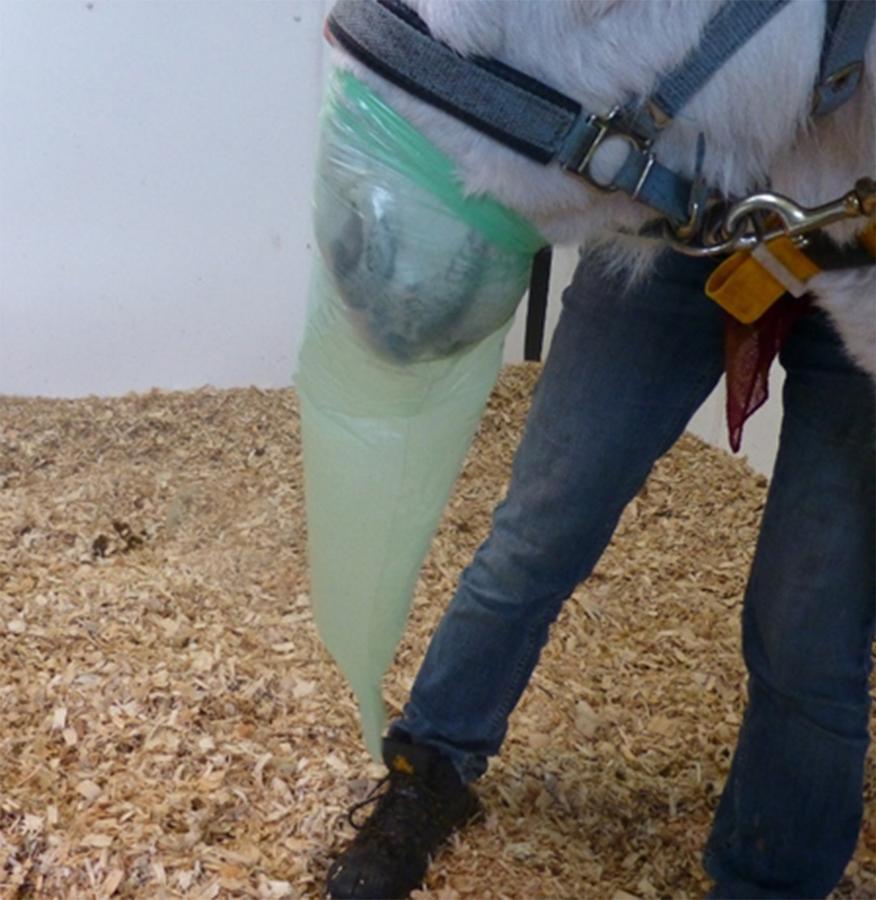
All equines having an anaesthesia require a good pre-operative check (figure 2). Donkeys are particularly stoic and can have subclinical disease, so thorough auscultation of the respiratory system, and potentially the use of a rebreathing bag to detect subtle airway sounds can be useful (figure 3). Blood samples are rarely used for field anaesthesia , but may be considered if the clinical exam suggests an obvious problem such as pale mucous membranes or in underweight animals. Full clinical exam:
- Weight estimation; use normograms, or weigh scales if available
- Cardiac exam; check for murmurs and arrythmias
- Respiratory exam; include lymph nodes, both sides of the chest and trachea
- Mucous membrane colour and refill
- Temperature
- Gastrointestinal sounds; avoid surgery on an equine with diarrhoea or suspected impaction
- Surgery specific checks; e.g. check testicles before castration surgery
⚠️ Do NOT anaesthetise equines with the following compromising conditions:
- Pre-existing ataxia, weakness
- Anorexia; especially donkeys who may develop hyperlipidaemia
- Dehydration; tacky mucous membrane, sunken eyes
- Diarrhoea/absent gut sounds
- Pyrexia
- Nasal disharge/ lympadenopathy/ pyrexia
- Pregnancy; there is a risk of loss of the fetus
- Severely under/overweight
After care plans
Create a plan for after the surgery with the team and the owner that everyone is able to carry out. This should include a plan for analgesia and antibiotics, how and who will administer them, and a date for follow up of any surgical procedures:
- Pain relief
- Antibiotic use
- Feed and water plans
- Wound care
- Exercise restriction/stabling
- Plan for check ups
Weight estimation for horses
To calculate the correct dose of anaesthetic drug the weight of the horse needs to be calculated. In the field, accurate scales are unlikely to be available. Horse weight tapes are available that allow a good estimation of weight (figure 4)
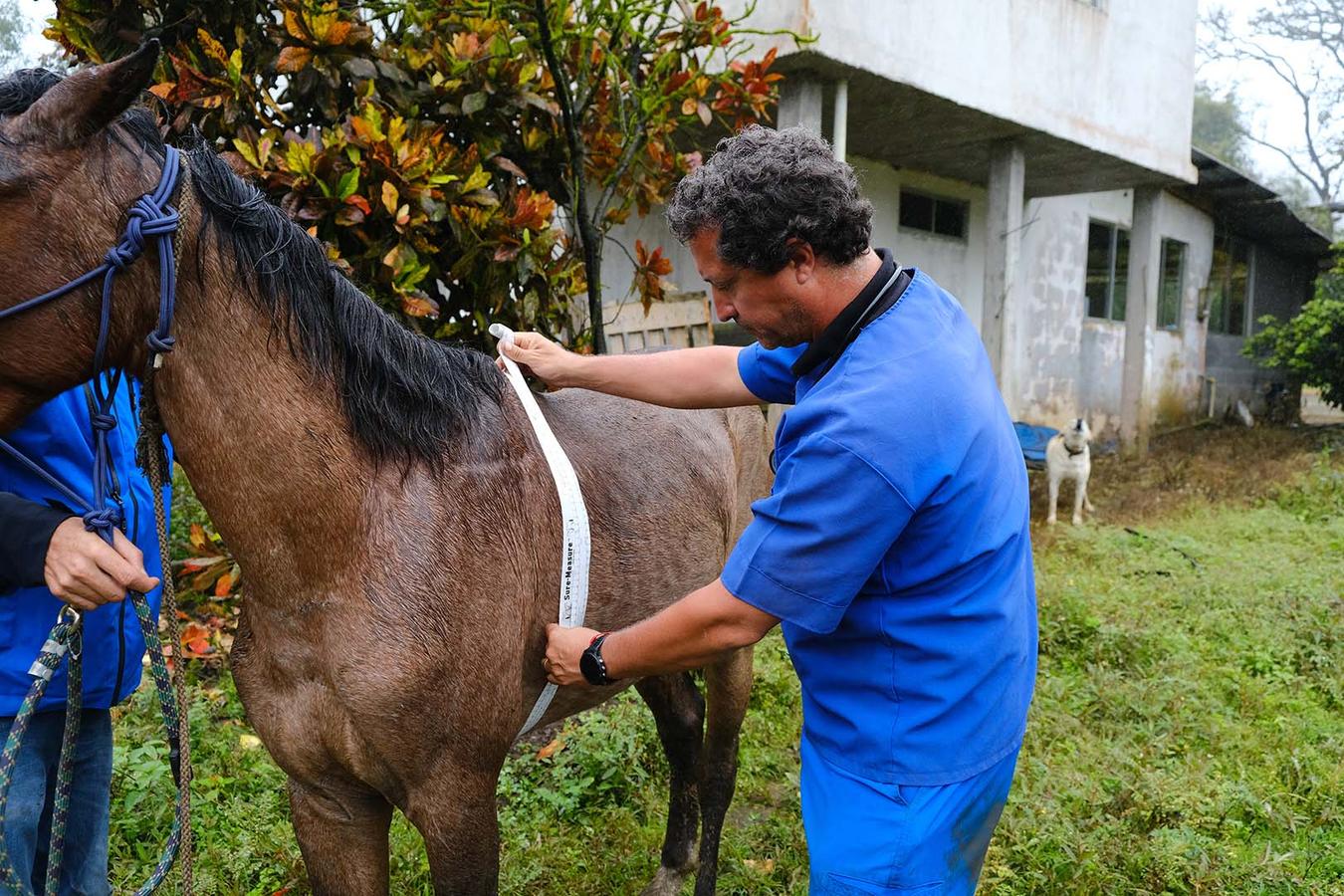
📚 A weight calculation that is considered more accurate than a weight tape is given below (lengths in cm):
(heartgirth² * body length) ÷ 11,900 = weight (Kg)
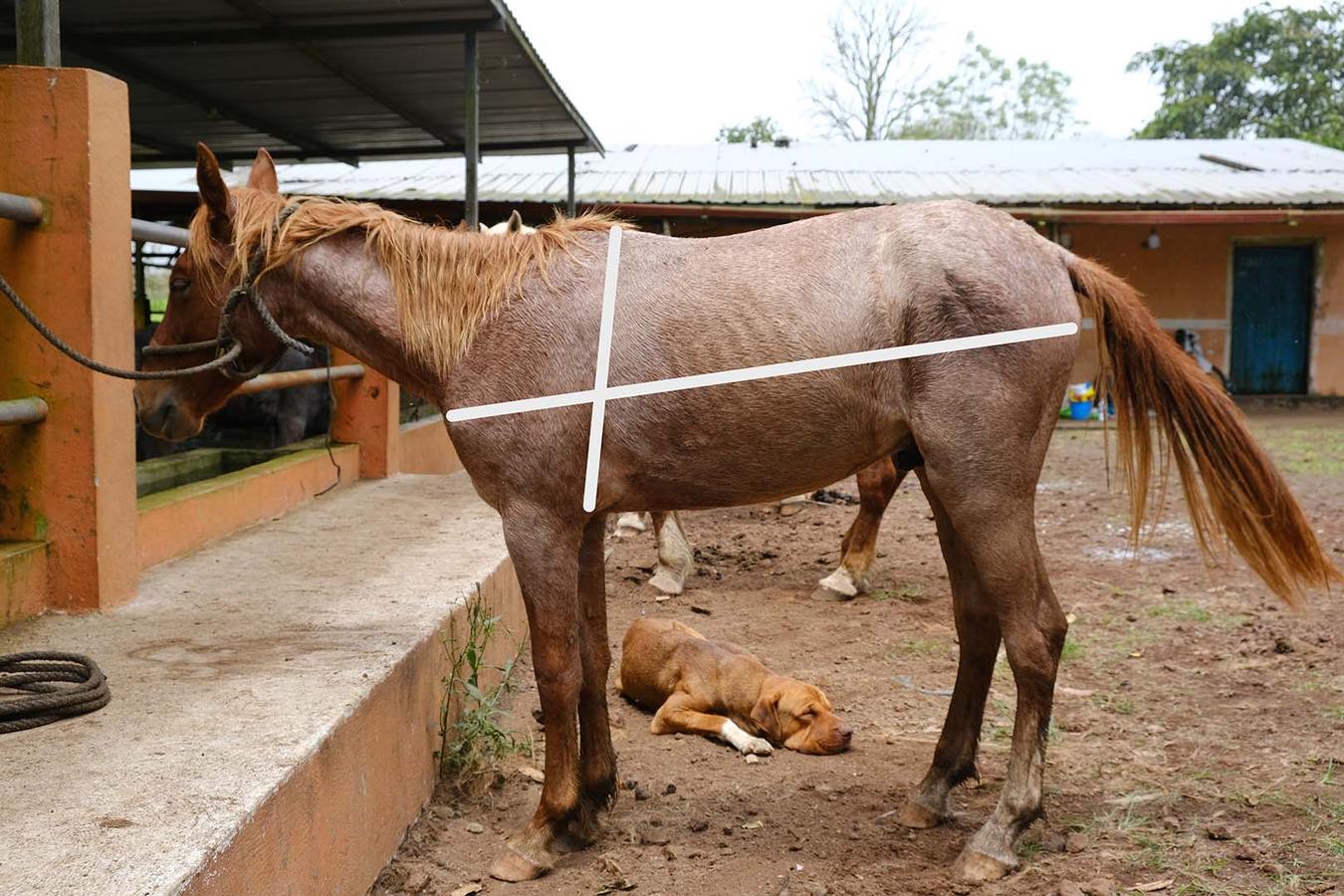
The tables such as from VioVet gives approximate weights for various breeds and size of horse. In working equine populations, most horses are between 13.2 to 15.2hh and are lighter breeds; many may be under the ideal weight given in this table. Each weight is given as a range and you can choose the weight depending on the build of the horse.
Weight estimation for donkeys
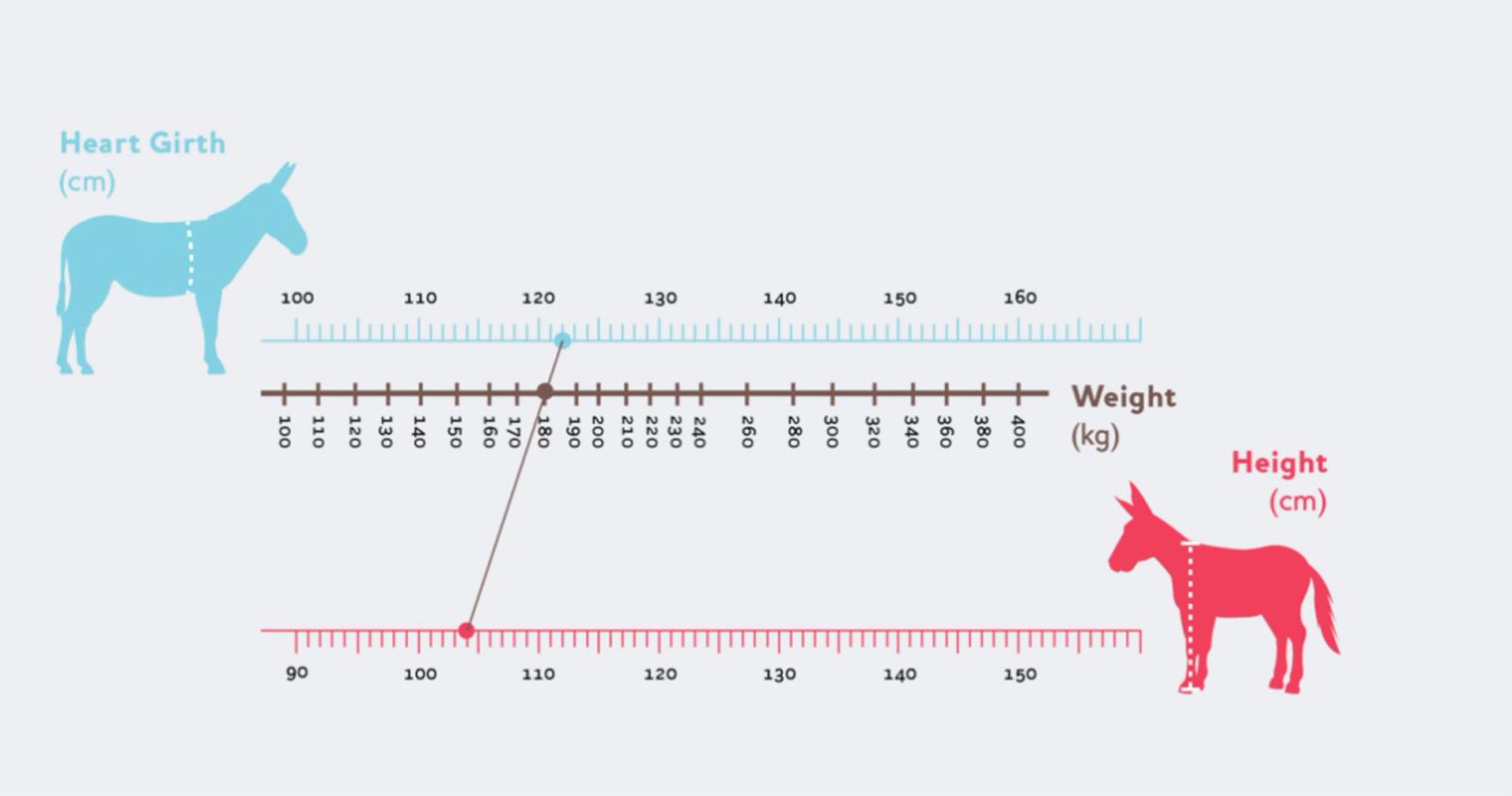
For donkeys over 2 years old, their weight can be estimated with the patients’ heartgirth (cm) and height (cm; figure 6). For donkeys under 2 years old see table 2.

Check lists
Check lists are useful tools in busy clinical practice and can help avoid mistakes. Before induction of anaesthesia, the anaesthetist should run through a check list, and liaise with the surgeon and team so that every person knows their role and what to expect. Check lists are invaluable in ensuring that nothing is forgotten when multiple people are involved in a procedure. An example of a simple field-based check list:
| Patient name/ID | Date | Procedure | Dorsal or lateral recumbency | Anaesthetist (name) Surgeon (name) Nurse /assistant (name) |
|---|---|---|---|---|
| Check | Yes | No | Comments |
|---|---|---|---|
| Consent form signed | Adult over 18 needed for consent | ||
| Location checked for hazards | |||
| Pre-op check TPR | Abnormal findings? | ||
| Analgesia plan | Check with surgeon re pre-op | ||
| Antibiotic plan | Check with surgeon re pre-op | ||
| Mouth flushed | If use of an endotracheal tube is likely | ||
| Coat groomed | |||
| Hooves cleaned out | |||
| IV catheter and extension in place (figure 7) | Left or right jugular | ||
| Equipment check | See list above; towel, rope, headcollar, ocular lubricant | ||
| Drugs ready and labelled top ups (figure 8) | |||
| Controlled drugs (CD) signed out and recorded | Check CD register before and after anaesthetic | ||
| Monitoring form ready for use | |||
| Emergency box checked and ready | Check drugs are in date |