

Before you start
Do not rush in with your knife! A thorough external examination of the carcass is the first step in the post-mortem exam procedure. Look carefully and systematically from all angles for any abnormalities, to ensure that nothing is missed.
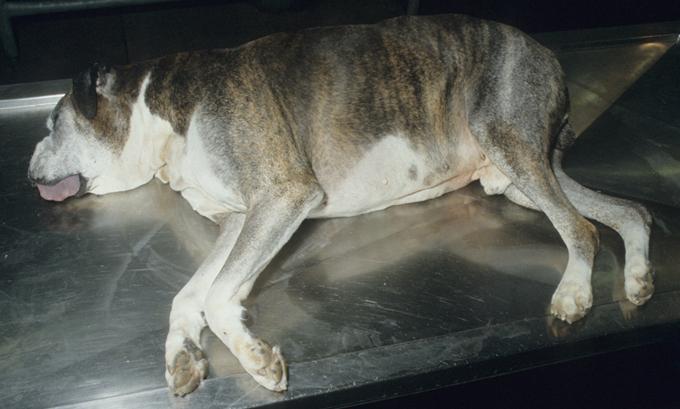
Firstly, check the following points:
Identity of the animal. For example, does it have a collar? Is it microchipped? (use a microchip detector to check, if available)
Weigh the carcass.
Record the breed.
Record the sex.
Assess the degree of hydration. Is the skin tight or loose? (this can useful in a freshly-dead animal).
Distinguishing features such as cuts, abrasions, scuffed nails.
Skin conditions such as tumours, infections, inflammation.
Head
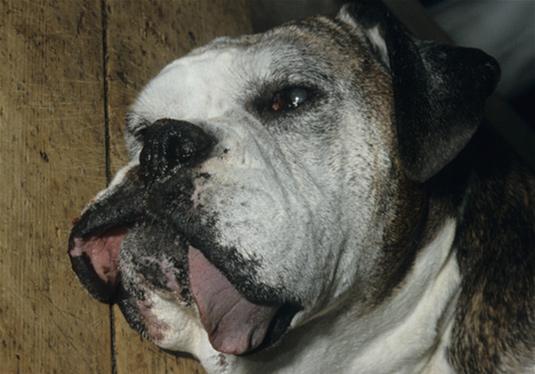
Start systematically at the head end. Check the eyes, ears, mouth and nose.
Note in the image below, the dog is a brachycephalic breed (Boxer). This may be important; for example, in hot countries, brachycephalic dogs can have difficulty regulating their body temperature due to excess soft tissue in their pharynx, leading to heat stroke and death.
Ears
Assess for skin changes on the pinna, then examine the external auditory meatus for exudate or other lesions.
Eyes
Have a look at the image below. What features should you check when assessing the eyes?
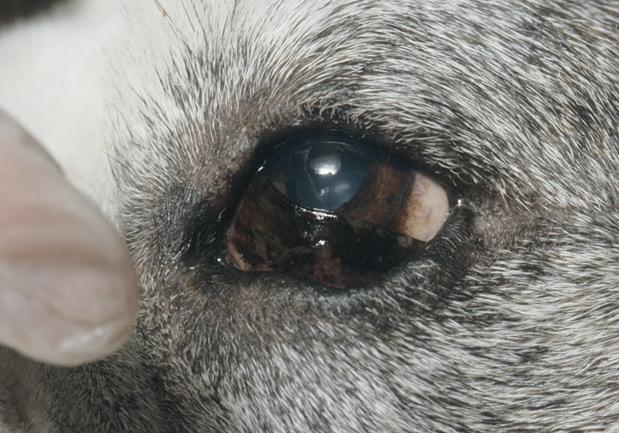
Click on the buttons in the image below to reveal the answers:
Oral cavity
The oral cavity has many structures that should be examined. These include:
- Lips
- Gums
- Teeth
- Tongue (both dorsal and ventral surfaces)
- A visual check of the remaining mucosa
Study the image below. What features would you assess in this animal?
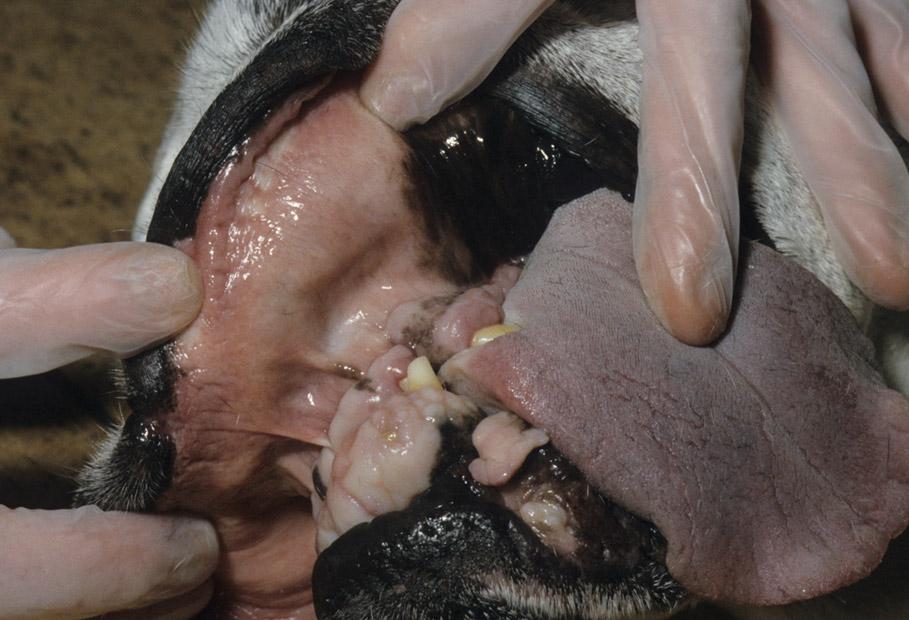
Click on the buttons in the image below to reveal the answers:
Let us assess the gums in more detail:
Paws
Carefully examine all four feet — dorsal (Figure 5) and palmar/plantar surfaces (Figure 6).
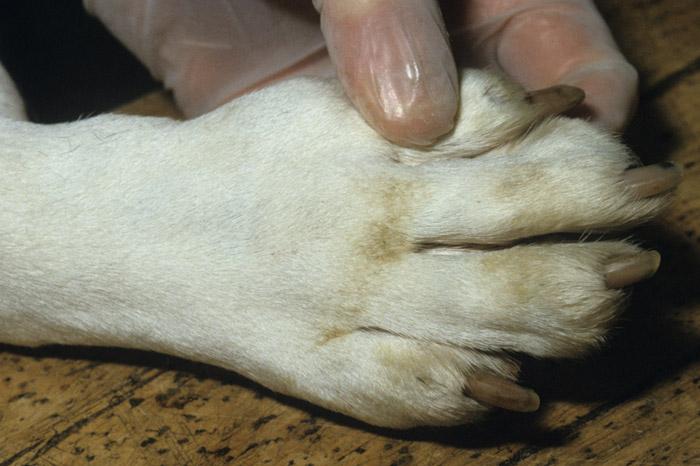
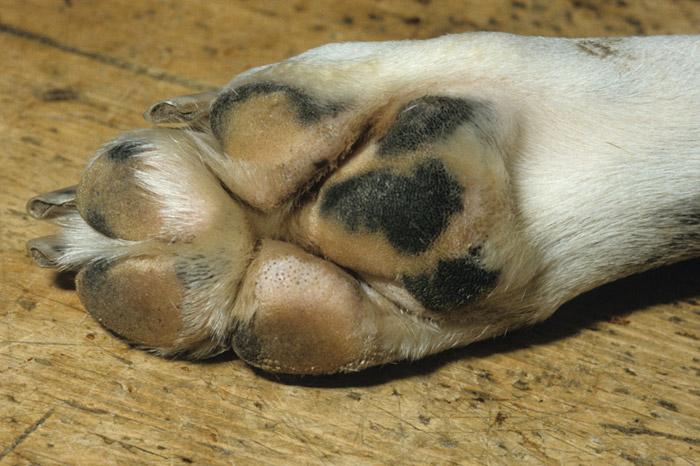
Are there any skin lesions or damage? Is there discolouration on the hairs around the toes, indicating allergic skin disease (atopic dermatitis)? Are the nails scuffed or ripped? This could indicated a road-traffic accident.
Perineum and genitalia
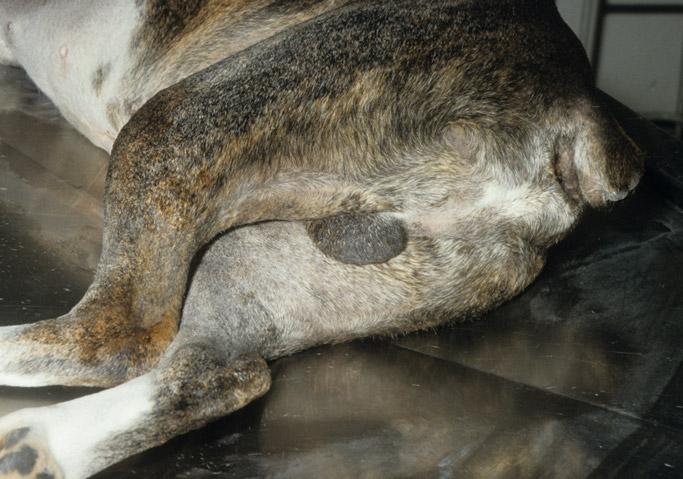
Observe for abnormalities in these areas. For example, is there any perineal staining indicating diarrhoea? Are the testicles present? Do they look and feel normal? The image below shows normal perineum and genitalia. Note the docked tail.
Skin and limbs
Lastly, check the rest of the skin over the body and palpate the limbs to assess for fractures. Palpate the common peripheral lymph nodes to see if they are enlarged (submandibular, retropharyngeal, supra-scapular, axillary, inguinal, popliteal).
Only after assessing the external surface should you now pick up your knife and make an incision.