

In spay-neuter clinics, the availability and choice of facilities for an operating environment is often limited, and available resources have to be utilised as best as possible. Designing the operating theatre from scratch is rarely an option, and so it is often necessary to make best use of what is available. Consideration of factors below when setting-up the clinic will help to maximise patient care in any situation.
The operating theatre
There should be a designated area for operating only. It should not be a connecting room to other areas of the clinic and only people involved in surgery should be permitted access. The article about preparation of the surgical team covers important considerations for limiting contamination of the theatre environment.
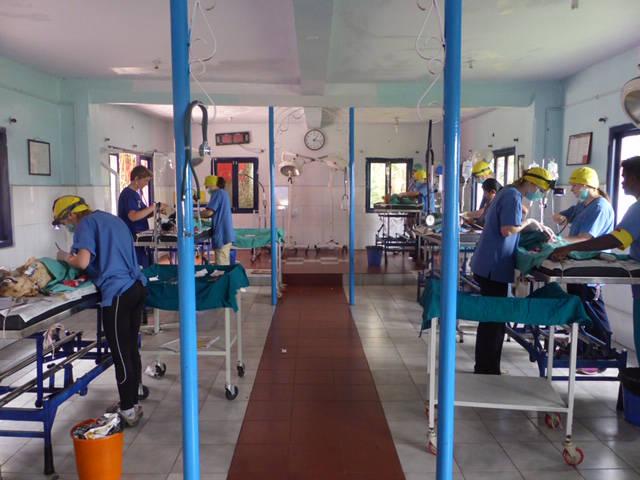
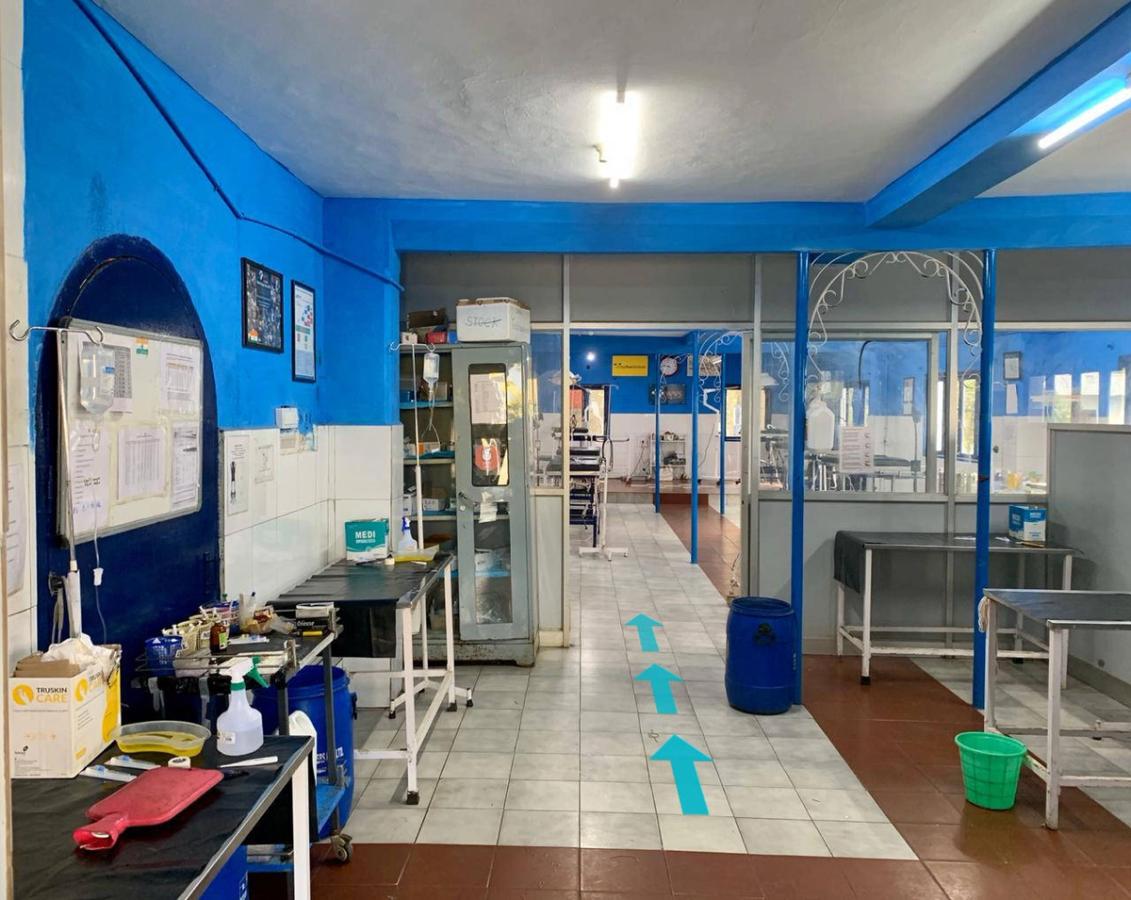
Layout. Consider the position of surgical tables so that people are not moving past the surgical field to access other parts of the theatre. Walkways for moving patients safely in and out of theatre should be clear and kept free of clutter (Figure 1).
Airflow. Air movement can increase the risk of wound infection from airborne microorganisms. To avoid this, the number of people in the operating theatre should be limited to only those that are needed. In addition, operating tables should be positioned away from open windows (or keep windows closed where possible).
Equipment. Keep the amount of equipment in the room to essential items only to facilitate cleaning. Equipment should be easy to move so that the floor can be cleaned without corners where dirt can accumulate.
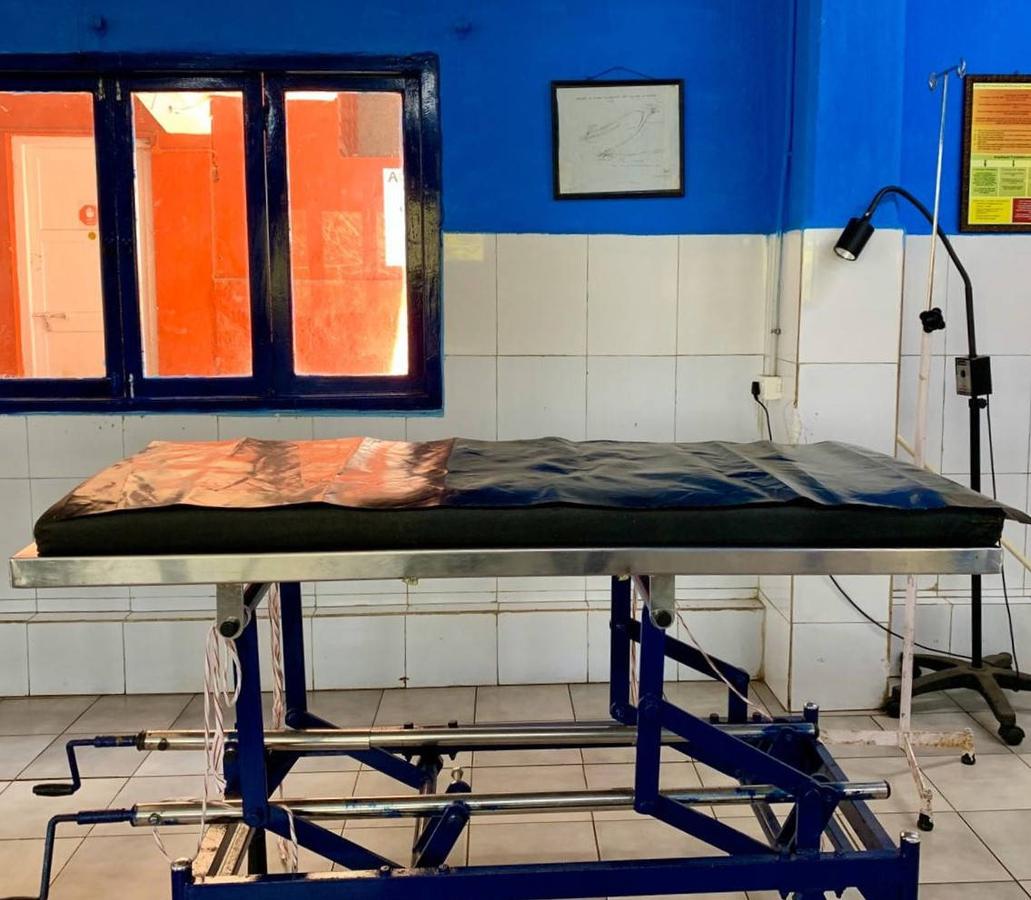
Cleaning. Ideally walls and floor surfaces should be tiled or painted with washable paint so that they can be disinfected regularly. Ideally, use stainless steel operating tables, floor-standing lights, surgical stands and equipment which can be effectively disinfected (Figure 2). Open drains should never be situated in the operating theatre.
The Ancillary Rooms
Ancillary rooms comprise areas designated for procedures where sterility is not as critical as in theatre, such as the preparation area for patient preparation or clinic store cupboards. These areas pose a risk for direct contamination to theatre and the surgical field and so should also be prioritized in cleaning routines.
Ancillary areas must be cleaned and maintained as part of a routine, daily schedule.
Preparation area. For induction of anaesthesia, followed by other preparatory procedures such as IV catheter placement, clipping, initial scrubbing etc. As the animal will be moved directly to surgery, this room must be conveniently situated adjacent to the operating theatre.
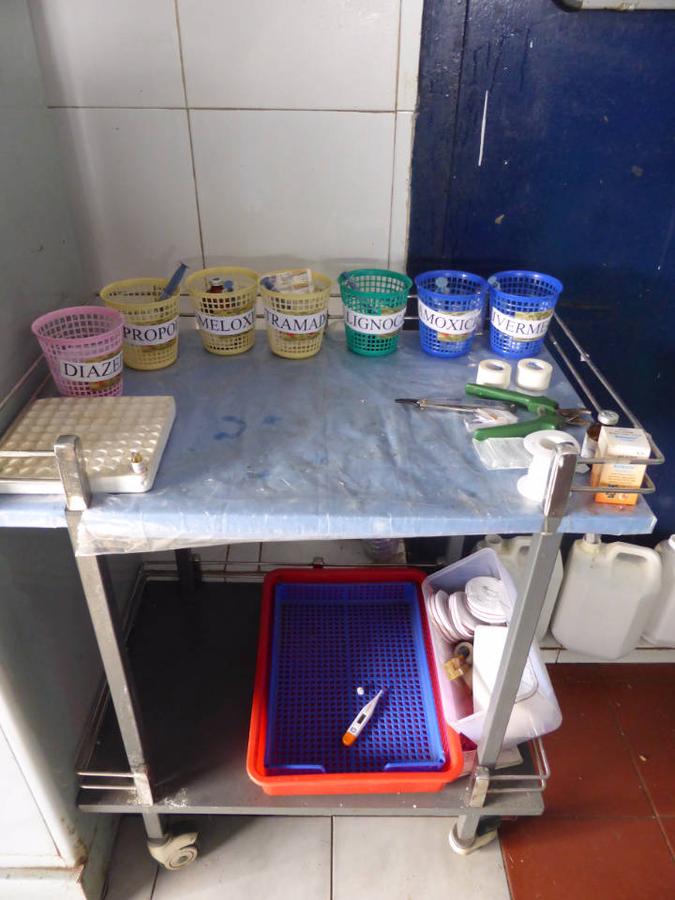
In addition, in the preparation room, there should be a dedicated area (such as a table or trolley) where medications are prepared each day (Figure 4).
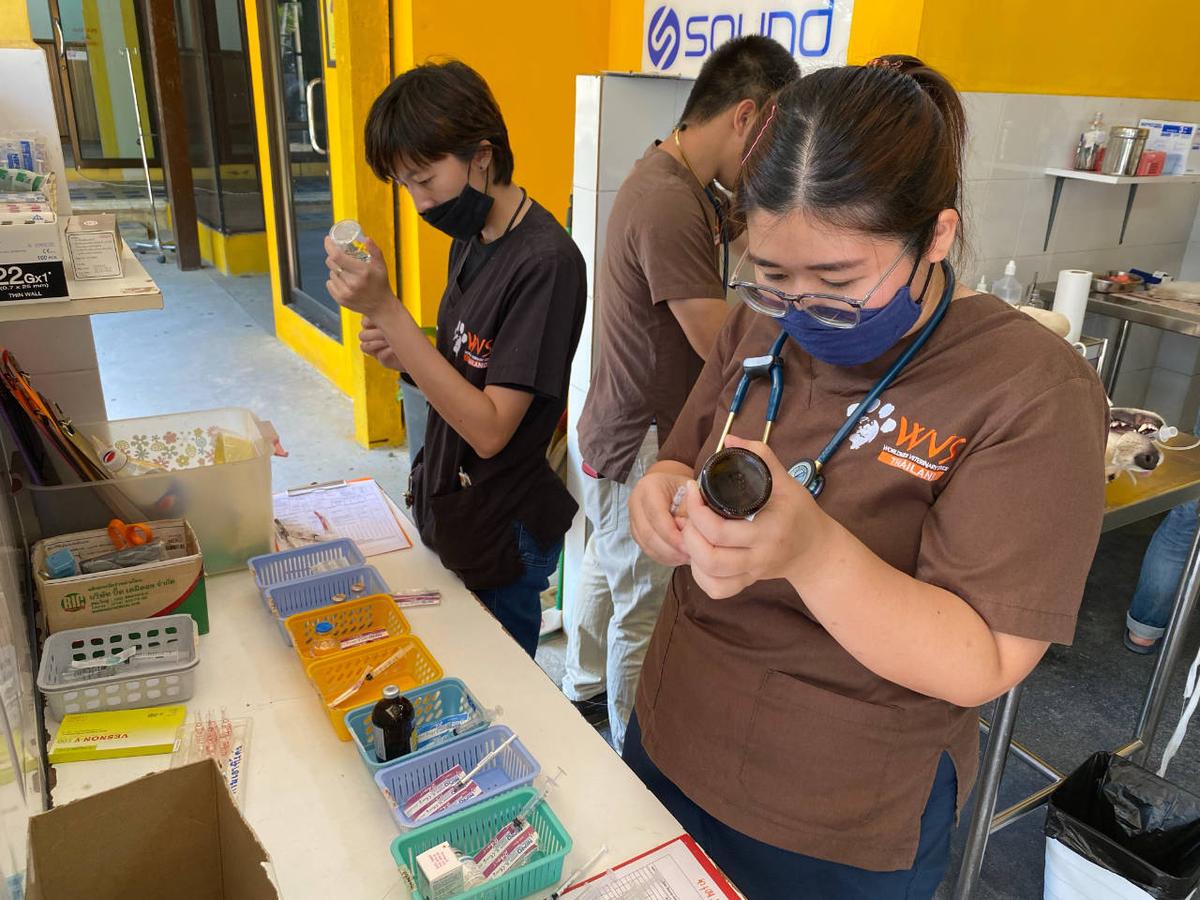
Ensure that there is a clear system for managing the drugs and that syringes are correctly labelled so that errors are avoided; this can occur easily in a busy spay-neuter facility with multiple staff members (Figure 5.)
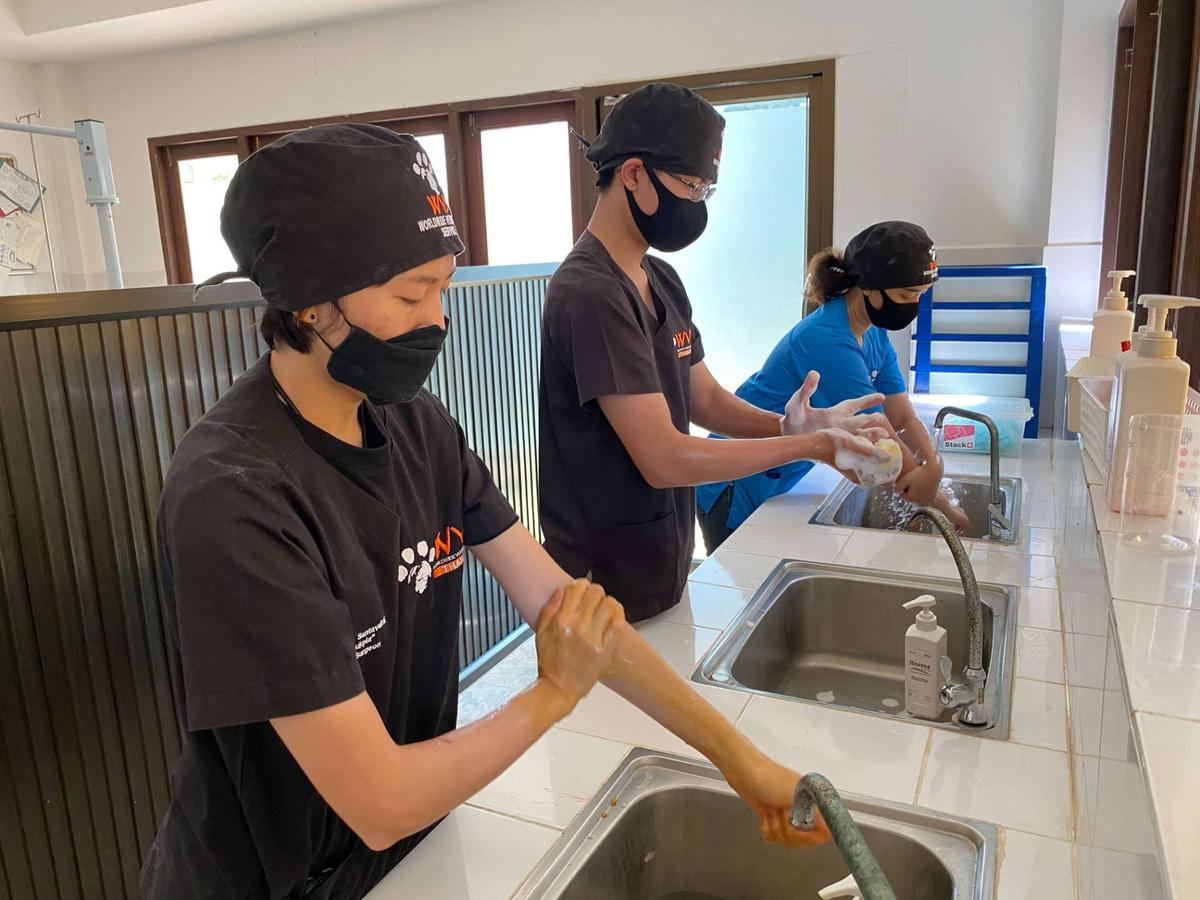
Surgical scrubbing area. For surgical staff to scrub their hands and arms in preparation for surgery; again, this area should lead directly into the operating theatre (Figure 6).
Sterile storage area. To house equipment that has been previously sterilised. This area must remain clean and dry at all times.
Cleaning and sterilising equipment area. For cleaning, preparing and packing equipment such as surgical instruments, ready for autoclaving or an alternative sterilisation procedure.
Cleaning schedules
Every facility should have a a Standard Operating Procedure (SOP) for ensuring thorough daily cleaning of all parts of the operating environment.
At the beginning of each day, all surfaces should be wiped over with a disinfectant solution (diluted to the manufacturer's recommended concentrations) and allowed to dry prior to starting surgery.
All equipment should be cleaned thoroughly, and instruments and other equipment autoclaved ready for the following day.
An example SOP used at our training centres.